
7 October Jobs That Turn Your Peonies Into A Wall Of Blooms Next Spring
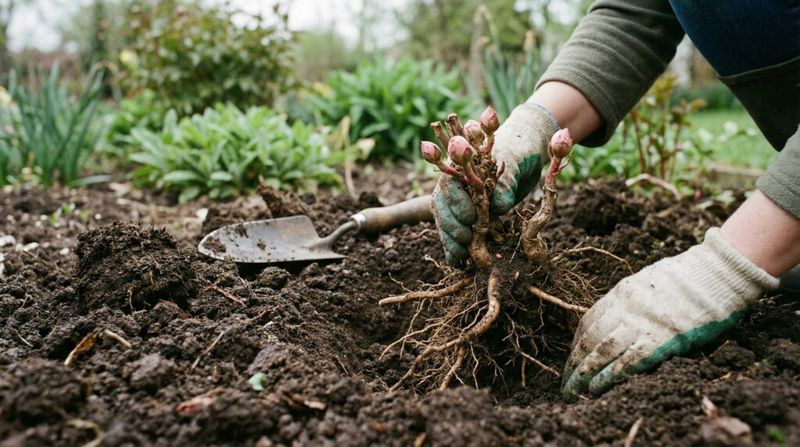
If your peonies gave you more leaves than flowers this year, the fix probably starts right now, not next May. October is when peonies quietly pack energy into their roots and set up next spring’s buds.
A few simple chores this month can mean the difference between a handful of blooms and a full, heavy wall of color. Here are seven jobs worth doing before the ground freezes.
1. Cut Back Herbaceous and Itoh Peony Foliage After a Hard Freeze
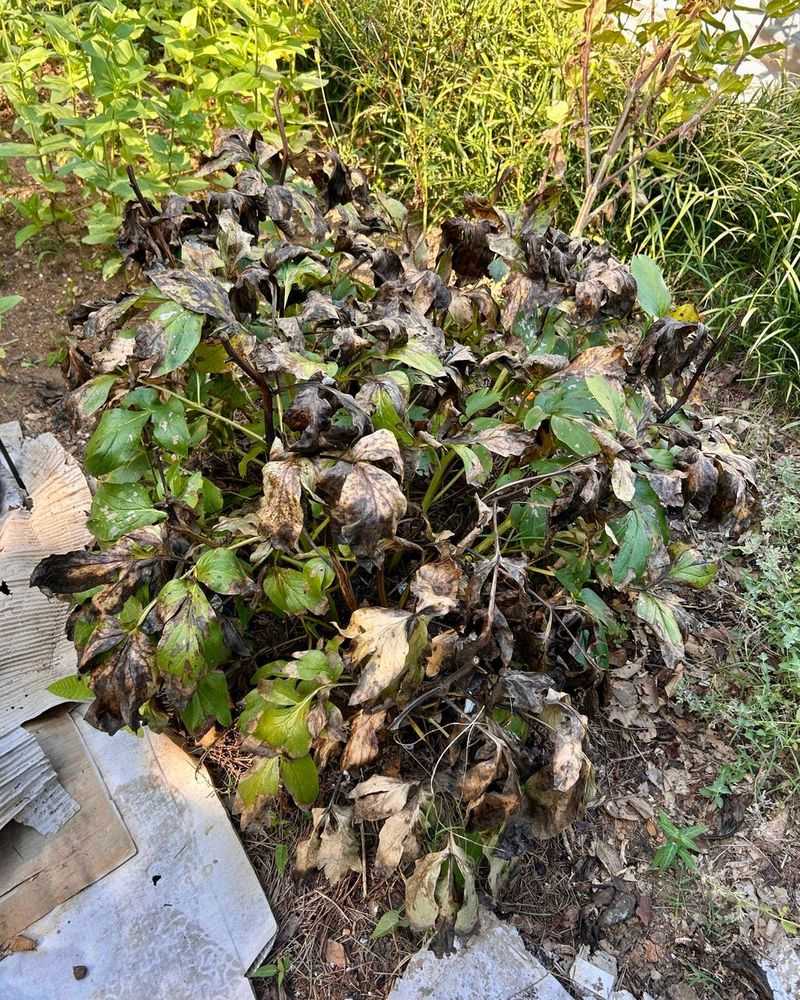
Patience pays off with the shears. Many gardeners chop peony stems the moment the bed looks messy, but green leaves are still sending food down to the roots.
Cut too soon, and you rob next spring’s flowers before they ever form.
Wait until a hard freeze in your area turns the foliage yellow or brown and floppy. That’s the signal the plant has finished storing energy for the year.
Then grab clean, sharp shears and cut herbaceous and Itoh peony stems down to about 1 to 3 inches above the soil.
Don’t leave the clippings lying around. Rake up the cut stems and any fallen leaves and toss them in the trash rather than the compost pile.
Diseases like botrytis blight and powdery mildew can hide in that debris over winter, and a tidy bed may help reduce the chance they come back next season.
2. Give Tree Peonies a Light Trim Only
Here’s the mistake that quietly wipes out a whole season of flowers: treating a tree peony like its herbaceous cousin. Tree peonies have woody stems, and they bloom on old wood.
Cut them to the ground in October, and next spring’s buds go straight into the yard waste bin.
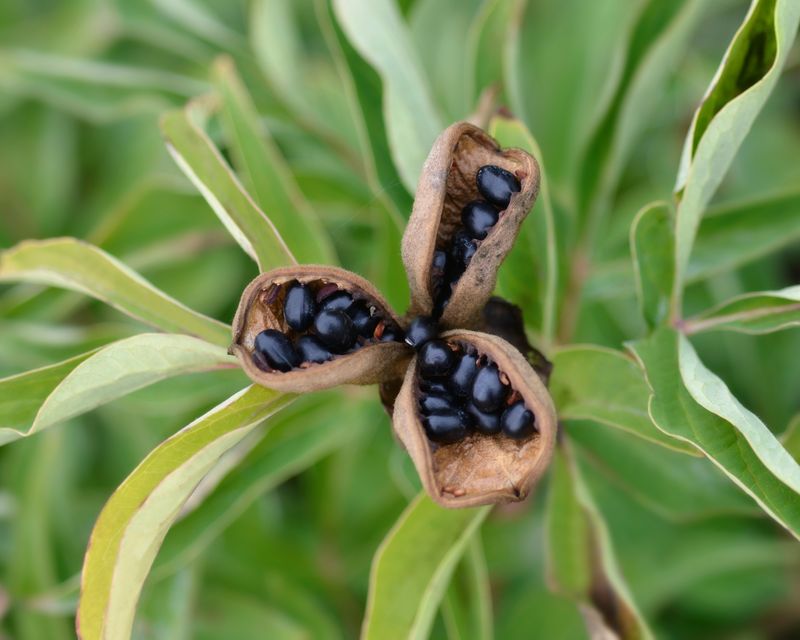
Instead, keep it simple. Snip off any mature, leathery seed pods so the plant stops spending energy on seeds.
Clip away dead or dying brown leaves, and leave the healthy woody framework alone.
Finish by clearing debris from around the base of the shrub. Fungal problems love damp, rotting leaves, so a clean footprint can help keep your tree peony healthier through winter.
Fun fact: tree peonies have been treasured in China for well over a thousand years, sometimes called the king of flowers.
3. Divide or Move Overcrowded Clumps
Remember when that peony was a bloom machine? If the clump has grown huge but now puts out fewer flowers, overcrowding could be the culprit.
Dividing it in fall can wake it back up.
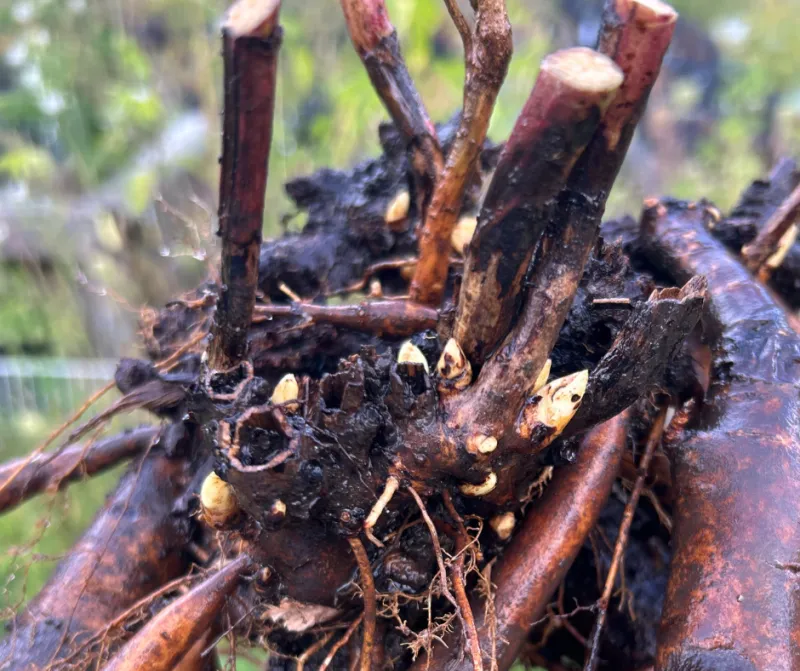
The sweet spot is after the first frost but before the ground freezes, usually late October into early November. Dig around the clump carefully, lift it out, and shake or rinse off the extra soil so you can see the roots and the pinkish buds, called eyes.
Use a sharp, clean knife to cut the root ball into pieces. Each division should have at least 3 to 5 eyes and a healthy chunk of root attached.
Smaller pieces can survive, but they often take a few extra years to bloom well.
Moving a peony that sits in too much shade? Same timing, same gentle digging.
Replant it in a sunnier spot and give it room to spread.
4. Plant New Peonies at the Right Depth
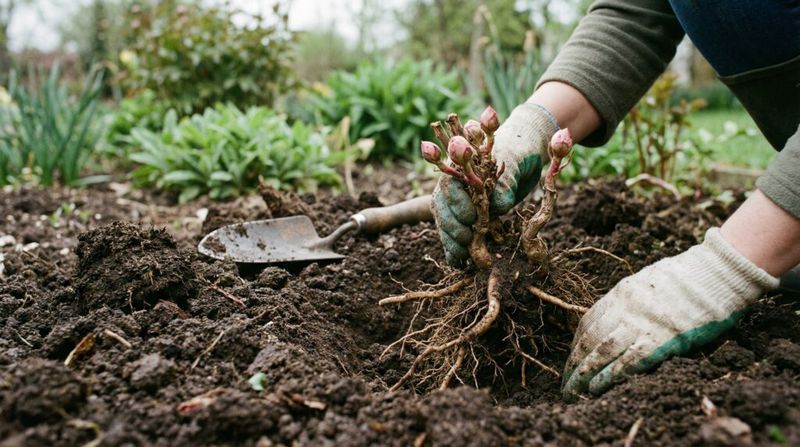
Two inches. That tiny measurement is behind more no-bloom peony complaints than almost anything else.
October is a great month to plant bare-root peonies. The air is cool, but the soil is still warm enough for roots to settle in before winter.
Pick a spot with full sun and fertile, well-drained soil, since soggy ground can lead to rot.
When you set the root in the hole, make sure the eyes sit no more than 1 to 2 inches below the soil surface. Plant deeper, and your peony may grow leaves for years without ever flowering.
In warmer southern regions, many growers go even shallower, closer to an inch.
Fill the hole gently and firm the soil with your hands. Then step back and resist the urge to pile extra dirt on top later.
5. Water Deeply Until the Ground Freezes

Fall feels damp, so it’s easy to forget the hose. But a dry autumn can leave peony roots thirsty right when they’re trying to store energy.
New plantings and fresh divisions need a deep soak right after they go in the ground. After that, water them weekly, or twice a week during dry spells, until temperatures really drop.
Steady moisture helps the new roots grab hold.
Established peonies want about an inch of water a week. If rain falls short, give them a slow, deep drink by hand.
Ease off as the weather cools, and stop altogether once the ground freezes.
6. Mulch New Plantings Loosely, Never Over the Crown
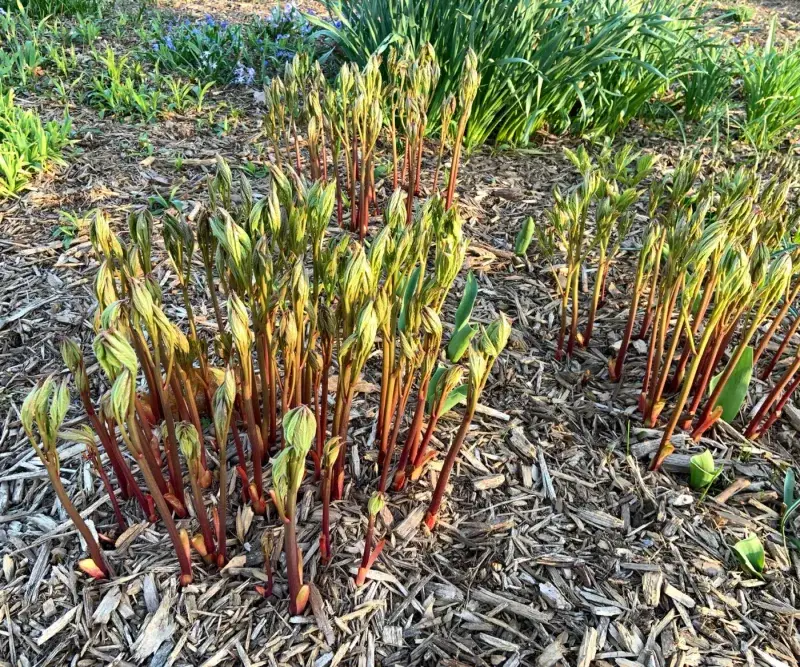
Think of mulch as a light blanket, not a heavy quilt. For a peony in its first winter, a loose ring of straw, shredded leaves, or evergreen boughs can keep the soil a bit warmer, hold moisture, and help prevent frost-heaving, when freezing and thawing push roots up out of the ground.
The catch is placement. Keep mulch away from the crown and those precious eyes.
Covering them can trap moisture and may lead to rot, which is the opposite of what you want.
Established peonies usually skip this step entirely. They’re tough, and they actually need a good winter chill to bloom well.
7. Feed Only If Your Peonies Need It
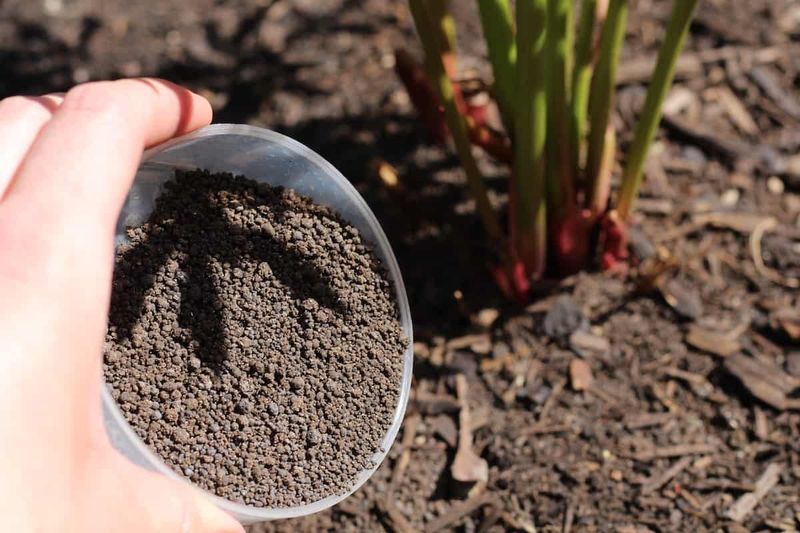
Good news for your wallet: healthy peonies in decent soil rarely need much fertilizer. Too much can actually backfire, giving you lush leaves and few flowers.
If your plants looked weak this year or your soil is poor, a light fall feeding can help. After you’ve cut the foliage back, scatter a little compost or a balanced, slow-release fertilizer around the plant.
Bone meal is another popular option for supporting root growth.
Skip high-nitrogen products in fall. Extra nitrogen can push tender new growth at the wrong time and favor foliage over blooms.
Spread whatever you use in a ring around the base, keeping it off the stems, and let winter do the rest.