
Removing Infected Hollyhock Debris This Fall Can Reduce One Source of Next Season’s Rust
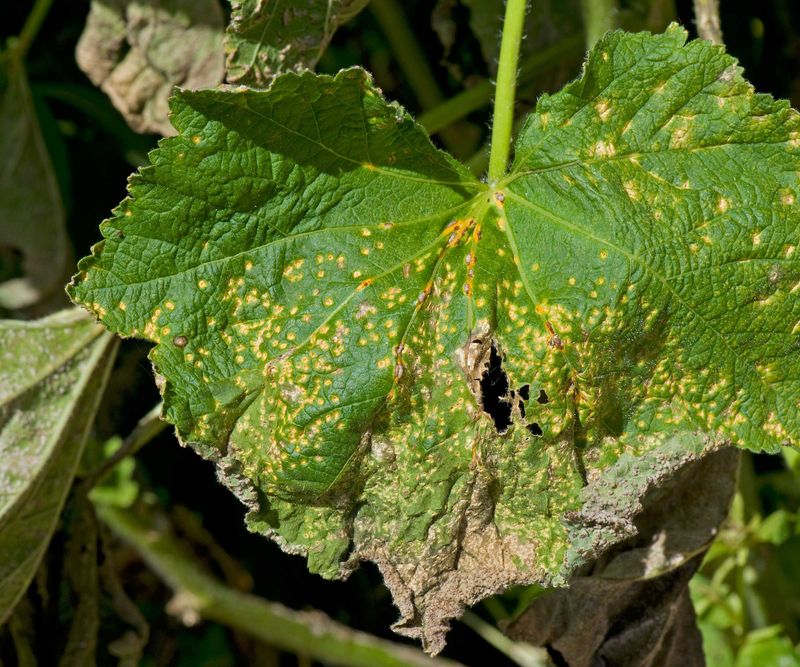
Orange spots on hollyhock leaves can make a gardener panic, especially when they show up again summer after summer. The fungus behind them can survive winter in more than one place, and some of those places are right in your bed.
Cleaning up diseased leaves and stalks this fall can reduce one source of next year’s infection. Here is how to spot rust, clear it out, and keep your expectations realistic.
Recognize the signs of hollyhock rust
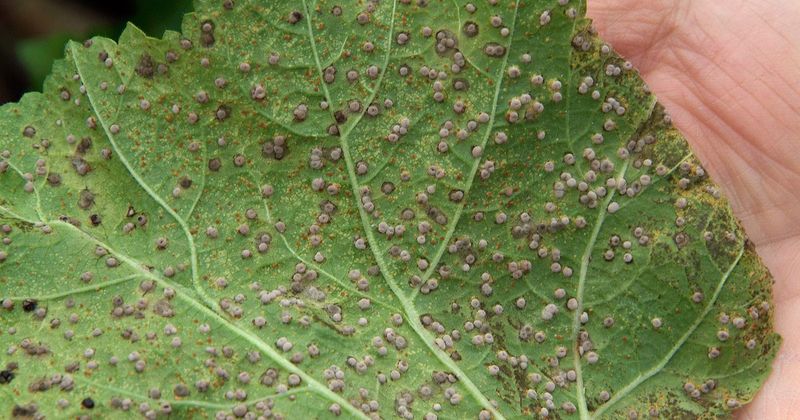
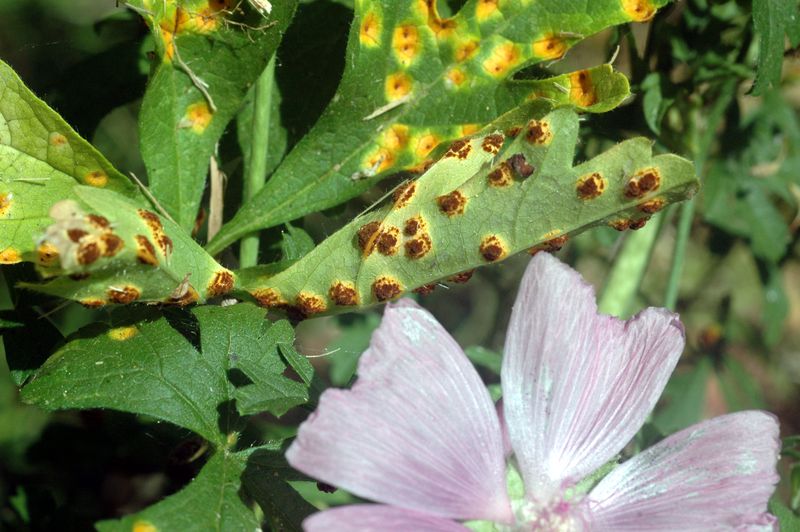
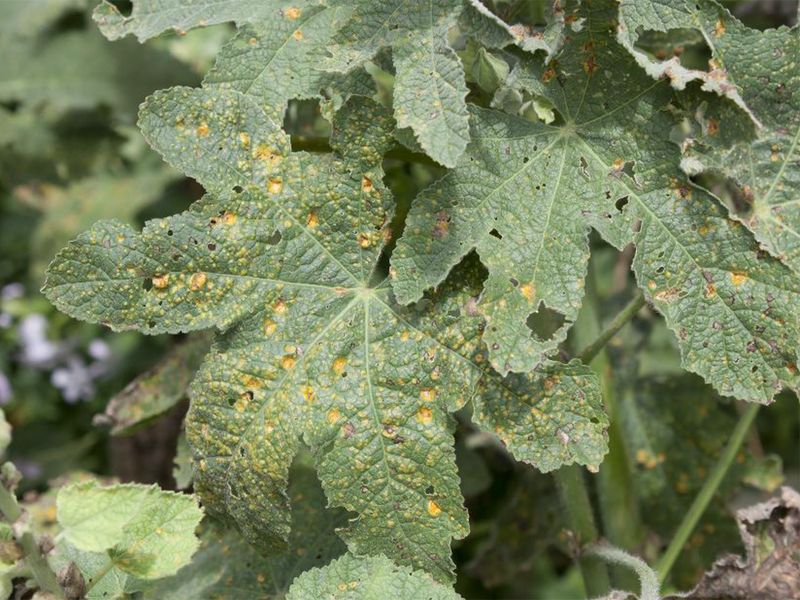
Walk out to your hollyhocks and flip a few leaves over. According to Iowa State Extension, a typical sign of rust is yellow-to-orange spotting on the tops of leaves, paired with raised reddish-brown or orange-brown pustules on the undersides.
Seeing both together is a strong clue that you are dealing with this disease.
Rust usually starts on the lower leaves and works its way up the stalk. As it spreads, badly affected leaves can shrivel, drop, or develop holes where the dead patches fall out.
That can leave the bottom of the plant looking bare and ragged by midsummer.
Keep in mind that not every orange spot means rust. Other leaf problems, insect damage, or ordinary aging can also cause blotches, so the pustules underneath are the detail worth checking.
If you are unsure, take a clear photo of both sides of the leaf to your local extension office for a second opinion.
Here is the reassuring part. Rust mostly hits the looks and vigor of the plant, and Wisconsin Extension says plant death is rare.
Colorado State University Extension agrees that the plant rarely dies, though a severe case can cause early leaf drop. Spotted leaves do not mean you failed as a gardener.
They mean a common fungal disease found your plants.
Why infected debris matters after the season ends
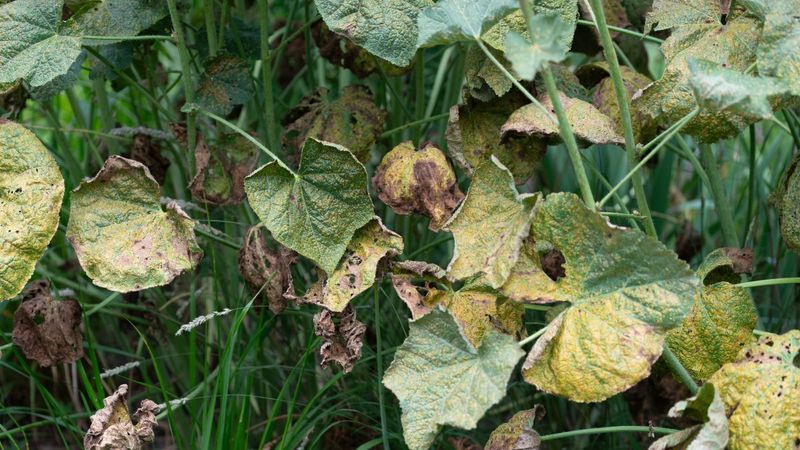
Once the flowers fade, a hollyhock bed can look finished, but the fungus may not be. Rust can survive winter on infected hollyhock material, including fallen leaves and stems left lying in the bed.
Both Iowa State and Wisconsin extension recommend a thorough fall cleanup for that reason.
Think of that debris as a leftover supply of the fungus sitting right beside next year’s fresh growth. When new shoots come up in spring, they are growing close to material that may carry the disease.
Taking that material away removes one possible starting point.
Notice the wording, though: one possible source. Plenty of gardeners with careful cleanup habits still see rust, and some gardeners who never clean up see very little.
Debris is a piece of the puzzle, not the whole explanation for why your plants get spotted.
That is actually good news. You do not need a perfect bed or a perfect record to make a worthwhile difference.
Clearing diseased leaves is a low-cost step that uses tools you already own, and it fits easily into the other fall chores you may be doing anyway.
Remove infected leaves and stalks from the bed
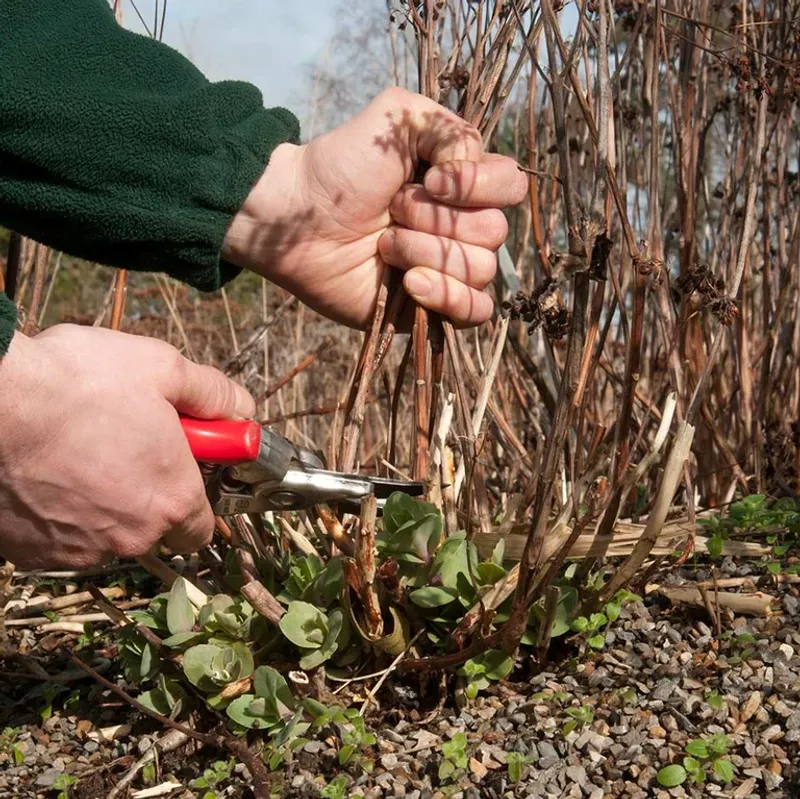
Grab pruners, gloves, and a bucket or tarp. Start by picking up fallen hollyhock leaves around the base, since those are the easiest to miss.
Then cut back the affected stalks and gather any other hollyhock debris you find.
The goal, as described by Wisconsin Extension, is to take the material out of the bed instead of leaving it where it fell. Cutting stalks and then dropping them on the soil does not help much.
Bag it, bucket it, and carry it away from the planting.
How long this takes depends on your garden. A couple of plants along a fence may be a quick job, while a long row with heavy leaf drop can take a good part of an afternoon.
Work in sections so you do not skip the corners behind taller plants.
A few practical tips can help. Rake gently with your hands or a small hand rake so you do not scatter leaves around.
Wipe your pruners with a cloth afterward, and wash your gloves before you move on to other plants.
Remember that one cleanup does not make future infection impossible. It simply takes away material that could carry the fungus through winter, which is a sensible step to add to your routine.
Follow local rules when disposing of diseased debris
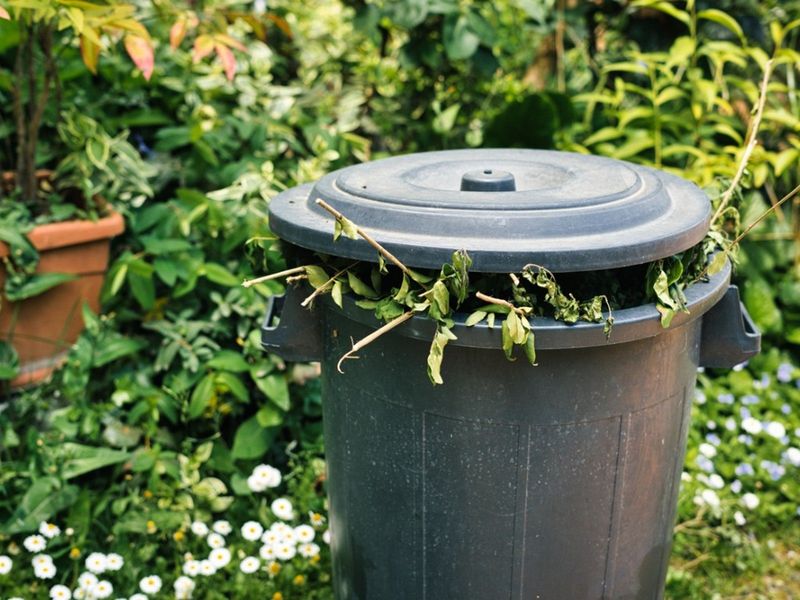
Once the debris is out of the bed, where it goes matters. Advice differs between sources, so there is no single rule that fits every yard.
The safest approach is to check what your town or county allows for plant waste.
Wisconsin Extension suggests putting the material in municipal garbage where that is allowed, or burying it deeply. Michigan State Extension says diseased debris should not be composted.
Other sources see it differently. A University of Massachusetts page lists rapid composting among disposal options.
That kind of composting is not the same as a slow backyard pile, so it is hard to assume your pile qualifies.
Because of that split, a method approved for diseased plant material in your area is the better choice. Call your waste hauler or check your municipal website to learn whether yard waste pickup, drop-off sites, or garbage disposal is preferred.
Burning is another question mark. Many areas restrict or ban it, so check local restrictions first and do not treat burning as a default.
If your community has no clear guidance, bagging the debris for trash is a simple, low-risk fallback.
A clean bed cannot block every route back
Even a spotless bed can see rust return. Wisconsin Extension notes that spores can drift in on the wind or arrive on infected transplants.
A nursery plant that looks fine at purchase may already carry the fungus.
Weeds can play a part too. Susceptible plants in the mallow family, such as common mallow, can help keep the disease going nearby.
If those grow along your fence or lawn edge, they may act as a reservoir.
Debris on the ground is also not the only place rust can wait out winter. The Royal Horticultural Society reports that it can overwinter on remaining green basal leaves and in perennial plant tissue.
So healthy-looking growth at the base of the plant may still carry some risk.
What does this mean for you? Cleanup lowers the odds, but it cannot promise rust-free hollyhocks.
If spots return next summer, it does not mean you did the job wrong.
Think of it as stacking small advantages. Each step you take trims the amount of fungus around, and that can make a difference in how heavy the problem gets, even if it never drops to zero.
Reduce disease pressure while hollyhocks grow
Summer habits can back up your fall cleanup. When you spot symptomatic leaves, pull them off if that is practical, and pick up any infected foliage that drops.
Wisconsin Extension lists these steps among ways to lower disease pressure.
Give plants room to breathe. Crowded stalks hold humidity around the leaves, and better airflow helps foliage dry faster.
When you plant or thin, leave space between hollyhocks instead of packing them tight.
Water at the soil level with a watering can or soaker hose instead of spraying the leaves. Rust is caused by a fungus, not by water itself, but wet foliage and splashing droplets can help spores spread.
Think of soil-level watering as a preventive habit, not a cure.
Keep an eye out for mallow-family weeds such as common mallow, and pull them before they settle in. Iowa State Extension also stresses good sanitation around plants.
None of this will cure an infection that has already taken hold. Control can be tough once symptoms appear, so the aim is to slow the spread and keep the plant looking as good as possible.
Lower one avoidable risk this fall
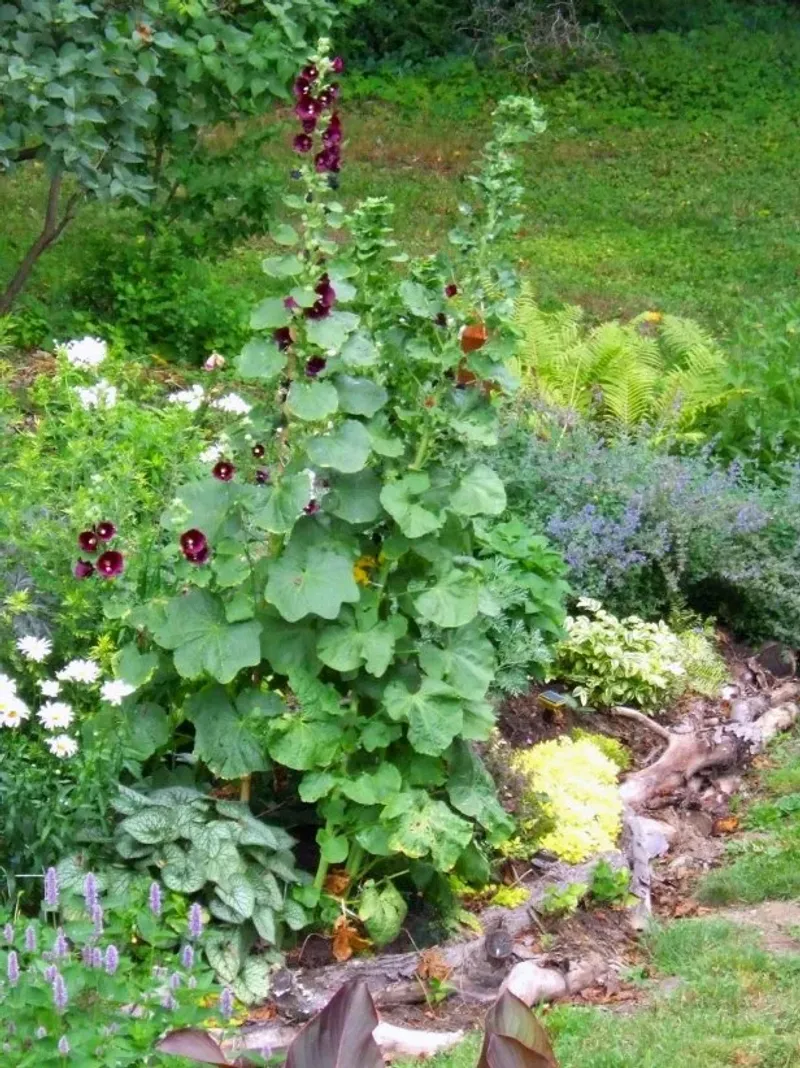
Clear the diseased hollyhock debris out of the bed, send it away by your local rules, and keep up the growing-season habits that ease disease pressure. As Wisconsin Extension points out, rust can still find a way back.
Cleanup trims one source, not every source.
Hollyhocks are tough, and a few spotted leaves are a manageable chore, not a verdict on your skills. Next summer, you will have given them a cleaner start.