
Indoor Pothos Yellowing? Check Soil Moisture Before Watering, Since Slower-Drying Soil May Mean Less-Frequent Watering
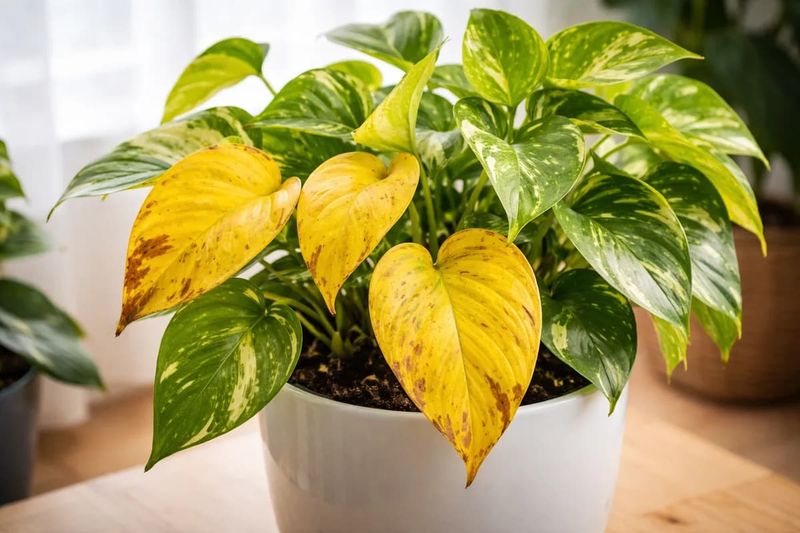
Your pothos came inside for winter, and now a few leaves are turning yellow. Your first thought is probably to grab the watering can.
Hold on, because yellow leaves alone cannot tell you whether the plant is thirsty or soggy. A quick soil check gives you a much better answer.
Indoor light can slow pothos water use
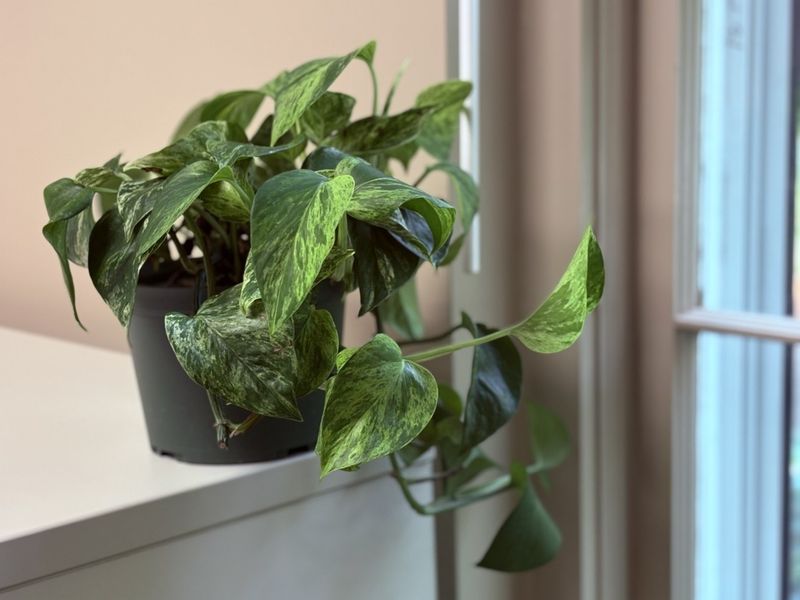
Outdoors, your pothos probably enjoyed brighter light and warmer air. Once it moves inside, the light usually drops, and growth often slows with it.
Penn State Extension notes that indoor growth often slows in reduced light, so watering should follow soil moisture rather than the old outdoor routine.
A plant that is growing more slowly generally uses water more slowly too. That means the potting mix may stay damp longer than it did on the porch.
The pot can look the same, but the soil is telling a different story.
This is where the idea of watering less often comes from. It applies only when your soil checks show the mix is taking longer to dry.
If the soil is drying out as fast as ever, your plant may need water on the same rhythm as before.
Not every move indoors has the same effect. A pothos beside a bright south window in a warm room may use water quickly, while one in a dim corner may sip slowly.
Pot size, potting mix, drainage, and temperature all change how fast the soil dries.
For that reason, skip any fixed winter schedule such as every two weeks. Your plant and your home set the pace, and the soil is the best way to read it.
A yellow leaf is a clue, not a diagnosis
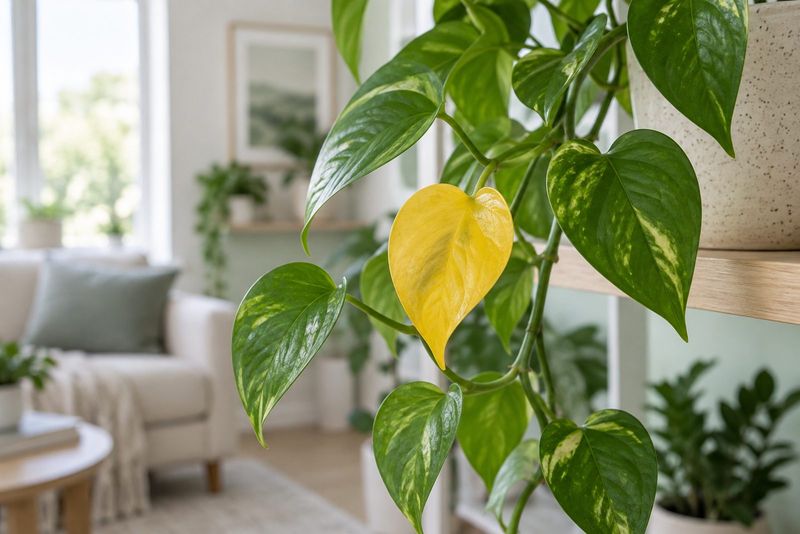
Seeing yellow on your pothos feels like a verdict, but it is really just a clue. Leaves can turn yellow when a plant adjusts to a move, when light or temperature changes, or when the soil stays too wet.
They can also yellow from too little water, pests, disease, or plain old leaf aging.
Illinois Extension lists several of these as possible contributors to houseplant problems. Because so many causes look alike, leaf color alone cannot tell you whether to add water or hold it back.
Here is the reassuring part. Some yellowing or leaf drop is normal after a plant comes indoors.
Penn State Extension says plants may take a month or two to adjust to the change in light and growing conditions.
A few older leaves turning yellow and dropping during that window is usually not cause for alarm. It is the plant shifting gears for its new spot.
What deserves attention is yellowing that spreads across the plant or keeps going for weeks. In that case, stop guessing from the leaves and start checking the soil, the light, the temperature, and the drainage.
Changing your watering habits may help in some cases, but it will not cure every case of yellowing. Treat the leaf as a nudge to investigate.
Check the soil before you water
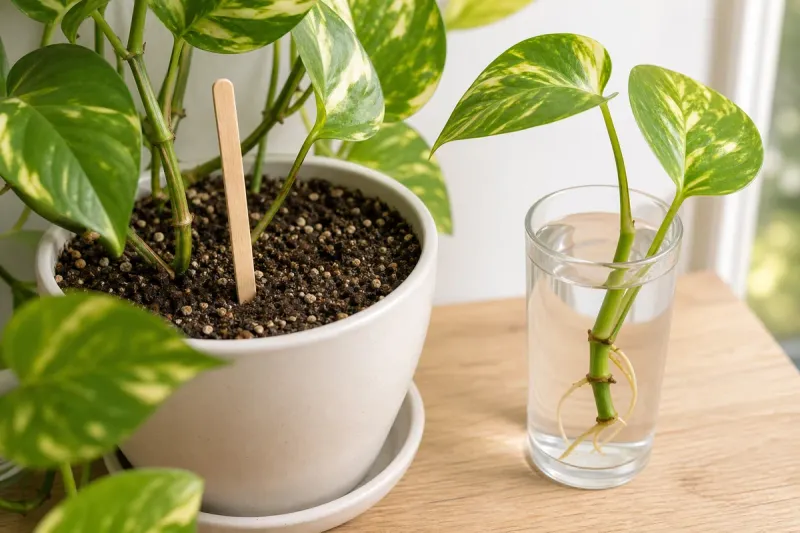
Forget the calendar and use your finger. Push it into the potting mix and feel what is happening below the surface.
An Extension expert suggests checking roughly 1 to 2 inches down, with the depth depending on pot size.
In a small pot, the shallower end of that range makes sense. In a larger pot, go a bit deeper.
If the mix still feels moist, wait and check again in a day or two.
If it has become somewhat dry, it is time to water. Pothos does well when the mix dries partly between waterings, so you do not need to let it go bone-dry.
When you do water, go slowly and thoroughly. Pour until water runs out of the drainage holes, which wets the whole root ball instead of just the top layer.
Use a pot with drainage holes. Without them, extra water has nowhere to go and the roots can sit wet.
Then empty any water from the saucer or decorative outer pot. A pothos sitting in standing water for days is a common mistake, especially when the pot hides inside a pretty cachepot.
Because drying time shifts with the pot, mix, light, and temperature, your checks may land on different days each week. That is normal.
The soil is simply answering your question.
Check the plant’s new location
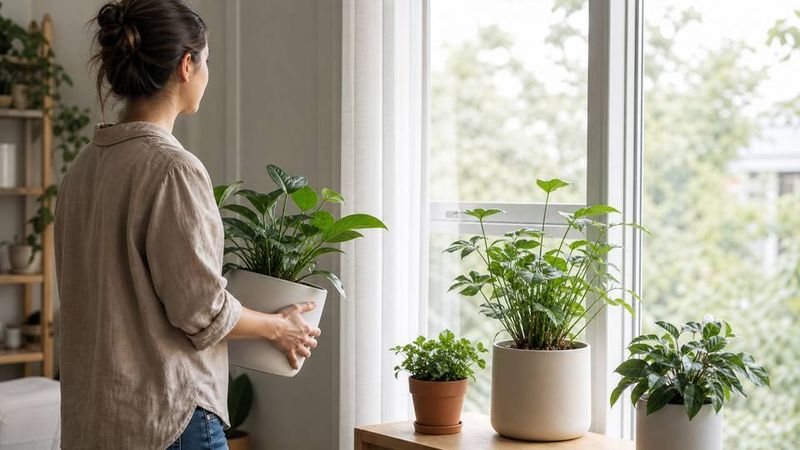
Where you set the pot matters as much as how you water it. Pothos prefers filtered or indirect light, so a spot near a bright window with a sheer curtain often works well.
Extension guidance also advises keeping it away from cold drafts, cold glass, and heat vents.
Winter windows can be tricky. A leaf touching a chilly pane may suffer, and a plant parked over a heating vent can dry out and stress quickly.
Moving the pot even a foot or two can make a difference.
These changes in growing conditions can contribute to leaf damage, which is one reason yellowing is hard to pin on watering alone. A plant that is cold, dim, or blasted by dry air may show it in its leaves.
Growth also tends to slow in winter. Penn State Extension says fertilizer is generally unnecessary while a plant is not actively growing, so skip the plant food as a rescue attempt.
Extra nutrients will not fix a light or watering issue and may only add stress.
Try a quick walk-through of the spot. Is the light bright but not harsh?
Is the plant clear of drafts and vents? If you can answer yes, the location is probably not the culprit.
When yellowing calls for a closer inspection
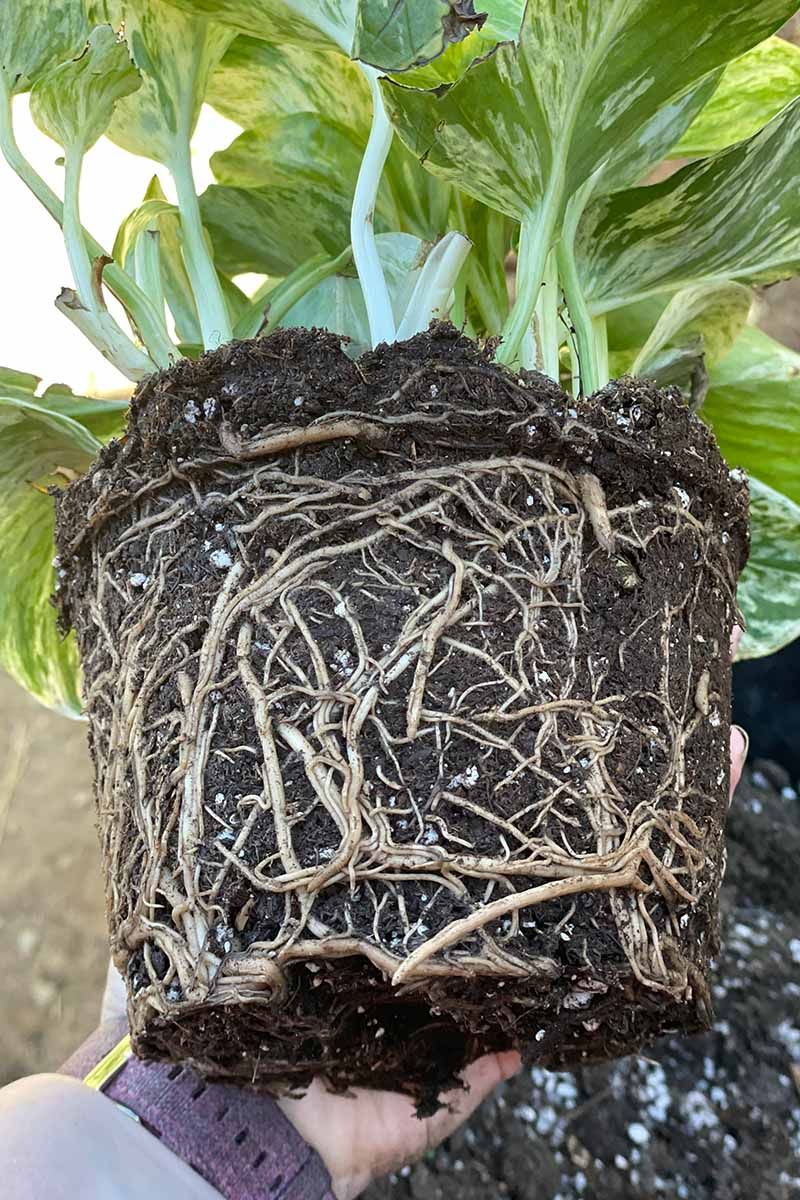
Sometimes yellowing sticks around. If it is widespread, continues for weeks, or shows up on new growth, a closer look is worth your time.
Start by rechecking soil moisture and drainage, since a pot that stays wet or never drains can cause trouble.
Next, flip a few leaves over. University of Minnesota Extension covers insects that can damage indoor plants.
Look at the undersides and stems for tiny insects, webbing, or sticky residue.
Then look for signs of root trouble. Persistently wet soil, poor drainage, and dark, limp roots are more worrying than a yellow leaf by itself.
Penn State Extension lists dark brown or black roots and older leaves yellowing and falling among root rot signs.
To check, slide the plant gently out of its pot. Healthy roots are usually firm and lighter in color, while damaged ones look dark and feel mushy.
One yellow leaf does not mean root rot or pests. You need other signs alongside it, such as soggy soil that never dries, dark roots, or visible insects.
If nothing turns up, go back to light, temperature, and drainage. If the soil is bone-dry and the plant droops, underwatering may be part of the story, so let your findings guide the next step.
Let soil moisture guide the next watering
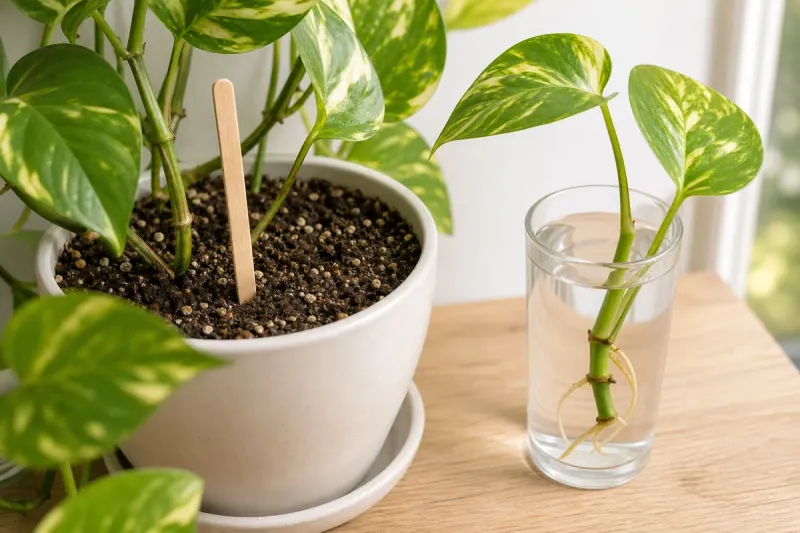
Your plan is simple. Check the mix before watering, water when it has become somewhat dry, and let the excess drain out.
A few older leaves may drop as your pothos adjusts to indoor life, and that alone is no reason to panic.
If yellowing keeps going, investigate instead of automatically adding water or withholding it. Extension advice favors checking moisture and conditions.
The plant is not asking for more or less water. It is asking you to look closer.