
Why Your New North Carolina Fescue Still Thins Out Weeks After It Finally Sprouts
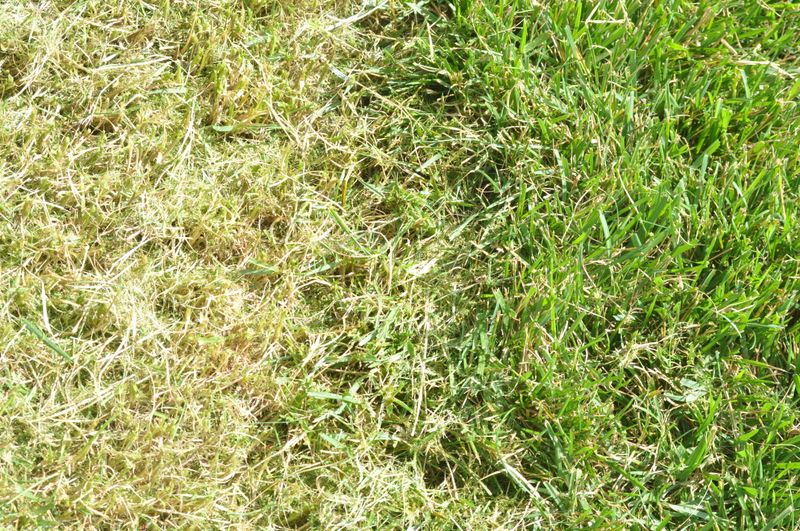
Seeing green fuzz come up after weeks of waiting feels like a win. Then, a few weeks later, the lawn starts to look patchy and thin again.
Sprouting is only the first step, and the stretch right after it is where many new lawns struggle. Here is how to figure out what is going on in your own yard before you change anything.
Sprouting is not the same as establishment
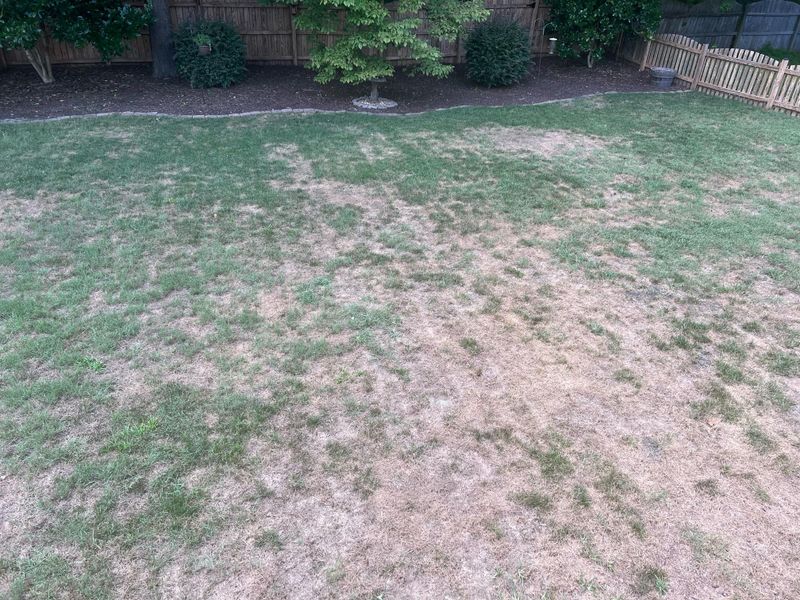
Seeing blades poke through the soil means the seeds germinated. It does not mean the lawn has taken.
A seedling still has to grow roots, handle sun and wind, and survive its first mowings before it can be called established.
That slow stage is where trouble shows up. NC State Extension’s lawn guide lists several reasons turf declines, including poor establishment, management problems, unsuitable grass, nutrient imbalance, disease, insects, and weeds.
No single hidden culprit explains every thin lawn.
Think of the weeks after sprouting as a checkup rather than a victory lap. Your seedlings may be telling you something about the water they get, the way they are mowed, the soil beneath them, or the spot where they are growing.
The next sections walk through those clues one at a time: moisture, disease symptoms, mowing height, soil test results, shade and tree roots, planting date, and repair of bare spots. Some will fit your yard and some will not.
The goal is to sort out which ones do before you spend money on a fix that does not match the problem.
The seedbed needs moisture, not constant wetness

Young seedlings have tiny roots, so the top layer of soil matters most. NC State advises keeping the top 1.5 inches of soil moist during early establishment.
That can mean light watering two or three times a day for 7 to 21 days.
As roots develop, the plan changes. Water less often but for longer so moisture reaches deeper.
After the third mowing, the guidance is to water to a depth of 6 to 8 inches about weekly or as needed. Treat those numbers as a starting point, not a calendar, since rain, soil type, and sun all change how fast your seedbed dries.
Moist is not the same as soaked. NC State’s turf disease guidance suggests gradually cutting back irrigation frequency as seedlings root, letting leaves dry between cycles, and avoiding wet low spots.
Extended wetness can encourage damping-off.
A simple check helps. Push a finger or a small screwdriver into the soil.
If the top inch or two is dry and crumbly, seedlings may be stressed. If it is mucky or standing water lingers, you may be giving too much.
When thinning looks like disease, symptoms still need checking
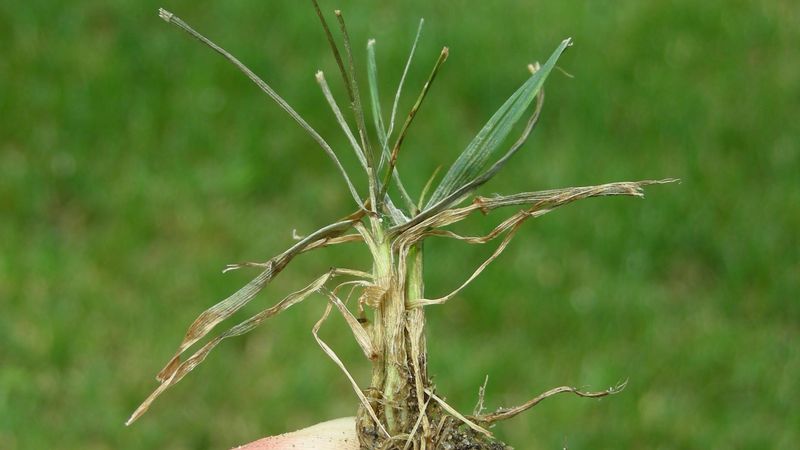
Disease is one possible reason seedlings vanish, but thin grass alone does not prove it. Damping-off is the usual suspect with new seedlings.
NC State describes affected seedlings as flaccid or twisted at first, then dark and greasy before they disintegrate, often in patches.
Those clues are worth noting, but they are only clues. Drought, overwatering, chemical injury, and other problems can also produce a poor stand.
A dry seedbed and a soggy one can both leave you staring at bare ground.
If you suspect disease, get a diagnosis before buying a fungicide. NC State’s seedling guidance points out that different pathogens call for different treatment, so a guess can waste money.
Your county Cooperative Extension office can help you submit a sample.
Brown patch deserves a mention, but only when the picture fits. NC State says it is most severe in extended hot, humid weather and is favored by long leaf wetness, poor drainage, shade, overwatering, and excess nitrogen.
In a cool, dry October stretch, it is not the first thing to blame.
Take photos, note where patches sit, and jot down recent weather and watering. That record makes a diagnosis far easier.
Mow by seedling height, not by the calendar
Grass grows on its own schedule, so a set number of days after sprouting is a poor guide for the first mow. Cool weather, shade, and seeding date can all speed up or slow down growth.
Let the blades tell you when.
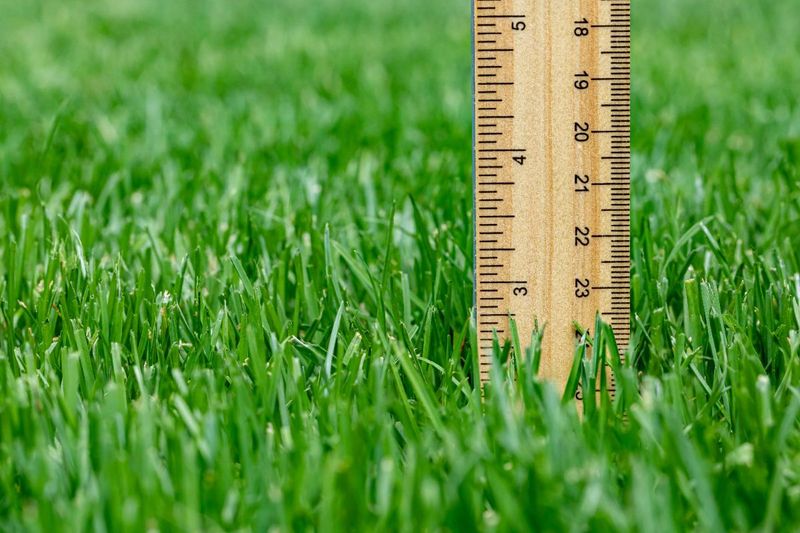
The trigger comes from NC State’s lawn guide: start mowing when turf is 50 percent taller than the height you want. For tall fescue, that means mowing down to 3 inches once it reaches 4.5 inches.
Keep a ruler handy and measure a few spots.
A few habits protect tender seedlings. Use a sharp blade so leaves are cut cleanly rather than torn or yanked.
Mow when both plants and soil are dry, since wet soil lets a mower tug at shallow roots and clippings clump.
Never remove more than one-third of the leaf surface at once. Scalping a young stand strips away the leaves it needs to feed new roots.
If the grass got ahead of you, trim it down in stages instead of all at once.
Let a soil test guide the first fertilizer decision
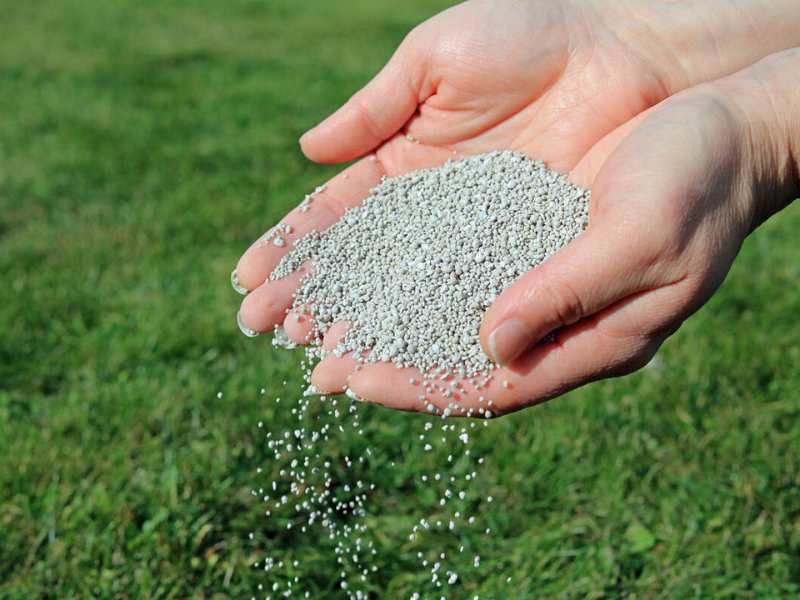
When a lawn looks thin, reaching for fertilizer feels natural. It is not a reliable cure, though, because thinning has many causes and extra nutrients fix very few of them.
A soil test shows what your soil actually lacks, including whether lime is needed.
For new seedlings, NC State advises fertilizing about six to eight weeks after emergence, at roughly 1 pound of nitrogen per 1,000 square feet, or as your soil test recommends. The Extension Gardener Handbook also stresses basing nutrient decisions on soil test results.
Before you spread anything, think about what already went down. A starter fertilizer applied at seeding counts toward your total.
Piling on more can backfire, since NC State’s disease guidance notes that excess nitrogen can increase disease risk.
If you have not tested yet, collect samples from a few spots and send them in. Results can show whether the issue is nutrients at all, or whether you should look back at water, mowing, or shade.
Shade and tree roots can limit what fescue can establish
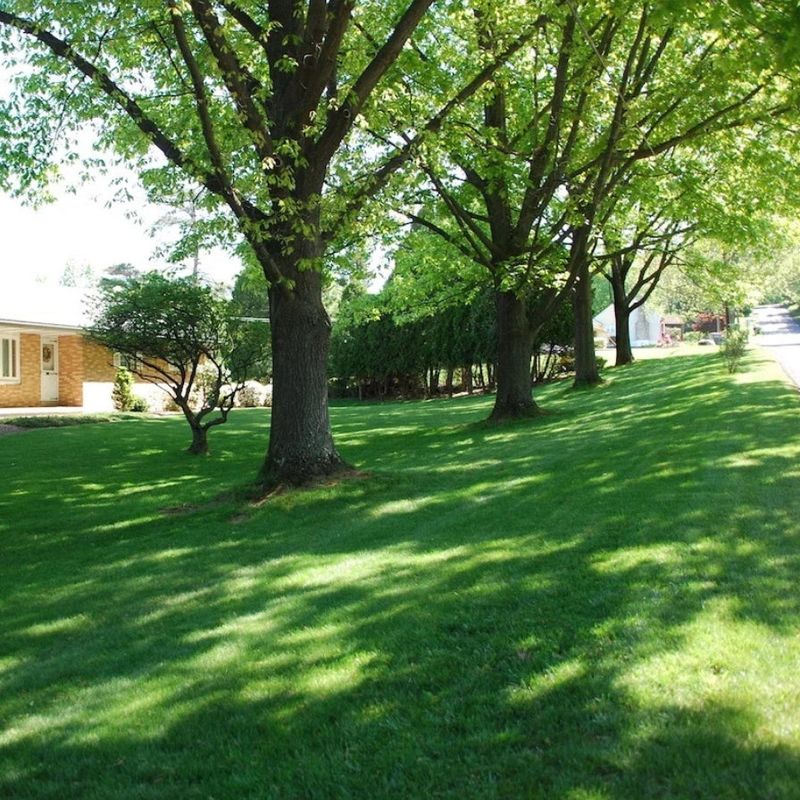
Sometimes the seedlings are not the problem. The spot is.
A corner under an oak or maple may look like it needs more seed, when what it really needs is more light and less root competition.
NC State says turfgrass will not grow well where an area gets less than four hours of sunlight daily or less than 50 percent open sunlight. Tree roots add another squeeze, since they take up water and nutrients near the surface where seedlings are trying to root.
Watch the area over a day. Note when sun reaches it and for how long.
If thinning lines up with the shadow of a tree or the zone above its roots, site limits may be to blame.
In that case, repeated reseeding is unlikely to overcome dense shade or root competition. Consider an alternative to turf, such as a shade-tolerant groundcover, mulch beds, or native plantings suited to your part of the state.
The Carolina Lawns guide can help you think through where grass makes sense and where it does not.
Late fall seeding raises risk, but does not guarantee failure
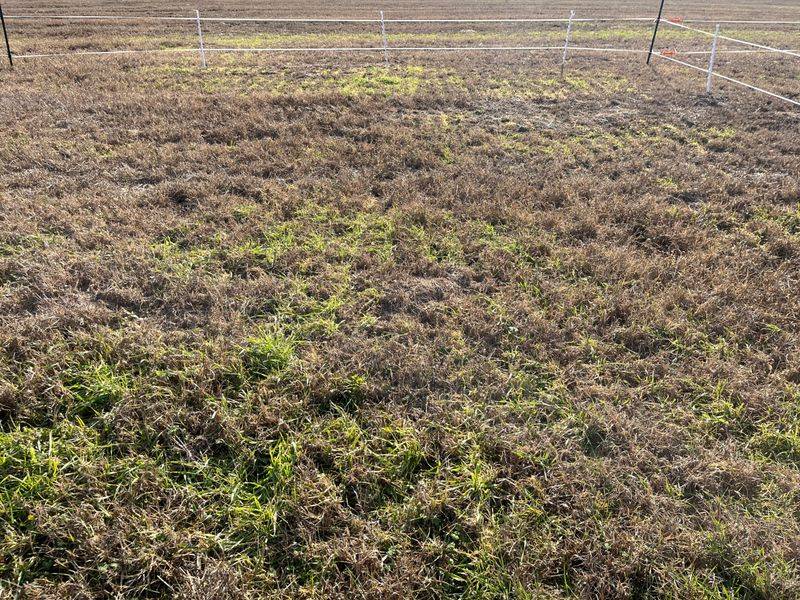
Timing is its own question, separate from why seedlings are thinning right now. NC State lists the best tall fescue seeding windows by region: Aug. 15 to Sept. 1 in the mountains, Sept. 1 to Oct. 1 in the Piedmont, and Sept. 15 to Oct. 15 in the Coastal Plain.
By mid-October of 2026, all three windows have passed. Seeding later increases the risk of winter injury, because young plants have less time to build roots before cold weather arrives.
Higher risk is not the same as failure. A late planting may come through fine, especially in a mild winter, but it deserves extra care and realistic expectations.
Plan to keep an eye on it through winter and into spring.
Just as important, planting date does not explain the thinning you see today. Check moisture, mowing, soil, and site first, then treat timing as one more thing to watch in the months ahead.
A thin patch may need reseeding, not more waiting
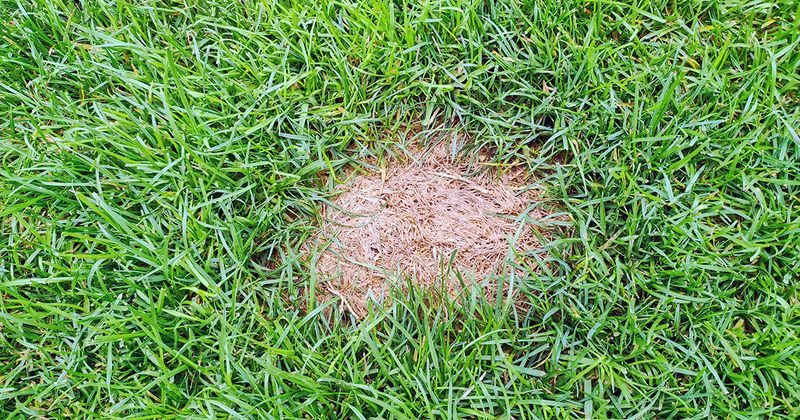
Some lawns fill in as the weeks go by, but tall fescue will not help much on its own. It has a bunch-type growth habit, which means plants grow in clumps rather than spreading sideways to cover gaps.
A bare area stays bare unless you add seed.
NC State advises replanting bare spots larger than 4 inches in diameter. Loosen the surface, spread seed, and keep the area moist the way you would for a new seeding, then ease off as roots grow.
Before you patch, ask whether the spot is a one-time gap or a symptom. A small bald area from a washed-out seed pile is a repair job.
Widespread thinning that keeps returning points to something unresolved, such as watering swings, mowing stress, disease, or too little sun.
Fix the cause first when you can find it, and then reseed. Otherwise the new seed may meet the same trouble that thinned the first batch.
Check the cause before changing the care
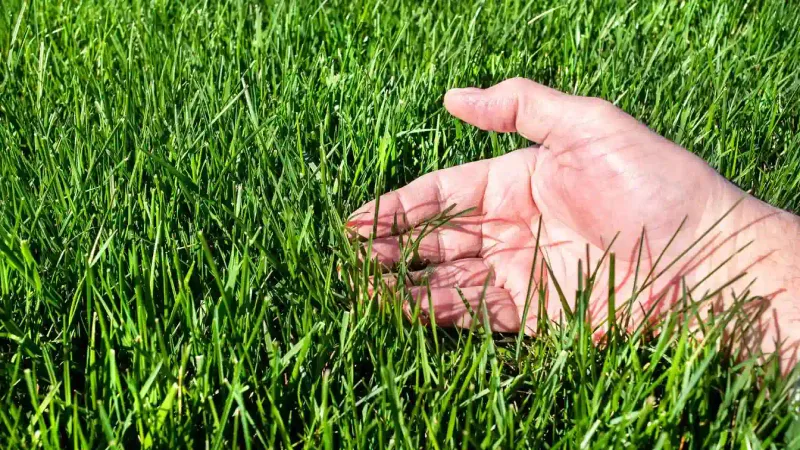
Start with what you can see and feel. Check how moist the soil is, look for patterns in where seedlings are failing, and review your mowing height, fertilizer history, and hours of sun.
Keep planting date in mind as a winter-injury risk, not a cause of what you see today. The Carolina Lawns guide and NC State’s damping-off page are good places to confirm details.
A thin lawn is a question, not a verdict. Answer it with observation, and the right fix usually becomes clear.