
Wolf Spiders In Your Basement This Fall Can Eat Roaches, But A Sighting Doesn’t Prove They’re Eating Yours
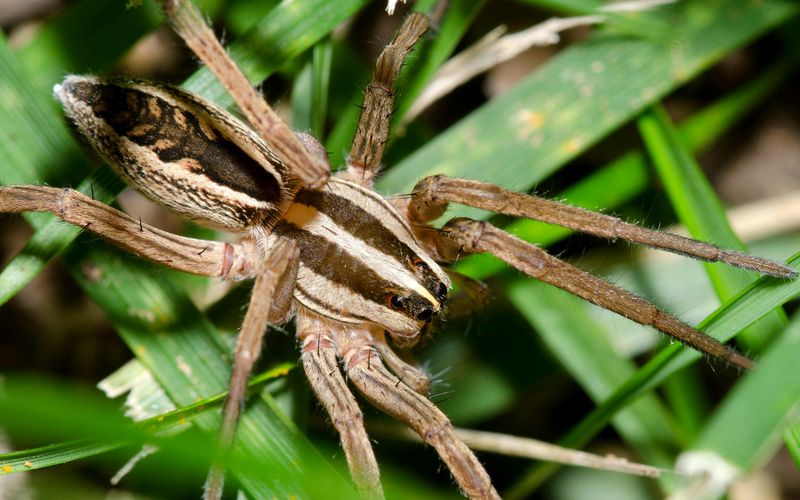
You flip on the basement light and spot a big, fast, brown spider on the floor. Your first thought may be to grab a shoe.
But wolf spiders hunt insects, and some of them do eat cockroaches. Here is what that does and does not mean for your home, and what to do next.
Why wolf spiders turn up in basements in fall
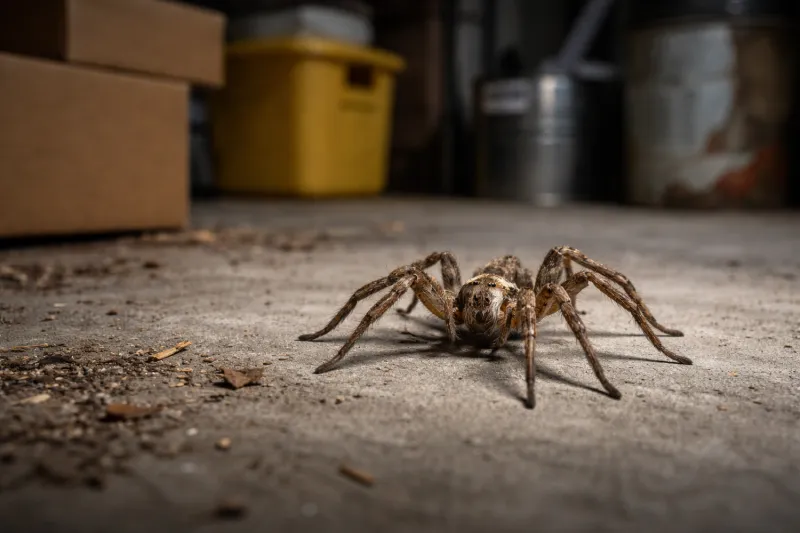
Wolf spiders do not spin webs to catch dinner. They roam along the ground and chase down insects, which is why you tend to see them out in the open, crossing a floor or sitting near a wall.
Fall is when many homeowners start noticing them. Colorado State University Extension notes that wolf spiders commonly wander into houses in autumn, and University of Maryland Extension reports finding them in places like basements.
Cooler nights, changing weather, and the search for shelter can all nudge a ground-dwelling spider toward a gap under a door or a crack in a foundation. Once inside, a basement offers dark corners and quiet.
Here is the key point: a spider can end up indoors for reasons that have nothing to do with cockroaches. A single wolf spider on your floor does not tell you that roaches are living nearby.
It simply tells you a spider found a way in.
Think of the sighting as a small clue about your home’s gaps and clutter, not a report on your insect population. If you want to know whether roaches are around, you will need to look for them directly, and a later section shows how.
Some wolf spiders can eat cockroaches—but that proves little about a home
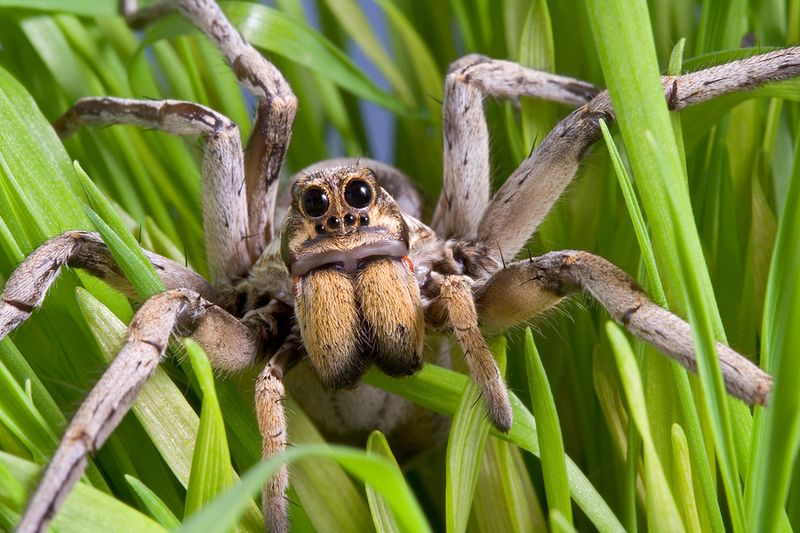
Yes, cockroaches are on the menu for some wolf spiders. An Ask Extension answer describes roaches as prey, so it is fair to say a wolf spider might catch one if the two meet.
Might is the important word. Being able to eat a roach is different from having roaches to eat in your basement, and different again from keeping a roach problem in check.
The best-known research is narrow. A 1991 study by Fred Punzo looked at the prey of one species, Lycosa lenta, in the field in central Florida during 1987 and 1988.
Cockroaches showed up among the prey, but the spiders were living outdoors in a particular habitat.
That study did not follow house spiders, and it did not measure how many roaches a spider removes from a home. Spider species and behavior also vary, so its results do not translate into a control rate for every wolf spider.
So the catchy idea that your basement spider is eating roaches you never see goes further than anyone has shown. Two separate facts are being stitched together: roaches can hide in dark places, and some wolf spiders eat them.
Neither one tells you what is happening in your house.
If you like the idea of a quiet hunter in the corner, that is fine. Just do not count on it as your roach plan.
Check for cockroaches directly
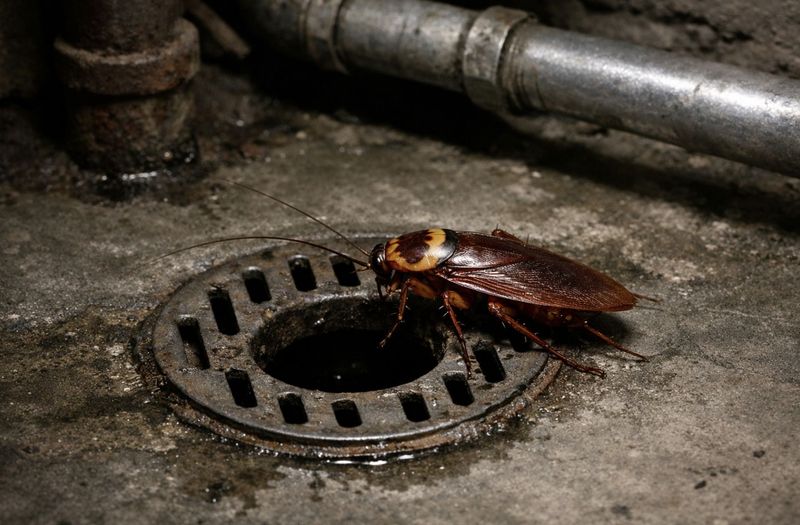
Guessing from a spider is unreliable, so test the roach question yourself. Start with a flashlight after dark, when roaches are most active, and look in warm, damp, tucked-away spots such as behind appliances, under sinks, around water heaters, and near floor drains.
Next, set out sticky monitors. UC Statewide IPM Program guidance points to places roaches travel, so place traps along wall and floor junctions and near any spot where you suspect activity.
Leave them for several days, then check what they caught. A few trapped spiders or crickets are not roaches.
Finding roaches, especially young ones or several in one trap, tells you where to focus.
Remember what traps are for. They help detect and monitor roaches, which means they show whether you have a problem and where.
They are not a full solution on their own.
Cockroach management leans on habits: cleaning up food and crumbs, fixing leaks and drying damp areas, and sealing gaps so roaches cannot travel or hide. The EPA also suggests asking whether a pesticide is truly needed before reaching for one.
If your traps stay empty of roaches, that is useful news. You have a spider question, not a roach question.
Choose whether to leave the spider or move it
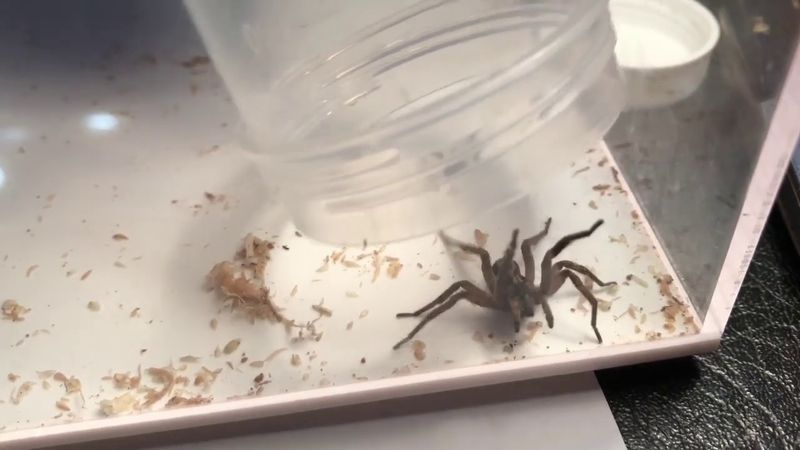
Whether the spider stays is up to you. Leaving it alone is an option if you are comfortable with it, but it is a personal choice, not a pest-control strategy.
On safety, extension guidance describes wolf spiders as generally shy and not considered dangerous to people. They can still bite if handled or confined, so give them space and do not try to pick one up.
If you would rather not share your basement, relocating it is simple. UC Statewide IPM Program and University of Maryland Extension both support the container method.
Set a jar or other container over the spider. Slide a sheet of stiff paper or thin cardboard underneath, hold it firmly against the opening, and carry the whole thing outside.
Release it near a woodpile, shrubs, or a garden edge, away from your door.
Many people feel uneasy around big spiders, and that is a fair reaction. Moving one outdoors respects that feeling without any harm to the spider or risk to you.
Whichever you choose, keep the roach question separate. Leaving or moving the spider does not answer it, so check with monitors either way.
Discourage spiders from entering and settling indoors
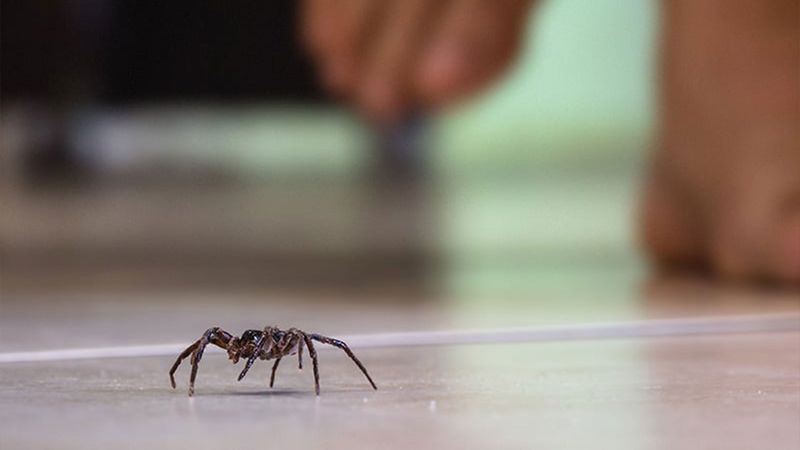
If spiders keep appearing, work on the ways they get in and the places they like to hide. These steps are about spiders, and they are not a test or a fix for roaches.
Start with the outside edges. UC Statewide IPM Program recommends sealing cracks in the foundation and gaps around windows and doors.
A tube of caulk and a free afternoon go a long way.
Check door sweeps, weather stripping, and window screens too. A torn screen or a worn strip at the bottom of a door is an open invitation for a wandering ground hunter.
Then look inside. Colorado State University Extension advises cutting down on clutter and hiding places.
In a basement, that can mean moving cardboard boxes into lidded plastic bins and keeping stored items off the floor and away from walls.
A tidier space gives spiders fewer places to settle, and it makes any future inspection easier. You will spot droppings, egg cases, or movement more quickly when you are not digging through stacks of stuff.
These measures can reduce how often spiders come in, but they will not guarantee a spider-free house. Sealing and decluttering can also help with other pests, yet roach control has its own steps, covered next.
Manage confirmed cockroaches as a separate problem
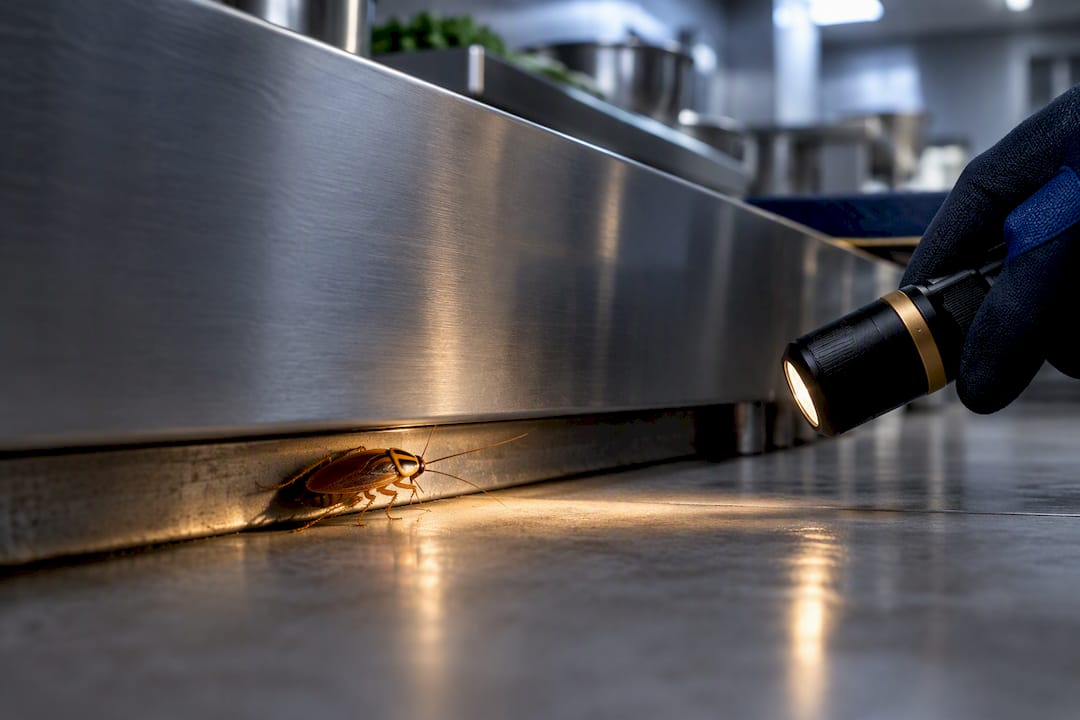
When your traps or flashlight check turn up real roaches, switch to a roach-specific plan. A wolf spider is not part of that plan.
The EPA’s integrated pest management principles describe a steady approach: identify the pest, monitor it, prevent what lets it thrive, and choose controls based on the actual problem.
In practice, keep monitors out so you can see whether numbers are rising or falling. Clean up crumbs and grease, store food in sealed containers, and take out trash regularly.
Roaches need moisture, so fix leaks and dry damp areas, including around basement pipes and drains.
Exclusion matters too. Seal cracks and gaps where roaches travel or hide, using the same caulk-and-patch mindset you used for spiders but aimed at roach pathways.
UC Statewide IPM Program lays out these steps in detail for home cockroach management.
As for pesticides, the EPA encourages asking whether one is needed at all. A spider sighting alone is never a reason to spray.
If roaches are confirmed and persistent, a licensed pest professional can help match the treatment to what you found.
The spider in the corner is just a spider. The roaches, if they exist, deserve their own plan.