
Spider Plant Tips Turning Brown Indoors May Be Reacting To Your Tap Water, Among Other Causes
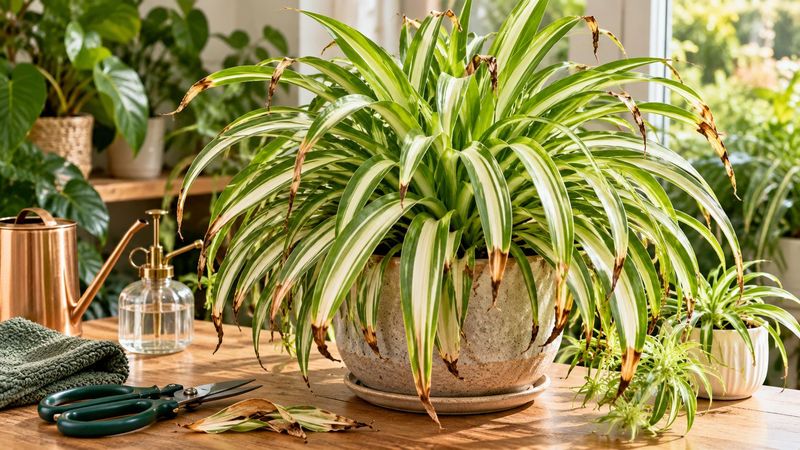
Brown tips on a spider plant can make you feel like you did something wrong. Many owners blame overwatering and start changing their routine right away.
But the water coming out of your faucet may be part of the story, and testing it is cheap and simple. Here is how to run that test and check everything else along the way.
Brown tips are a clue, not a diagnosis
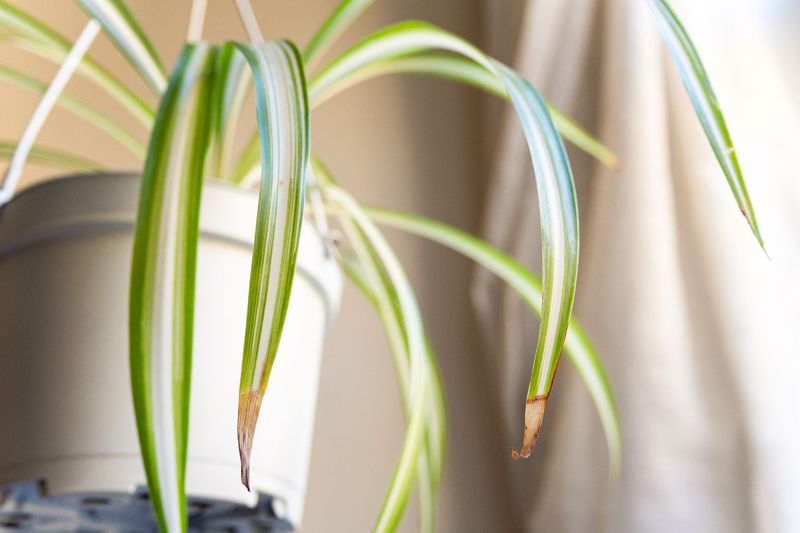
Crispy brown tips on your spider plant are frustrating, but they are not a verdict. The same symptom shows up for several different reasons, so the tips alone cannot tell you which one is at work.
According to UW-Madison Extension, spider plant browning can come from low humidity, soil that gets too dry, salt buildup, too much fertilizer, or chemicals in the water. Overwatering and poor drainage can also hurt the roots.
Iowa State University Extension describes a similar mix of causes for houseplants in general.
That is why this article treats tap water as one suspect, not the culprit. Water quality is often overlooked, so it deserves a fair look.
Your watering habits deserve a look too, because both can matter at once.
Think of this as a small home investigation. You will learn why tap water is a reasonable suspect, how to test a different water source, and how to check soil moisture, humidity, fertilizer, salts, and drainage.
Then you will judge the results by watching the new leaves, not the old damaged ones.
Good news: spider plants are tough, and most of these checks cost little or nothing. A few weeks of careful observation will tell you far more than guessing from one brown leaf.
Tap-water constituents can injure spider-plant tips
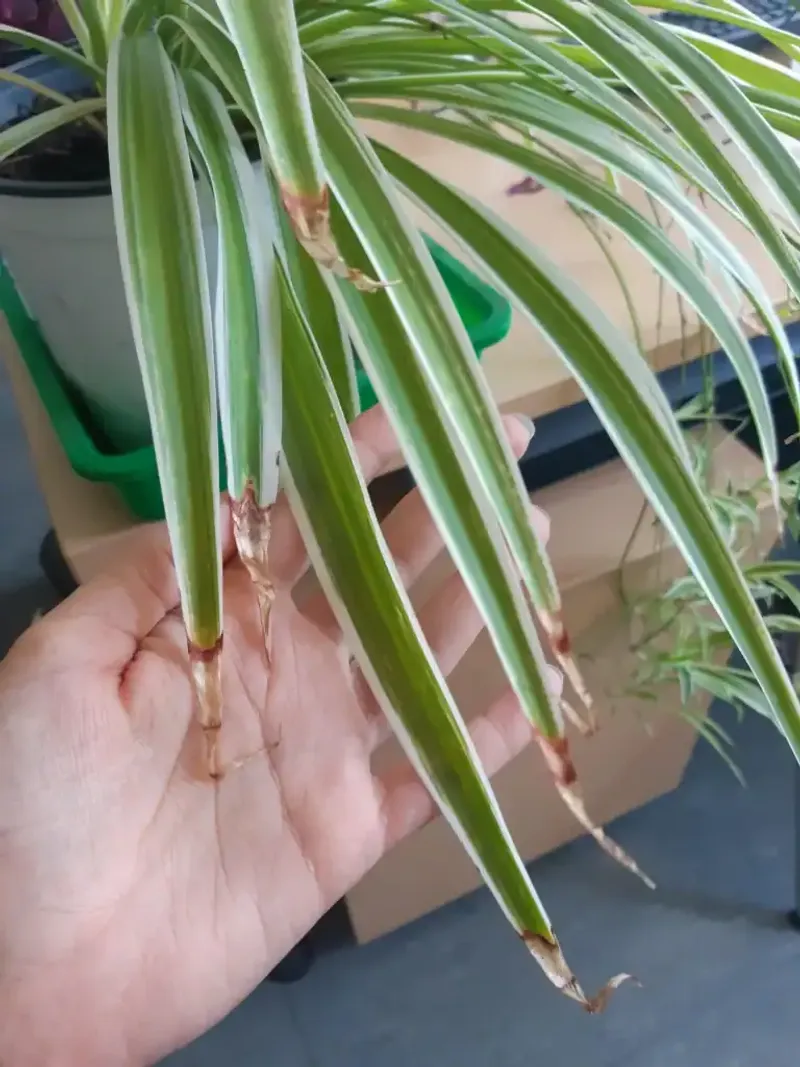
Spider plants have a reputation for being sensitive to what is in the water. NC State Extension lists the plant as susceptible to tip burn from fluoride and chlorine in tap water.
There is lab-style proof too. In a HortScience study on spider plant tipburn, researchers applied fluoride and saw tip burn develop.
So the idea is not an internet myth. Fluoride can injure the tips of this plant.
Still, that does not mean your plant is a victim. Tap water differs a lot from town to town, depending on the source and how it is treated.
Some households have water that is gentle on plants, and some spider plants shrug off water that bothers others.
Here is a practical clue. If your plant sits in a spot with decent humidity, you water on a sensible rhythm, and you rarely fertilize, yet tips still brown, water quality moves higher on the suspect list.
If the soil is bone dry between waterings or the pot is crusted with white residue, other causes may be leading.
The research makes water a fair thing to test. It does not make water a sure answer, which is why a simple trial comes next.
Test a different water source
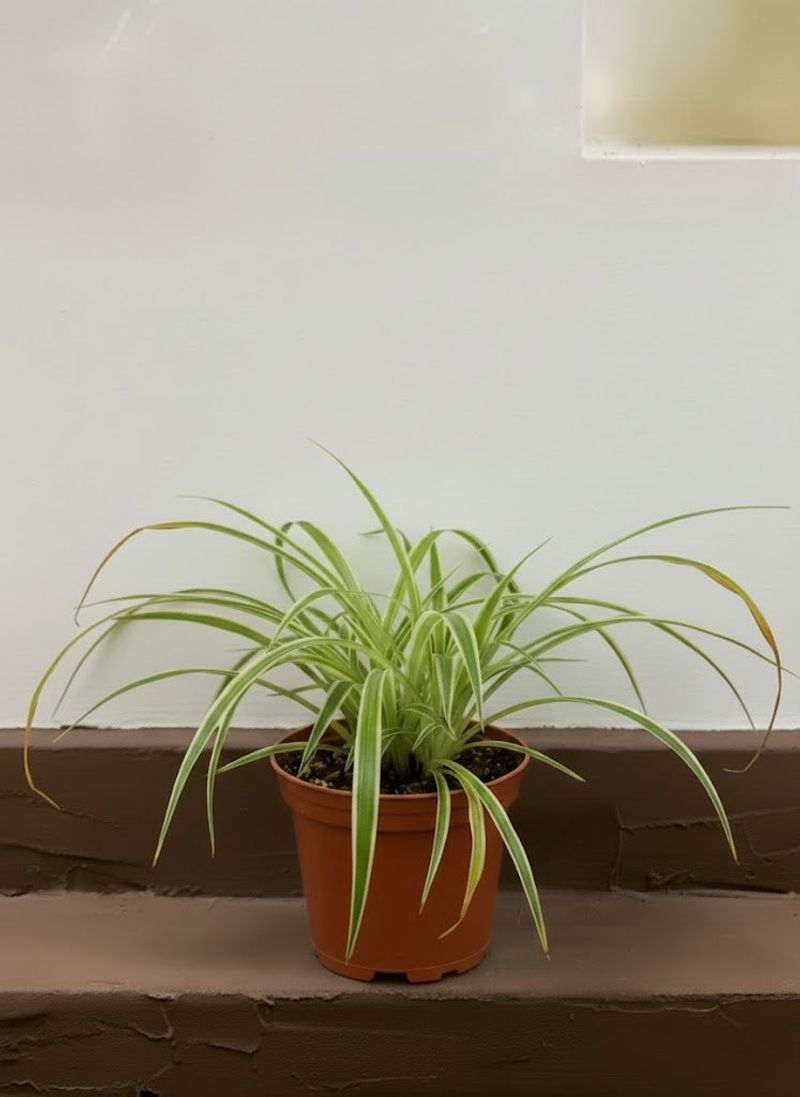
The easiest way to learn whether your water matters is to change it for a while. UW-Madison Extension suggests switching to rainwater or distilled water if tap water chemicals may be the problem.
Start by using the alternative every time you water, for at least a couple of months. Keep everything else steady, including light, fertilizer, and pot.
Changing five things at once makes the results impossible to read.
Write down the date of the switch. Then watch the newest leaves as they unfurl from the center of the plant.
If they come in with clean green tips while older leaves stay brown, water quality may have been contributing.
Here is the part that surprises people. Existing brown tissue is damaged and will not turn green again.
You can trim the brown ends with clean scissors if they bother you, but the plant is not failing to heal. It simply cannot repair dead leaf tips.
Be honest about what this trial can and cannot do. If new growth improves, that is a helpful sign, not courtroom proof.
If new leaves still brown, your water was probably not the main driver, and it is time to look at the care conditions covered later.
Either result teaches you something, and neither one means you failed your plant.
Choose water that can reduce fluoride
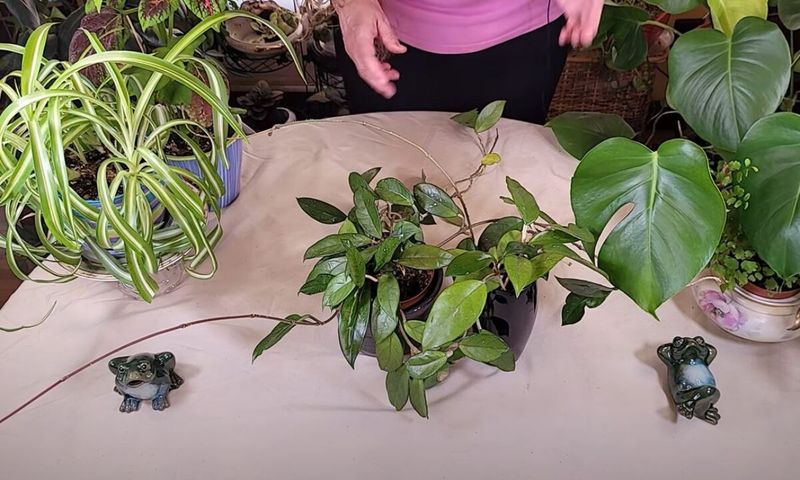
Not every water source handles fluoride equally. Rainwater, distilled water, and reverse-osmosis water are all reasonable options to try, and each has a different trade-off.
Rainwater is free and is the option UW-Madison Extension mentions. Collect it in a clean container, and remember that collected rainwater is not potable, so keep it away from drinking use.
Distilled water from a grocery store is easy and predictable. Reverse-osmosis water is available from refill stations or a home system.
The EPA lists reverse osmosis and activated alumina as technologies used to remove fluoride. A typical pitcher filter is not on that list.
If you want a household filter, look for a specific fluoride-reduction claim, and use the NSF claims guide to understand certifications. Words like “filtered” or “carbon” do not prove anything about fluoride.
One popular tip is to leave tap water out overnight. That helps chlorine escape, but fluoride is dissolved in the water and stays put, as USGS fluoride research describes.
Skip that trick as a fluoride fix.
Pick whichever option fits your budget, and treat it as a test rather than a promised cure.
Check care conditions as well
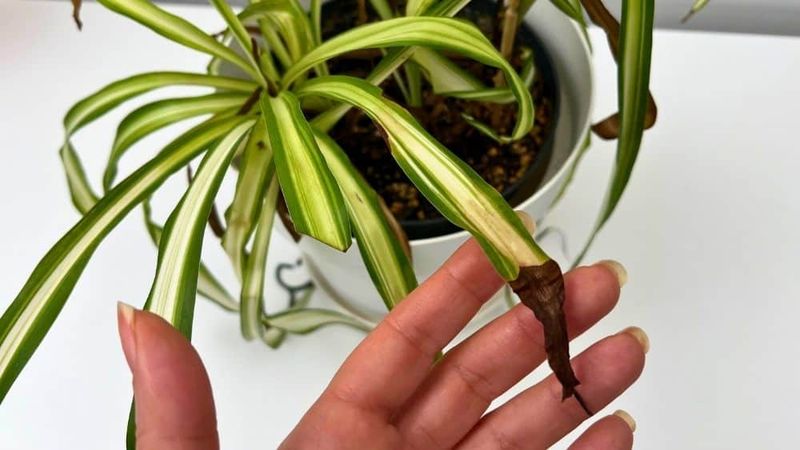
If browning continues after a water change, the plant is likely telling you about something else. Work through the list one item at a time instead of changing everything at once.
Start with soil moisture. Push a finger two inches into the pot.
Water thoroughly until it runs out of the drainage holes, then let the soil dry slightly before watering again, as UW-Madison Extension recommends. Do not simply water more often.
Soil that stays soggy can lead to root rot, and a pot sitting in drained water makes it worse.
Next, look at drainage. The pot needs holes, and the saucer should be emptied after watering.
Heavy, compacted soil that stays wet is a common hidden problem.
Then consider fertilizer and salts. A white or crusty layer on the soil surface or pot rim can signal salt buildup.
Too much fertilizer can cause the same kind of tip damage as dry soil, which is why a plant that gets watered often can still brown. Ask Extension discusses spider plants with brown tips and points to this kind of care review.
Cutting back on fertilizer and flushing the pot with plenty of water through the drainage holes can reduce buildup.
Finally, think about humidity. Winter heating and air conditioning dry the air, and Iowa State University Extension lists low humidity among causes of brown leaf tips.
Move the plant away from vents and heaters, or group it with other plants.
No single clue proves the cause. Change one thing at a time, and compare new leaves after a few weeks.
Judge progress by new growth
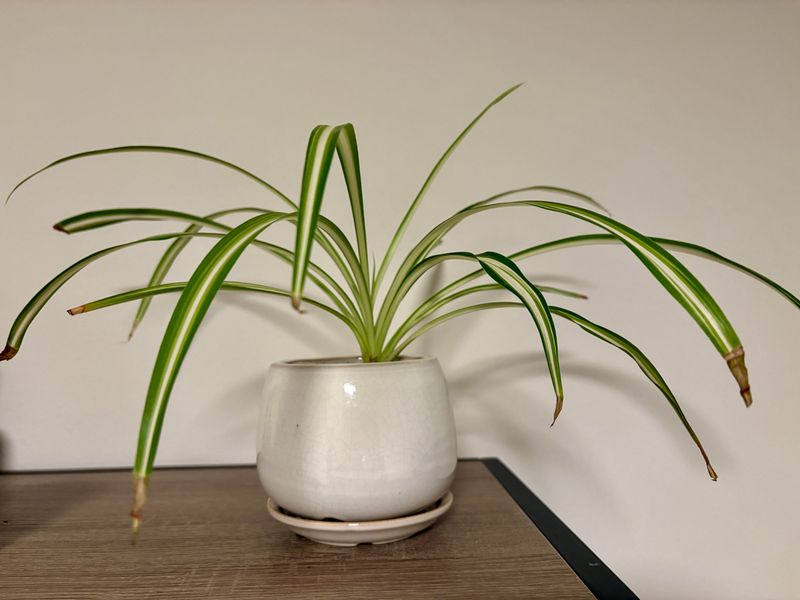
Here is the plan in short. Try rainwater, distilled water, or reverse-osmosis water, water thoroughly and let the pot drain, and give the soil time to dry slightly between waterings.
Keep notes, and change only one thing at a time.
Then look at the newest leaves, not the old ones. Clean new tips suggest your changes are helping, which fits what UW-Madison Extension advises.
If new leaves still brown, go back through humidity, fertilizer, salts, and drainage.
A spider plant forgives a lot. Judge it by the leaves it grows next, not the ones it already lost.