
Why One Good Soaking Rain Won’t Undo This Fall’s Drought Damage To Your North Carolina Trees
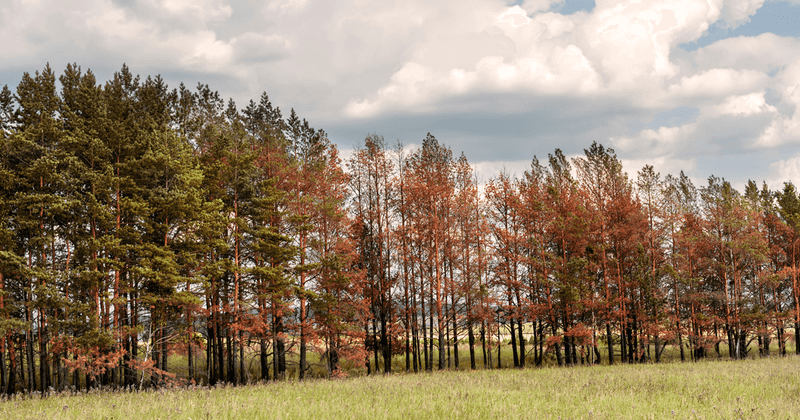
The heavy rain finally came, and many North Carolina yards got a real drink. It feels like the worry should be over.
But rain on the surface and water at the roots are two different things, and trees that struggled through dry weather may still be working through the stress. Here is how to check your own yard and decide what your trees actually need before winter.
Recent rain brought relief, but conditions still vary across North Carolina
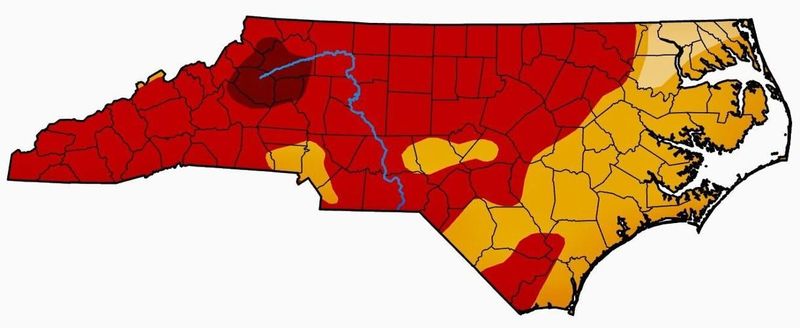
The rain was real, and so was the relief. According to the October 13, 2026 U.S.
Drought Monitor assessment, heavy rainfall substantially improved drought conditions across much of western and central North Carolina, and exceptional drought was removed there. Soil moisture was replenished in parts of the region, which is good news for many trees and shrubs.
Still, a statewide map is a big picture. Dryness persisted in some places that received less rain or had longer-term moisture shortages, and the North Carolina Drought Management Advisory Council tracks how conditions differ by area.
A yard in the mountains, one in the Piedmont, and one on the Coastal Plain can each tell a different story.
Your own yard adds more differences. A sandy lot drains fast, a compacted clay lot may shed water as runoff, and a sloped bed can lose much of a downpour before it soaks in.
Two neighbors can get the same rain and end up with very different moisture around their trees.
So the useful question is not whether it rained, but whether the water reached your tree’s root zone. The rest of this article walks through how to find out, what to do if the answer is no, and what to leave alone if the answer is yes.
Drought stress can linger where it occurred
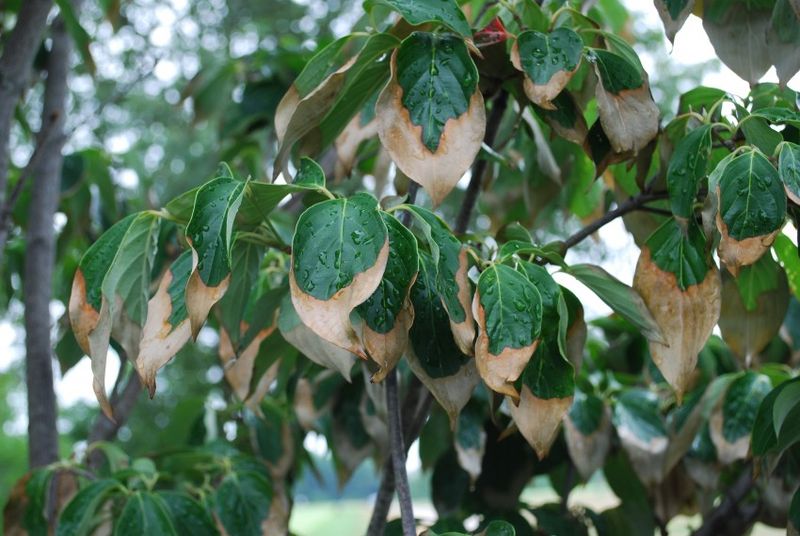
Trees under water stress can show it in several ways. NC State guidance on drought stress describes wilting or curled leaves, brown leaf edges known as scorch, early leaf drop, smaller or thinner foliage, and twig dieback as possible warning signs.
Those signs are clues, not a diagnosis. Wilting and browning can come from other causes, including root problems, disease, insects, or too much water, as the NC State Extension Gardener Handbook points out.
A brown leaf edge alone cannot tell you what happened.
If drought did injure a tree, rain does not undo it overnight. Leaves that already scorched stay scorched, and twigs that died do not come back.
Water helps a tree recover going forward, but it cannot restore tissue that is already gone.
Some drought-stressed trees also decline later. An NC State specialist notes that trees may die one to three years afterward because of drained energy reserves, reduced roots, and pests.
That is a possible outcome for some trees, not a fate for every tree that had a rough summer, and recovery time varies by species, age, and site.
Recently planted trees deserve extra attention. Their roots are still spreading, and NC State says they generally need supplemental water for their first one to two years.
Check whether rain reached the roots
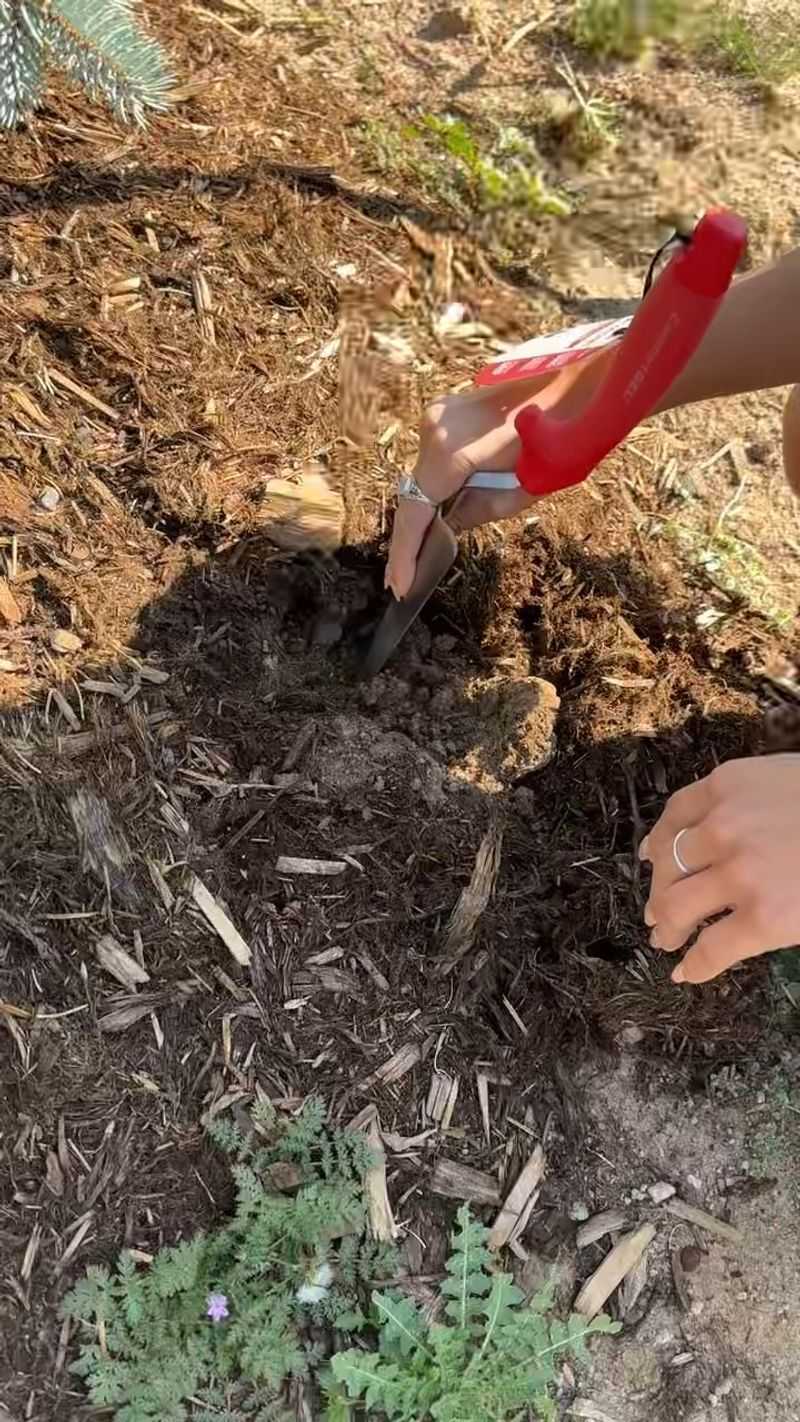
Grab a trowel or a long screwdriver instead of trusting the rain gauge. The NC State Extension Gardener Handbook suggests aiming to wet the soil roughly 1 to 3 feet deep for woody ornamentals, and it recommends digging to see how far water actually went.
Pick a spot under the canopy and out toward the dripline, then dig down several inches or more. Squeeze a pinch of soil from the deeper layer.
If it feels cool and damp and holds together a bit, moisture reached the roots there. If it crumbles dry, the rain may have stayed near the top.
A damp surface can fool you. A brief or hard rain can wet the top inch or two while the deeper soil stays dry, especially on slopes where water runs off.
Soil type and compaction matter too, since packed clay soaks up water slowly while sandy soil drains quickly.
The reverse also holds. If the soil is already wet at root depth, adding water does nothing helpful.
Penn State Extension notes that saturated soil can deprive roots of oxygen, so soggy ground is a reason to hold off.
Check a few spots around the yard, since a low corner and a hillside may give very different answers. Your findings, not the forecast, decide what happens next.
Water slowly and deeply only when the root zone needs it
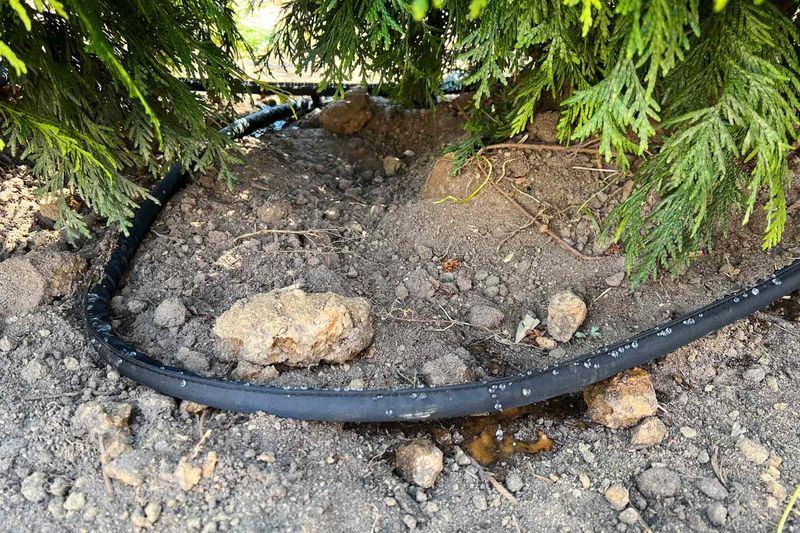
If your soil check shows dry ground at root depth, slow and deep is the way to go. A gentle trickle lets water soak down instead of running off, while quick, shallow sprinkling mostly wets the surface and encourages shallow roots.
A soaker hose or a hose set to a slow drip works well.
Where you water matters as much as how. Roots reach well past the trunk, and the NC State handbook says the root zone can extend two to three times the distance from the trunk to the dripline.
On a larger tree, watering only beside the trunk misses much of the root area.
You will see numbers for how often to water. The handbook says established woody plants may need water about every 10 days during prolonged dry spells, and an NC State specialist recommends slow, deep watering every 7 to 10 days for drought-stressed trees.
Treat those as starting points, not a calendar.
Your real schedule shifts with soil moisture, recent rain, species, tree age, slope, and soil type. The handbook also notes that plants need less water in cool seasons, so a fall or winter routine should usually be lighter than a July one.
Before you turn on a hose or sprinkler, check for local water restrictions. Watering also cannot promise that an injured tree will pull through, but it gives a stressed tree its best chance.
Protect vulnerable roots through fall and winter
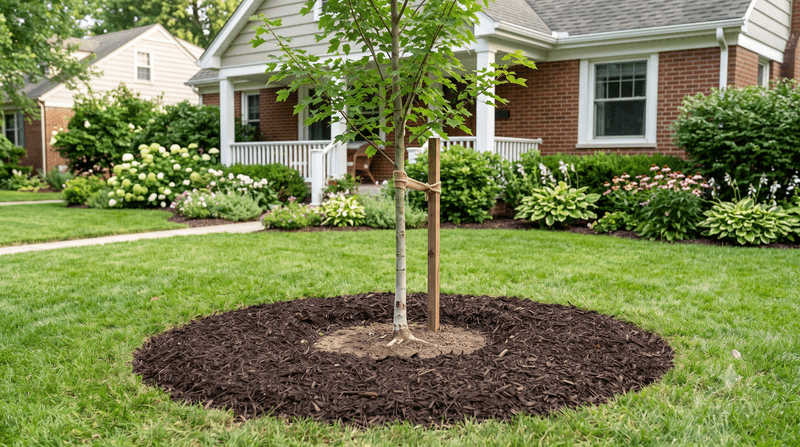
Mulch is a simple helper. A layer over the root zone helps conserve soil moisture and moderate soil temperature.
The NC State tree specialist suggests 2 to 4 inches, kept a few inches from the trunk, while the Extension handbook recommends 2 to 3 inches with at least 6 inches of clearance.
Keep mulch off the trunk itself, and spread it wide rather than piling it up like a volcano. Mulch protects what is there, but it does not reverse injury a tree has already taken.
Evergreens and recently planted trees need the closest watch heading into winter. NC State Extension notes that evergreens keep losing water through their needles in winter and cannot take up water while the ground is frozen.
That is why a dry fall can show up as brown needles later.
The same guidance advises watering as needed through winter when conditions allow, meaning the ground is not frozen. A mild day in the Piedmont or on the Coastal Plain can be a good time to check soil and water a thirsty evergreen.
Skip the fixed calendar. Check the soil every few weeks, especially after a dry stretch, and follow local rules by checking with the NC Drought Management Advisory Council before irrigating.
Let soil conditions—not one storm—guide the next step
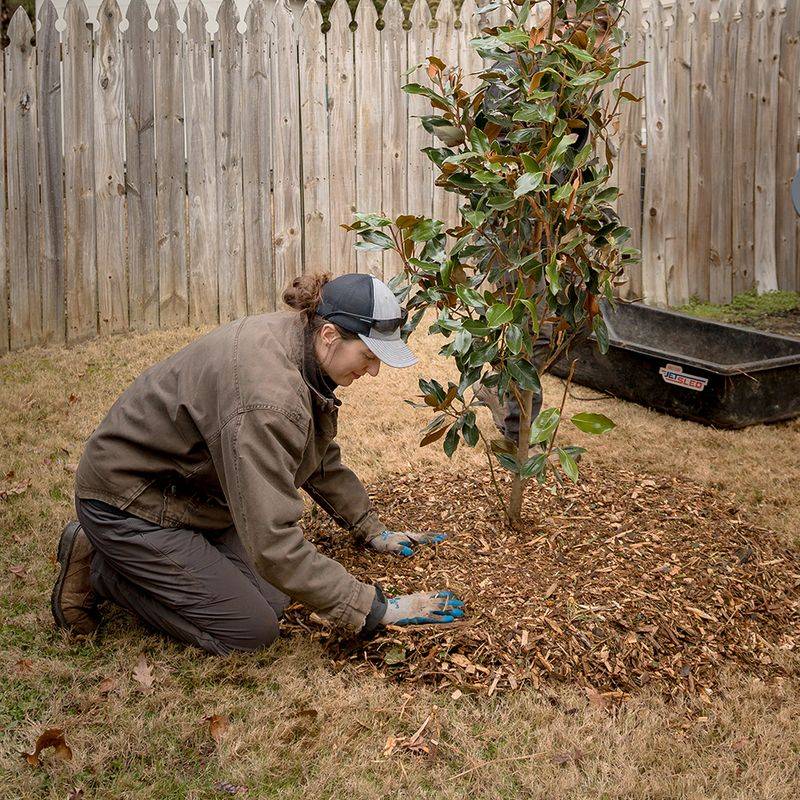
The recent rain may well have helped your yard, but it cannot promise that every root zone is refilled or bring back leaves and twigs that were already lost. Dig a few inches, feel the soil, and water only where it is dry at root depth, as the NC State handbook advises.
Keep an eye on newer trees and evergreens, and remember that odd-looking leaves do not prove drought, while a stressed tree will not necessarily decline, as NC State explains. Recovery has no set timeline, so patience counts.
A tree tells its story slowly, and the soil tells you what to do today.