
Clematis Barely Bloomed This Year? Check Its Pruning Group Along With Light and Winter Damage
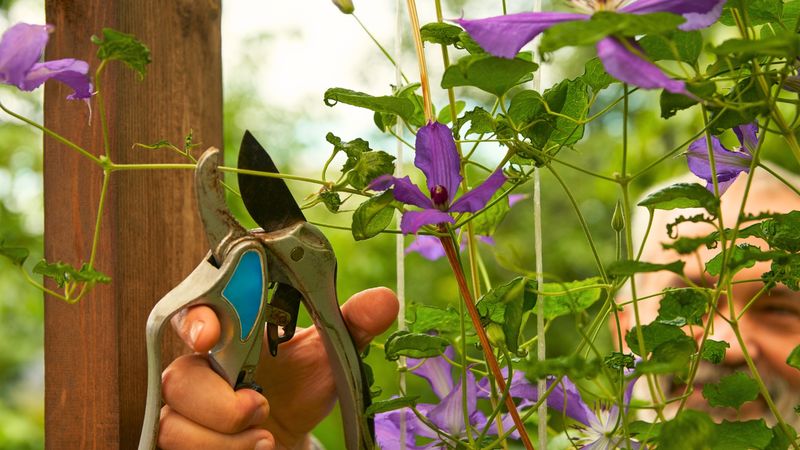
A clematis that gives you only a few flowers can leave you wondering what you did wrong. One thing worth checking is its pruning group, because different clematis make their flowers on different stems.
A cut made at the wrong time can snip off the stems that were carrying buds. Pruning is only one possible cause, so here is how to check it safely and what else to look at.
Pruning group is one factor to check
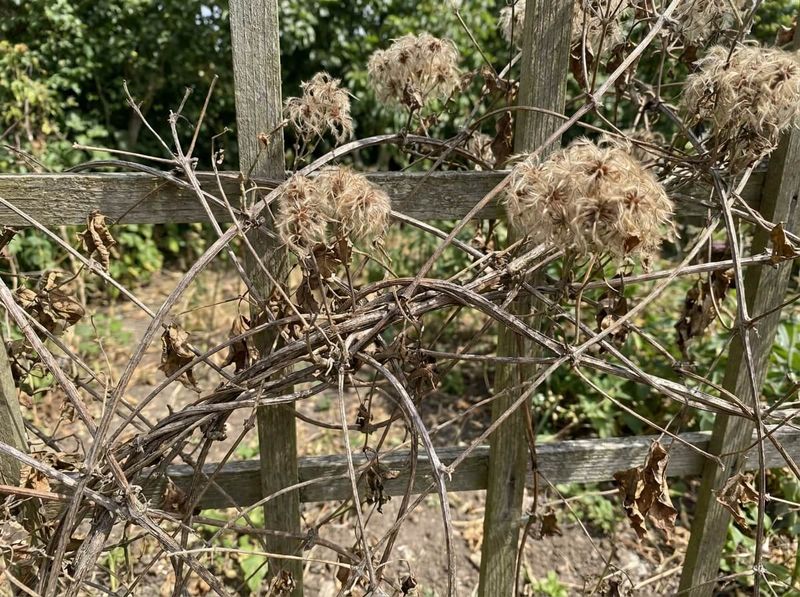
Clematis are sorted into three pruning groups, and the groups differ in where the flowers form. Some bloom on stems grown last year, some bloom on stems grown this season, and some do both.
That is why a single cut can mean very different things for two vines that look alike in winter.
Here is the risk. If your clematis blooms on last year’s stems and you cut those stems back hard, you remove the buds before they open.
The plant grows back, but you may see few flowers, or flowers that arrive late. The Royal Horticultural Society pruning guide explains that the right pruning time depends on the group for exactly this reason.
Still, a wrong cut is not proven to be behind most bloom problems. A plant that gets too much shade, a vine hit by winter damage, or a young clematis that has not settled in can all produce few flowers.
An Ask Extension answer on a non-blooming clematis lists several of these possibilities side by side.
So think of the pruning group as one useful clue, not a full diagnosis. Knowing it helps you avoid a cut that costs you flowers next year.
It also gives you a calm, simple starting point before you pick up the shears.
Use the label and flowering pattern as clues
Start with the easiest evidence, the plant tag. If you still have it, the cultivar name or the pruning group number is your best starting point.
If the tag is gone, an old receipt, a nursery order, or a photo from planting day can help you find the name.
No tag at all? Then watch the plant’s flowering pattern as a supporting clue.
Note whether it blooms in spring, in summer, or in two rounds. Write the dates down this season so you can compare them next year.
Be careful about reading too much into bare stems. Last year’s stems on a clematis often look much alike in winter, so their appearance alone does not reliably tell you the group.
An Illinois Extension reply on a clematis question points gardeners toward the variety and bloom habits instead.
Late flowering also needs a cautious reading. A vine that blooms only late may be a Group 3 plant.
It may also be a Group 2 plant that lost its old growth over winter and had to flower on new stems, as noted in Iowa State guidance on growing clematis.
Treat all of this as clues, not an exact test. When the clues disagree, hold off on any big cut and keep gathering notes.
Group 1 usually needs little routine pruning
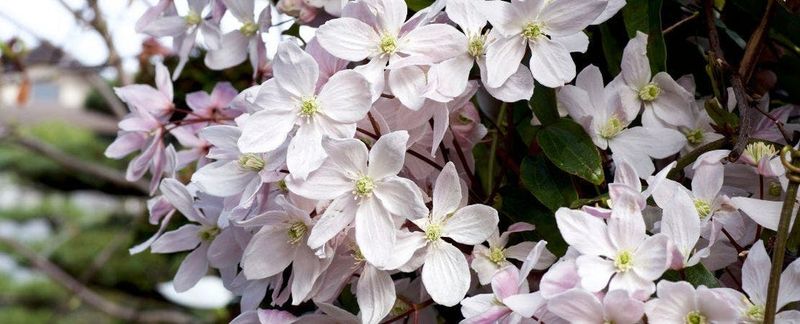
Early bloomers in Group 1 flower in spring, and they do it on stems that grew the previous year. Those stems are the ones carrying this year’s buds.
A hard cut in fall or winter takes the flowers away before they have a chance to show.
The good news is that Group 1 plants often need very little routine pruning. Leaving one mostly alone can be a perfectly good plan.
The RHS pruning guide describes light attention for this group, with most of it done after flowering.
If the vine gets tangled or outgrows its spot, wait until the blooms fade. Then trim or thin it right away, so the new growth that follows has the rest of the season to mature and set next spring’s buds.
Remove anything clearly dead or broken at that time as well.
Check your own habits too. If you have been cutting a spring bloomer back every fall, that routine could be part of the story.
Stopping the fall cut costs nothing, and it is an easy change to try.
Other plant care details matter, and the Clemson Cooperative Extension clematis fact sheet is a handy reference for the broader picture. For this group, the main rule is simple: when in doubt, put the shears down.
Group 2 can flower on old and new growth
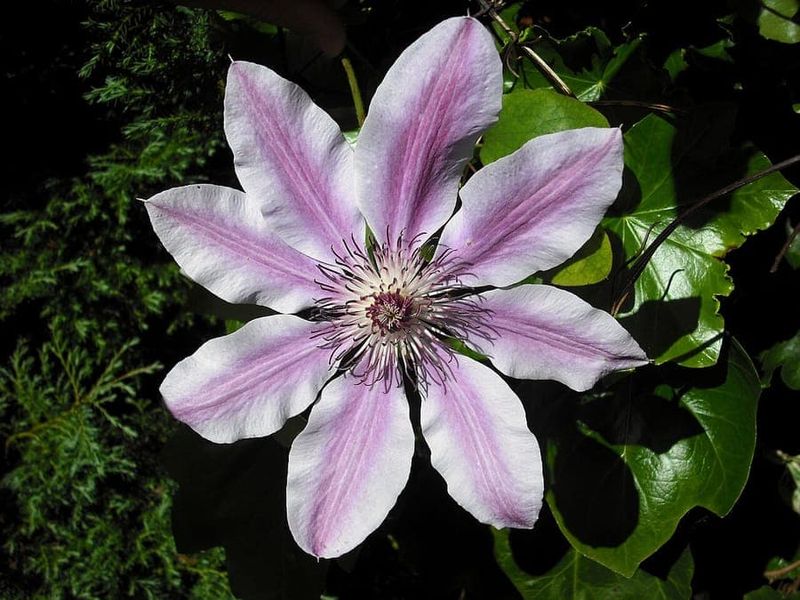
Many gardeners know Group 2 for its big, showy flowers. These plants often put out an early flush on stems from last year.
They may then bloom a second time on new growth later in the season.
That two-part habit changes how you prune. Try to keep as much live old growth as is practical, because those stems hold the early flowers.
Take out the stems that are dead or weak, and leave the healthy ones in place. The RHS guide describes this lighter approach.
Avoid a severe cut if you want those early flowers. Cutting everything to the ground may still give you a later show from new shoots, but you give up the first round.
A mistimed cut costs a flush, not usually the plant.
Winter can play a part here too. Iowa State notes that losing much of the old growth over winter can lead to poor flowering.
Clemson’s fact sheet is another place to compare advice for your own area.
Compare this with the other groups. Group 1 usually gets minimal pruning, and Group 3 gets a real cutback.
Group 2 sits in the middle, with careful tidying rather than a big chop.
Group 3 flowers on growth made this season
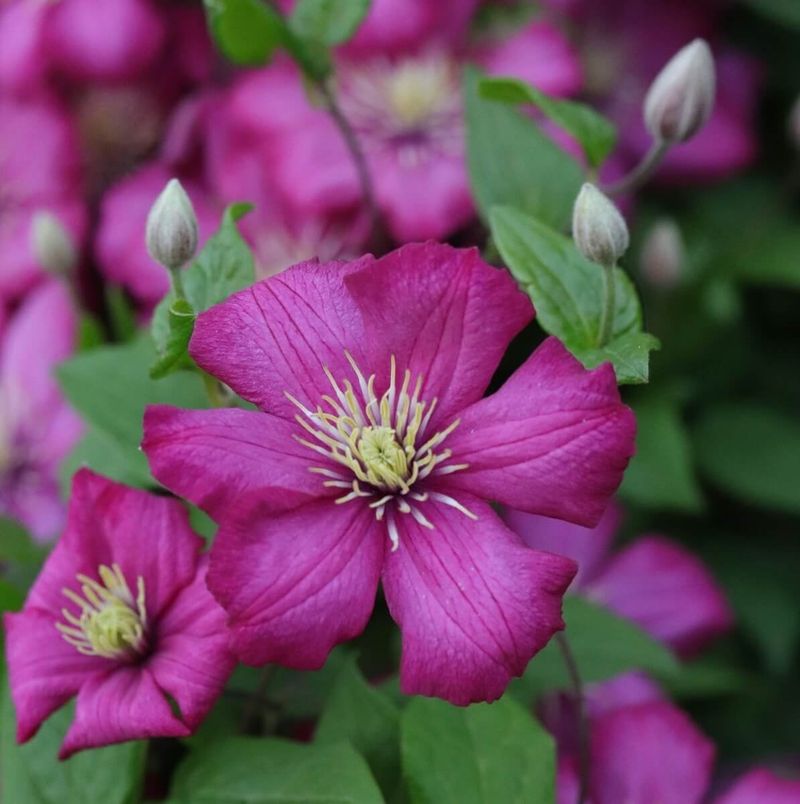
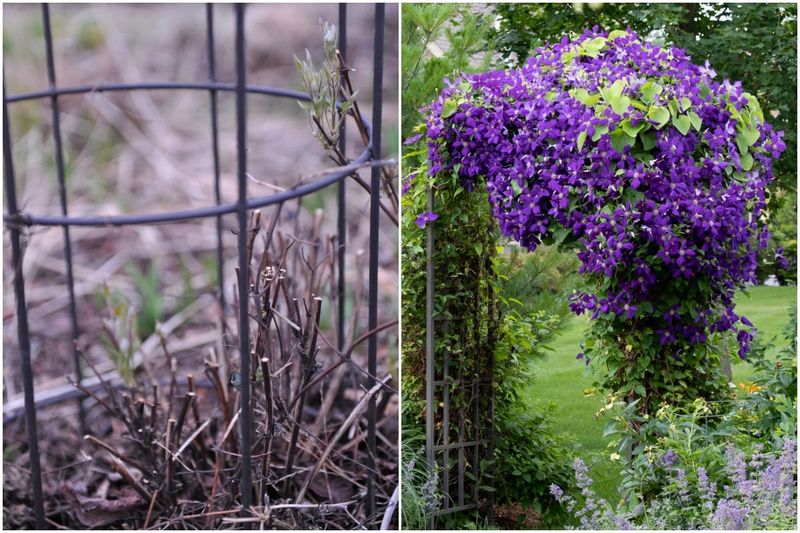
Late bloomers in Group 3 flower on stems that grow during the current season, usually later in summer. Because the flower buds have not formed yet in winter, there are no old buds to lose.
That makes a cutback much safer for this group.
The usual timing is late winter or early spring, before strong new growth starts. Exact timing varies across the country, so watch your local weather and the swelling buds rather than a fixed date.
The RHS guide supports this seasonal approach.
How low should you cut? Iowa State Extension suggests roughly 6 to 12 inches above the ground.
Recommendations differ between sources, though, and Clemson’s fact sheet gives its own guidance, so no single height fits every garden.
Here is the contrast that matters. A hard cut that helps a Group 3 vine could remove the flower-bearing stems of a Group 1 or Group 2 plant.
That is why confirming the group comes before any big cut.
Remember that late flowering alone does not prove a vine is Group 3. If you are not sure, the next section explains a safer path.
When in doubt, wait and check other causes
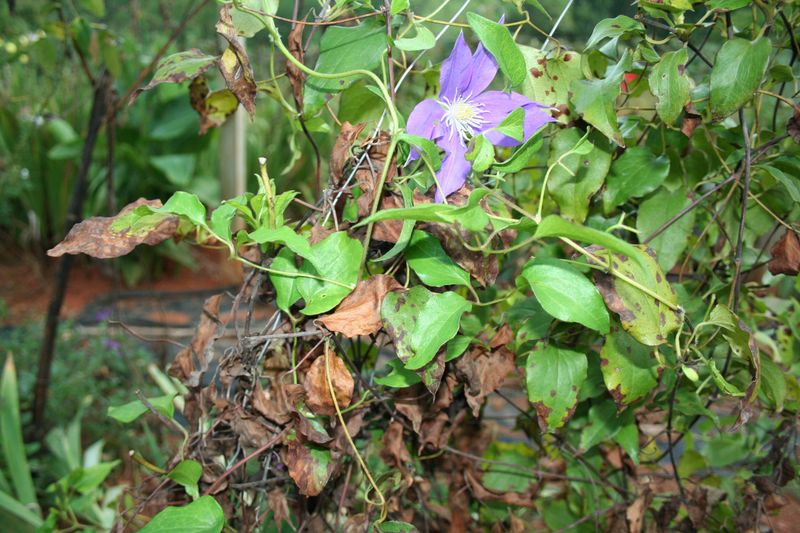
If you cannot tell which group your clematis belongs to, skip the hard fall cut. Wait until the plant leafs out in spring, then see which stems are alive.
Iowa State’s pruning advice recommends waiting for leaf-out to find dead wood on the old-wood types. Keep old growth where you can, and take off only what is clearly dead.
Look beyond the shears, too. Clematis in shade tend to flower less, and an Ask Extension answer lists winter damage and slow establishment among other possible causes.
A young plant may simply need another season, and Iowa State’s growing guide notes the value of a sunny spot for the top of the vine.
Mistakes happen, and they are usually forgivable. Iowa State Extension rejects the idea that a wrong cut kills clematis.
More often you lose some flowers or one flush.
Your plan is simple. Find the variety, match any pruning to the growth that carries its flowers, and skip cuts you cannot explain.
A clematis you leave alone for a season will often forgive you.