
Zinnia Seed Heads Drying On Your Plants Can Give You A Low-Cost Chance At More Flowers Next Season
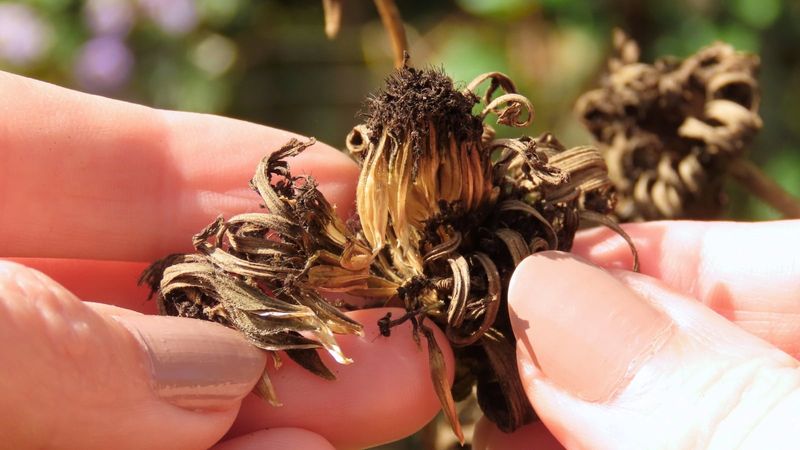
Those crispy, brown zinnia heads you might be tempted to toss could hold next year’s seed. Saving them takes a few simple steps and costs you nothing but a little patience.
You will not get a guaranteed flower bed, and the new plants may not match the old ones. Still, it is an easy way to try growing more zinnias without buying seed.
What makes a dry zinnia head worth keeping?
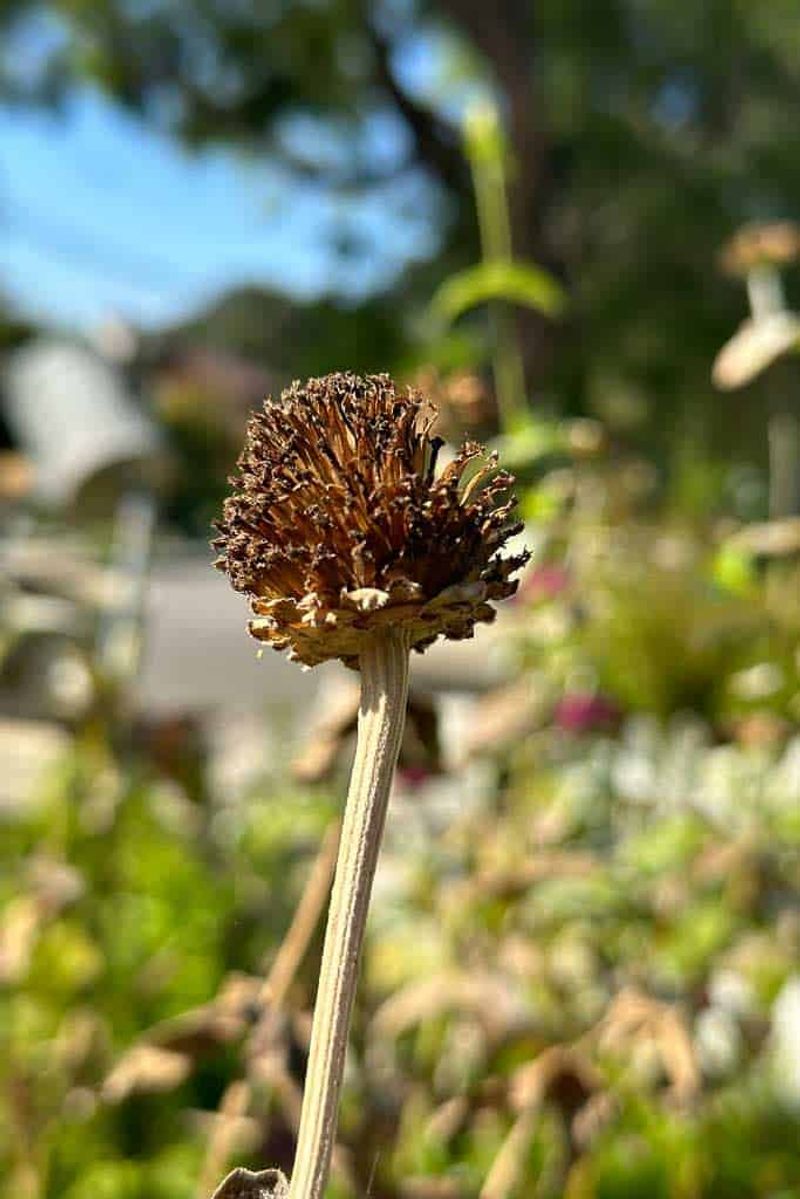
A zinnia bloom looks like one big flower, but it is really a cluster of many small flowers packed together. New Mexico State University Extension notes that viable seed can form in both the ray flowers (the petal-like ones) and the disk flowers (the center).
That is why a dry head can be a handy little seed source.
There is a catch, though. Some of those seed structures are empty, and the sources reviewed do not give a dependable count of good seeds per head.
So the idea that every head holds dozens of seeds ready to sprout is a hopeful guess, not a promise.
Does that make saving seed pointless? Not at all.
Zinnias show up on Iowa State University Extension’s list of flowers that are good candidates for seed saving, so many gardeners find it worth a try.
Think of a saved head as a free ticket to try again, not a guaranteed payout. If you keep several heads, you improve your odds.
Some seed may not sprout, and the plants that do come up may look a little different from the ones you started with. Growing them will still take soil, water, and some of your time, but you will not need to buy the seed itself.
Let selected blooms mature before you cut them
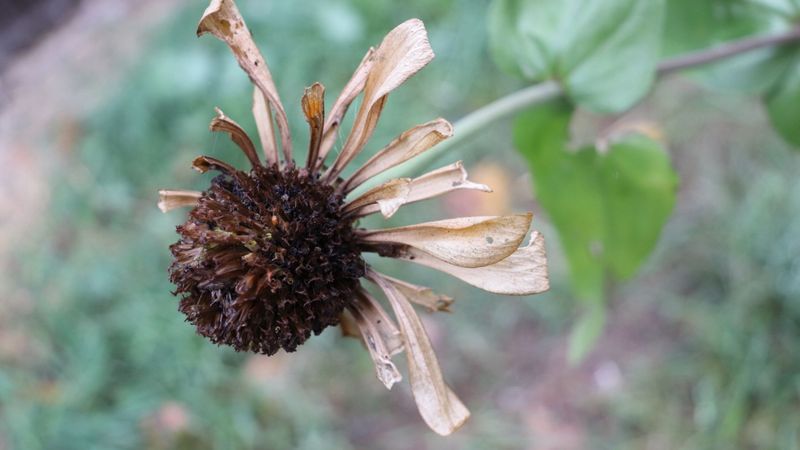
Deadheading keeps zinnias blooming, so you will need to hold back on a few. Pick your healthiest, best-looking plants and let some flowers stay put.
Those blooms are your seed donors.
The signs of readiness are easy to spot. Colorado State University Extension advises harvesting when the head is dry, before it falls apart and scatters.
Seed Savers Exchange points to a fully dry, brown head and a stem that has browned below it.
Timing is a balancing act. A head cut too early may hold immature seed, while one left too long may drop its seed on the ground.
A Colorado State community garden newsletter suggests judging each head by its condition rather than counting days.
Blooms on the same plant often ripen at different times, so check them one at a time. Local weather and bloom dates matter too.
A gardener in a warm, late-frost area may harvest weeks after someone farther north, and that is perfectly normal. Heads that are green or soft at the base can wait a little longer.
Finish drying heads that are still damp
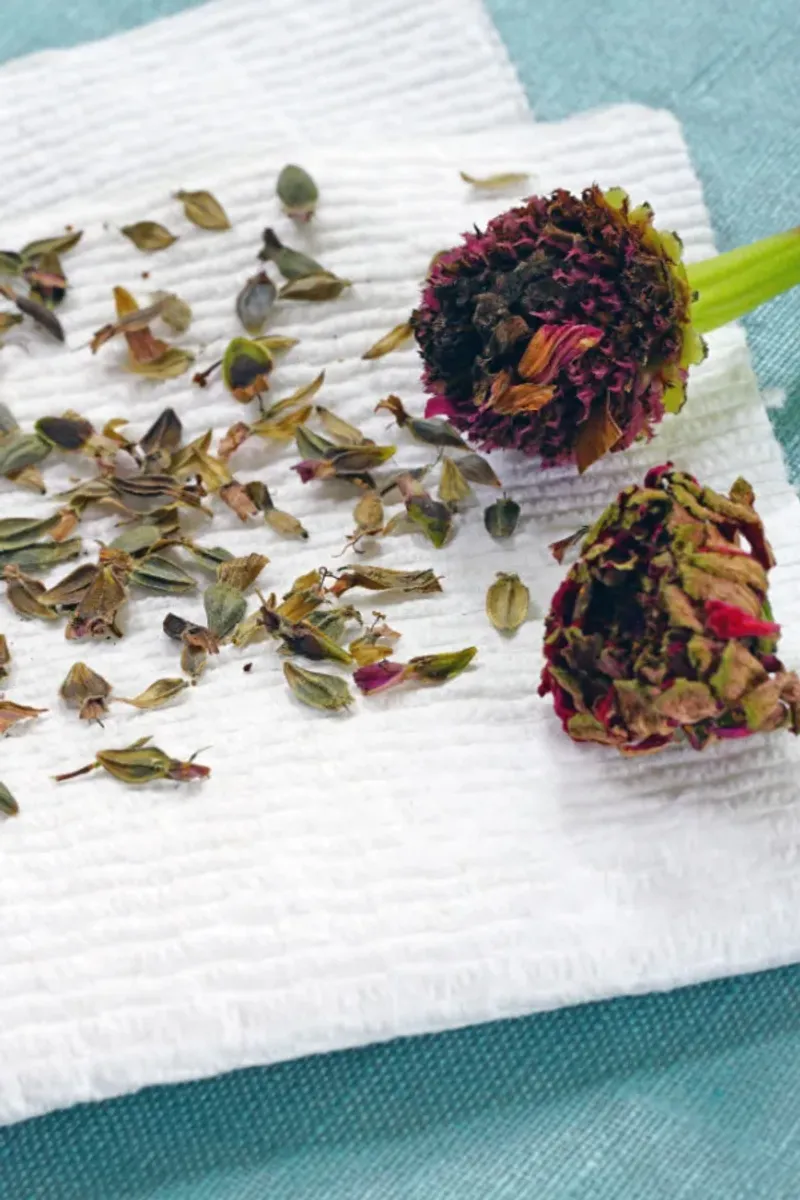
A rainy stretch can leave heads damp, or a head may be brown but still feel a bit soft in the middle. You can finish the job indoors instead of leaving it to the weather.
Colorado State University guidance suggests drying them inside where air can move around them.
Spread the heads or seeds out in a single layer on a tray, paper plate, or screen. Seed Savers Exchange advises drying them thoroughly before storage.
A room with a breeze or a small fan nearby helps, and a stack of heads piled in a bowl does not.
Give them time and check back. A head is ready when it feels dry and brittle all the way through, with no cool or soft spots in the center.
Moisture is the real enemy here. Colorado State Extension’s storage advice stresses that seed should be dry before it is put away.
If you are unsure, wait another few days.
Keep the whole head or release the seeds
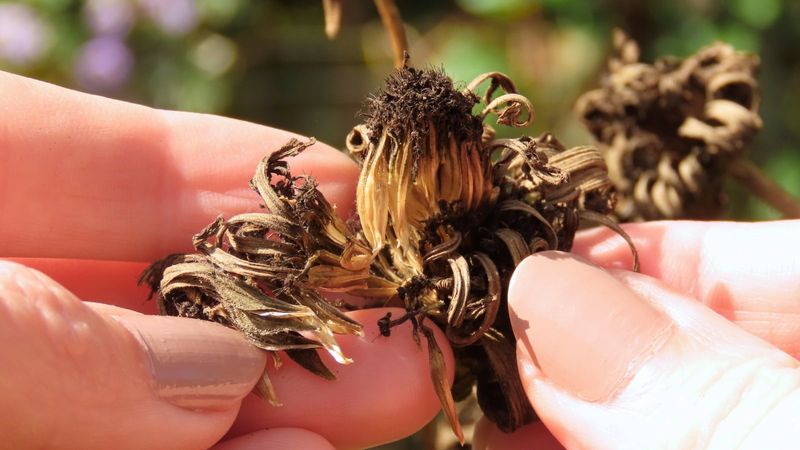
Once your heads are dry, you can go one of two ways. Some gardeners keep the head whole.
Others crumble it gently to free the seeds.
New Mexico State University Extension recommends saving the whole head, partly because picking out the viable seed structures from the empty ones is fiddly work. Keeping it intact skips that chore and lets you sort things out later at planting time.
If you prefer tidy storage, Seed Savers Exchange describes gently crumbling the heads to release the seed. Home gardeners do not need to winnow out every bit of chaff, so a little leftover plant material is fine.
Either way, do not expect every piece in the pile to sprout. Some will be empty, and that is part of how zinnias work.
Plan to sow a bit more thickly than you hope to grow, and you can thin later if too many come up.
Store only dry seed, with its label
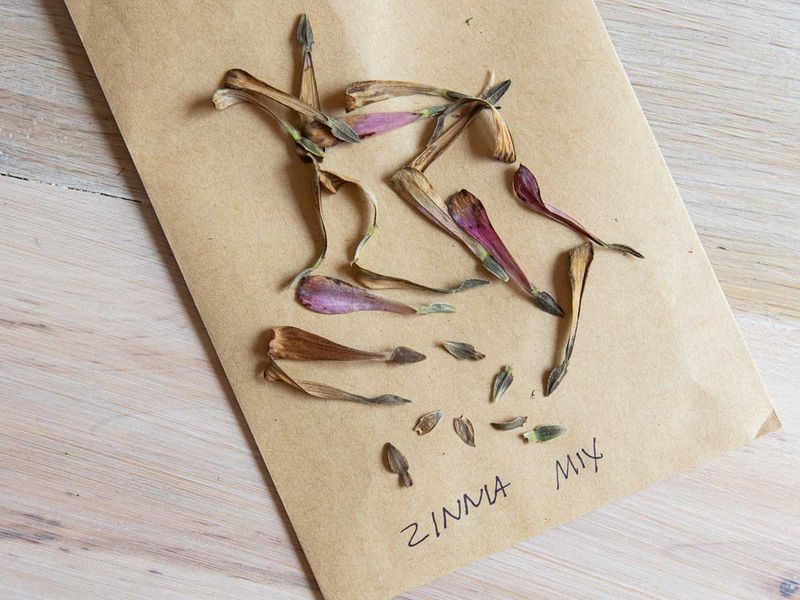
Before anything goes into a container, make sure it is completely dry. Damp seed in a closed jar can spoil.
Once you are sure, label the head or seed with the variety (if you know it) and the year.
Then pick a cool, dry spot. Iowa State University Extension recommends sealed glass jars kept in a cool, dry place.
A closet shelf or pantry often works better than a hot garage or sunny windowsill.
Seed does not last forever. Colorado State University Extension says properly dried seed generally keeps best in cool, dry conditions, and that how well it germinates later depends on seed quality and storage.
If you want to know what you have, Iowa State suggests a germination test about a month before planting. Put a few seeds on a damp paper towel and see how many sprout.
A weak result tells you to sow more thickly or start with fresh seed.
Will next year’s flowers look like this year’s?
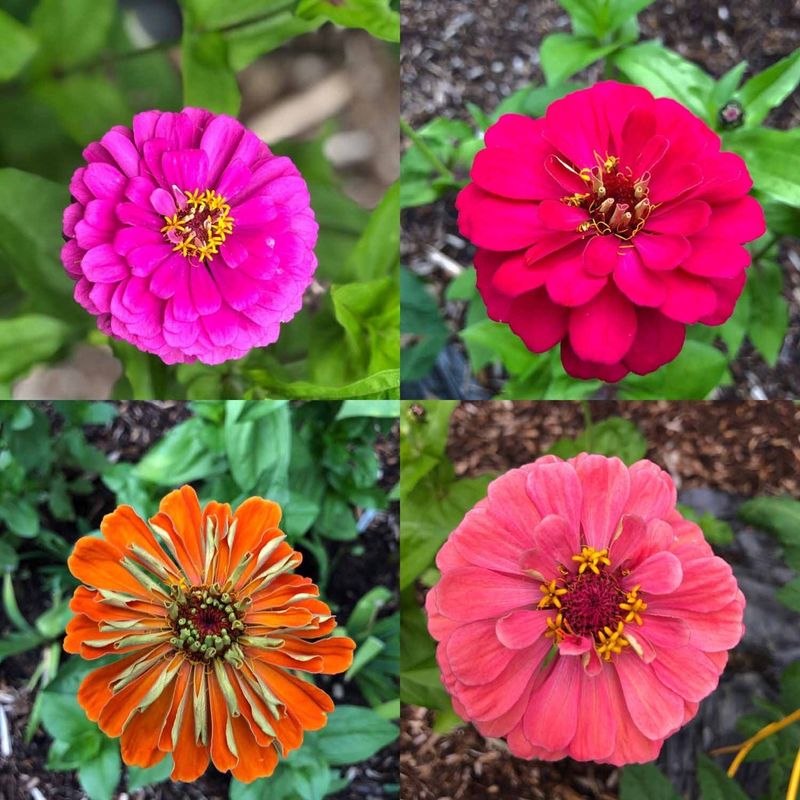
Here is a surprise some gardeners get: the new plants may not match the old ones. If your zinnias were F1 hybrids, their seed generally does not come true to type.
Iowa State University Extension and Penn State Extension both note that seedlings can differ in color, form, or other traits.
Even open-pollinated zinnias can surprise you. Zinnias cross-pollinate, so if other varieties bloom nearby, the seed may produce different-looking plants, as the UC Agriculture and Natural Resources seed-saving guide explains.
For some gardeners, that is half the fun. A pink you did not plant or a petal shape you have never seen can be a happy accident.
If you need an exact color or cultivar, though, saved seed is not a dependable way to get it. In that case, buying fresh seed of that variety is the safer route.
Sow outdoors when frost danger has passed
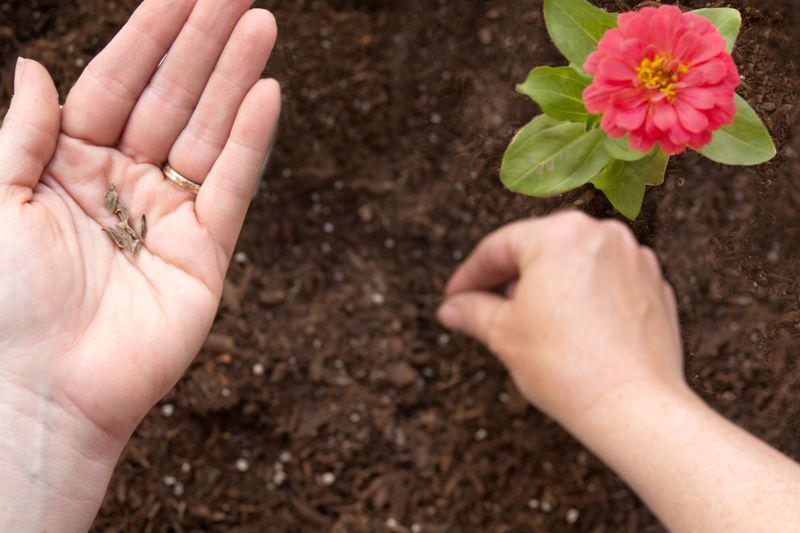
When you plant depends on where you live. Spring is one possible season, but what matters is your local calendar.
Wait until frost danger has passed and the soil has warmed up.
The guidance gives some numbers to work with. Iowa State University Extension’s zinnia instructions recommend sowing seed about one-quarter inch deep.
University of Minnesota Extension says soil should be at least 70 degrees F for direct seeding.
Treat those as helpful recommendations, not rules for every cultivar or growing method. Depth and spacing can vary, so check any details that came with your original seed.
If you kept heads whole, break them up at planting time and sow the pieces. A germination test, as Iowa State suggests about a month ahead, can show whether your stored seed is still lively.
Then you will know how thickly to sow.
Keep the soil lightly moist after planting, and be patient. Not every seed will come up.
A saved head is a low-cost chance to grow more
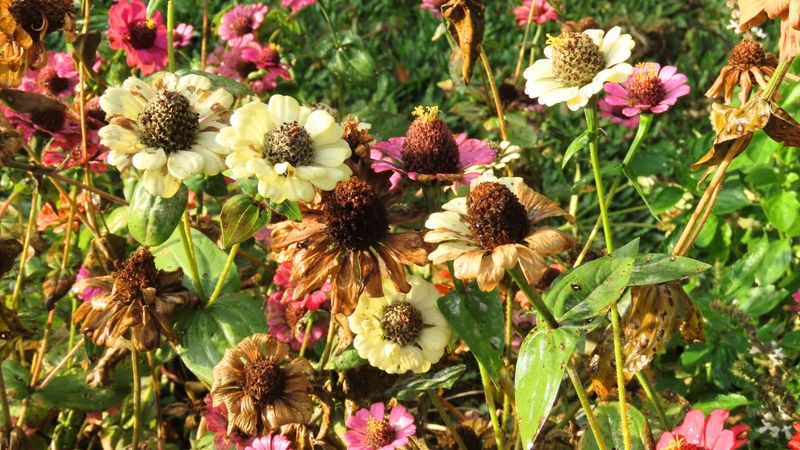
Leave a few blooms on healthy plants, harvest each head once it is dry, finish drying indoors if the weather is damp, and keep it dry until planting time. Those small steps are the whole routine, and Iowa State University Extension backs the basics.
Saving seed spares you the cost of buying that seed. It does not guarantee sprouting, a full bed, or flowers that match this year’s.
Even so, a few brown heads in a jar cost almost nothing to keep, and next year’s garden might thank you for them.