
Could That Fast Basement Spider Be a Wolf Spider? What It Eats and What to Do
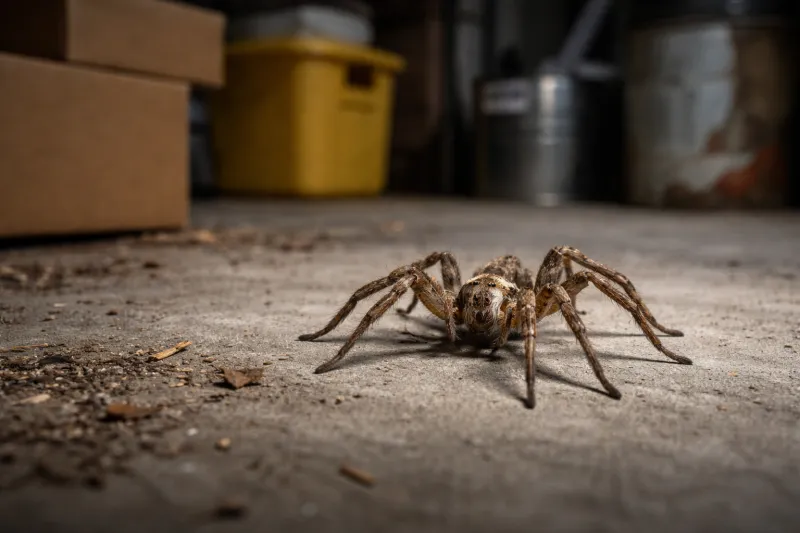
A quick, dark shape darts across the basement floor, and your heart jumps. It might be a wolf spider, a hunter that chases down insects instead of waiting in a web.
Knowing what these spiders do, and what they can’t do, helps you decide whether to leave one alone or move it outside. A few simple checks can keep you calm and safe.
A fast-moving basement spider may be a wolf spider
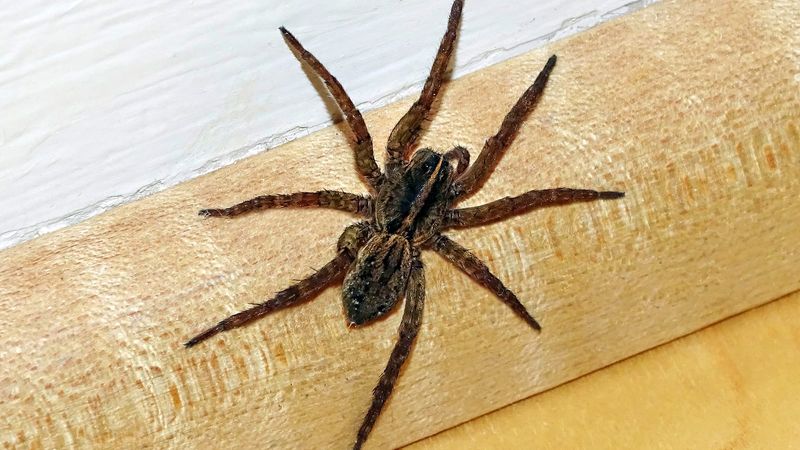
Speed alone cannot tell you what kind of spider just raced past your boots. Plenty of spiders move fast, so a quick sprint is a clue at best, not proof.
A wolf spider is one possibility, and it helps to know how they live.
Wolf spiders are solitary, roaming hunters. Instead of spinning a web and waiting, they wander and chase.
Utah State University Extension notes that they feed on insects and other spiders, and many hunt along the ground, sheltering in places like leaf litter, mulch, woodpiles, or under objects outdoors.
The menu is wide. University of Maryland Extension lists prey that includes roaches, ants, beetles, crickets, and earwigs.
Those are all bugs many people would happily see gone from a basement.
Still, a list of what wolf spiders can eat is not a report on what the spider in your house is eating. You may never see it hunt at all.
Think of it as a general picture of the animal, one that is useful when you decide how to react to a confirmed wolf spider.
If you can’t be sure of the species, treat the spider as unidentified. Give it space, keep your hands away, and read on for ways to size it up safely.
Predator does not mean household pest control
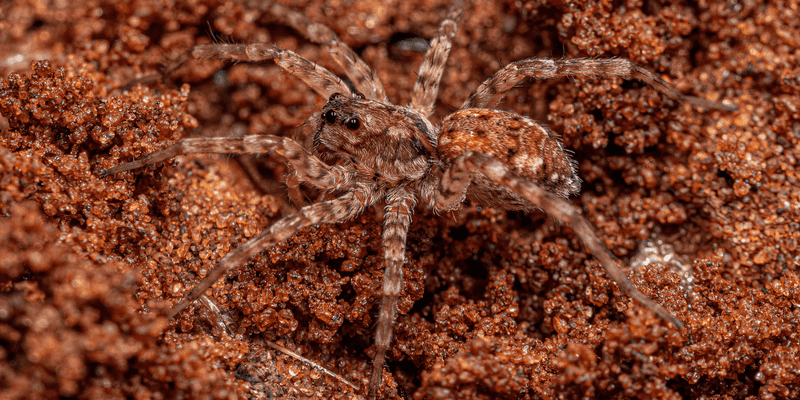
It is tempting to picture a wolf spider as a tiny, free exterminator. The truth is more modest.
Wolf spiders do eat some nuisance insects, but that does not mean one spider can fix a pest problem.
According to Ask Extension, wolf spiders are predators that feed on a range of small creatures. Nothing in that guidance shows that a single spider in a basement will wipe out roaches or any other infestation.
They are generalists, so they eat what they happen to meet.
Picture a basement with a real cricket or roach problem. One spider wandering around might catch a few, but the population can keep growing around it.
If you see many bugs, the better move is to find out why they are there, such as moisture, food, or entry gaps.
Bed bugs deserve a special mention. Wolf spiders should not be counted on as bed-bug control, and nobody should treat one as a plan for that problem.
Bed bugs call for proper inspection and treatment.
As Utah State University Extension describes them, wolf spiders are not generally considered a health hazard. Even so, treat any spider as a visitor, not a pest-control service.
Why a spider may appear indoors in fall
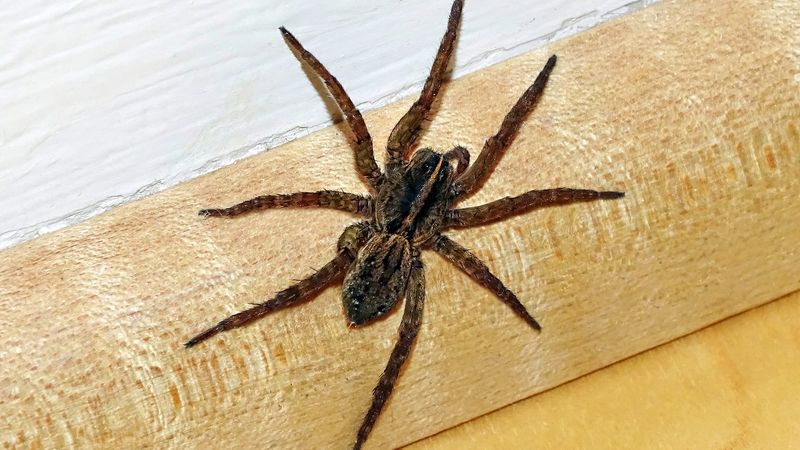
Fall brings a wave of spider sightings, and the reasons vary. Cooler nights push many small creatures to look for shelter, and spiders are no exception.
Some simply wander in by accident through an open door or a gap.
University of Minnesota Extension says spiders may enter homes accidentally, particularly in fall. In other words, the spider on your basement floor may not have been looking for anything.
It may have taken a wrong turn.
Wolf spiders in particular may come inside as the weather cools, according to Ask Extension. Basements are close to the ground, which makes them an easy landing spot for a ground-roaming hunter.
Here is the catch. Not every autumn spider is a wolf spider, and not every one came in for the same reason.
One may have followed prey, another may have hitched a ride on firewood, and another may have been chasing warmth.
So when you spot one, skip the guessing about its motives. Look at where it is, how big it is, and whether you see more than one, then decide whether to leave it or move it out.
Use several clues to assess a possible wolf spider
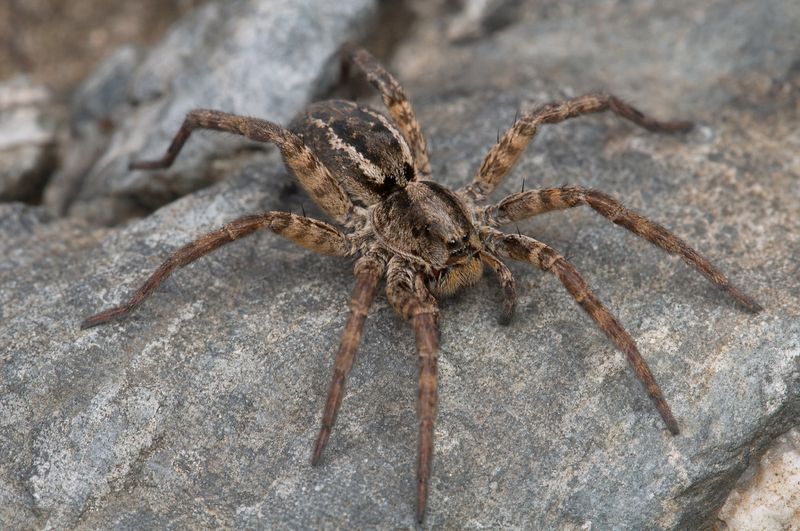
Sizing up a spider works best when you stack several clues together. No single trait settles it, and a casual glance can fool you.
Treat everything below as a first impression.
Wolf spiders are generally dark, somewhat hairy, and fairly robust, and they move quickly. University of Minnesota Extension describes them as roughly a quarter inch to an inch long.
Their size and speed can look alarming, but they are not aggressive.
Some have banded or striped legs, which can help when you compare them with other spiders. Penn State Extension offers more detail on how these hunters look and behave.
Keep in mind that plenty of other brownish spiders share some of these features.
Photos can add to the confusion. Lighting, angle, and a blurry phone shot can hide the very details that matter.
Eye arrangement is one of those details, and as UC Statewide IPM Program explains for recluse spiders, it can be hard to inspect without magnification.
If you are unsure, or the identification matters because someone could be bitten, be cautious. Keep kids and pets back, avoid touching the spider, and consider asking your local extension office to look at a clear photo.
Know when a spider comparison calls for more caution
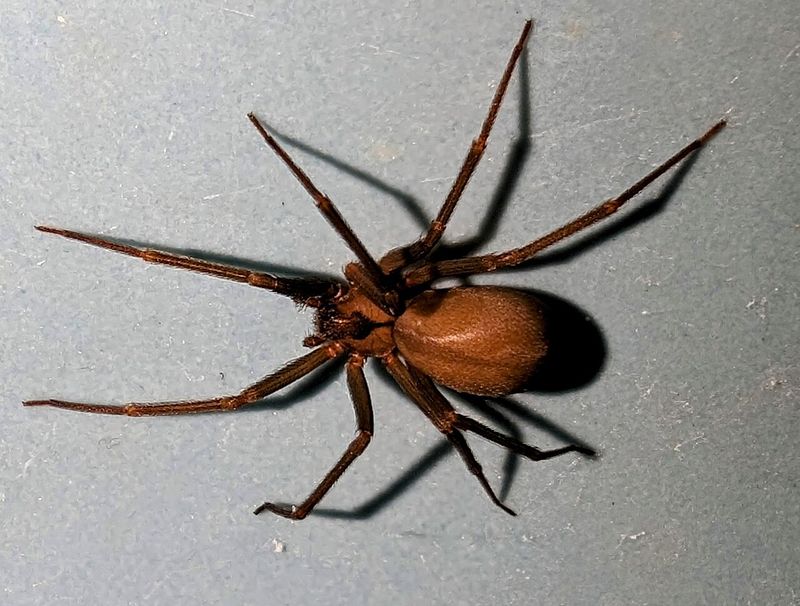
Most spiders in a home pose little risk, but a few are medically significant. In the United States, CDC and NIOSH identify black widows and brown recluses as the main groups.
Comparing them with a wolf spider can help, as long as you remember it is only a rough guide.
Wolf spiders are typically hairy and may have banded or striped legs. Brown recluses have legs and abdomens of a more uniform color.
UC Statewide IPM Program notes that recluses have six eyes arranged in three pairs, but that pattern is hard to see without magnification.
Do not lean on a violin-shaped mark. Virginia Tech Extension cautions that markings can mislead, and a supposed violin alone is not reliable proof.
Brown recluses are also found mainly in the Midwest and South, so range matters.
Black widows carry a red marking on the underside of the abdomen. Even so, nobody can promise a perfect ID at a glance, so keep your distance from any spider you can’t place.
Skin problems are another trap. The CDC Yellow Book notes that reported spider bites are often unreliable, and a sore cannot be diagnosed as a spider bite by looking at it.
If you suspect a bite and symptoms are significant or getting worse, get medical advice promptly.
Move it with a cup and stiff paper

Moving a spider outside takes just a few seconds and two household items. You need a clear cup or container and a piece of stiff paper or thin cardboard.
Stay calm and move slowly.
Place the cup gently over the spider so it is trapped without being squashed. Slide the paper under the cup’s rim, keeping the spider inside as you go.
Then lift the cup and paper together, holding them firmly.
Carry it outdoors and set it down near a woodpile, shrubs, or leaf litter, away from your door. Tip the cup so the spider can walk off.
Ask Extension points to this kind of cup capture and release.
Skip direct handling. Penn State Extension notes that a wolf spider may bite if mishandled or trapped against skin.
That is a defensive reaction, not a sign of an aggressive spider.
If the spider is out of reach or you feel uneasy, it is fine to leave it alone for a while. It may wander off by itself.
Reduce the chances of another spider getting inside

The best way to cut down on surprise visitors is to make your home harder to enter. Start low, since ground-level gaps are the easiest doorways.
Walk the outside of your house and look at the foundation, doors, and windows.
South Dakota State University Extension recommends sealing gaps, repairing screens, and installing tight-fitting door sweeps. These steps also help keep out the insects that spiders follow.
Inside, reduce clutter in the basement. Stacks of boxes, piles of paper, and cluttered corners give spiders and their prey places to hide.
Outside, clear debris and hiding places near the foundation, such as leaf piles, mulch against the wall, and stacked wood.
If you do meet a confirmed wolf spider, you can leave it alone or release it outside. Just don’t count on it to treat an infestation, as Utah State University Extension describes a predator, not a pest-control service.
A tight house and a tidy basement do more over the long run than any single spider ever could.