
What It Really Means When Your North Carolina Lawn Feels Spongy Underfoot This Fall
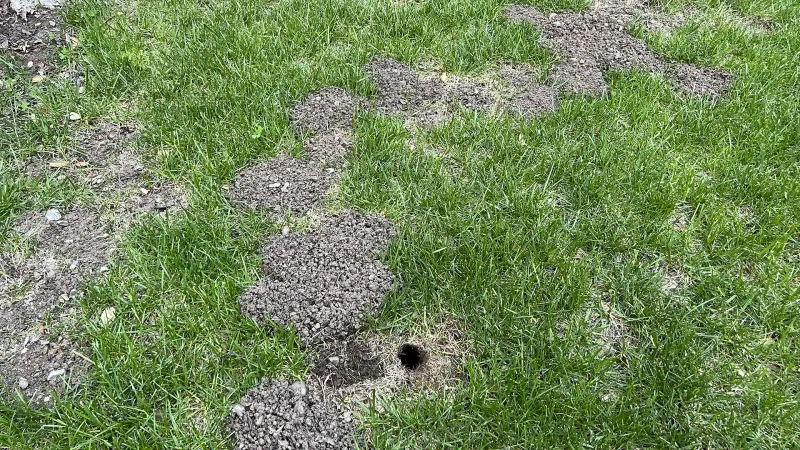
You step onto the grass and it gives way like a damp mattress. Something is going on beneath your feet, and the clue is easy to misread.
In North Carolina yards, a soft spot might point to a mole, a vole, or a patch of hungry grubs. A closer look at the shape of the ground can tell you which one, and whether you need to do anything at all.
Raised ridges make a mole more likely than softness alone
Walk across a soft patch of lawn and you learn very little. Spongy footing is a vague clue, and several different things can cause it.
The shape of the disturbance tells you much more than the feel of it.
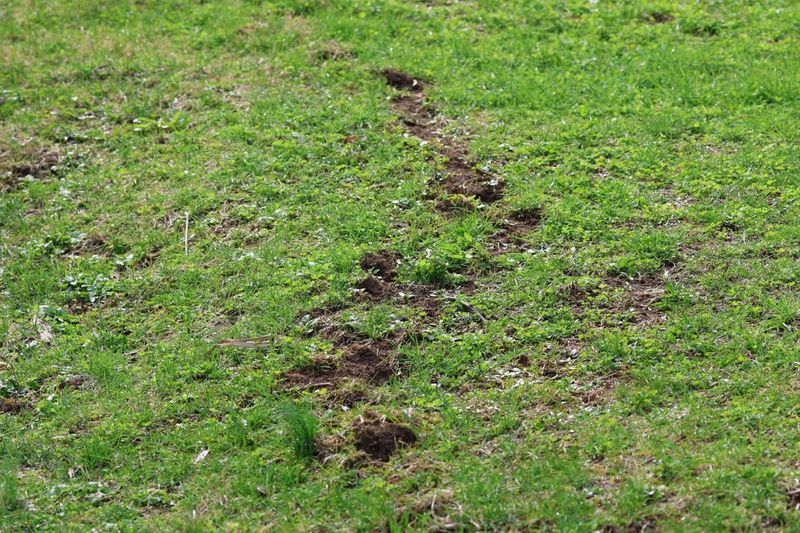
Look for narrow, raised, winding ridges just beneath the grass. When these show up, a mole becomes a likely cause.
NC State’s wildlife guidance explains that moles make shallow foraging tunnels that push the turf upward as the animal moves through the soil. The result looks like a thin, curving rope laid under the grass.
Spongy ground alone is a different story. NC State’s animal damage guide also lists soft, spongy ground among the signs of pine-vole activity.
Grub injury can loosen turf as well, so feel by itself cannot name the animal or insect at work.
Try a slow walk across the yard with a careful eye. Notice whether the soft area is a straight line, a loop, a wandering path, or a broad patch.
Check whether the grass sits higher than the ground around it, and whether you see small mounds of soil. Snap a few photos from low to the ground, since side light makes ridges stand out.
Those details will point you toward the likely cause long before you touch a shovel or a spray bottle.
A mole digs for food beneath the grass
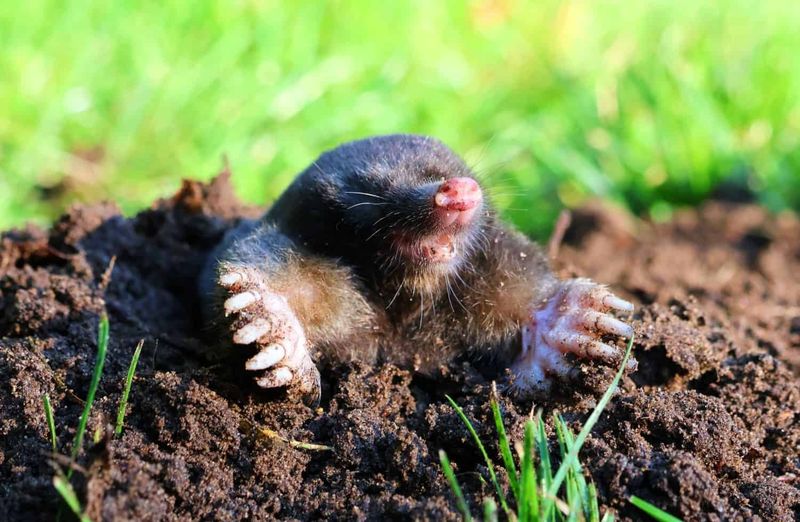
Under the sod, a mole is simply looking for dinner. Moles are not rodents, and you will rarely see one, since they spend nearly all their time underground.
Their eyes are small and mostly hidden, and their broad front feet are built like little shovels.
Shallow runs are the feeding routes. Moles hunt mainly for earthworms and insects, and grubs are one item on that menu.
NC State’s wildlife chapter also notes that deeper tunnels may serve as travel routes, which is why some mounds seem to appear without any ridge nearby.
North Carolina has three kinds: the eastern mole, the hairy-tailed mole, and the star-nosed mole, as described in an NC Wildlife Resources Commission fact sheet. You cannot tell which one you have from a lawn run, so do not try to guess the species from the ridge.
A fresh-looking ridge in fall also does not prove that digging began overnight. You may just be noticing a tunnel that was already there, or one that shifted after rain.
Mole runs can be temporary, and their locations change with soil moisture and food. Fall itself is not shown to be a special trigger, so treat the timing as a quirk of when you happened to look.
Grubs and voles can also leave turf soft
Because soft ground has more than one possible author, the mole idea needs backup. Voles are a good example.
These small rodents eat plants and can gnaw roots, so their signs look different from a mole’s raised ridge.
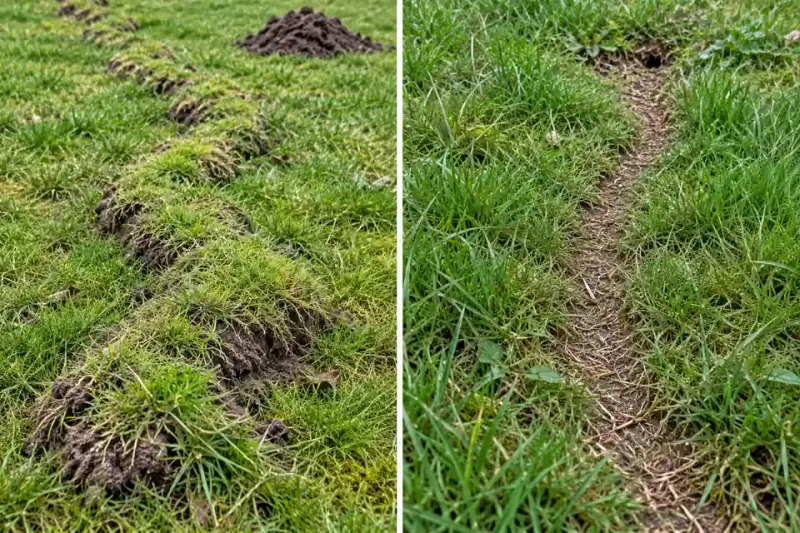
Vole runways are often cut into the grass surface, and you may see clipped blades or small droppings along them, according to University of Maryland Extension. Pine voles are trickier.
They can tunnel underground and damage roots without leaving obvious surface runways, and NC State’s animal damage guide lists soft, spongy ground among their signs.
Grubs are the third suspect. NC State’s turf guidance on white grubs connects grub injury with turf that feels spongy or lifts easily, since feeding cuts the roots that hold the sod down.
Treat each of these as a clue, not a verdict. A raised ridge leans toward a mole, a cut surface runway leans toward voles, and turf that peels back like a loose carpet leans toward grubs.
Several can even show up in the same yard, so look at more than one spot before settling on an explanation.
Mole tunnels can help the soil and still disrupt turf
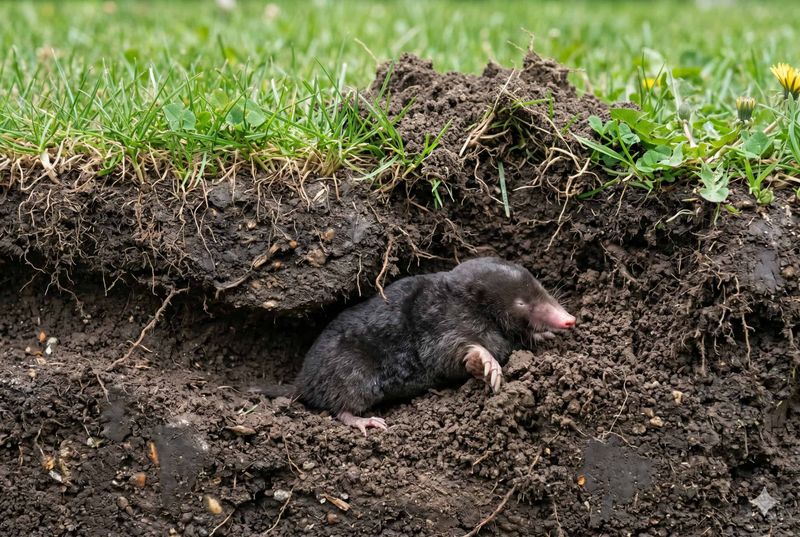
Moles are neither heroes nor villains. Underground, they eat earthworms, insects, and other soil invertebrates, and their digging stirs and loosens the ground.
These are real ecological jobs, as outlined in NC State’s wildlife chapter.
The same digging has a cost. Extensive tunneling can shift soil, dry out shallow-rooted turf, or disturb roots.
A lawn crisscrossed with runs may show brown streaks in a dry spell, and the grass over a ridge can feel loose underfoot.
Other animals sometimes borrow the tunnels too. University of Maryland Extension notes that mole runs may be used by other small mammals, which can add to root trouble that gets blamed on the mole.
None of this means every mole is a lawn pest. A few ridges along a fence line may be harmless, and you can often press them down with a foot and watch whether they come back.
Damage varies by yard, soil, and how many tunnels there are. Ask yourself whether the grass is actually declining or whether the lawn just looks a little lumpy.
That answer should shape how much effort the situation deserves.
Inspect loose turf before treating for grubs
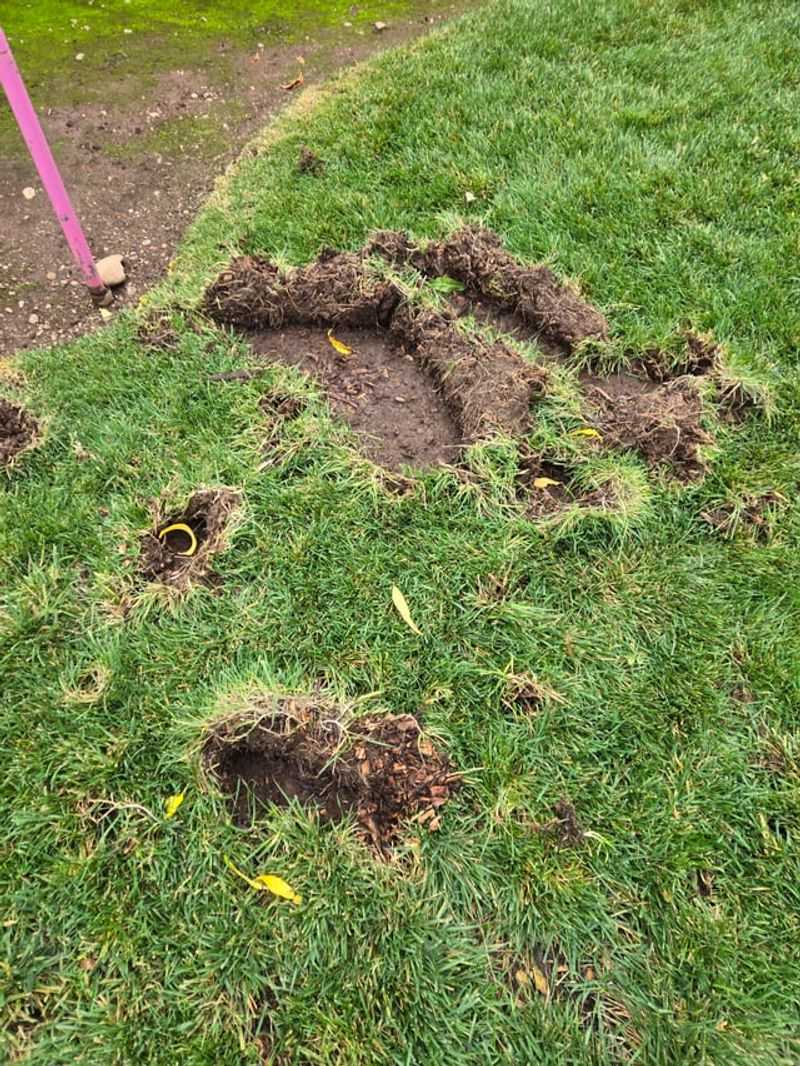
Guessing is a poor way to handle grubs. If the turf is loose, yellowing, or lifts easily, check underneath first.
NC State’s white grub guidance recommends cutting and lifting a one-square-foot section of sod, then looking at the roots and soil below.
Use a flat spade to cut three sides, fold the sod back, and sift through the top few inches of soil. Count the plump, C-shaped, white grubs.
Then press the sod back and water it so the patch can recover.
The number matters, but only in context. NC State’s turf guidance says 10 to 15 grubs per square foot will definitely need attention.
A lower count does not automatically mean treatment is needed, since healthy turf can tolerate some grubs.
Timing helps too. Grub activity can occur from August through October and again from April through early May, though timing varies by species and region, as covered on NC State’s TurfFiles insects page.
Check a few spots, including one healthy area and one troubled area, so you can compare what you find.
Choose a response that protects wildlife
A good next step matches what you actually found. If the signs are unclear, or the damage is large, call your county Cooperative Extension office.
They can help sort out moles, voles, and grubs for your region.
Keep the problems separate. Confirmed grub damage is its own issue, while mole tunnels are another.
Moles eat earthworms and many other invertebrates, so grub control may help only a little with moles, a point made on NC State’s mole page. That page also notes that several advertised remedies lack research support, so skip poisons, homemade chemicals, and miracle repellents.
If you choose chemical control for a confirmed problem, use only products registered for that purpose, follow the label, and minimize hazards to non-target animals such as pets, birds, and box turtles. NC State’s wildlife chapter supports that cautious approach.
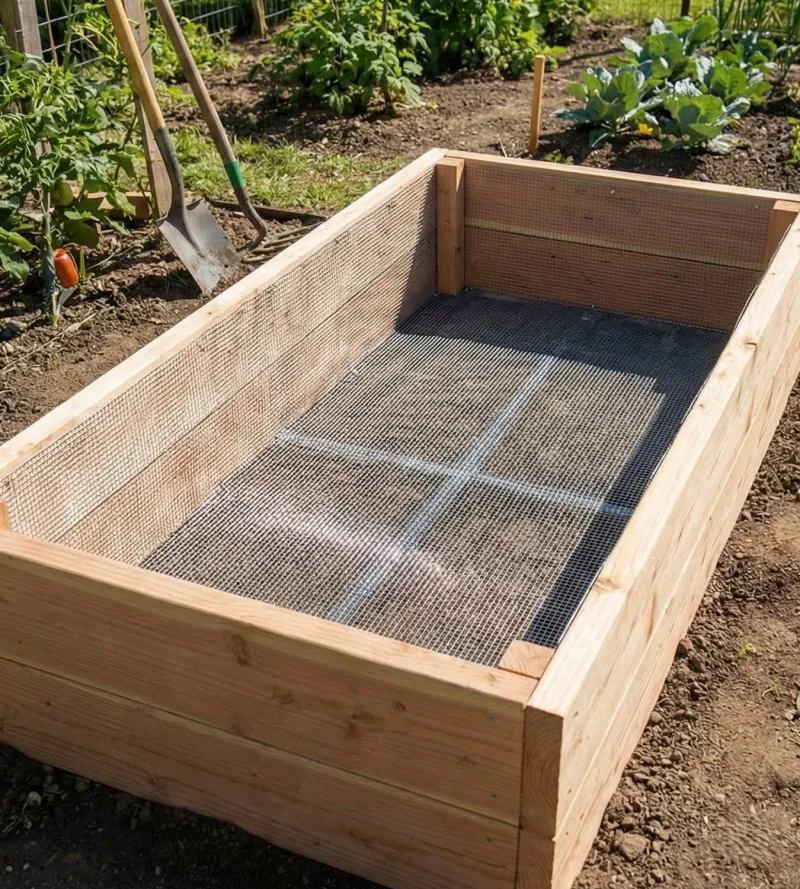
For a small, valuable bed, exclusion may work. NC Wildlife describes burying hardware cloth at least 12 inches deep with a lip bent outward.
One firm rule applies to the star-nosed mole. NC Wildlife lists it as a species of special concern, and it cannot be removed.
That status belongs to that species, not to every mole in the state.
Treat a spongy lawn as a clue, not a diagnosis
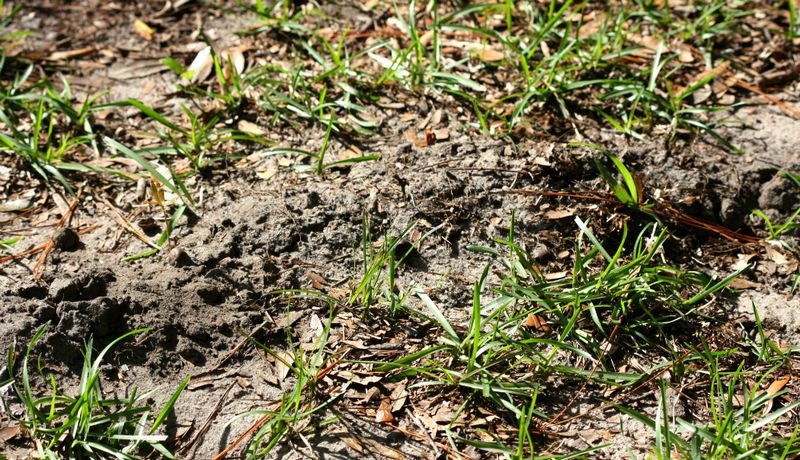
Raised, shallow ridges make a mole more likely, according to NC State, but softness alone can come from pine voles or grubs. Look for matching signs and confirm real damage before acting.
A mole is not proof of grubs, and not every mole needs to go.
Sometimes the best lawn care is a pause and a good look.