
Raccoons or Skunks Tearing Up Your Lawn? Check the Soil for Grubs Before You Treat
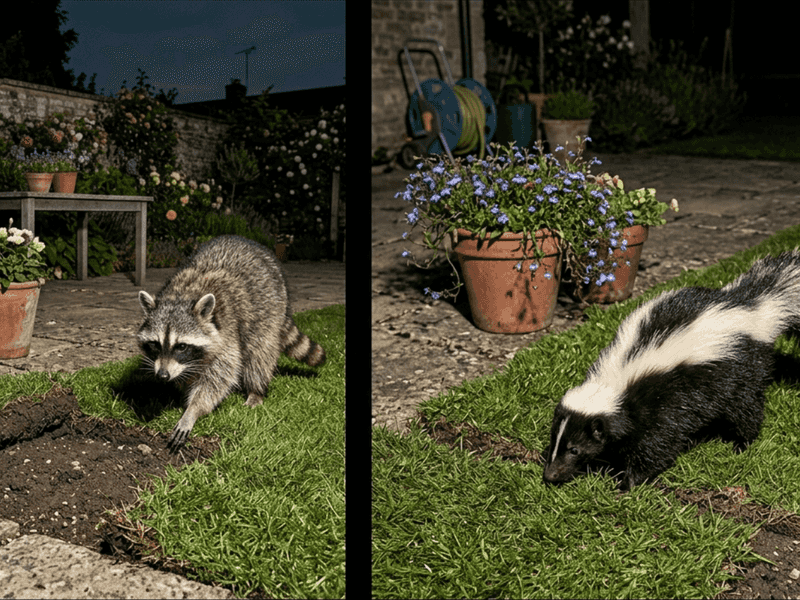
You walk out in the morning and part of your lawn looks like it was peeled back overnight. Raccoons are a common suspect, but they are not the only one, and grubs are not always the reason.
A few simple checks can tell you what is really going on under the grass. Knowing that first can save you from spending money on a treatment you may not need.
What does overnight lawn damage actually tell you?
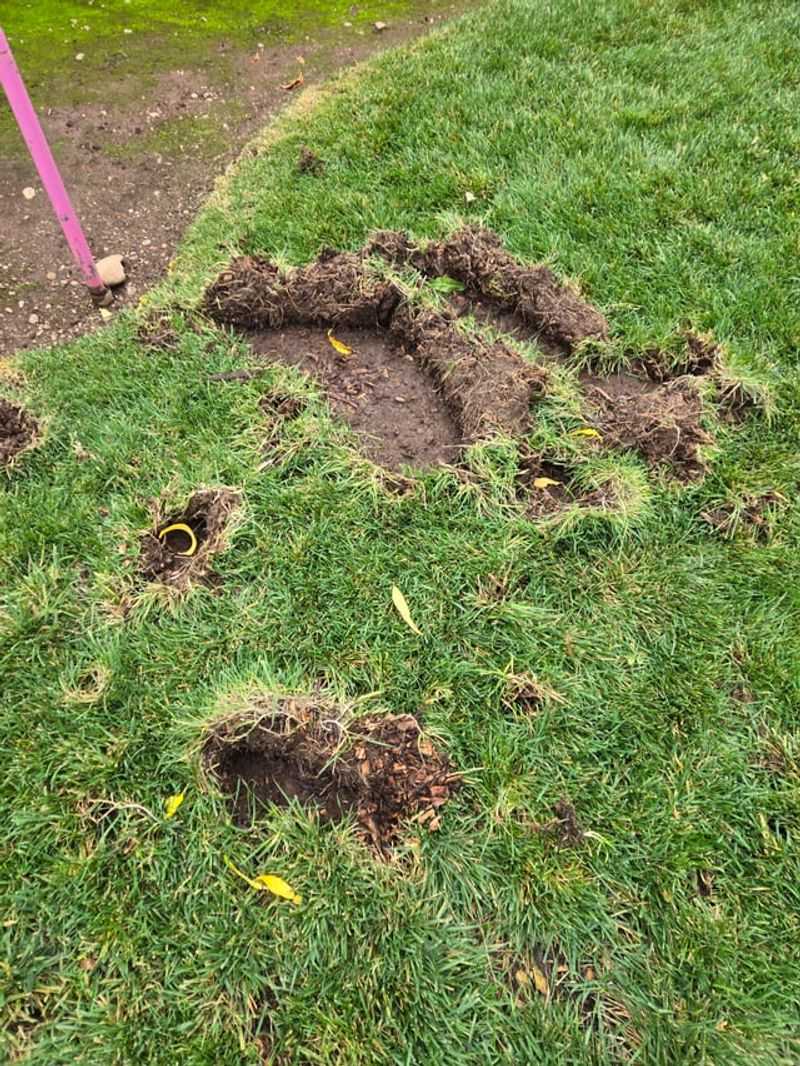
Torn-up turf at sunrise tells you one thing for sure: an animal was foraging in your lawn overnight. It does not tell you which animal it was or what it was after.
Raccoons are known for flipping sod while hunting white grubs, but skunks can leave damage that looks very similar, according to Iowa State University Extension.
Both animals also eat earthworms and other small creatures living in the soil. So the digging could point to grubs, but it could just as easily point to a good crop of worms after a rain.
University of Maryland Extension makes a similar point in its guidance on animals digging in lawns. Animal damage by itself does not prove you have a grub problem.
That is why it helps to treat the mess as a clue to investigate, not a diagnosis.
Resist the urge to grab a grub killer on day one. Start by looking closely at what the damage looks like, then check what is living under the turf.
The next sections walk through both steps, so you can decide with real information instead of a guess.
The damage pattern offers clues, not certainty
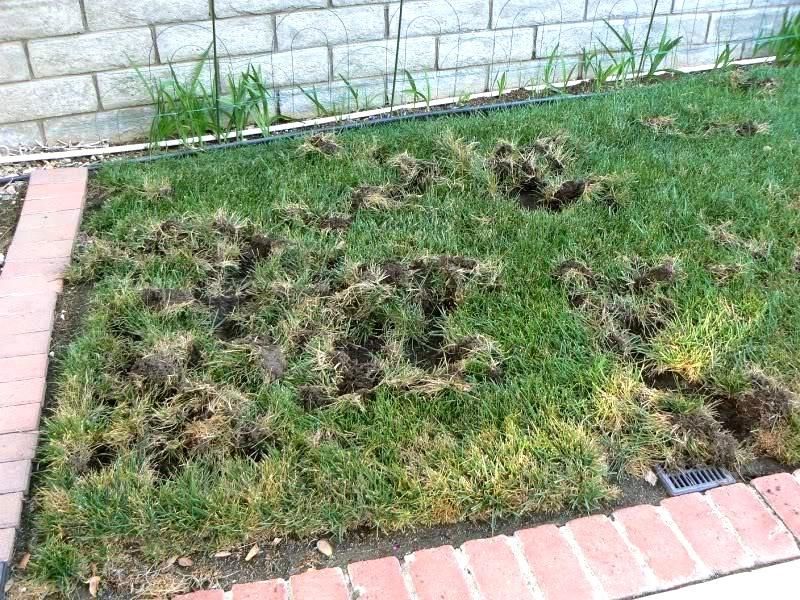
Take a slow walk across the damaged area and look at the shapes. Raccoons tend to lift or flip pieces of sod, sometimes rolling it back like a rug.
Skunks more often leave clusters of small, cone-shaped holes where they poked their snouts into the ground, as described by University of Maryland Extension.
Treat those patterns as hints, not proof. The two animals can leave damage that looks alike, and Iowa State University Extension notes that the results can overlap.
A lawn might even show both kinds of damage in different spots.
A few quick notes can help. Snap a photo of each damaged area, jot down how large the patches are, and see whether the flipped pieces are still intact.
Check again the next morning to see whether the digging has moved or grown.
If you want to be sure which animal visits, a trail camera pointed at the lawn is a no-contact way to find out. Even then, knowing the animal will not tell you what it was eating, so the soil still needs a look.
Check beneath the turf before considering grub control
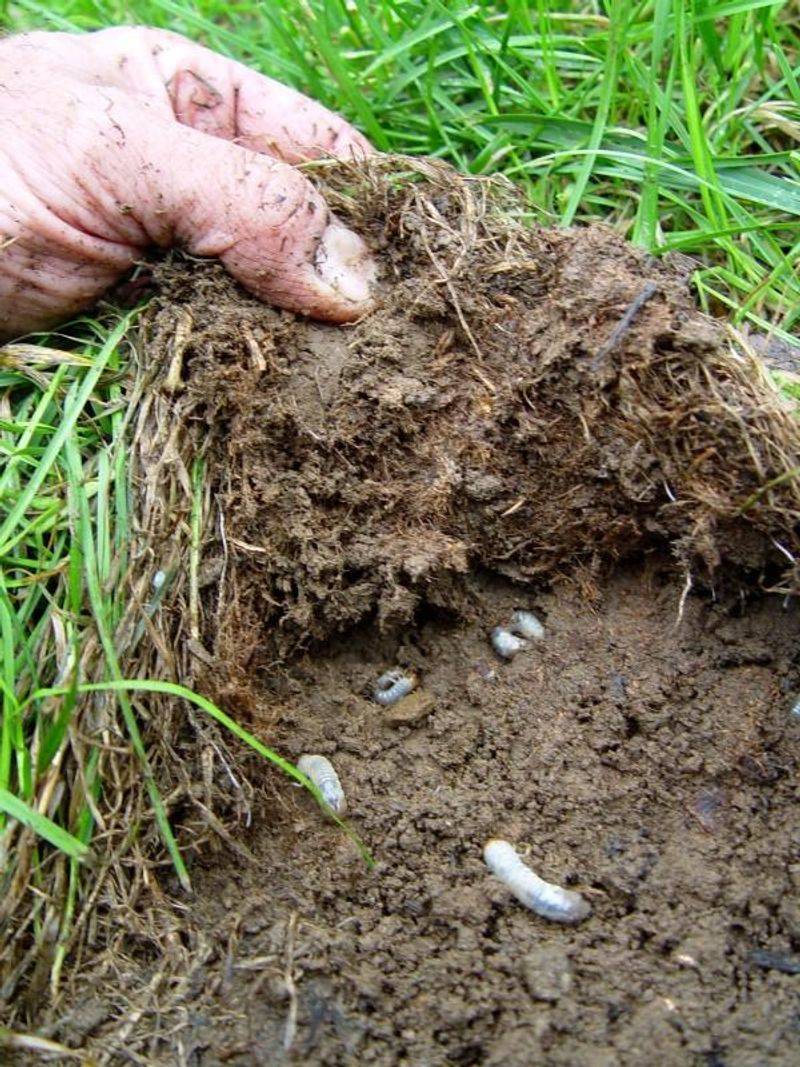
The only way to know whether grubs are down there is to look. Use a spade to cut and lift about one square foot of turf, then peel it back and sift through the top few inches of soil.
Count the creamy white, C-shaped grubs you find, as outlined by University of Maryland Extension.
One sample is not enough. Grub populations can be patchy, so a spot with none may sit a few steps from a spot with plenty.
Check several areas, including the edges of the damage, a spot that looks healthy, and any area that tends to stay green and moist.
Write down the count from each spot so you can compare them later. Set the turf back in place afterward, press it down, and water it if the weather is dry.
This step is about gathering information. Finding grubs does not automatically mean you need to apply a pesticide, and finding none is useful too.
It may mean the animals were chasing earthworms, and a grub product would have been wasted money.
A grub count needs context
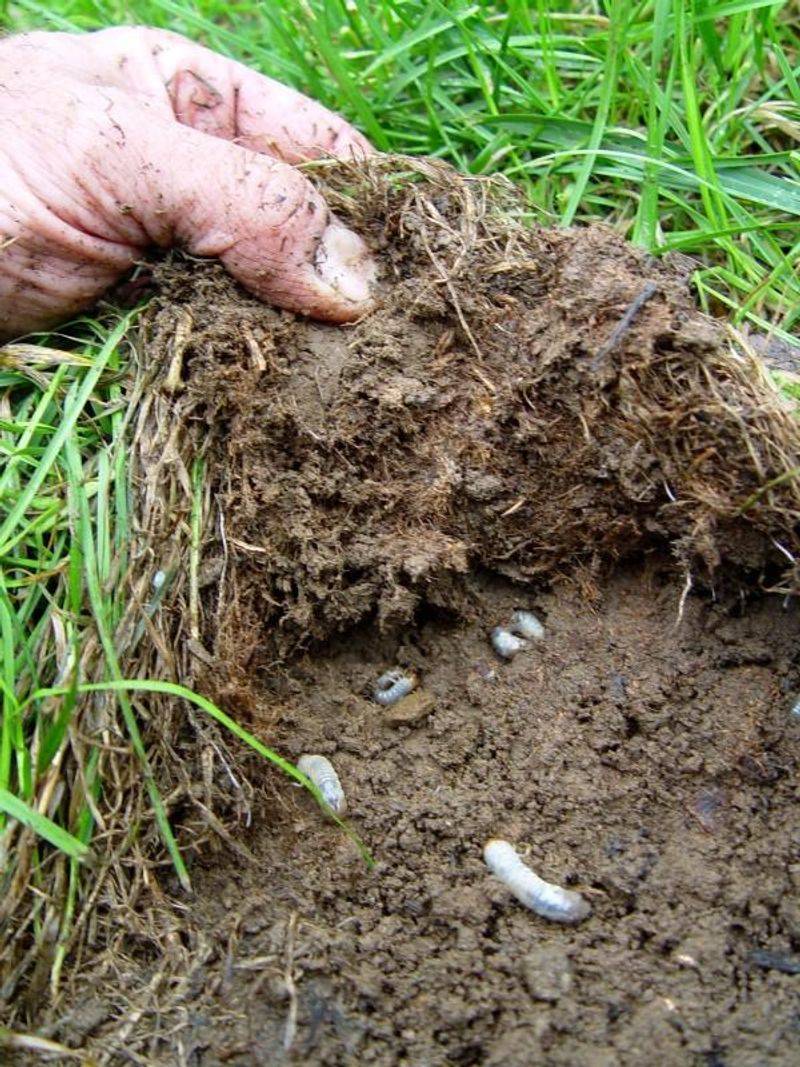
Say your samples turn up a handful of grubs. That alone is not a reason to treat.
Healthy turf can tolerate some grub feeding, and University of Wisconsin-Madison Extension explains that treatment decisions depend on the grub species, the grass type, the condition of the lawn, and what you expect from it.
Numbers you may see quoted are guides, not rules. University of Maryland Extension suggests that roughly 5 to 10 grubs per square foot may warrant control in some cases, depending on the grub and grass species.
It is not a universal cutoff.
There is another number to keep separate. Iowa State University Extension notes that animals may be drawn in at about five grubs per square foot, while healthy turf can handle considerably more before the grass shows injury.
Those are two different questions. One asks how many grubs might attract a hungry raccoon or skunk.
The other asks how many grubs the grass can take before it suffers. A lawn can be a snack bar for wildlife without being in danger, so do not use one number to answer the other.
If treatment is warranted, let local timing and the label lead
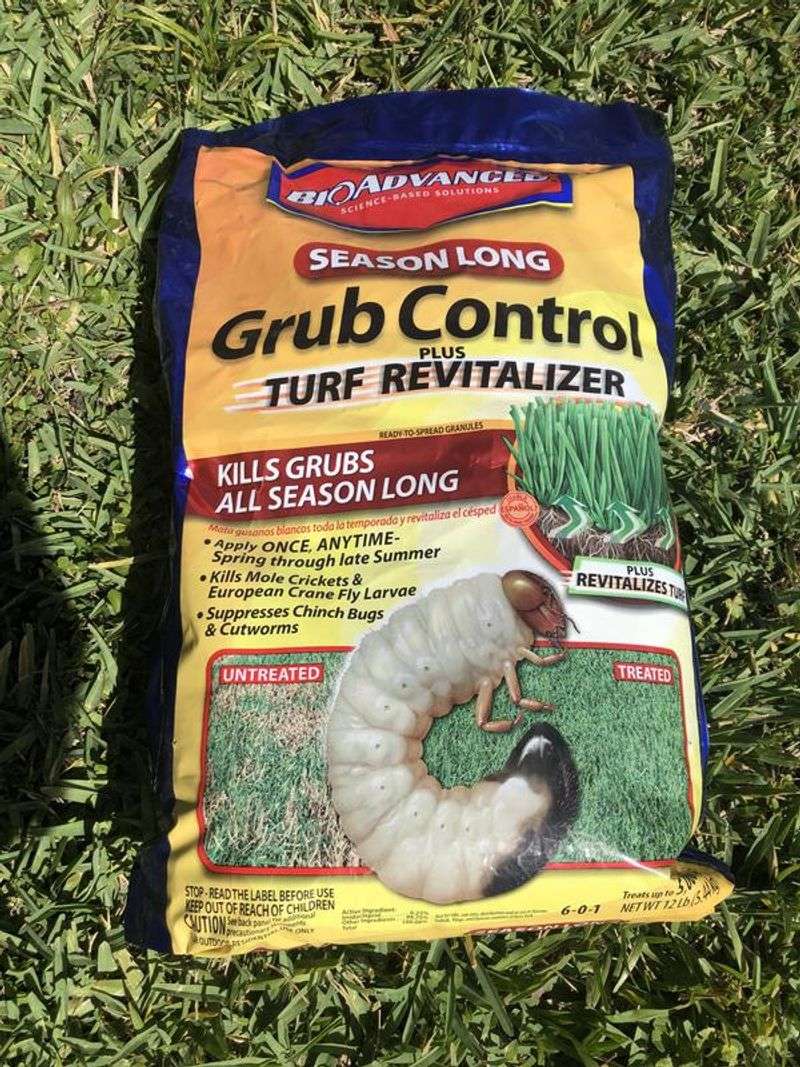
If your sampling shows grubs at levels that threaten the lawn, then it is fair to consider treatment. Even then, there is no single best date for the whole country.
Iowa State says curative treatments work best in late summer and are not effective after early October, per its guidance, while Wisconsin guidance gives windows that vary by species and can reach into October.
Products differ too. Some are preventative and are applied before grubs hatch, while others are meant to kill grubs already in the soil.
Which one fits depends on your location and which grub you have, and University of Maryland Extension covers this distinction for its region.
Call or check your local Extension office for timing that fits your area. Then read the current label on the product you pick, since labels spell out where it can be used, how to water it in, and how long people and pets should stay off the lawn.
The U.S. EPA advises using pesticides only for labeled purposes and following every precaution, including keeping children and pets away for the stated period.
When grubs are scarce, remove attractants and repair the lawn
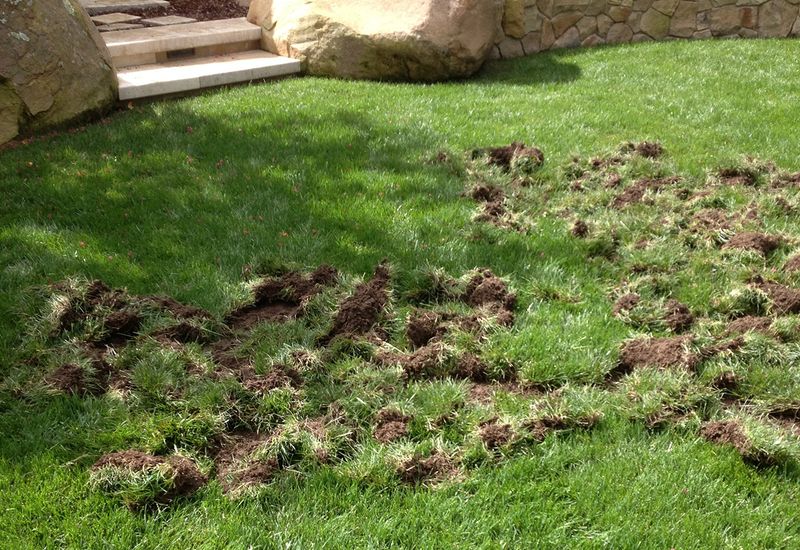
If your samples show few grubs, shift your attention to what else might be drawing animals to your yard. Bring outdoor pet food inside at night and keep garbage in cans with tight lids.
University of Maryland Extension lists these steps for lawns where grubs are not abundant.
Then fix the lawn itself. Flip any torn sod back into place and press it down firmly so the roots touch soil.
Water it if the weather is dry, as Iowa State University Extension recommends.
Where the turf is too shredded to put back, rake the spot lightly and overseed or reseed it. Keep the new seed moist until it is established, which usually means light watering more often than you would for the rest of the lawn.
These steps may reduce what draws animals and help the grass bounce back. They do not guarantee the digging will stop.
Think of them as tidy, low-cost habits that leave your yard a little less appealing and a lot healthier.
Grub control may not stop the digging
Even a well-timed grub treatment may not end the nighttime digging. Animals can keep searching for earthworms or other food, and Iowa State University Extension describes few reliable ways to prevent repeat damage.
Ordinary fences may not hold raccoons, which can climb over them, and they may lift or claw through ground coverings. Scent repellents are generally unreliable.
So the practical path is a sequence. Look at the damage for clues, sample the soil in several spots before treating, follow local Extension advice and the label if the count justifies action, and repair the turf.
University of Maryland Extension cautions that animal damage alone does not establish a grub infestation.
If digging returns, go back to the soil and the attractants instead of reaching for stronger products. Some seasons are simply worm-rich, and the lawn recovers.
A torn-up lawn is frustrating, but a hungry animal is mostly telling you what is under your grass.