
These 12 Hummingbird Treats Beat Plain Sugar Water (And 6 Things You Should Never Put In Your Feeder)
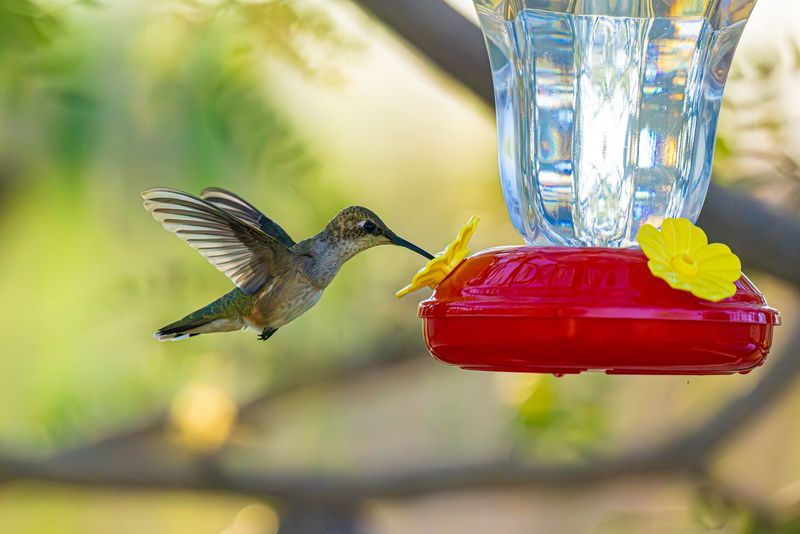
Sugar water keeps hummingbirds buzzing, but it is only a small slice of what these tiny birds really need. In the wild, they sip from flowers, snap up bugs, and even lick tree sap to stay strong.
If you have ever wondered why hummingbirds visit your feeder once and then vanish, the answer may be growing (or missing) right in your garden. Here are 12 natural treats that give hummingbirds more than sugar ever could, plus 6 feeder mistakes that can quietly harm them.
1. Trumpet Honeysuckle
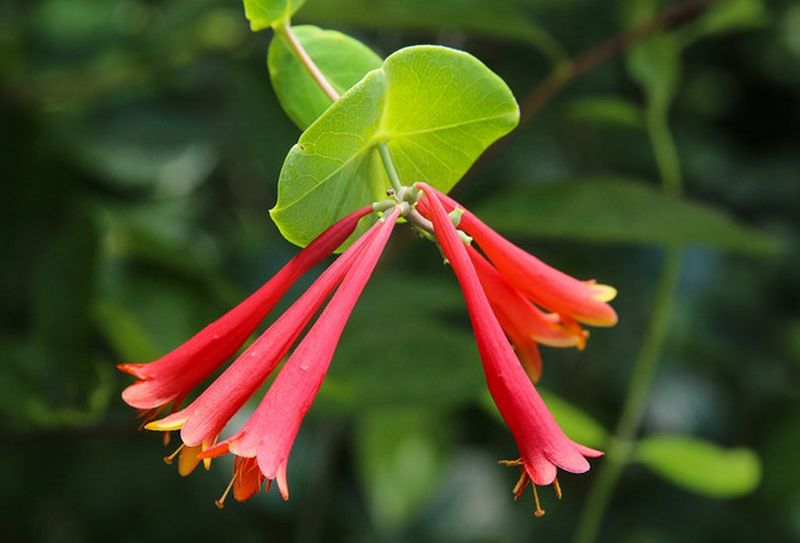
Picture a fence covered in scarlet tubes, and a ruby-throated hummingbird zipping from bloom to bloom like it owns the place. Trumpet honeysuckle, Lonicera sempervirens, is a native vine that hummingbirds have been visiting for thousands of years.
Its long red flowers are shaped almost perfectly for their bills.
Unlike the invasive Japanese honeysuckle, this one plays nice with your yard. It blooms in spring and often keeps going in waves through summer.
That steady supply matters, because migrating birds need fuel the moment they arrive.
Plant it in full sun to part shade near a trellis or mailbox post. It needs little care once settled, and a light trim after the first flush can encourage more flowers.
2. Bee Balm
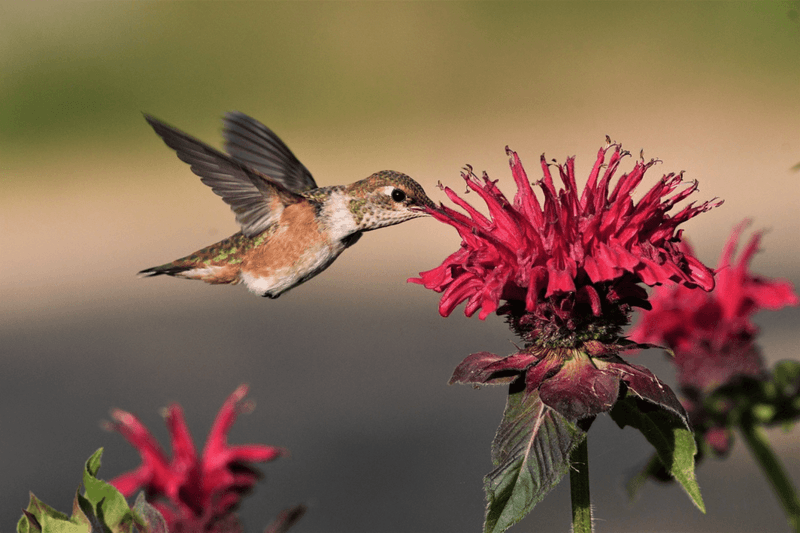
Ask a group of longtime bird watchers which plant pulls in the most hummingbirds, and bee balm comes up again and again. Monarda didyma has wild, shaggy red blooms that look a bit like fireworks frozen mid-burst.
Real flower nectar carries extras sugar water lacks, including amino acids, vitamins, and trace minerals. Bee balm serves all of that up from midsummer on.
It also spreads fairly easily, so one small plant can become a patch in a couple of seasons.
Give it sun and decent air flow. Powdery mildew can show up on crowded plants, so thinning stems in spring may help reduce the problem.
3. Gregg Sage
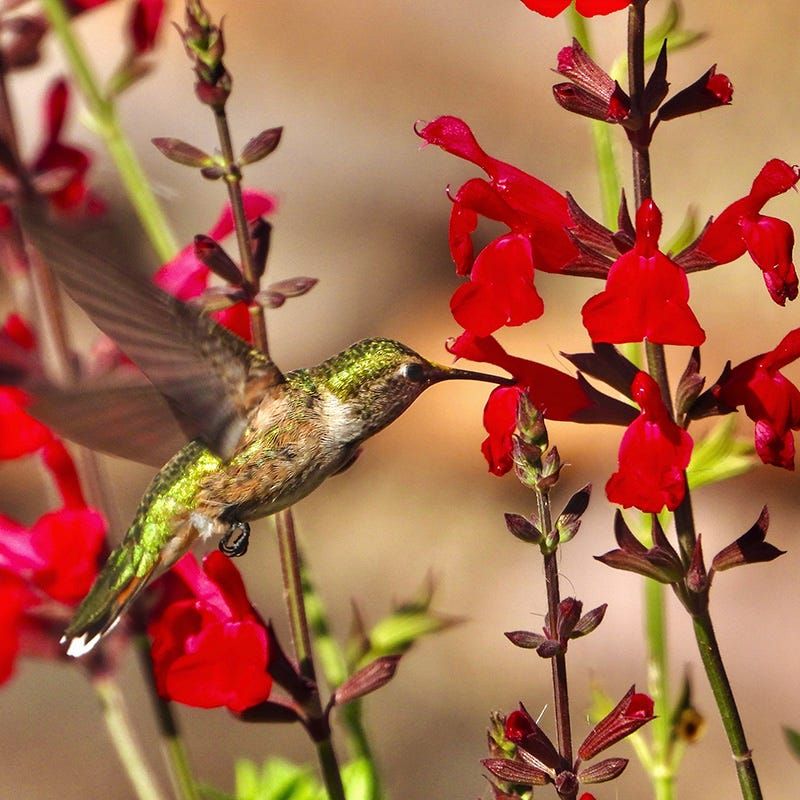
Heat that wilts your petunias barely fazes Gregg sage. Native to Texas and the Southwest, Salvia greggii shrugs off dry spells and keeps flowering in pink, red, coral, or white.
Hummingbirds love it for one big reason: it blooms for months. In warm regions it can flower from spring into fall, filling the gaps when other plants take a break.
Plant it in well-drained soil in a sunny hot spot. Soggy roots are its main weakness, so go easy on the hose once it is established.
4. Hummingbird Sage
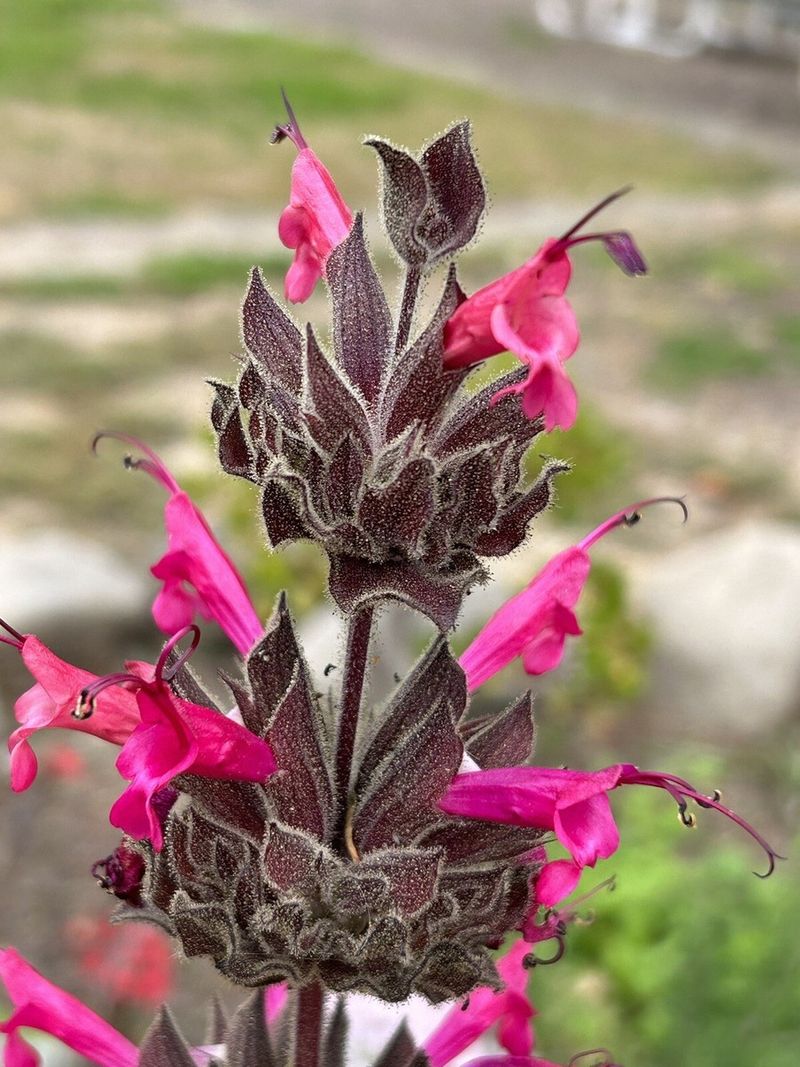
Shady corner? Dry soil?
California gardeners have a secret weapon. Hummingbird sage, Salvia spathacea, thrives under oaks where many flowers sulk.
Its magenta flower spikes appear in late winter and spring, right when Anna’s hummingbirds are nesting and need a boost. The leaves smell sweet and fruity when brushed.
Outside California, look for a native salvia suited to your own region. Local nurseries can point you to one.
5. Cardinal Flower
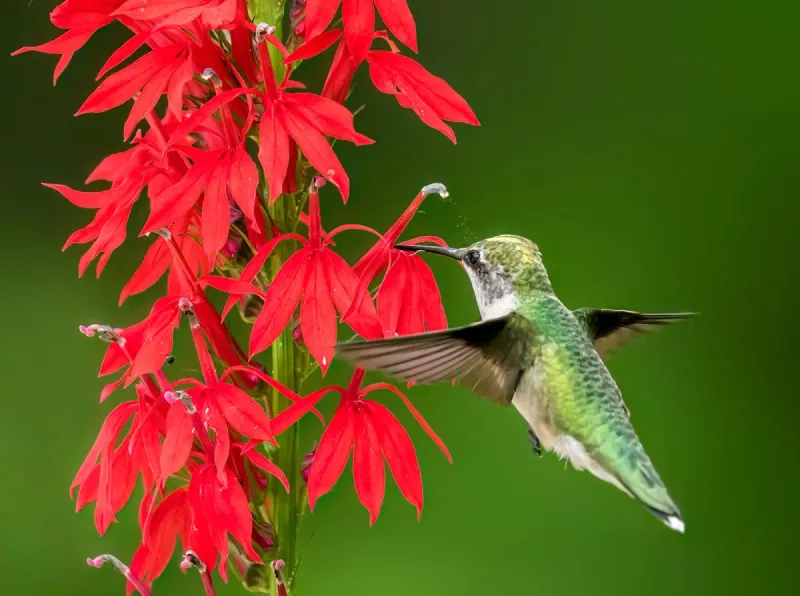
Few reds in nature are as intense as cardinal flower. Lobelia cardinalis sends up tall spikes in late summer, and in many areas hummingbirds are its main pollinator.
It loves moist soil, which makes it a great fix for that soggy spot where nothing else grows. Rain gardens and pond edges are ideal.
Plants can be short-lived, so let a few go to seed. Fresh seedlings will usually keep the patch going for years.
6. Coral Bells
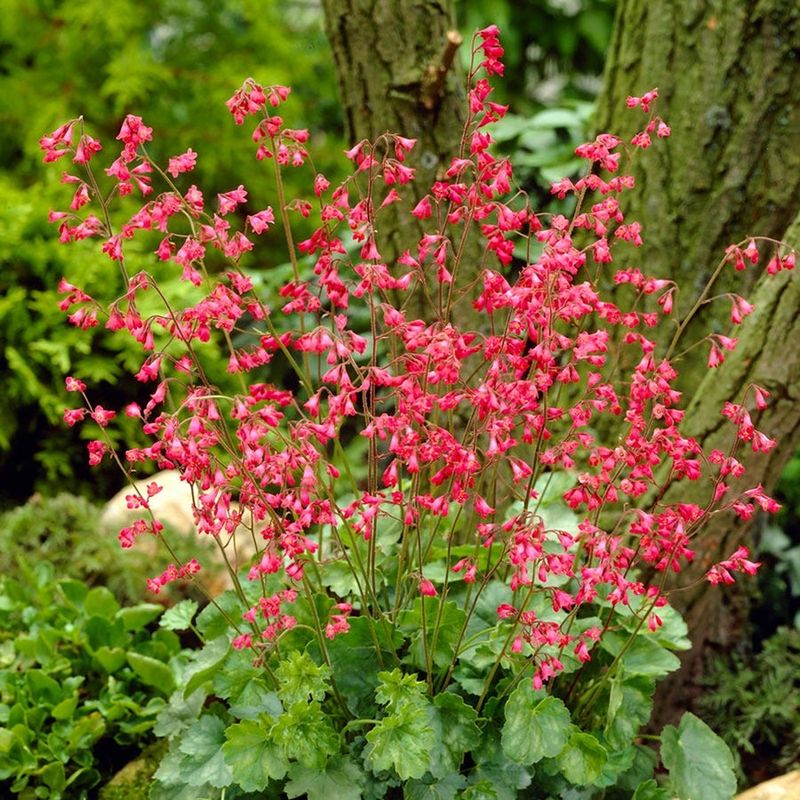
Tiny bells on wiry stems might not look like much from the patio. To a hummingbird, though, a clump of coral bells is a snack bar at eye level.
Heuchera species with red or coral flowers bloom in late spring, often before many summer perennials get going. Early nectar like this helps returning birds settle in.
Tuck them into part shade along a path. Pick varieties bred for flowers, not just leaf color, since some fancy-foliage types bloom poorly.
7. Red Columbine
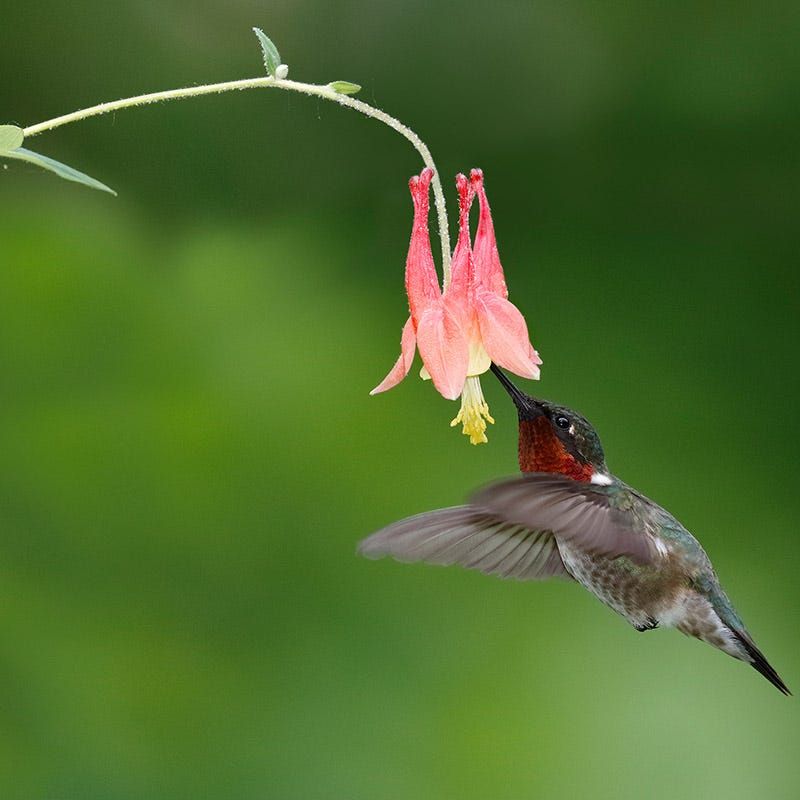
Spring migrants arrive hungry, and wild columbine is often waiting for them. Aquilegia canadensis has nodding red and yellow flowers with long spurs full of nectar.
It blooms early, sometimes in April, filling a gap before bee balm and cardinal flower open. Hummingbirds learn the timing and come back each year.
Plant it in part shade with average soil. It seeds itself politely, giving you free plants without taking over.
8. Fuchsia
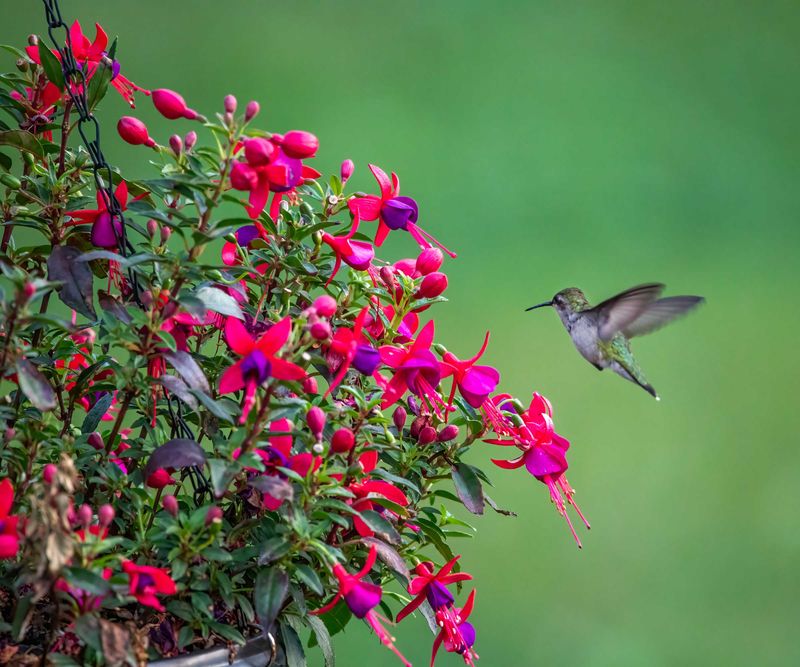
Got a shady porch with an empty hook? A hanging basket of fuchsia may turn it into the busiest spot in your yard.
Those dangling, ballerina-shaped blooms point downward, which is easy for hovering birds and tricky for many bees. Fuchsias flower all summer when kept out of harsh afternoon sun.
Water often, since baskets dry out fast in heat. A drooping fuchsia usually perks up after a deep drink and a move to more shade.
9. Tiny Insects
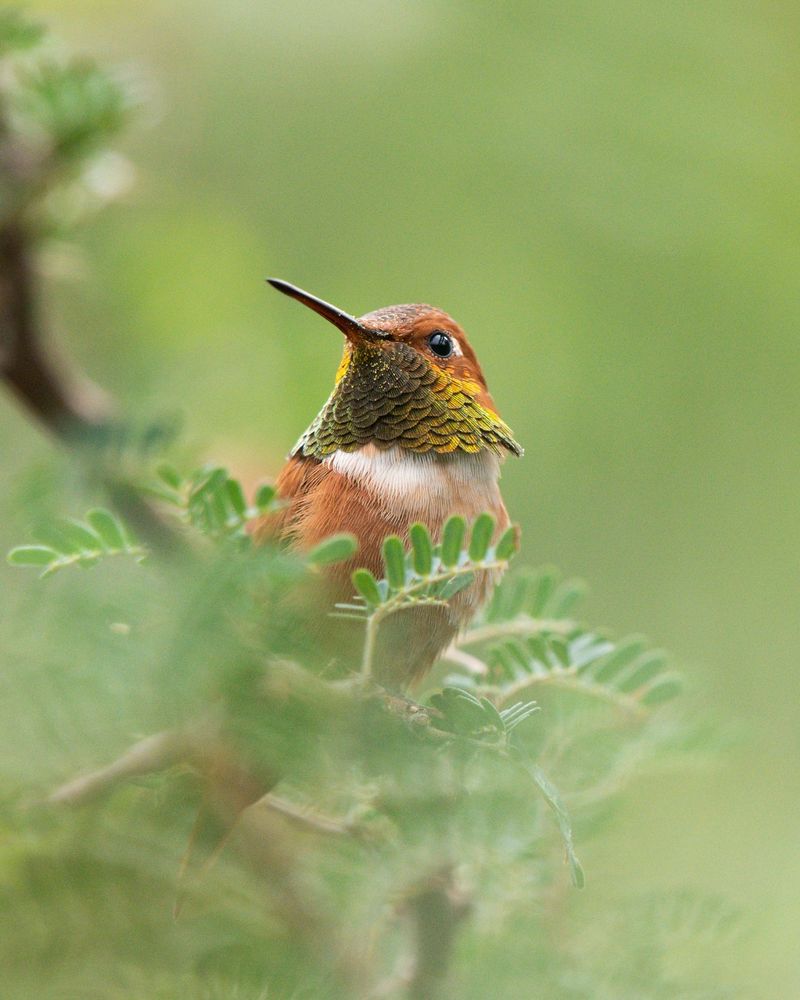
Here is the part most feeder fans never hear: hummingbirds are fierce little hunters. They snatch gnats, midges, fruit flies, mosquitoes, and aphids right out of the air or off leaves.
Bugs supply protein and fat that nectar cannot. Nesting females especially need them, since baby hummingbirds are fed mostly insects to grow feathers and muscle.
Want more bugs for your birds? Leave some leaf litter, skip the bug zapper, and let a few aphids live on your plants.
10. Small Spiders
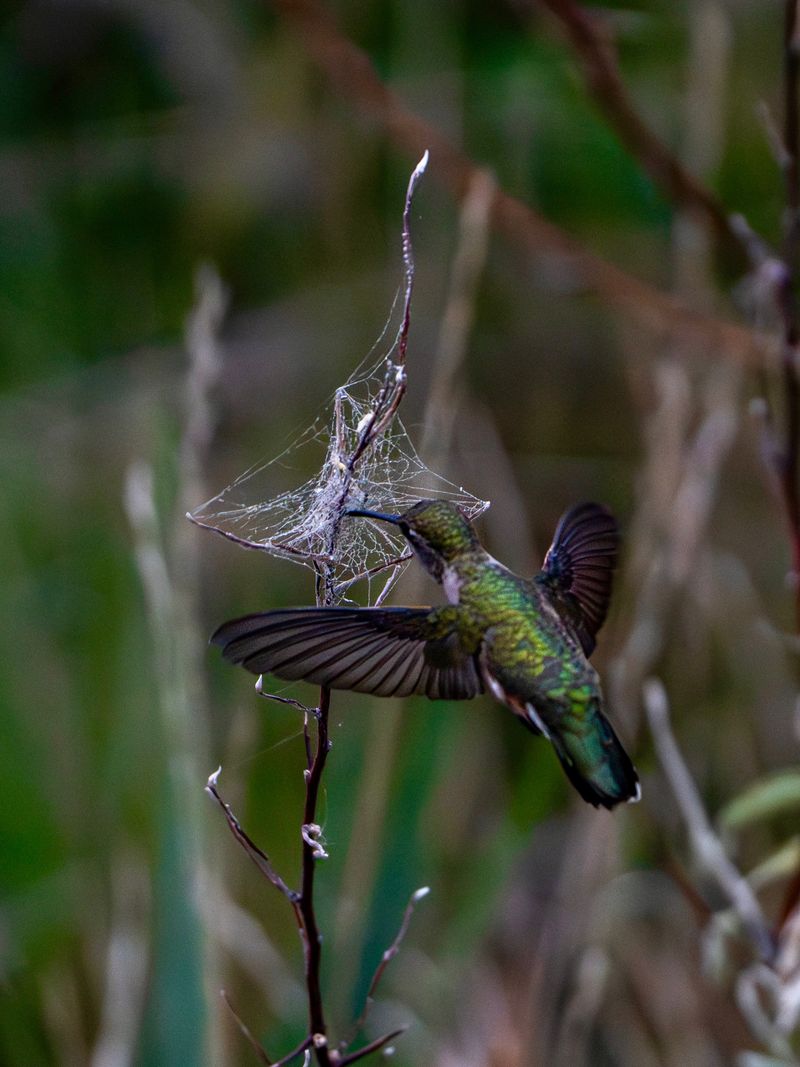
Before you sweep away that cobweb on the shed, think twice. Small spiders are a major protein source for hummingbirds.
The birds also steal spider silk to build their nests. The silk stretches, letting the walnut-sized nest grow as the chicks get bigger.
That is a neat bit of engineering.
A slightly messy garden corner with shrubs and webs can be one of the best gifts you give them.
11. Tree Sap
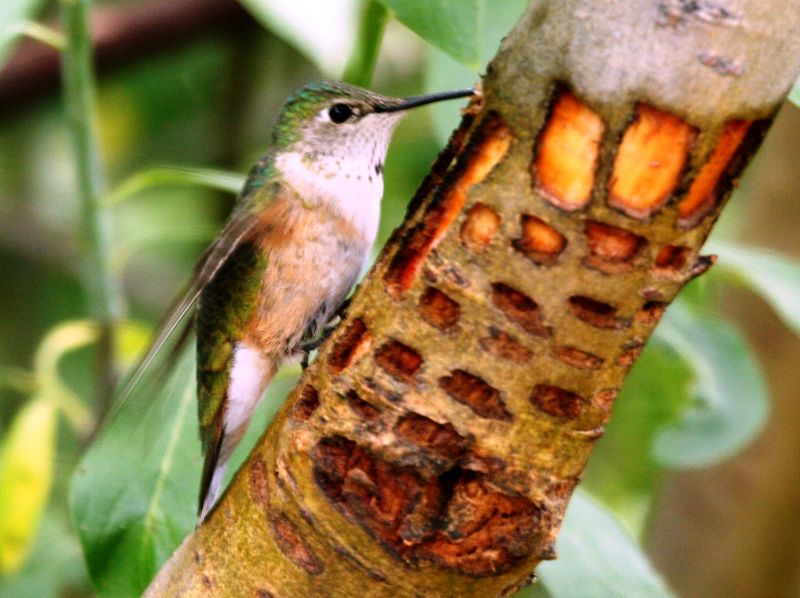
Early spring can be rough when few flowers are open. Some hummingbirds solve that by following woodpeckers called sapsuckers.
Sapsuckers drill neat rows of holes in birches, maples, and other trees. Sweet sap oozes out, and ruby-throats have been seen sipping from these wells and grabbing insects stuck in the sap.
If you spot those tidy holes on a backyard tree, give it a little patience. It may be feeding more than one kind of bird.
12. Flower Pollen
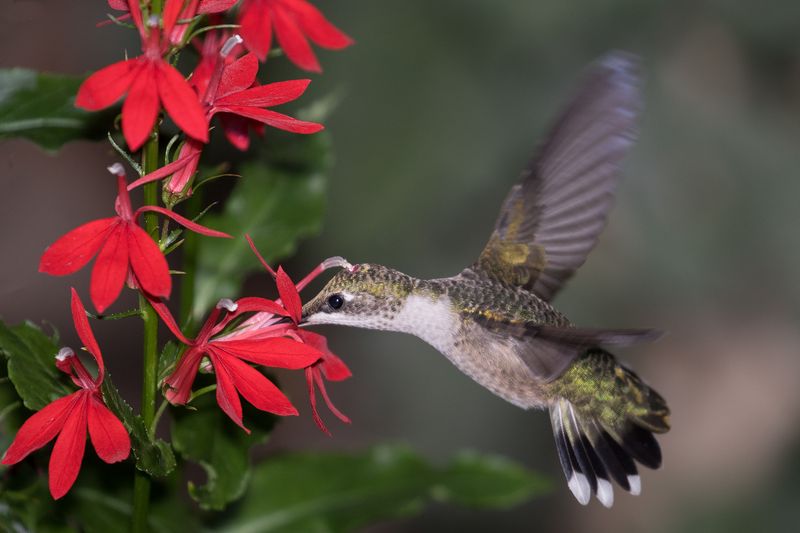
Ever noticed a hummingbird with a yellow smudge on its forehead? That dust is pollen, picked up while feeding.
Some pollen gets swallowed along with nectar, adding a small amount of protein. Meanwhile, the bird carries the rest to the next flower, helping plants make seeds.
Mixing bloom times in your beds keeps this trade going all season. Aim for something flowering in spring, summer, and fall.
13. Red Food Coloring
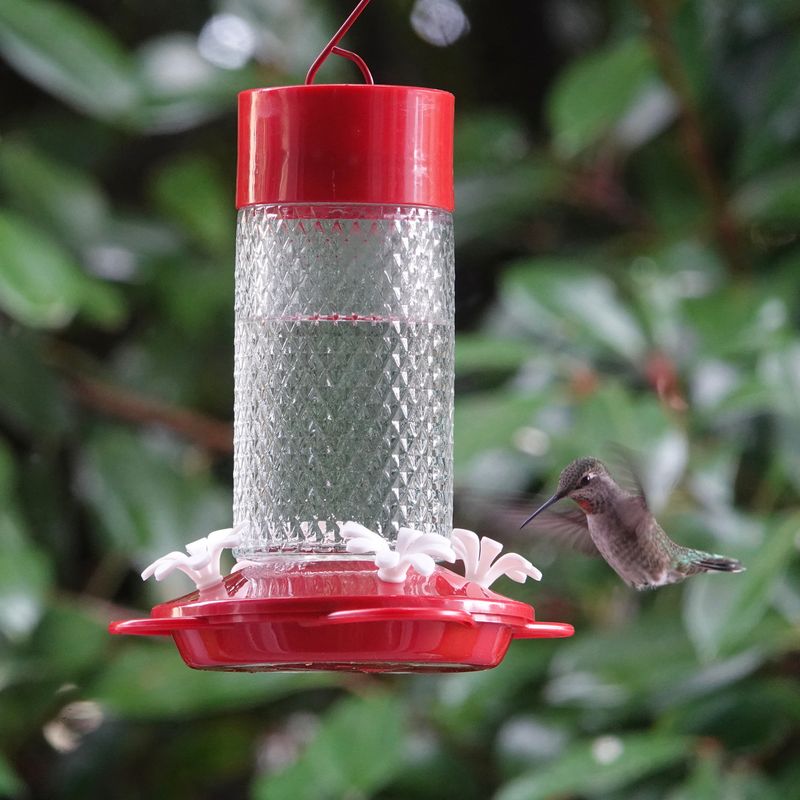
Store shelves are full of bright red nectar, but your birds do not need it. Hummingbirds are drawn to the red parts of the feeder, not the color of the liquid.
Many dyes are petroleum based, and some bird experts have raised concerns about links to kidney trouble and other health problems. There is simply no benefit worth the risk.
Stick with clear nectar: one part plain white sugar to four parts water. If your feeder lacks red, tie a red ribbon nearby.
14. Honey
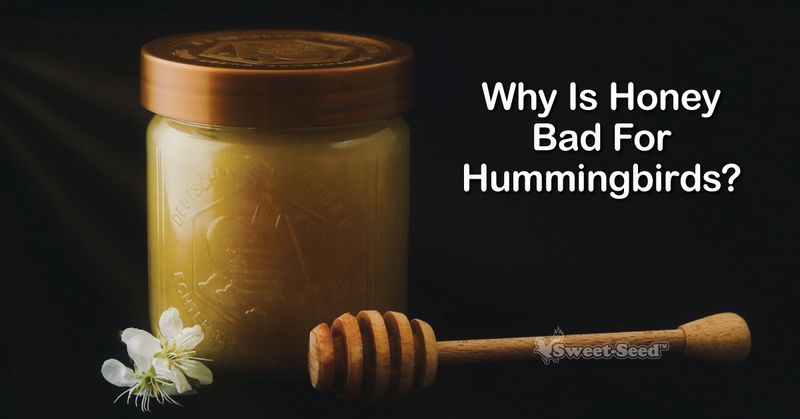
It sounds natural and healthy, which is exactly why so many people make this mistake. Honey mixed with water ferments fast and grows mold and bacteria.
That can lead to a fungal infection that makes a hummingbird’s tongue swell. A bird that cannot use its tongue cannot eat, and the result is often fatal.
Save the honey for your tea. White table sugar is the safer choice here.
15. Brown, Raw, or Organic Sugar
Here is a case where less processed is not better. Brown, raw, and many organic sugars contain extra iron, and brown sugar holds molasses too.
Hummingbirds cannot handle much iron. Over time it may build up and cause a deadly condition called iron storage disease.
Plain refined white sugar is the closest match to flower nectar. Cheap store brand works perfectly.
16. Artificial Sweeteners
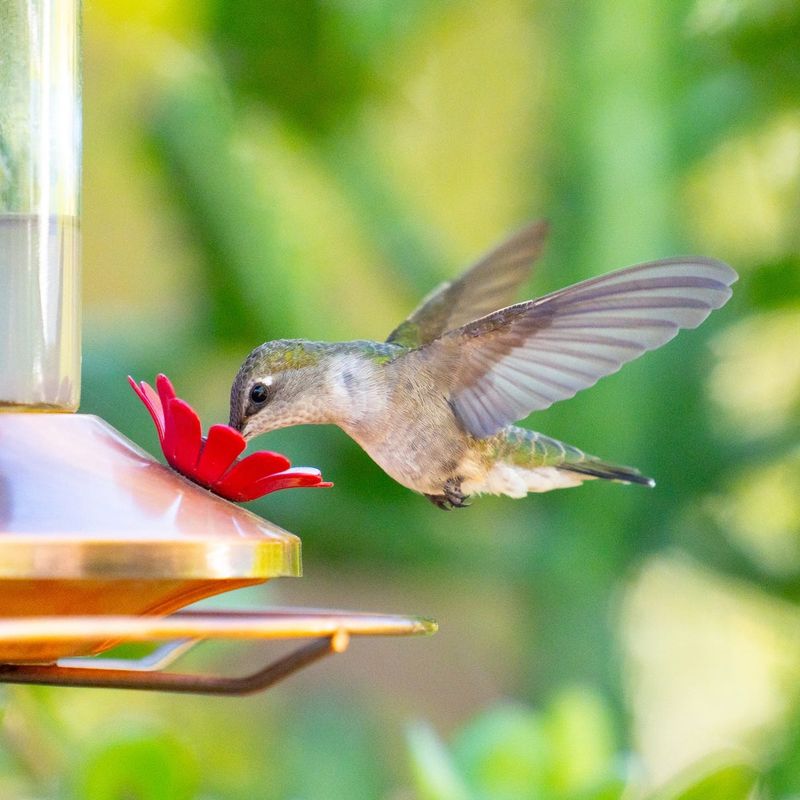
A hummingbird’s heart can beat over 1,000 times a minute. That engine needs real calories, constantly.
Sweeteners like Splenda, Equal, stevia, and xylitol taste sweet but give almost no energy. A bird filling up on them could starve while thinking it ate.
Keep diet products in the kitchen and real sugar in the feeder.
17. Fruit Juice and Molasses
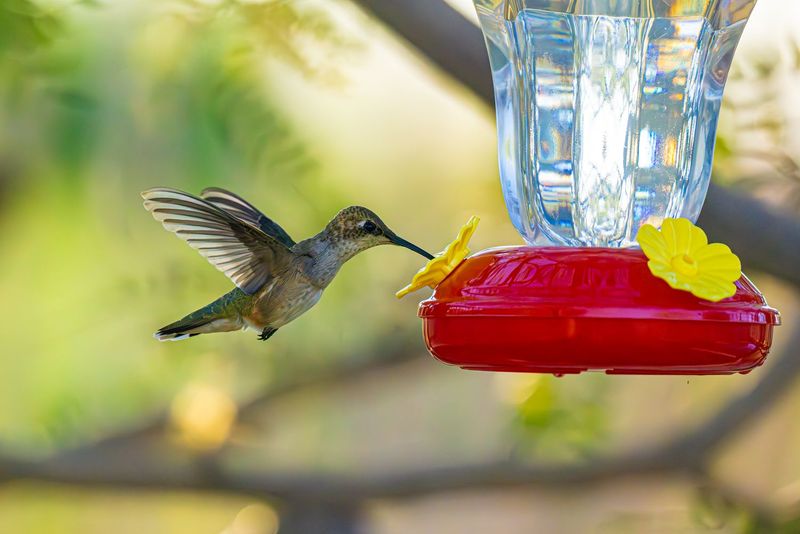
Grandma’s old tips sometimes included a splash of juice or a spoon of molasses. Both are bad news.
Juice has the wrong sugar mix, can be acidic, spoils quickly, and draws ants. Molasses is loaded with iron, which can poison hummingbirds.
If you want to share fruit, set out overripe banana nearby. It attracts fruit flies, which the birds may happily hunt.
18. Spoiled Nectar and Pesticides
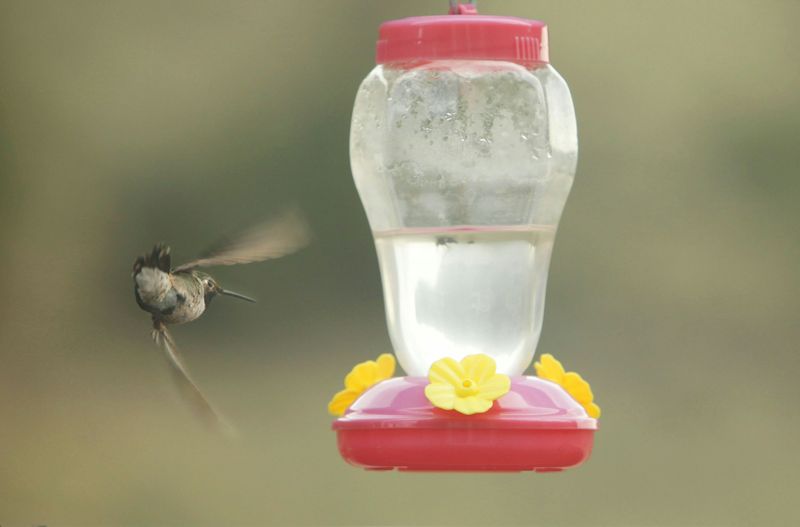
Cloudy liquid, black specks, or milky strings mean your nectar has turned. Dump it right away and scrub the feeder with hot water.
In hot weather, change nectar every day or two. In cooler weeks, every three to five days is usually fine.
Also go easy on sprays around the yard. Pesticides can harm birds directly and wipe out the insects they need.
A healthy, lightly buggy garden plus fresh nectar is the best treat of all.