
If Your Peace Lily Still Droops After Watering, Check the Soil Before Assuming Something Else Is Wrong
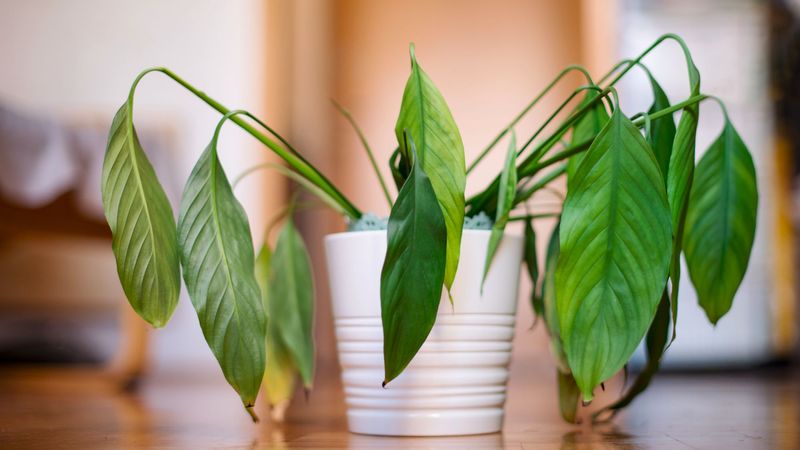
Your peace lily is flopped over, and you just watered it. That can feel like a sign you did something wrong.
The good news is that a few quick, low-cost checks can tell you far more than the droop itself. Start with the potting mix, and the next step usually becomes clear.
A droop after watering is not a diagnosis
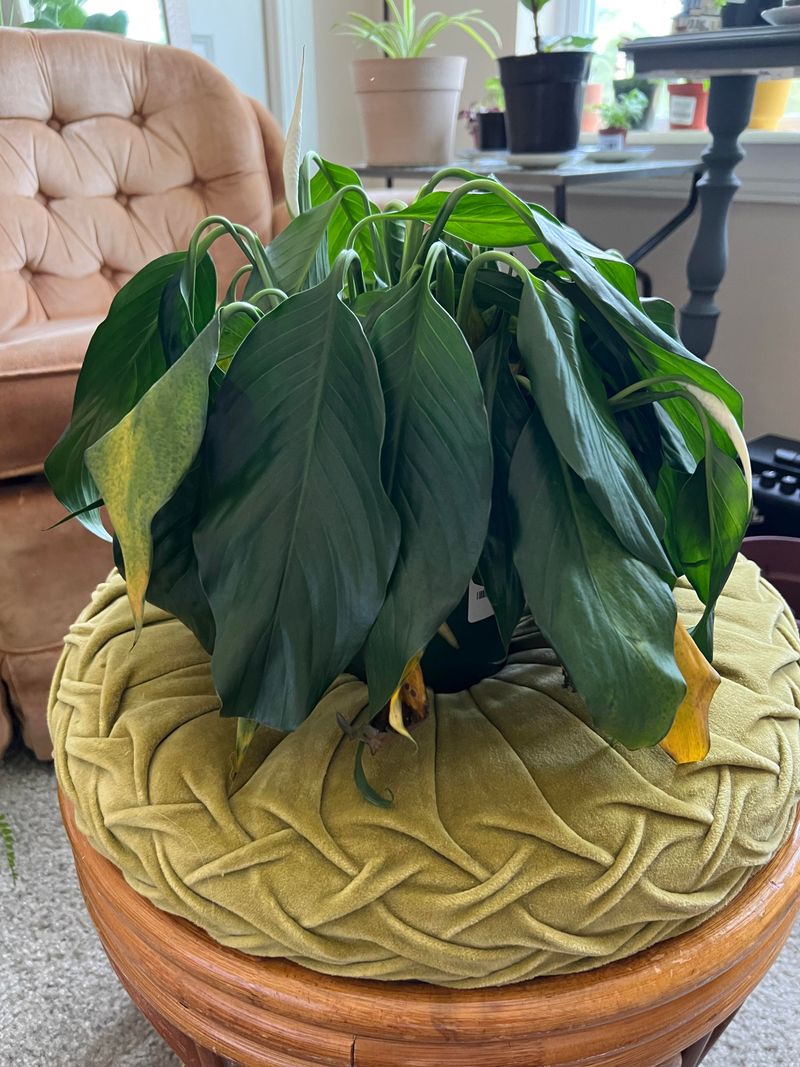
Seeing a peace lily collapse right after you water it feels confusing. Here is the catch: the timing tells you very little.
A thirsty plant can stay limp for a while after a good soaking, and a plant sitting in soggy mix can droop too.
According to Clemson Cooperative Extension, too much moisture can damage roots and interfere with water uptake, which makes the leaves wilt much like they do from thirst. So the leaves look the same whether the plant is too dry or too wet.
A dry plant often perks up within hours of thorough watering, as University of Florida IFAS guidance notes for severe wilting from lack of water. That is not a promise for every plant or every cause, though.
If the droop sticks around, the plant is asking you to look closer rather than guess.
Skip the urge to add more water or to assume root rot. Your first move is simple and free: check the potting mix before you do anything else.
Check the potting mix before you water again
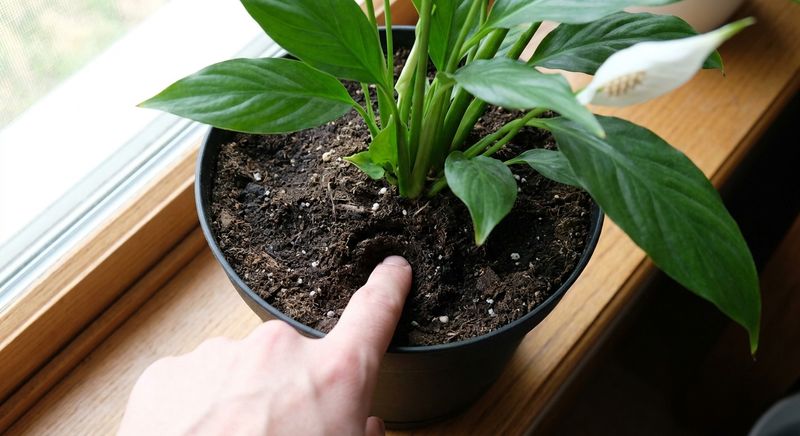
Grab nothing fancy for this step. Push a finger about 1 to 2 inches into the mix and feel what is there.
Dry and crumbly means thirsty, while cool, damp, and clumping means there is still water around the roots.
Weight helps too. Lift the pot after a thorough watering so you know how heavy it feels when it is full, then lift it again when you suspect it is dry.
A pot that feels surprisingly light usually holds little water.
Both checks match Clemson’s peace lily advice, which says peace lilies like mix that is moist but not soggy.
Leaf posture is a poor guide, because a droop can come from several causes. A calendar is a poor guide as well.
University of Maryland Extension stresses that watering needs change with growing conditions, so a fixed weekly schedule can lead you astray.
Once you know whether the mix is dry or wet, you know which path to follow next.
If the mix is dry, water the root ball thoroughly
Dry mix gets a deep drink. Water slowly until it flows out of the drainage holes, then let the pot drain and empty the saucer or outer pot so the roots are not left standing in water.
Many dry plants bounce back quickly. University of Florida IFAS reports that severe wilting from lack of water can recover within hours.
Still, no plant owes you a deadline, and some will take longer or not recover.
Sometimes the mix is so parched that water races down the sides of the pot and out the bottom, never soaking in. If the root ball has shrunk and pulled away from the pot wall, University of Maryland Extension notes that several applications may be needed to rehydrate it.
Try pouring a little, waiting a few minutes, then pouring again. Another option is to set the pot in a sink with a few inches of water for a while, then let it drain fully.
Either way, Clemson’s guidance backs the same goal: water thoroughly, then let the excess leave.
After that, give the plant time and check the mix again before adding more.
If the mix is wet, check drainage
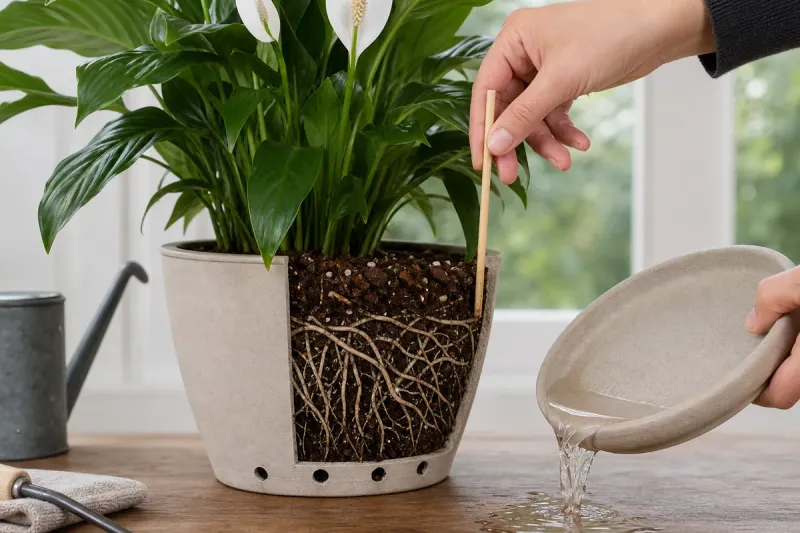
Wet mix with a drooping plant means you should put the watering can down. More water will not fix a plant whose roots already have plenty.
Here is why it matters. Clemson Cooperative Extension explains that prolonged excess moisture can cut the oxygen around roots, and stressed roots take up water poorly.
The leaves then wilt in a way that looks a lot like drought stress.
Start with the pot itself. Does it have a drainage hole, and is the hole open?
Lift the pot and look at the saucer or decorative outer pot. Water collected there keeps the bottom of the mix soggy, so pour it out.
Check how the mix feels, too. Heavy, packed mix that stays wet for a long time holds more water than the roots can use.
University of Maryland Extension reminds growers that water needs vary, so a wet pot may simply need more days to dry.
Move the plant somewhere it can drain freely, wait, and keep checking the mix with your finger. If the plant keeps going downhill despite good drainage, it is time to look at the roots.
Inspect the roots if the plant keeps declining
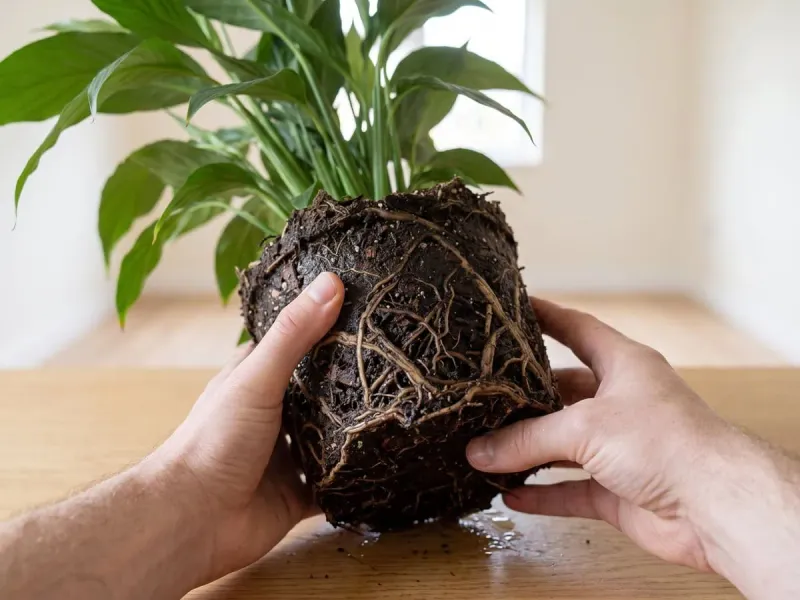
Root checks are for a specific situation: the mix is wet and the plant keeps getting worse. Drooping or brown leaves alone do not tell you the roots have failed, so you do not need to unpot every limp plant.
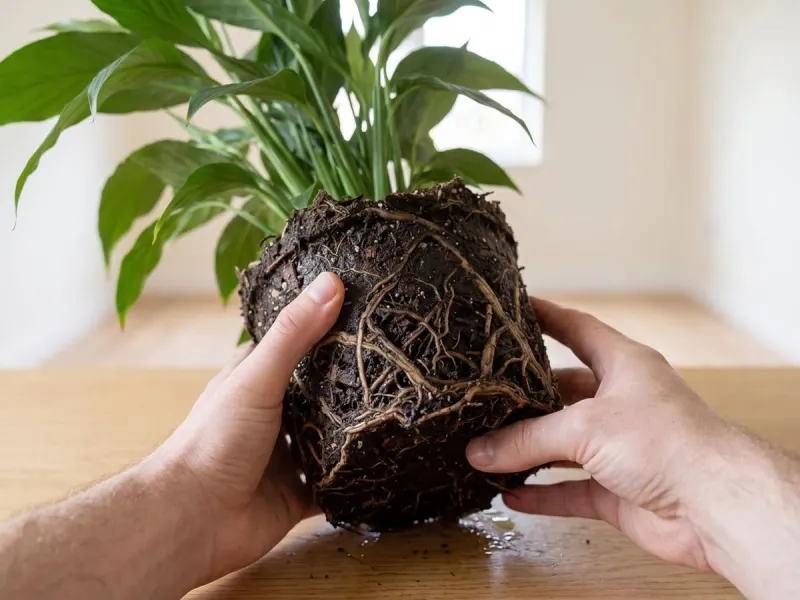
When you do check, slide the plant out of the pot and look at the root ball. Healthy roots tend to be firm.
Black, mushy roots are a warning sign of root rot, according to Ask Extension.
A warning sign is not a final verdict. If you find firm, healthy roots among the damaged ones, the plant may be able to recover.
A root mass that is mostly rotted may not be salvageable, but you cannot know that until you look.
If you find damage, trim off the soft, dark roots with clean scissors and repot in fresh, well-draining mix in a pot with drainage holes. Then water only when the mix tells you it is time.
Go gently and keep your expectations realistic. Some plants rebound, and some do not.
Consider the plant’s location and room to grow
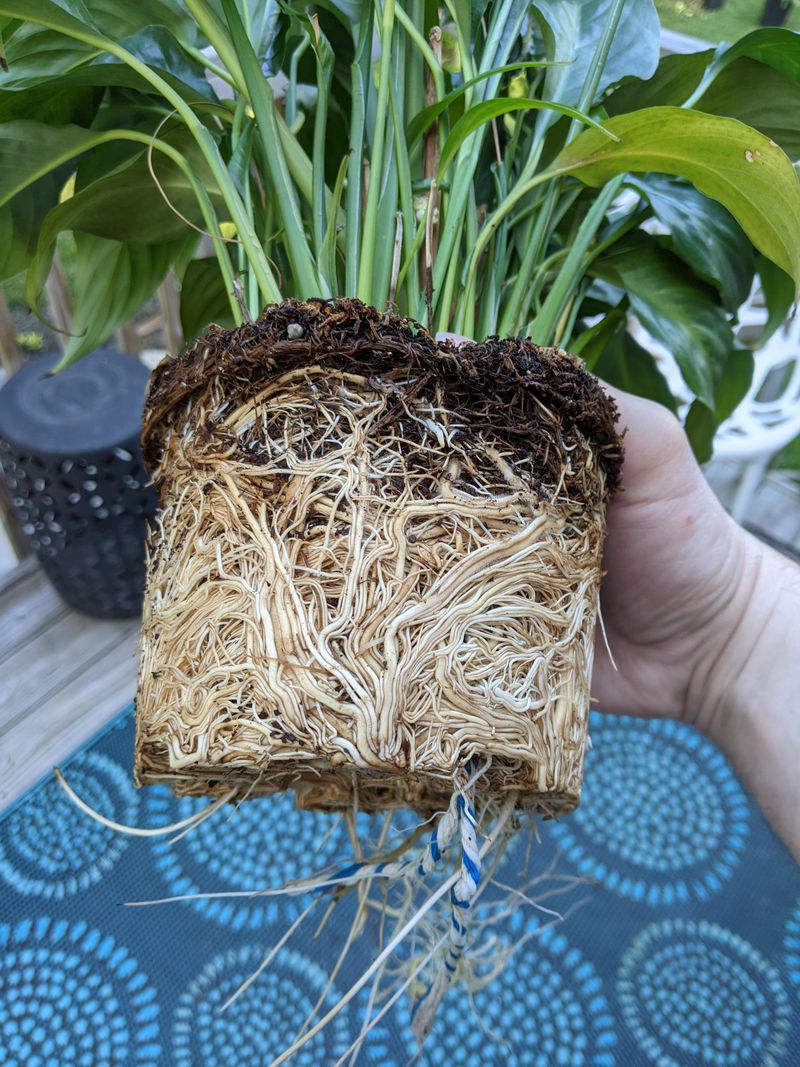
If the mix is neither bone dry nor soggy and drainage looks fine, widen your search to where the plant lives. Direct sun, heat, cold drafts, and air from heating or cooling vents can all stress a peace lily, per Clemson Cooperative Extension.
Temperature extremes can do damage as well.
Try moving the plant to bright, indirect light away from vents and cold glass. Spritzing the leaves is not a fix for drooping, so save your effort for changes that matter.
Next, think about the roots. A plant packed tightly into its pot may dry out fast, wilting between waterings.
Peace lilies tolerate being somewhat pot-bound, so a few roots poking out of the drainage hole do not mean it needs a new pot.
Repotting becomes worth considering when roots crowd the pot or the plant wilts between waterings again and again. In that case, go only modestly larger, one size up.
A much bigger pot holds extra mix that can stay wet and cause the very trouble you are trying to avoid.
Change one thing at a time so you can tell what helped.
Let the evidence guide your next move
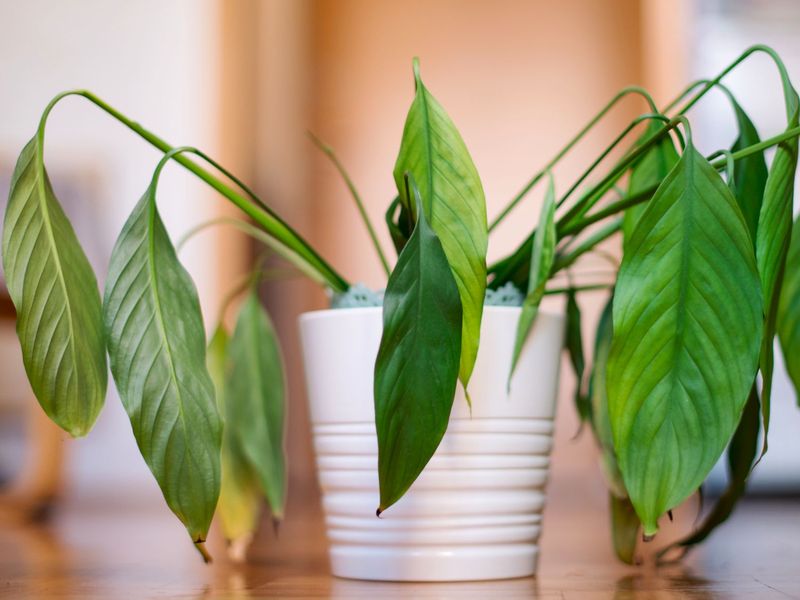
Keep the order simple. Check the mix first.
Water thoroughly only if it is dry, check drainage if it is wet, and look at the roots or the plant’s location if it keeps declining.
Timing and droop cannot name the cause on their own, as Clemson and University of Florida IFAS both suggest by pointing you back to the mix, drainage, roots, and location.
Your peace lily is not hiding the answer. A finger in the soil usually finds it.