
Is a Slug Chewing Holes in Your Hostas? How to Investigate After Dark and Manage the Damage
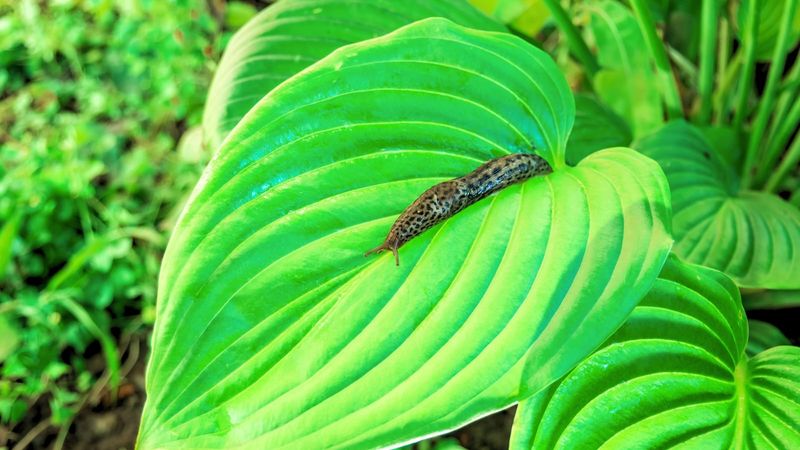
Ragged holes in your hosta leaves can be upsetting, especially when the plant looked perfect last week. Slugs are a common suspect, but they are not the only one.
A quick flashlight visit after dark, plus a few simple clues, can help you work out what is going on. Then you can match your response to the damage without putting your plants or pets at risk.
Slugs deserve the first check, not an automatic verdict
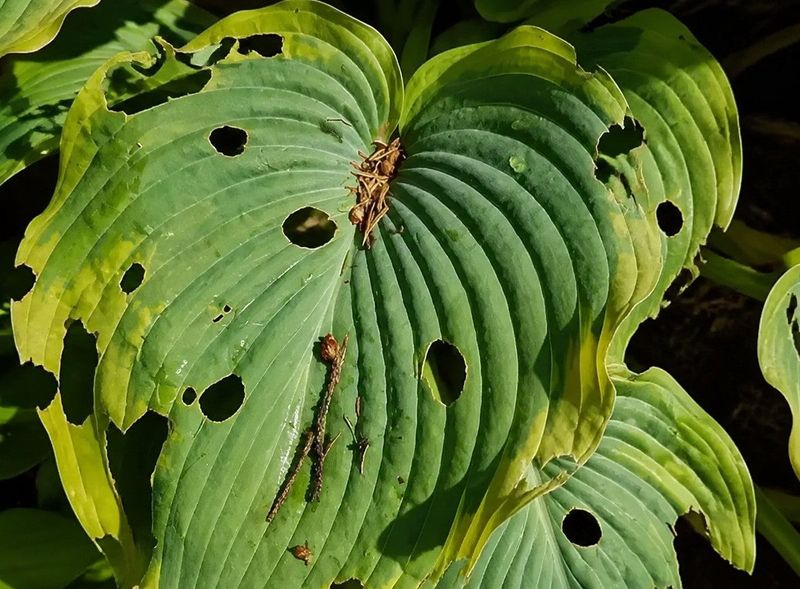
When hosta leaves show ragged, irregular holes, slugs are a smart first suspect. They love cool, damp, shady spots, and that describes the average hosta bed pretty well.
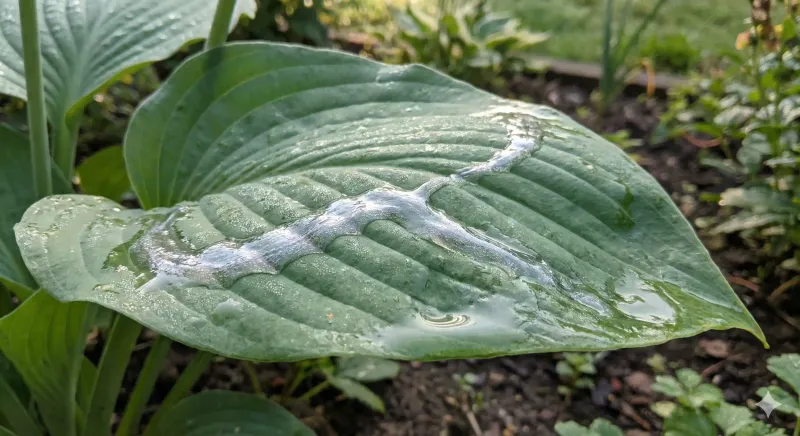
Add a few shiny, silvery slime trails on the leaves or nearby soil, and the case for slugs gets stronger.
Still, a hole is just a hole. University of Minnesota Extension’s hosta diagnostic guide lists several possible causes of leaf holes, including earwigs, cutworms, weevils, animals, and even hail.
So the damage by itself cannot tell you who did it.
The same goes for timing. Many hosta chewers work at night, which means that finding fresh holes in the morning does not prove slugs are responsible.
Slugs are mostly active after dark, and Extension guidance on slugs in home gardens points to looking for the slugs themselves or their slime trails as the more reliable sign.
Think of this as detective work with a simple plan. First, look at the damage pattern and compare it with other likely causes.
Next, go out with a flashlight or set a daytime shelter to see who shows up. Only after you have some evidence should you decide how much effort the problem deserves.
That approach protects your hostas, too. You avoid reaching for products or habits that do nothing for the real culprit, and you keep your response in proportion to what you actually find.
What else could be damaging the leaves?
Before you blame slugs, compare the clues. Earwigs are a good example of a lookalike.
They also feed at night and can chew holes in leaves, but University of Minnesota Extension notes that they do not leave slime trails. If you see holes but no shiny streaks, earwigs deserve a closer look.
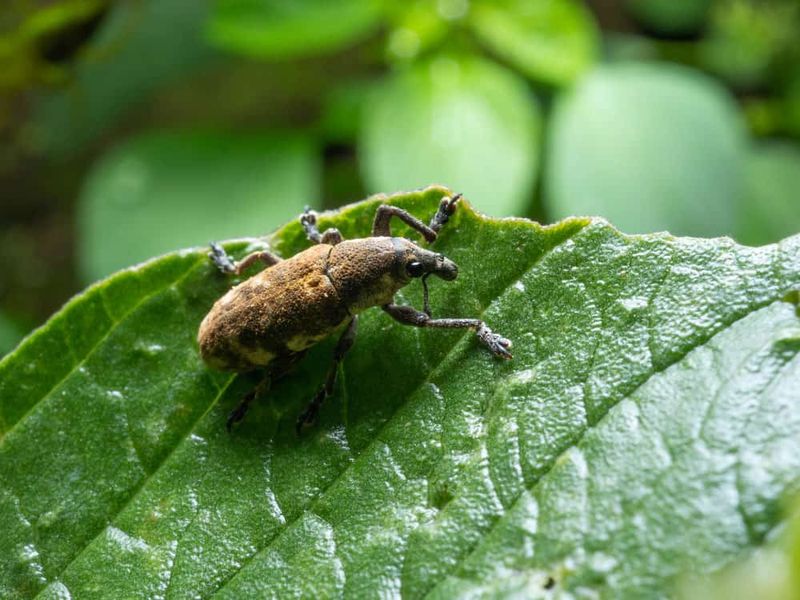
Black vine weevils leave a different signature. Their feeding tends to notch the edges of leaves rather than punch holes in the middle, as described in University of Illinois Extension’s black vine weevil guide.
Scalloped margins on one side of a leaf are a hint to think weevil.
Bigger losses point somewhere else. Deer or rabbits may remove whole leaves or large sections of a plant, and the damage often looks torn or chopped off rather than ragged and holey.
The hosta leaf-hole diagnostic page separates this kind of animal feeding from other problems.
Hail is another option, especially if a severe storm rolled through recently. Hail damage shows up after that weather event, often on many leaves at once, and it tends to affect the plants that were most exposed.
Hostas in a sheltered bed under a roof or dense tree may look fine while those in the open are shredded.
Jot down what you see: where the holes are, how big, and whether there are slime trails. Those notes will make the next steps much easier.
Use a flashlight to inspect after dark
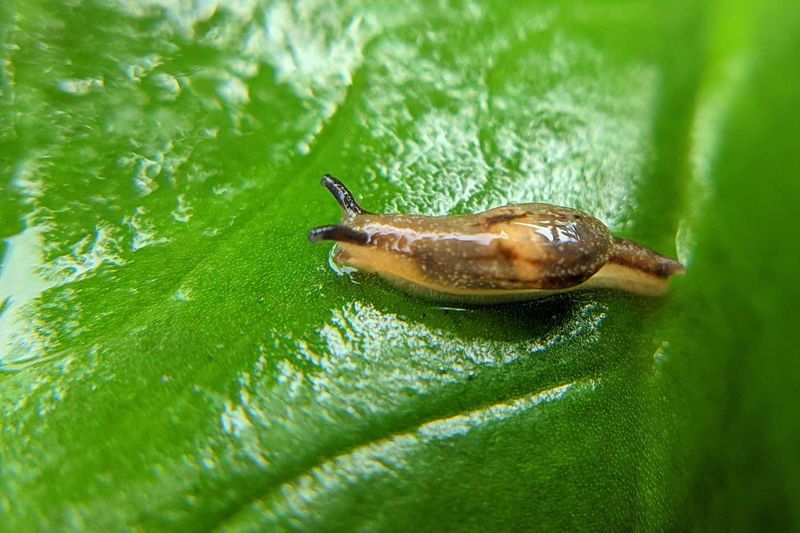
Grab a flashlight an hour or two after sunset, ideally after a damp day or an evening watering, and take a slow walk past your hostas. Slugs are most active when it is dark and moist, so this is when you have the best chance of catching one in the act.
A red-tinted light can make it a bit easier not to startle other critters.
Check both sides of the leaves, since slugs often hide underneath. Look at the base of the plant where the stems meet the soil, then sweep the light over nearby mulch, stones, edging, and any other cool, sheltered spots.
University of Minnesota Extension recommends this kind of nighttime search, and Illinois Extension also points to slime trails as a sign of slug activity.
If you find slugs or fresh trails on or near the chewed leaves, your suspicion gains real support. Do not stop there if you find something else.
Your light might reveal earwigs, which are also night feeders and, according to Extension earwig information, leave no slime behind.
An empty search does not close the case either. Slugs may be hiding elsewhere or may not have come out that night.
A single dark walk gives you a clue, not a verdict, so plan to try again on another damp evening.
Check beneath a daytime shelter
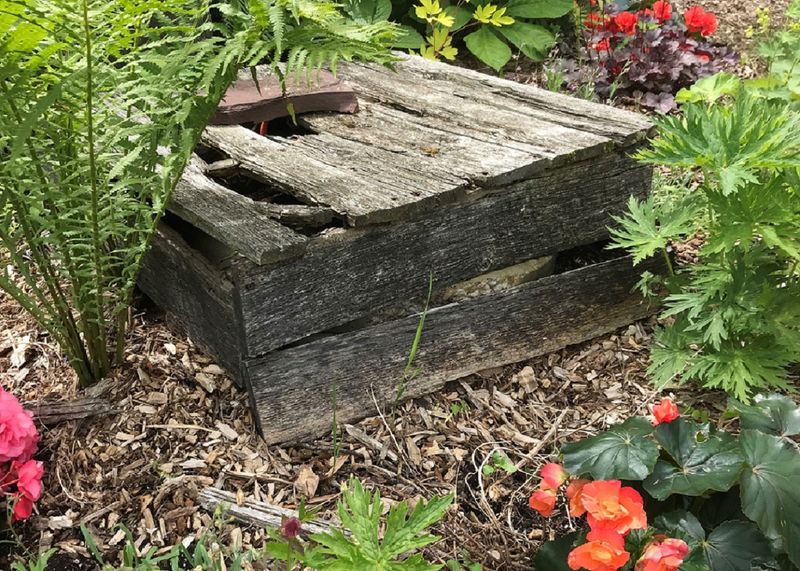
Not everyone wants to wander the yard in the dark, and that is fine. Slugs look for cool, damp hiding places during the day, so you can give them one and check it later.
Lay a damp board, a flat piece of wood, or a similar shelter on the soil close to your hostas in the evening.
The next morning, lift it up and see who has moved in. This simple method comes from University of Minnesota Extension’s slug guidance.
Any slugs you find underneath can be removed, such as by dropping them into a container of soapy water or sealing them in a bag for disposal.
Treat the board as a monitoring tool and a collection spot at once. If several slugs are tucked underneath, you have good evidence that they live in your bed.
If you find nothing, that does not clear them completely, because they may simply have chosen a different hiding place.
Repeat the check over several mornings, especially after rain or on humid days. A pattern is far more useful than a single look.
Keep gloves handy, and move the shelter every so often so you can see whether numbers are rising or falling.
Reduce shelter without drying out the hosta
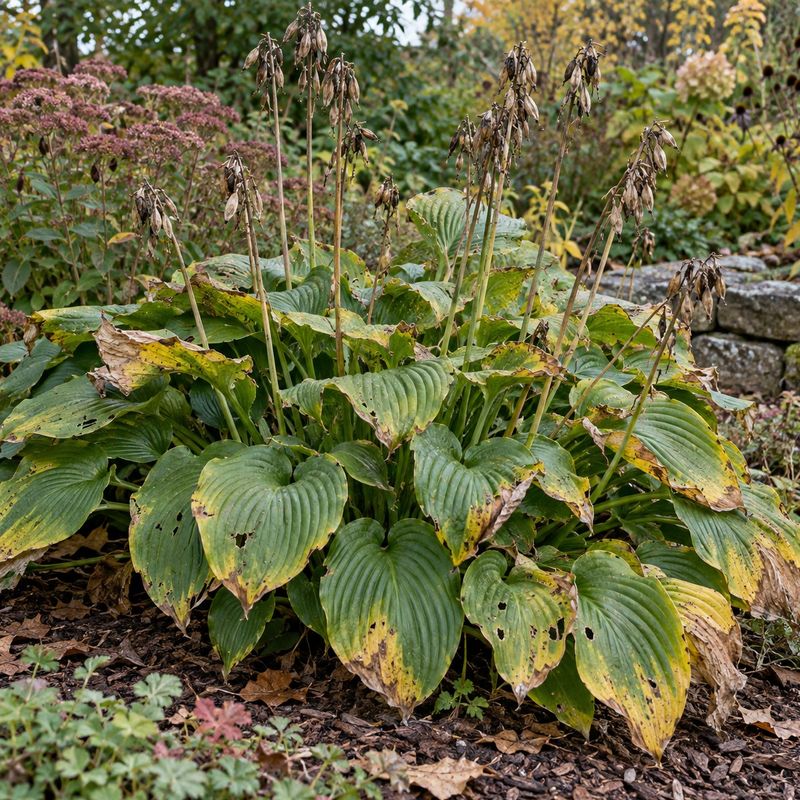
Slugs need somewhere to wait out the day, and a messy bed offers plenty of choices. Fallen leaves, old boards, bricks, pots, and other debris all make good hideouts.
Clearing them away leaves fewer comfortable spots near your hostas, a step that Extension slug guidance recommends.
Watering habits matter too, but be careful here. Water in the morning so leaves and soil have time to dry by evening, and avoid keeping everything soggy overnight.
Illinois Extension’s hosta slug article describes the benefit of keeping the bed from staying wet around the clock.
Do not go too far, though. Hostas have big leaves and need steady moisture, and a drought-stressed plant is not a happier one.
Give it the water it needs, just earlier in the day and without creating constant puddles.
Cleanup helps, but it is not a magic reset. Slugs can persist in protected places, such as under thick groundcover, deck edges, or neighboring beds, and local weather plays a big part.
As Penn State Extension’s slug overview makes clear, control is usually an ongoing effort rather than a one-time fix.
A good habit is to tidy the bed in spring and again in fall, and spot-check after rainy stretches.
Beer and copper have practical limits
Some gardeners swear by beer or yeast traps, and others get little from them. Both are possible add-ons, not guaranteed answers.
A shallow container sunk to soil level and filled with beer or a yeast mixture can attract slugs, which then drown.
The catch is upkeep. University of Minnesota Extension notes that these traps need regular checking and refilling to keep working.
Rain can dilute them, and a full trap of old slugs is not much fun to deal with.
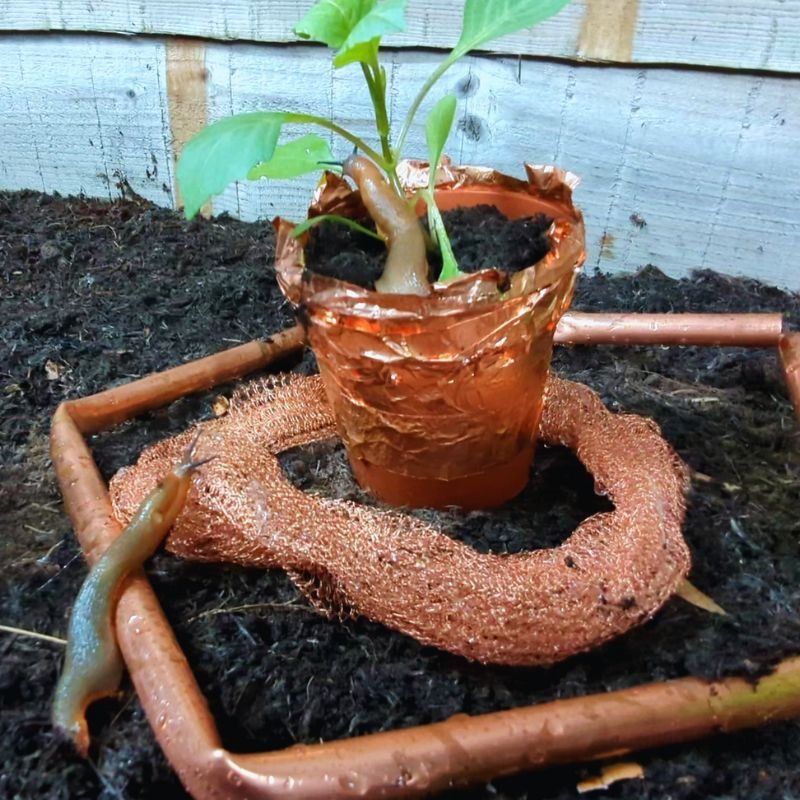
Copper barriers have their own limits. The strips need to be wide enough to work, and they are most practical around containers, raised beds, or other small areas rather than a long, sprawling hosta border.
A narrow strip, or one bridged by a leaf or mulch, may not stop much.
If you want to try either method, think of it as one tool among several. Pair it with your flashlight checks and with shelter reduction, and keep your expectations realistic.
Neither trick will wipe out the slugs in your yard, and you may still need to keep monitoring.
A potted hosta with a copper band is a reasonable experiment. A whole shady bed is a much bigger job.
Check the label before using slug bait
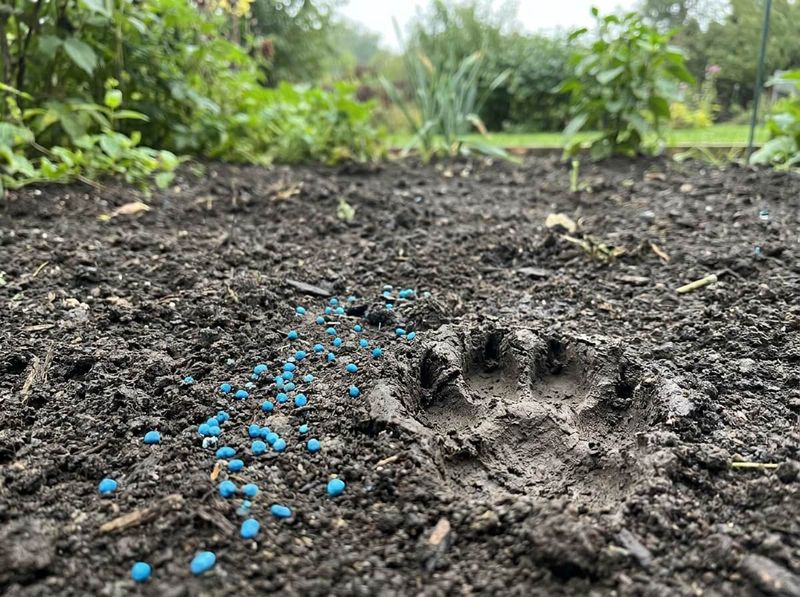
If you decide to try a commercial slug bait, start with the label. Find the active ingredient and read the directions for that exact product.
Baits are not interchangeable, and the rules on one box may not apply to another.
The ingredient matters a lot for pets. According to the National Pesticide Information Center, metaldehyde is highly toxic to dogs and other animals.
Baits containing iron phosphate or ferric sodium EDTA are less toxic to dogs, but less toxic does not mean risk-free.
So keep pets away from any bait, no matter what is in it. Apply it only as the label directs, and store the package where animals and children cannot reach it.
If a pet eats some, call your veterinarian or a poison hotline promptly.
One more reminder: slugs are mollusks, not insects. A general insecticide is not a slug treatment, and Wisconsin Horticulture’s slug page makes that distinction clear.
Look for a product made and labeled for slugs and snails.
Bait is one possible supplement, not the first step. Extension guidance treats it as an option alongside monitoring and cleanup.
And please skip the salt, which can harm your soil and your hostas.
Match your response to the damage
A sensible plan goes in steps. Confirm who is eating your hostas, then monitor and collect, reduce extra shelter, and add limited controls only if you still need them.
Each step builds on the one before it.
Take a deep breath about the holes themselves. Extension guidance explains that low to moderate slug feeding often affects how an established hosta looks more than how healthy it is.
Heavy feeding is more worrying, and seedlings and young plants deserve extra protection.
Expect to keep checking rather than win once and for all. As Penn State Extension describes, slugs are hard to eliminate completely.
A few minutes with a flashlight after rain goes a long way.
Your hostas will usually forgive a few lacy leaves, and next year’s growth will fill in the gaps.