
A Late October Routine That May Encourage Your Christmas Cactus to Bloom in North Carolina (No Guarantees for Christmas)
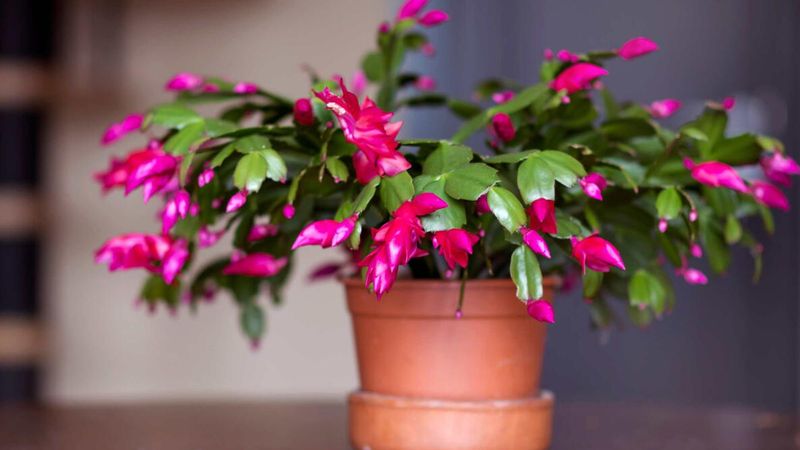
Your holiday cactus may be sitting on a windowsill right now with no buds in sight. These plants set flowers based on long nights and cooler air, so what you do in the next few weeks matters.
Late October is later than ideal, but there is still a calm, simple routine worth trying. Here is how to set it up indoors and what to expect.
Late October Is a Late Start, Not a Cutoff
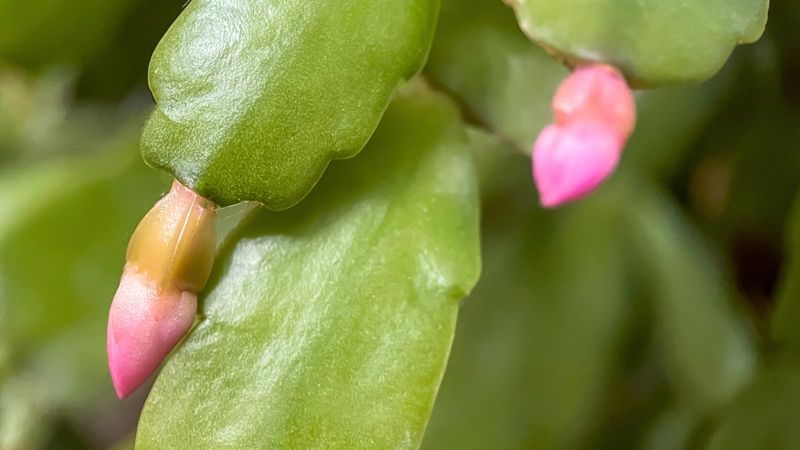
Holiday cacti pay attention to the seasons. As days shorten and nights cool in autumn, the plant gets the signal to start making flower buds.
Indoors, you can copy that signal with a steady routine of bright days and long, dark nights.
Timing is where expectations need a reality check. UConn’s holiday cactus guide suggests starting short-day treatment for Christmas cactus around October 1.
If you are reading this in late October, you are about three or four weeks behind that suggestion.
That does not mean it is too late to try. Starting now may still encourage buds to form, and some plants respond faster than others.
It just means the routine is less likely to be a dependable path to flowers on December 25.
Extension guidance generally calls for several weeks of treatment. University of Minnesota Extension describes a period of about four to six weeks.
Even then, forming buds is one step, and opening flowers is another that takes more time.
So think of a late October start as a reasonable effort with an uncertain finish line. You might get blooms near the holidays, or they might open in early January.
Both are normal outcomes for an indoor potted plant, and neither means you did something wrong.
This advice is for plants kept in pots inside your home. Indoor light and temperature are what count here, not what your yard is doing.
There is no statewide North Carolina start date, so your own room conditions are the guide.
The Name on the Pot May Not Predict the Bloom Date
Plenty of plants sold as Christmas cactus are not true Christmas cactus. UMass Amherst Extension reports that most commercial holiday cactus cultivars are Thanksgiving cactus or hybrids.
The label at the store may simply reflect the season it was sold.
This matters because the bloom schedules differ. Under natural day lengths, Thanksgiving cactus flowers about four to six weeks earlier than Christmas cactus.
If yours is really a Thanksgiving type, it may already be setting buds, or it may have bloomed before you ever started a routine.
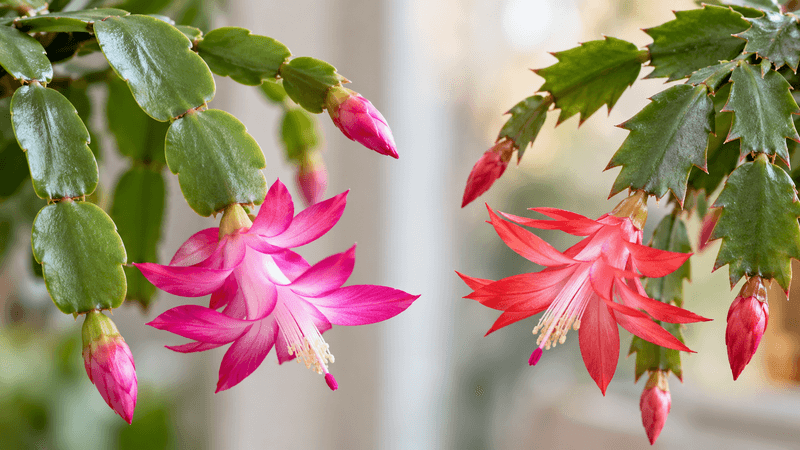
Segment shape can give you a clue. University of Illinois Extension explains how to tell them apart by looking at the stem edges.
Thanksgiving types tend to have pointed, tooth-like projections, while true Christmas cactus segments look more scalloped and rounded.
Hybrids blur those lines, though. A plant might show a mix of features, and you may not be able to say for sure what you have.
That is fine, because the care routine is nearly the same either way.
Take a look at your plant today and see which description fits best. Then use it to set loose expectations rather than a firm date.
If the buds show up early, or a bit late, the plant is simply following its own genetics.
Give It Bright Days and Long, Unbroken Nights
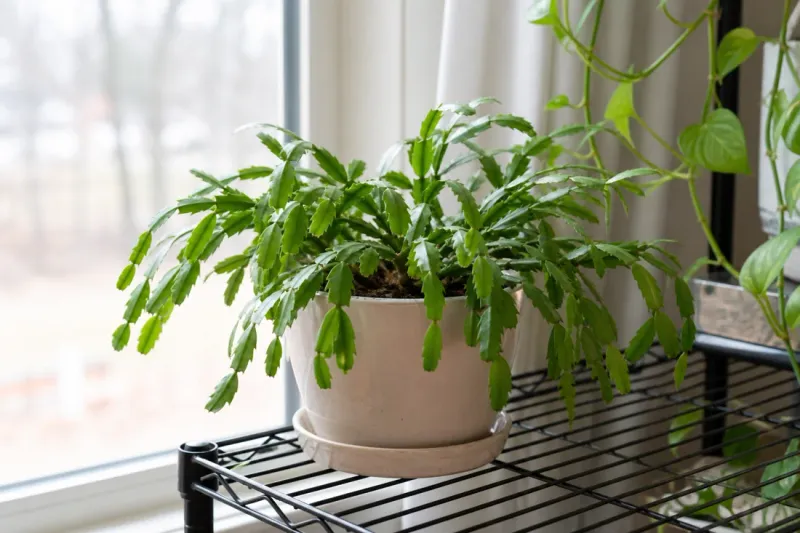
The core of the routine is a contrast. During the day, put the plant where it gets bright, indirect light, such as near an east or north-facing window.
At night, it needs real darkness without interruption.
A commonly cited goal is about 12 to 14 hours of uninterrupted darkness each night for roughly four to six weeks. Extension advice varies, though.
Iowa State University Extension and University of Illinois Extension give somewhat different numbers, and some sources suggest even longer nights. Treat 12 to 14 hours as a practical target, not a strict rule.
The easiest approach is a room nobody uses in the evening, like a spare bedroom or an unused dining room. Lamps, kitchen lights, and TV glow can all break up the dark period.
Even a short burst of light may interrupt the process.
If you cannot move the plant, you can place a cardboard box or a dark cloth over it each evening and remove it in the morning. Keep the routine steady, since UConn’s guide ties bud formation to consistent short days.
Put the cover on at the same time each night.
Mark your start date on a calendar. Four to six weeks gives you a general window to watch for tiny buds at the stem tips.
Buds are not guaranteed, but this schedule gives the plant a fair chance.
Cool Conditions Help, but Avoid Temperature Extremes
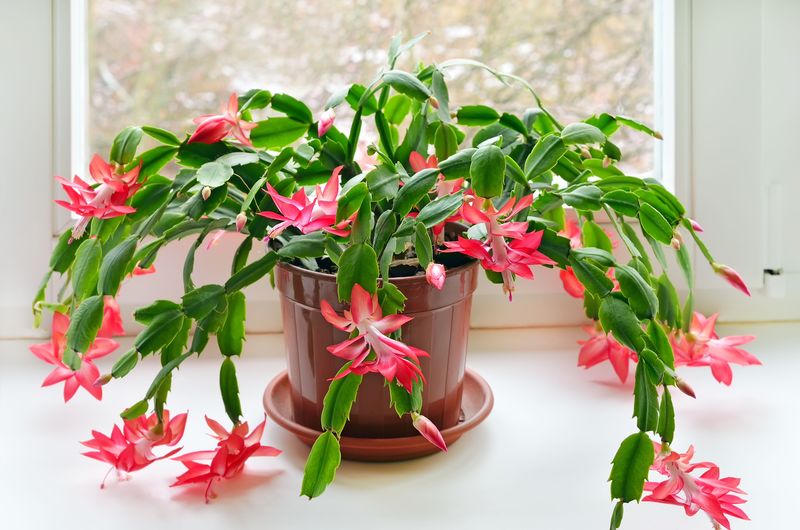
Cooler air is the second part of the setup. University of Minnesota Extension supports daytime temperatures around 65 to 70°F and nights around 55 to 65°F.
Most North Carolina homes can hit that range in a room with the heat turned down a bit at night.
Think of these numbers as practical guidance. They are not magic triggers, and no single temperature is guaranteed to cause blooms.
A plant at 60°F is not going to behave exactly like one at 55°F.
Sources also disagree on how temperature and darkness work together. University of Illinois Extension notes that nights near 55°F may encourage flowering even without short days.
Because the advice varies, it makes sense to combine both cues instead of relying on one.
A spare room, an enclosed porch that stays mild, or a spot near a window with a cooler pocket of air can work well. Check the temperature with a simple thermometer for a few days.
Then adjust the location rather than the thermostat for the whole house.
Do not use cold as a shortcut. Do not leave the plant by a drafty door, on a freezing windowsill, or outside on a chilly night to force buds.
Sudden swings stress the plant, so aim for cool and steady rather than cold.
Keep Care Steady as Buds Develop
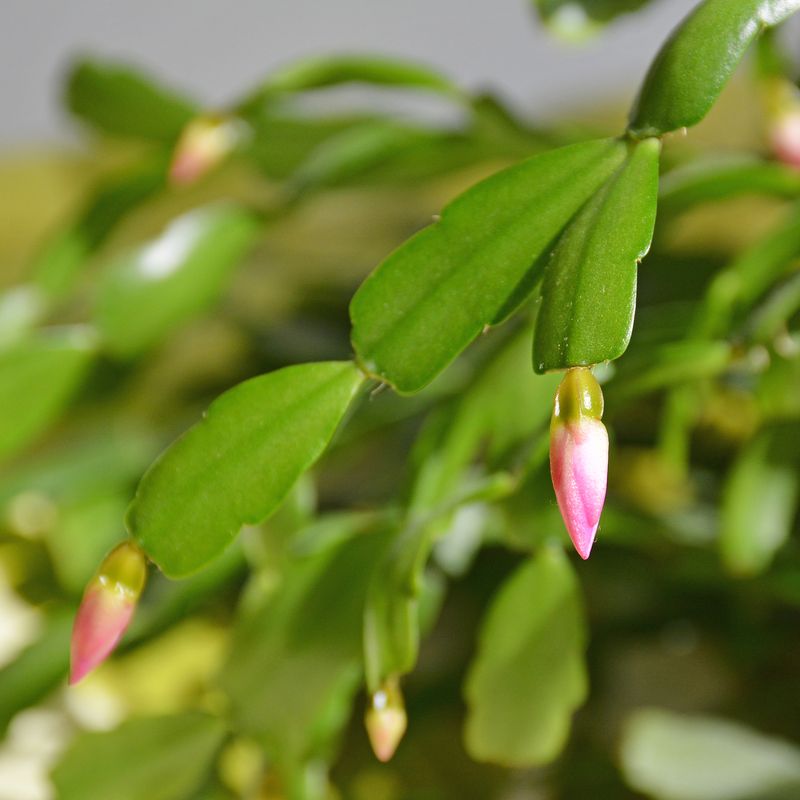
Once the routine is running, steady care protects your effort. Holiday cactus is an epiphyte, meaning it naturally grows on trees in tropical forests rather than in desert sand.
That is why it should not be treated like a desert cactus.
Water it sensibly. Iowa State University Extension advises avoiding both overwatering and letting the mix get excessively dry.
A good habit is to check the top of the soil and water when it feels slightly dry, then let extra water drain away.
Do not keep the plant bone-dry in hopes of forcing flowers. Drought stress can lead to shriveled segments and dropped buds.
Soggy soil is just as risky, since roots sitting in water can rot.
Avoid moving the plant around once buds appear. University of Wisconsin-Madison Extension points to changes in light, temperature, and drafts as common reasons for buds to fall off.
Keep it away from heating vents, exterior doors, and fireplaces.
Steady care lowers the odds of stress, but it cannot prevent every problem. Even a well-kept plant may drop a few buds.
If that happens, check for a recent move, a draft, or a watering swing, and keep conditions calm.
Bring Outdoor Pots Inside Before Cold Threatens
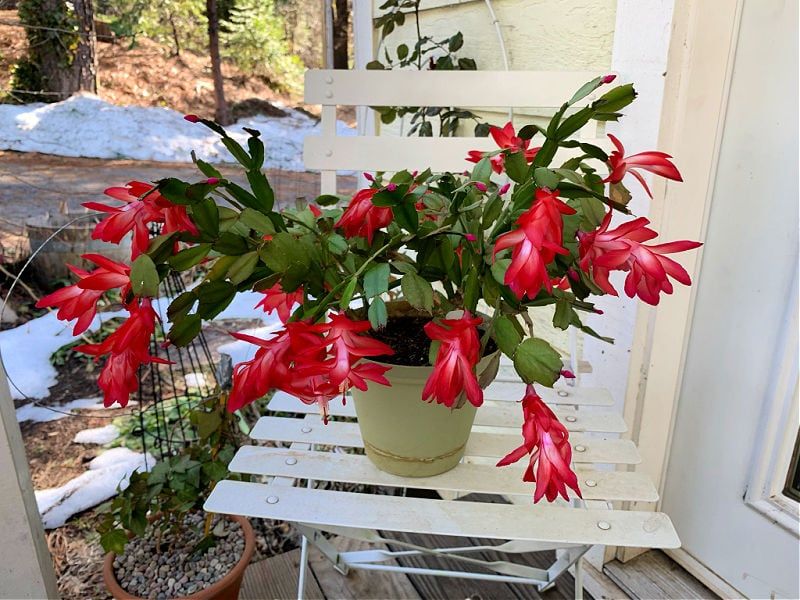
Some people keep their holiday cactus on a porch or patio through the warm months. If yours is still outside, plan to bring it in before temperatures fall below roughly 50°F or frost threatens.
UConn’s guide gives this as a safe cutoff.
Cold can damage the plant and may cause buds to drop. University of Wisconsin-Madison Extension also warns that cold exposure can harm these plants.
This is a protective step, not a trick.
It is different from using cold nights to force flowers. Chilly air outdoors is not a dependable way to trigger buds, and it risks hurting the plant.
Cool and steady indoors is the safer way to get that benefit.
North Carolina locations do not all reach these conditions on the same date. Mountain areas may see frost much earlier than the coast, and a sheltered porch may stay warmer than an open yard.
Watch your own forecast and nighttime lows.
When you bring the pot in, check it for pests and set it in its dark-night spot right away. Try not to shuffle it between several rooms.
One move, then a steady routine, is easiest on the plant.
Set the Schedule, Then Let the Plant Decide
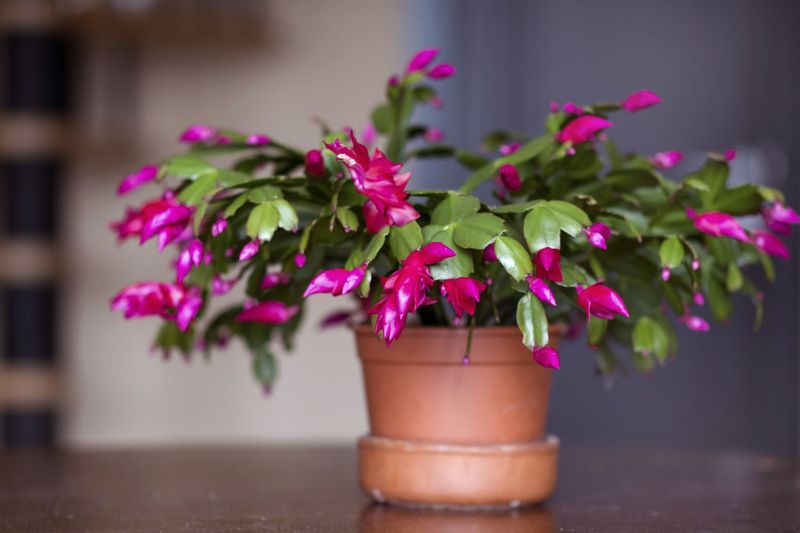
Your next steps are simple: bright days, long unbroken nights, cool and steady air, and calm watering. UConn and Iowa State both back this kind of routine.
It may encourage flowering, but it cannot guarantee a Christmas bloom.
Mark your start date and check the stem tips each week. A cactus that blooms in January is still a good result.