
Could Your Tap Water Be Why Your Peace Lily’s Leaf Tips Are Turning Brown?
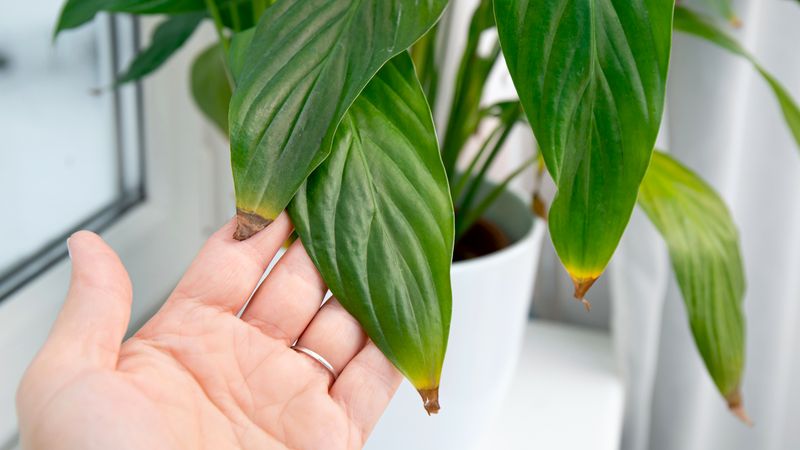
Brown tips on a peace lily can make you worry that you’re about to lose a plant you love. Many owners reach for the watering can first, but more water is not always the answer.
Water quality and your watering habits may play a part, along with a few other things. Here is how to check your plant’s clues before you change anything.
Brown tips are a clue, not a diagnosis
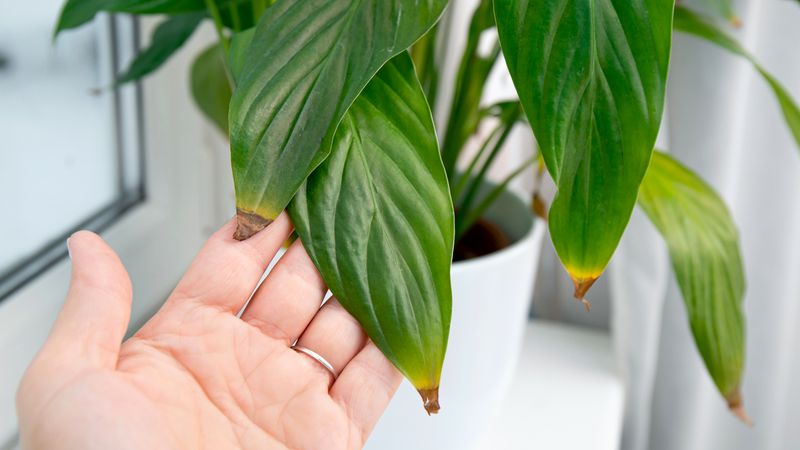
Crispy brown tips on your peace lily look alarming, but they do not point to one single cause. Brown tips are a general stress signal, and plants show it in much the same way no matter what is bothering them.
UC Statewide IPM guidance on houseplant problems lists several possible causes, including overfertilizing, salt buildup, soil that is too dry or too wet, low humidity, strong sun or heat, and drafts. Any one of these can leave a leaf tip brown and dry.
Water quality is one possibility worth a look. University of Missouri Extension notes that fluoride-related tip burn can show up in Spathiphyllum, the plant group that includes peace lilies.
Still, that does not mean your tap water is the problem in your home.
Watering habits matter too, but the fix is not always more water. Soil that stays soggy can damage roots, and the leaves may then look as though the plant is thirsty.
Adding water to a plant that is already waterlogged can make things worse.
So start by gathering clues before you change anything. Feel the soil a couple of inches down, look at the pot and soil surface for white crust, and notice where the plant sits.
Check for bright direct sun, a heating vent, or a drafty window. Look at whether the tips are the only issue or whether the whole leaf is yellowing or drooping.
Once you have a few clues, you can match one small change to what you find. That approach is safer for your plant than guessing, and it keeps you from changing too many things at once.
Fluoride and soluble salts can affect peace lilies
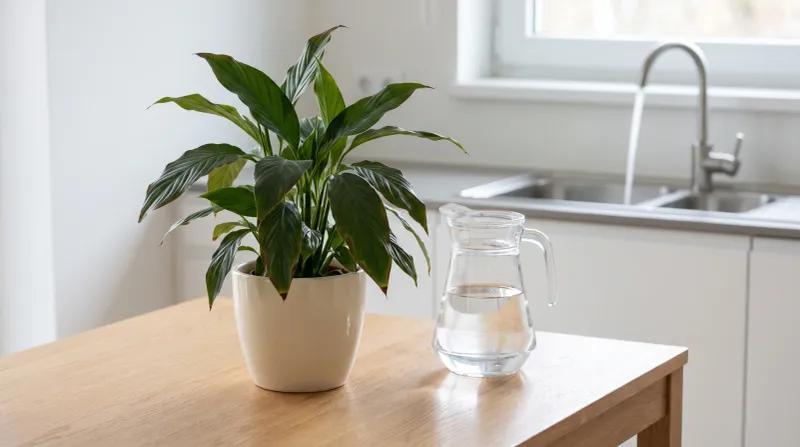
Peace lilies have a reputation for being a bit picky about water. Illinois Extension describes them as sensitive to fluoride and to soluble-salt buildup in the soil.
Those are two different concerns, and it helps to keep them apart.
Fluoride is a specific mineral that some water supplies contain. Missouri Extension names fluoride as a cause of tip burn in Spathiphyllum.
Not every water supply carries enough to bother a plant, and levels differ from town to town.
Soluble salts are a broader group. They come from dissolved minerals in water and from fertilizer, and they can slowly collect in potting mix as water evaporates and leaves them behind.
Heavy feeding can add to the pile, even if your water is fairly gentle.
Because the two problems are not the same, one remedy will not fit both. A step that cuts salt buildup may do little about fluoride, and the other way around.
That is why it helps to figure out which one, if either, fits your situation.
Think of water quality as a reasonable thing to investigate, not a verdict. Your peace lily may have perfectly fine water and still show brown tips because of light, humidity, or watering habits.
The next section covers clues that can nudge you toward or away from the water source.
Which clues point to the water source?
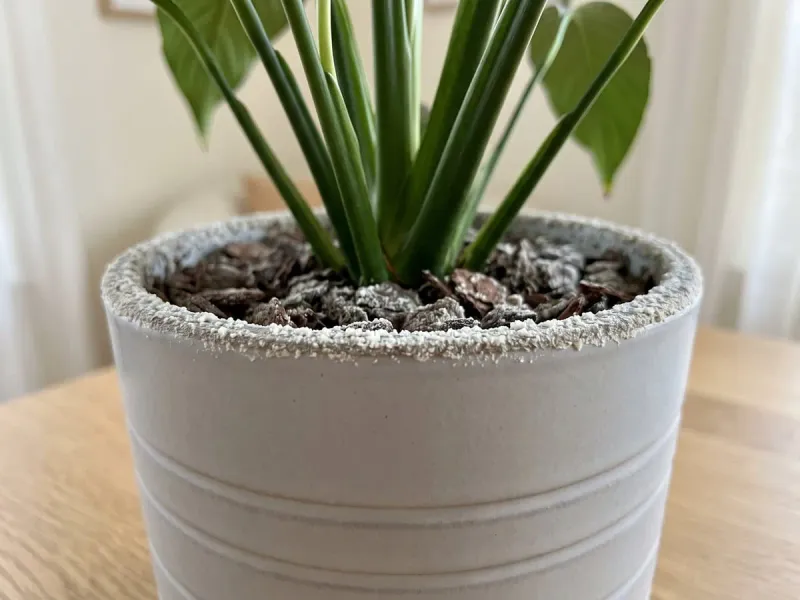
A white, crusty film on the soil or around the pot’s rim is worth noticing. University of Maryland Extension explains that mineral and fertilizer salts can leave deposits like this on indoor plants.
If you see it, salt accumulation becomes a fair suspect.
Keep in mind that crust is a hint, not proof. It does not tell you that salts are what turned your leaf tips brown, and it does not reveal where the salts came from.
Fertilizer and water can both add them.
Another clue is whether your home uses a water softener. Penn State warns that softened water can add salts that are hard on indoor plants.
Colorado State University Extension also points to water sources and fertilizer as contributors to salt in potting mixes. If the water at your sink is softened, take note.
Now the balance. Water content varies a lot from place to place, and ordinary tap water is not automatically bad for peace lilies.
Utah State University Extension says tap or well water is usually satisfactory for houseplants in general, aside from softened water.
Before switching anything, jot down what you see. Is there crust?
Is the water softened? Is the soil too wet or the air very dry?
A few notes can show whether water is a likely player or just one of several suspects.
Check the soil before watering again
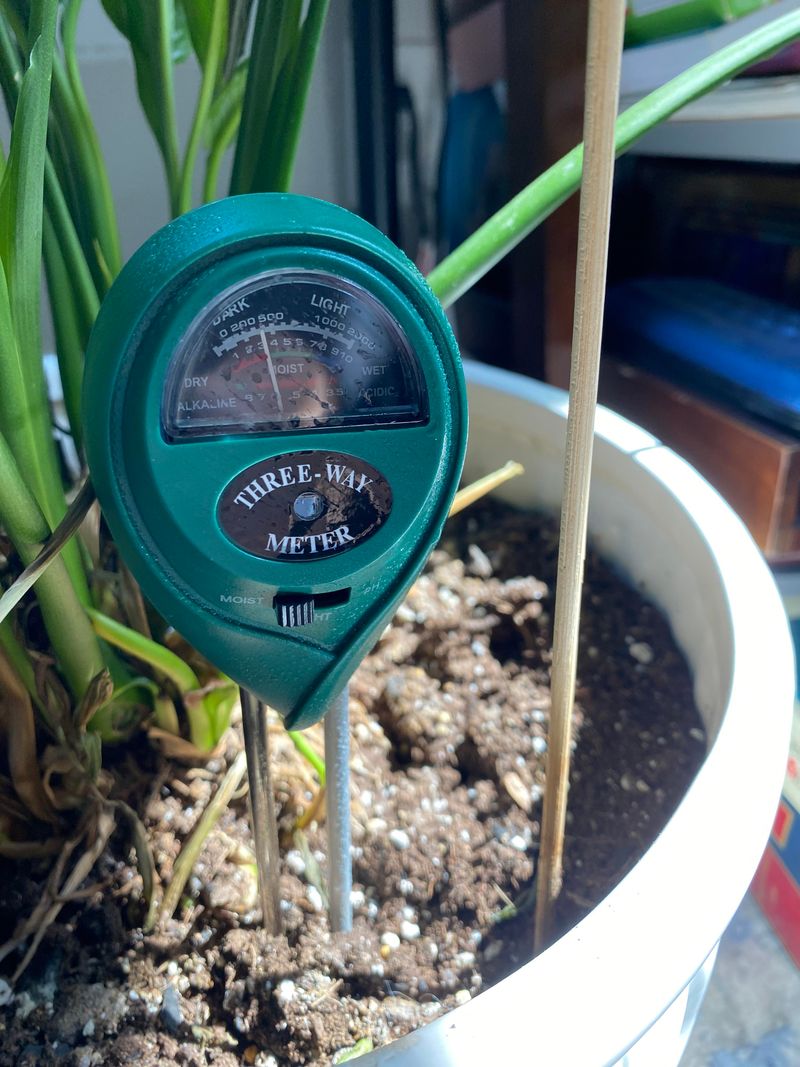
Your finger is the best watering tool you own. Peace lilies do best when the soil stays somewhat moist but not soggy, according to North Carolina State Extension.
South Dakota State University Extension adds that the mix can dry out a little between waterings.
Skip the calendar. Watering every Sunday ignores the fact that light, temperature, and pot size change how fast soil dries.
Push a finger into the mix and water when it feels like the plant needs it.
When you do water, do it thoroughly and let the extra run out through the drainage holes. Then empty the saucer so the pot is not sitting in a puddle.
A pot with no drainage hole is a common hidden problem.
Here is where it gets tricky. University of Maryland Extension notes that overly wet soil can damage roots, and the result can look like drought stress.
A plant with tired leaves and dry tips may be getting too much water, not too little.
If the soil feels wet a couple of inches down, hold off on watering and see how the plant does over several days. If the soil is dry and light, a good soak makes sense.
Either way, let the soil tell you what to do instead of assuming.
Flush suspected salt buildup with care
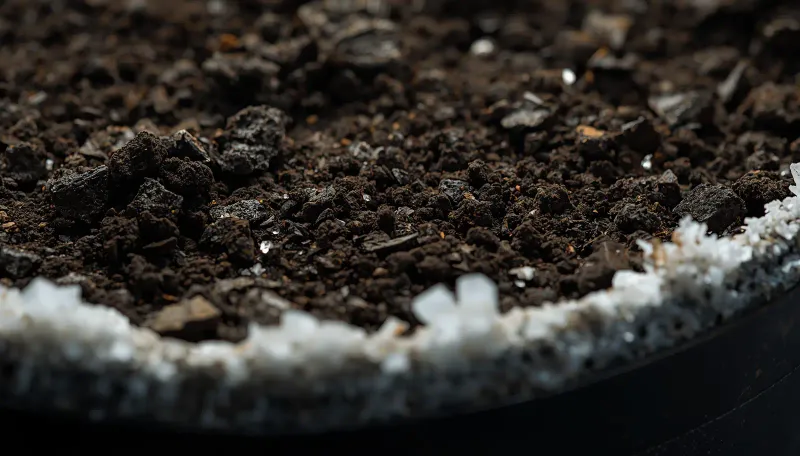
Flushing is a targeted tool, not a routine chore. It makes the most sense when salt buildup seems likely, such as when you can see white deposits on the soil or pot.
If there are no clues pointing to salts, you may not need to do it at all.
First, confirm that the pot drains freely. Flushing a pot with blocked or missing drainage holes just leaves you with a soggy plant.
Fix drainage before you try anything else.
Then slowly pour low-mineral water through the potting mix, as described by Colorado State University Extension. Let it run out the bottom, and give the pot plenty of time to drain thoroughly.
Dump the saucer afterward so the roots are not sitting in the runoff.
Wipe away crust from the rim and the soil surface if you like, since it is easy to remove. University of Maryland Extension also covers these deposits and how they form.
Sometimes the buildup is heavy enough that flushing will not cut it. In that case, fresh potting mix may be the better choice.
Repotting also gives you a chance to look at the roots and the pot’s drainage.
Flushing will not cure damaged tips that are already brown. It is meant to protect new growth, and it will not help if overwatering, low humidity, or light is the real issue.
Choose water based on the suspected problem
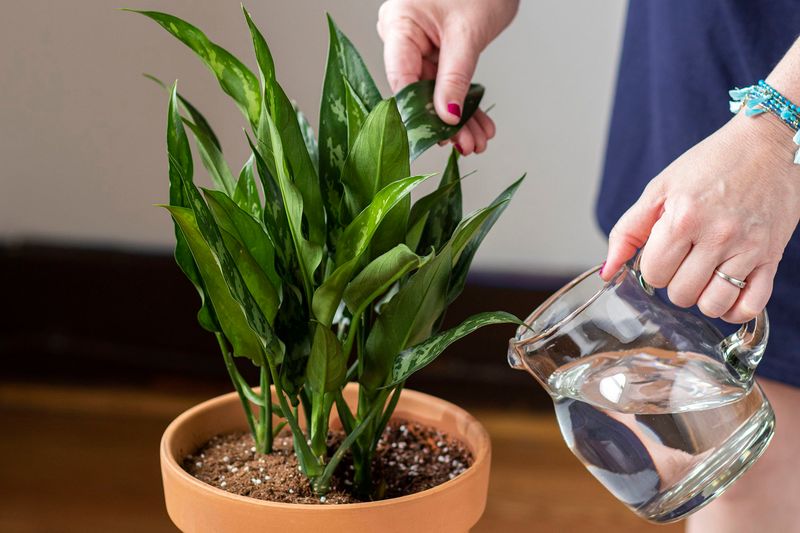
Different worries call for different answers, so match the water to the problem. If your home has a water softener, skip that water for your peace lily.
Penn State explains that softened water can add salts that harm plants. An unsoftened tap, such as an outdoor spigot, may be an easy workaround.
Fluoride is a separate matter. If you have a specific reason to worry about it, CDC guidance on home water treatment says reverse osmosis and distillation may remove or reduce fluoride.
These are options, not requirements.
Be careful with bottled water. CDC fluoridation FAQs note that bottled water can contain fluoride unless the label says otherwise.
Read the label before you assume.
You may have heard that letting tap water sit out overnight removes fluoride. That is not a reliable fix, and the CDC treatment guidance points to reverse osmosis or distillation instead.
Standing water can be handy for letting it reach room temperature, but do not count on it for fluoride.
You also do not need to give up the tap. Utah State University Extension says tap or well water is usually fine for houseplants.
Try a change only if your clues point toward water, and keep in mind that new water will not fix problems caused by drainage, humidity, fertilizer, or light.
Match the fix to the evidence
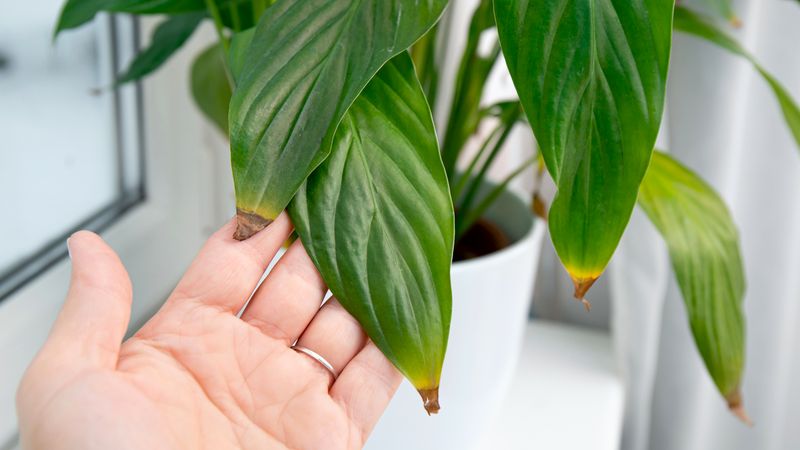
Work through your clues in order. Check moisture and drainage first, since soggy soil is a common trouble spot, as University of Maryland Extension explains.
Next, look for crust or softened water and adjust only if those clues show up.
If water does not seem to be the story, think about light, humidity, and fertilizer, which are all on the UC IPM list of possible causes. Change one thing at a time so you can tell what helps.
Brown tips take time to settle down, so trim them and watch the new leaves for your answer.