
Pulling Creeping Charlie By Hand Never Works – 8 Chemical-Free Tricks That Actually Get The Roots This Fall
You yank a long green vine of Creeping Charlie out of the lawn, feel great about it, and two weeks later it is back like nothing happened. That happens because every tiny piece of stem left behind can grow brand new roots.
Fall is the season when this stubborn weed is weakest and your grass is strongest, so the timing is finally on your side. Here are eight chemical-free tricks that go after the roots instead of just the leaves.
1. Hand-Pulling With a Late-Fall Advantage
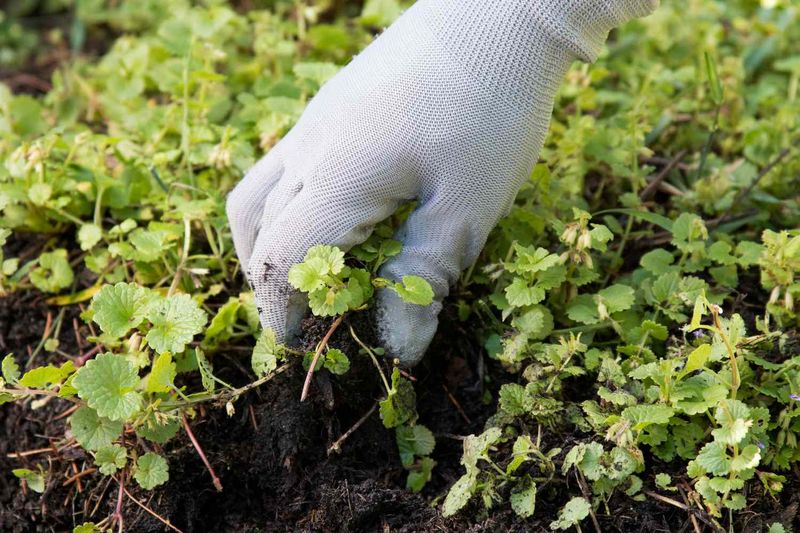
Here is the twist nobody tells you: hand-pulling is not useless, it is just usually done at the wrong time. In summer, Creeping Charlie clings to the soil like Velcro, and the stems snap off at every node.
Each broken piece left behind can sprout a whole new plant.
Late fall changes the game. As the weather cools, the plant tends to loosen its grip, and long strings come up with roots attached.
Wait for a day after a soaking rain, when the soil is soft.
Work slowly and follow each runner to its end instead of grabbing handfuls. Bag everything, since tossing pieces on the compost pile can replant the problem.
Small patches may clear up in just a few sessions done this way.
2. Smothering With Cardboard or a Tarp
Plants need sunlight to feed their roots, and Creeping Charlie is no exception. Cut off the light long enough, and the roots slowly starve.
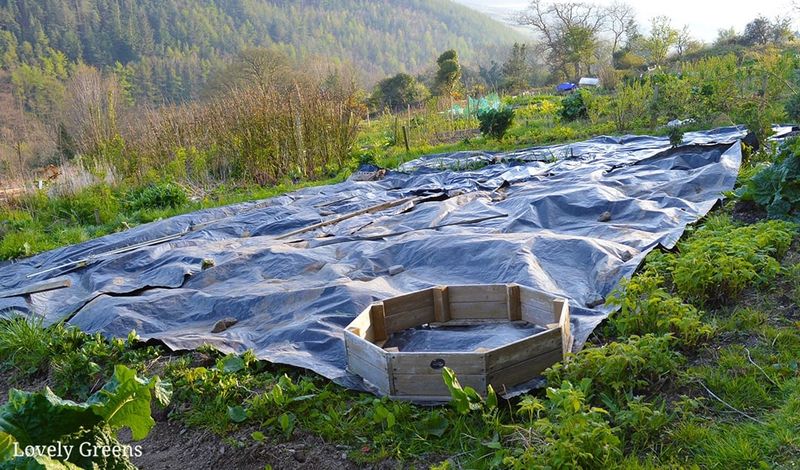
Lay cardboard, thick layers of newspaper, or a dark tarp over the patch. Stretch the cover 6 to 12 inches past the farthest visible vine, because runners love to sneak out the sides.
Weigh it down with bricks or rocks so wind cannot shift it.
Leave it in place for several weeks, and many gardeners keep it on through winter. Just know it will smother your grass too, so pick spots where you plan to reseed.
Think of it as hitting the reset button on a hopeless corner.
3. Aggressive Dethatching
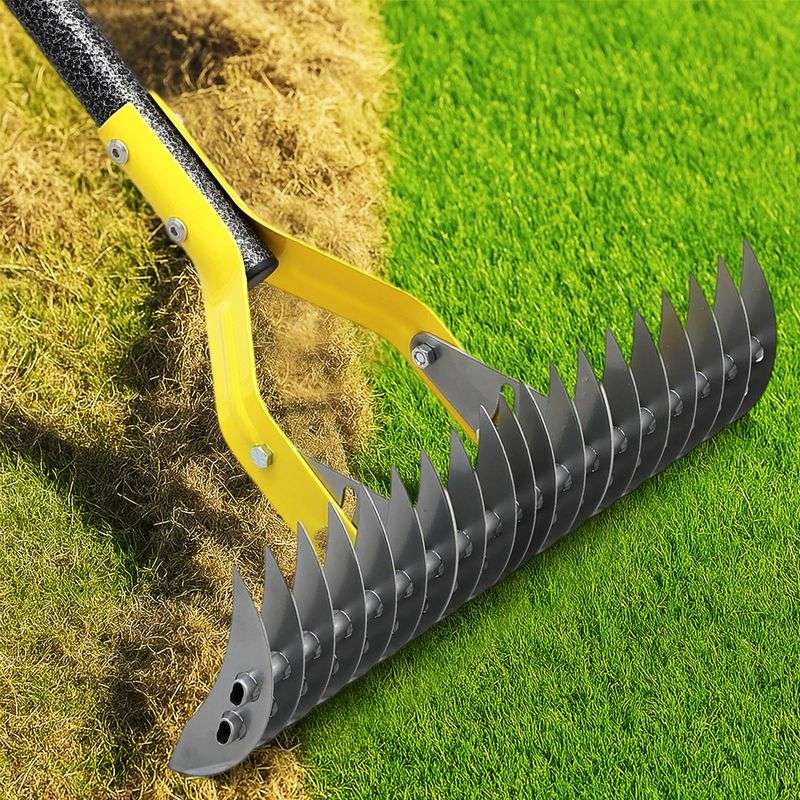
Picture a rake doing the work of a hundred hand pulls. A sturdy dethatching rake, with its sharp curved tines, can tear up long mats of runners in one pass.
The trick works best in late fall or early winter, when the weed is letting go of the soil. Rake firmly in several directions and gather the tangled vines as you go.
You will be surprised how much comes up.
Repeat every week or two through the season. Persistence matters more than strength here.
Afterward, rake up every loose bit so nothing reroots.
4. Fall Core Aeration
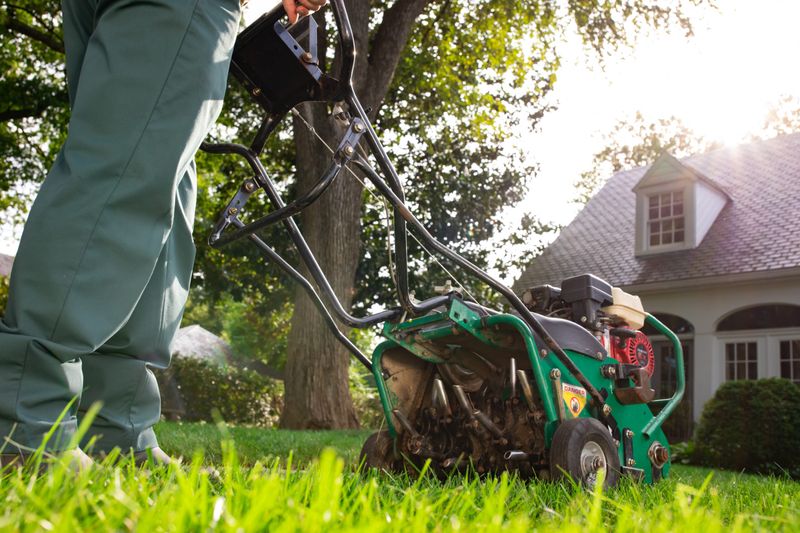
Hard, packed soil is a welcome mat for Creeping Charlie. Grass struggles to breathe there, but this weed shrugs and keeps spreading.
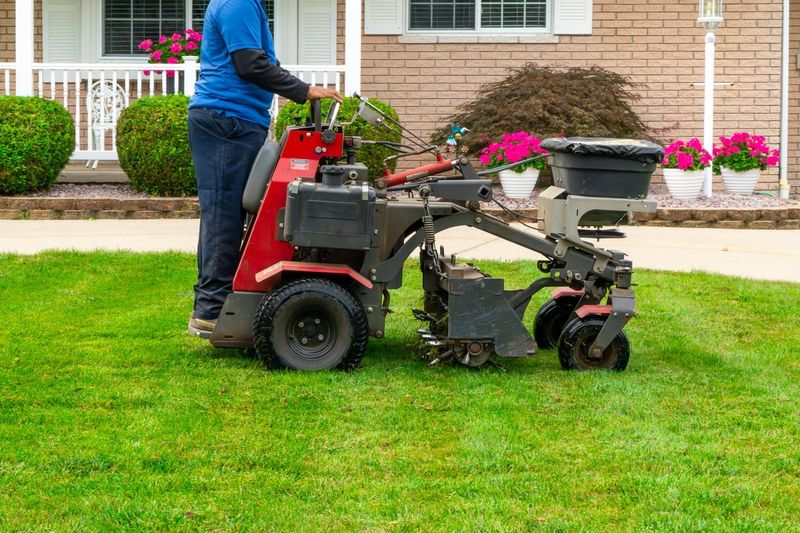
Core aeration pulls small plugs of soil out of the ground, opening space for air, water, and food to reach grass roots. Fall is ideal because cool-season grass is actively growing roots right now.
You can rent a machine or hire it out for a modest cost.
Leave the plugs on the lawn to break down naturally. Aeration will not kill the weed on its own.
It fixes the soil problem that let Creeping Charlie win in the first place.
5. Overseeding for Thick Turf
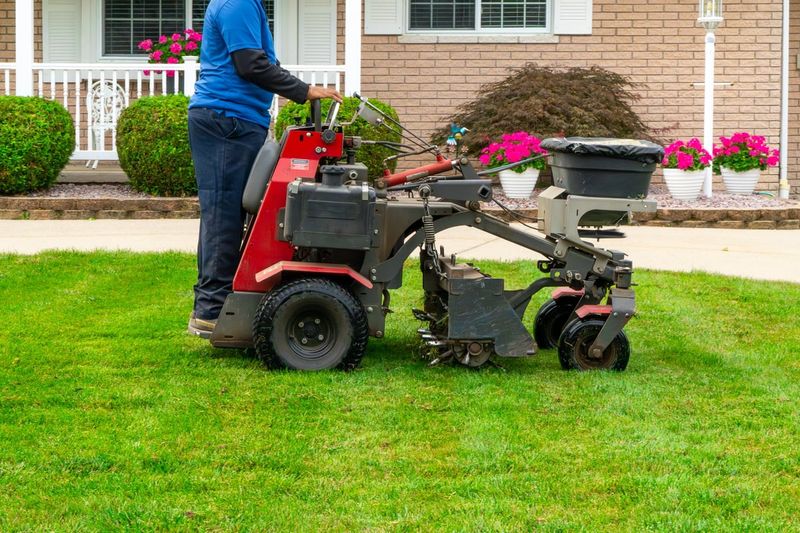
Bare ground never stays empty for long. If you clear out Creeping Charlie and leave the spot open, it will simply crawl back in.
Right after aerating, spread grass seed over thin and bare areas. The seed drops into those holes and gets great soil contact.
Choose a shade-tolerant blend such as fine fescue for darker spots, since shade is exactly where this weed thrives.
Keep the seed lightly moist for a few weeks. A thick, crowded lawn leaves almost no room for runners to root.
It is the most peaceful kind of weed control there is.
6. Smart Fall Fertilizing
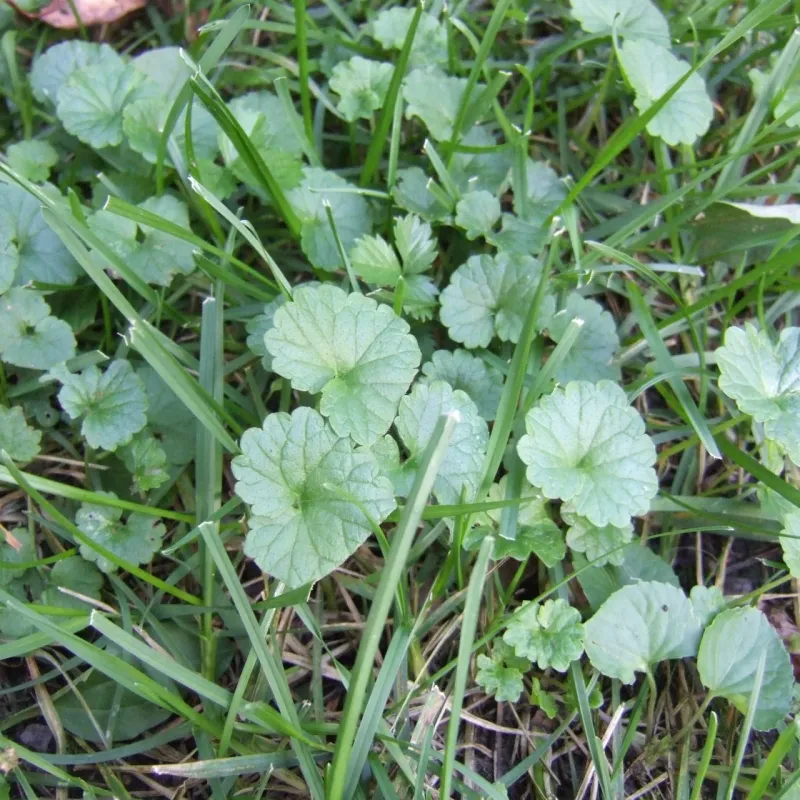
Hungry grass loses fights. Well-fed grass pushes deep roots and fills in gaps before weeds can move in.
A fall feeding, timed to your grass type, helps lawns store energy for winter and green up strong in spring. Cool-season lawns in the North benefit most from fertilizing in early to mid fall.
Warm-season grasses in the South usually want food earlier, so check your local extension office.
Follow the label and avoid overdoing it. Too much nitrogen washes away and wastes money.
The goal is steady strength, not a quick flush of green.
7. Boiling Water for Cracks and Edges
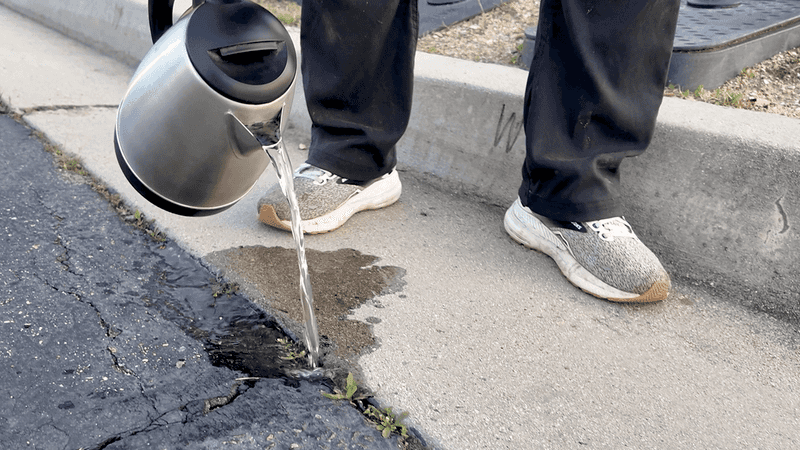
Got Creeping Charlie squeezing out of patio cracks or along the driveway? Your kitchen kettle might be the simplest tool you own.
Pour boiling water slowly and directly onto the plant. The heat can kill leaves, stems, and shallow roots on contact.
Small spots may need a second treatment a week later.
Be careful, though, because boiling water kills anything it touches, including grass and flowers. Save it for hardscape areas, not the middle of your lawn.
And wear closed shoes, for obvious reasons.
8. Iron-Based Broadleaf Weed Products

Did you know iron, the same mineral that keeps lawns green, can be toxic to broadleaf weeds? Creeping Charlie soaks up iron much faster than grass does.
Iron-based products, often sold as FeHEDTA weed control, take advantage of that difference. The weed absorbs too much and blackens, while grass usually stays fine.
It is a non-synthetic option for people avoiding traditional herbicides.
Expect to repeat applications, since tough roots may push out new growth. Spray on a calm, dry day and keep it off concrete, which it can stain.
Combined with thicker grass, it can tip the battle in your favor.