
Why Disturbing a Fire Ant Mound Can Make Control Harder in Your North Carolina Lawn
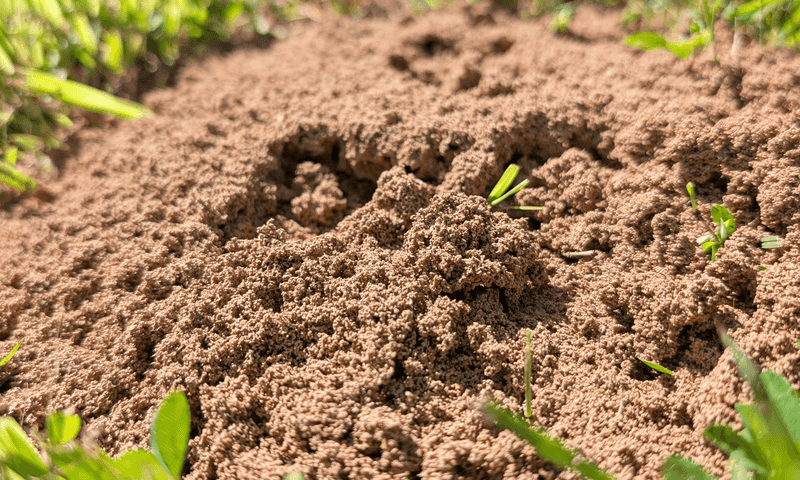
That quick kick at a fire ant mound feels satisfying, but the ants may have other plans. Disturbed colonies can pick up and move, and that can make them harder to control in your North Carolina yard.
The good news is that you have better options than stomping and splashing. Here is how fire ant colonies really behave and what works instead.
A mound does not map the whole colony
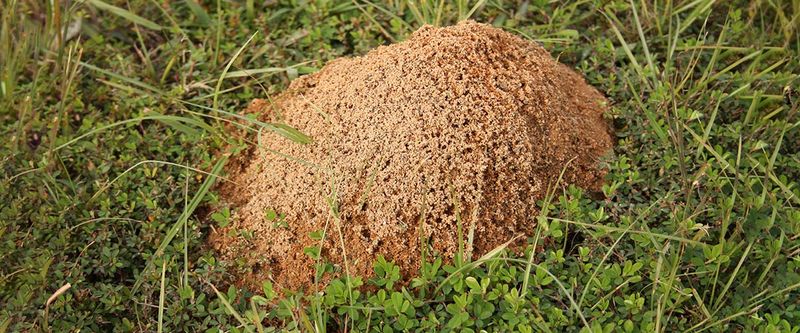
Picture a fire ant mound as a front door, not a blueprint. The dome you see on top of the grass does not necessarily show how far the colony reaches underground or where it will be next month.
According to NC State Extension’s biology guide, fire ants can move between mound sites. Colonies also shift on their own, so a mound that sits in one spot today may be abandoned later even if nobody touches it.
Some colonies have multiple queens, which is another reason a single mound can be a poor measure of what is going on below. A yard with several mounds might hold several separate colonies, or it might hold connected activity.
You cannot tell by looking at the surface alone.
UGA Cooperative Extension makes a similar point in its guidance on imported fire ants in urban areas: colonies commonly relocate after being disturbed. That is a real risk, and it is the reason casual disturbance is a poor strategy.
Still, a kick does not automatically scatter ants all over your lawn. Relocation is possible, not guaranteed.
The practical lesson is simple: since you cannot see the whole colony, do not poke at the part you can see.
Can kicking or casual flooding make control harder?
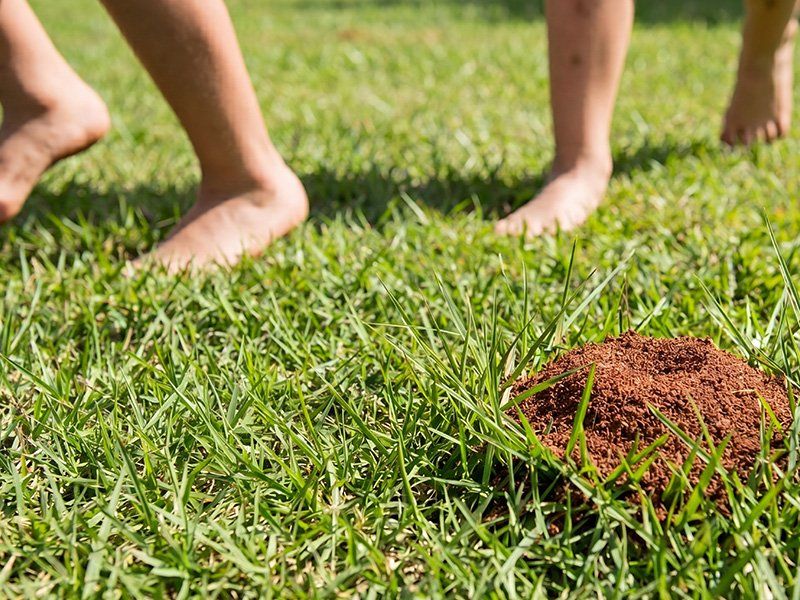
Yes, it can. Digging into a mound or repeatedly disturbing it may lead workers to move the queen deeper underground, or to carry the queen and workers elsewhere, as NC State Extension explains.
The result can be a brand new mound near the old one.
That is why a hose can backfire. Ordinary water flooding is not a reliable way to wipe out a colony, and ants that survive may simply resurface somewhere else in the yard.
Folk remedies run into the same problem. UGA Extension notes that colonies may survive home remedies.
Its guidance also says sprinkling grits or other food on mounds does not work.
Boiling water is a more dramatic version of the same idea. UGA reports it eliminated about 60 percent of treated mounds, which means roughly four in ten were not eliminated.
It also carries burn risks for you and can damage the grass and plants around the mound.
Skip gasoline, bleach, ammonia, battery acid, and similar chemicals entirely. They create fire, safety, and environmental hazards, and they can harm the soil and wildlife that share your yard.
Choose a treatment for the problem you have
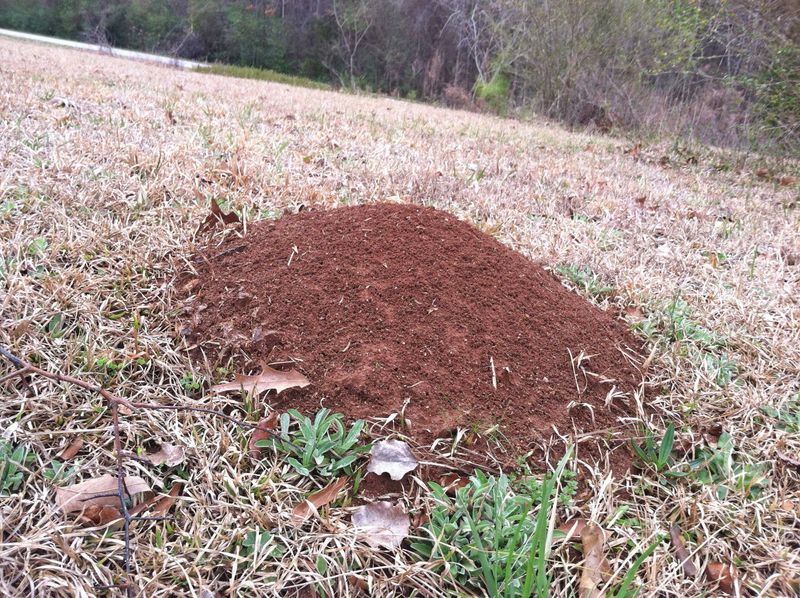
Start by asking how big your problem is. A yard with many mounds calls for a different tool than one mound beside the back steps where kids play.
For multiple colonies, bait is often a practical choice. As NC State’s turf guide describes, foragers carry bait back into the colony, so you can treat a wide area without finding every mound.
The tradeoff is speed. Bait works more slowly than some direct treatments, and NC State notes that visible ants may linger for days or longer.
When you need action at one spot, a properly applied, labeled mound treatment may work faster. NC State’s landscape guidance also cautions that even direct treatment may not kill every ant or queen.
Neither approach is a universal promise. How fast a product acts, and whether it suits your lawn, depends on that product and its label.
Read the label before you buy, and choose one made for your type of site.
Bait must reach foraging ants
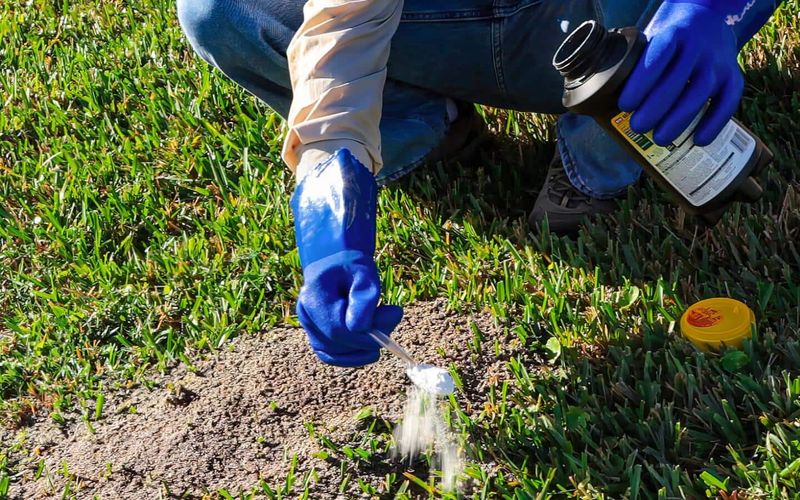
Bait only works if ants pick it up. Foragers carry the granules back to the colony, which is how the active ingredient reaches ants you never see.
Placement matters. NC State advises spreading mound-treatment bait around the mound rather than on top of it, because ants forage from entrances around the mound’s edge.
Leave the mound undisturbed beforehand, so you do not send the colony scrambling.
Timing matters too. Apply bait when ants are actively foraging.
A simple check is to set a small greasy snack, like a bit of hot dog, near a mound and see whether ants find it. If they do, they are out looking for food.
Moisture is the other big factor. NC State’s turf guidance advises keeping bait dry and not applying it to wet grass or when rain is expected within 24 hours.
Directions can vary by product, so check what your label says about grass and rain.
Keep the container sealed and stored dry. For more on getting good results, see NC State’s baiting tips.
Do not assume one product’s rules apply to every bait on the shelf.
A mound treatment is not the same as flooding
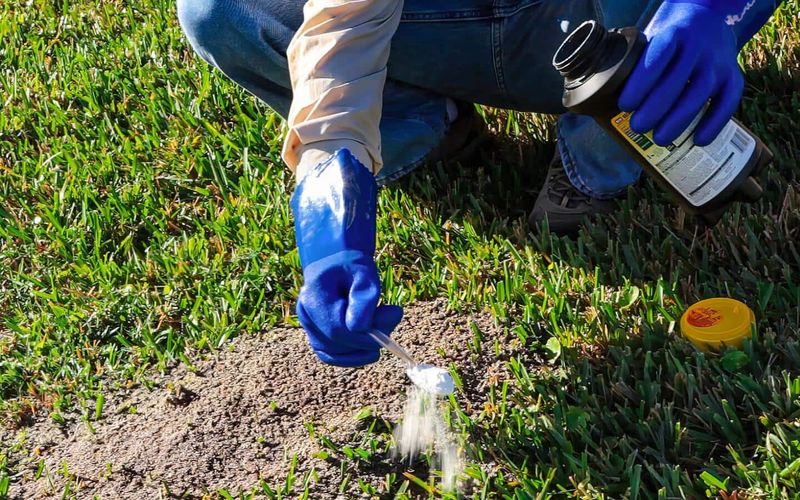
Pouring a bucket of water on a mound and applying a labeled mound treatment may look similar from a distance. They are very different.
A labeled product is made, tested, and approved for a specific use, and its directions spell out how to apply it.
For a targeted, urgent problem, such as a mound by a play area or patio, NC State Extension describes direct mound treatment as an option that can work faster than bait when it is correctly selected and applied. Casual flooding or kicking is not in that category.
The label is your rulebook. It tells you whether the product is allowed on a home lawn, how to apply it, how much to use, and what precautions to take.
Do not assume a product made for another setting is suitable for your yard.
Keep expectations realistic. NC State cautions that direct treatment may leave some ants or a queen alive, so watch for continuing activity or new mounds nearby.
For product details, the North Carolina Agricultural Chemicals Manual is the current reference. It also sends users back to the label, and the label governs how you use the product.
Protect people, pets, and the rest of the yard
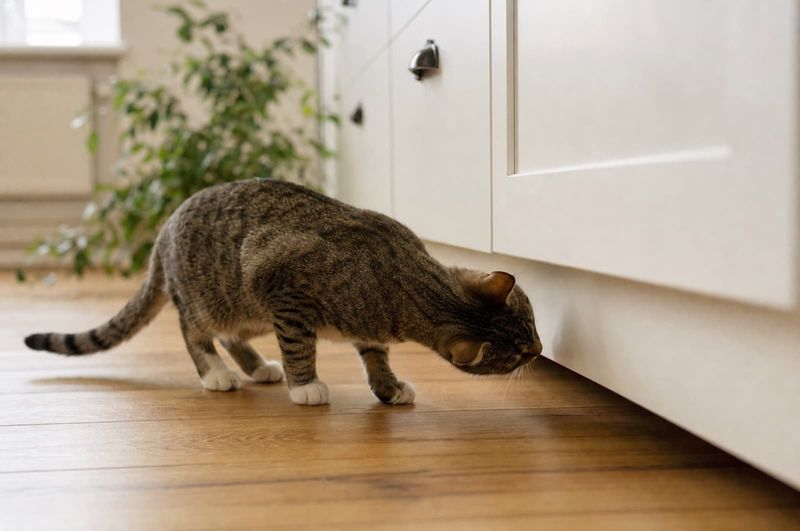
Treating ants should never put your family or your yard’s wildlife at risk. Make safety part of the decision, right alongside bait or mound treatment.
Read the label’s precautions before you open the container. They explain how to keep bait and treated areas away from children and pets, and what to do with leftovers.
NC State’s baiting tips reinforce following directions closely.
Water deserves extra attention. Some fire ant products pose risks to aquatic life, so follow product-specific water precautions and avoid runoff toward storm drains, ponds, ditches, and streams.
Not every product carries the same warnings, which is why reading yours matters. The North Carolina Agricultural Chemicals Manual is a good place to look up product information, though the label still comes first.
For the animals you value, such as box turtles, toads, and birds, the EPA offers tips for reducing pesticide impacts on wildlife. Apply only where needed, use the right amount, and keep products off areas where wildlife feeds or drinks.
Give treatment time, then check for activity
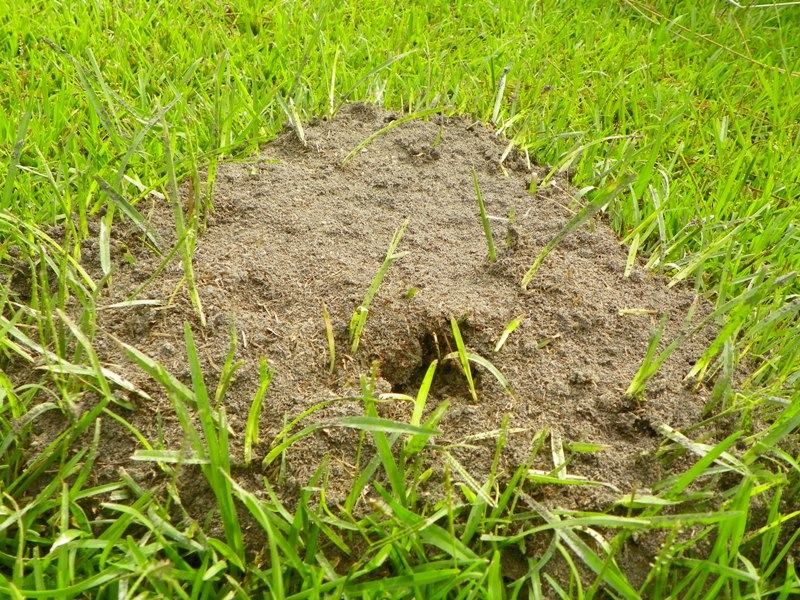
Patience is part of the plan. NC State’s baiting guidance makes clear that bait can take days or longer, and ants you still see do not prove it failed.
After the wait, look again. NC State recommends checking for continuing activity or new mounds nearby, and following the product directions if more treatment is needed.
Resist the urge to kick or flood the site while you wait, since disturbance can undo the work.
A calm mound and a suitable treatment beat a satisfying stomp every time.