
Your Potted Geraniums Stopped Flowering? 6 Simple Resets Bring Color Back All Winter Indoors
Your geranium bloomed like crazy on the porch all summer, and now it sits by the window with nothing but green leaves. You are not killing it, and you did not ruin it.
Geraniums simply need a few changes once they move indoors for the cold months. Make these six easy resets and your plant can start pushing out bright flower clusters again before spring arrives.
1. Move It to the Brightest Window You Have
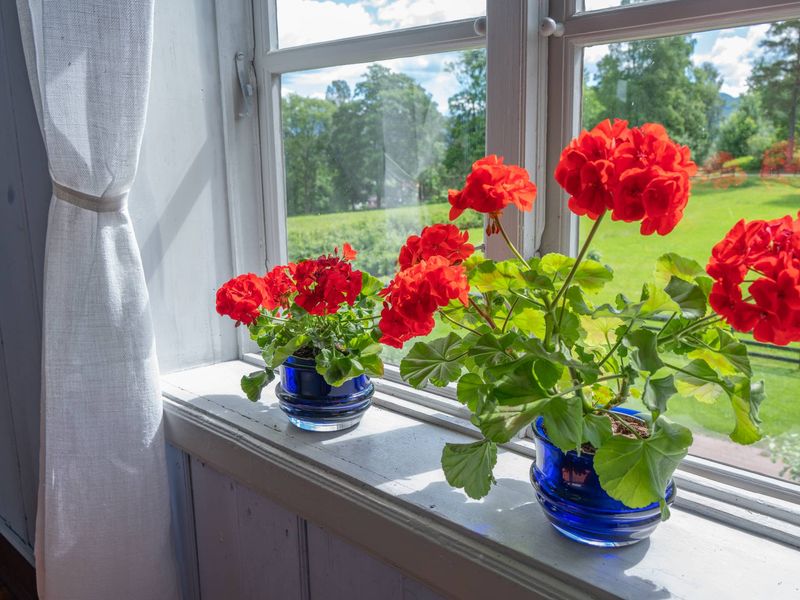
Light is the number one reason indoor geraniums quit blooming. Outside, your plant soaked up hours of direct sun every day.
Inside, even a spot that looks bright to you may only give it a fraction of that.
Geraniums want six or more hours of sun daily to set flower buds. A south-facing window is best, and a west-facing one is a solid second choice.
Pull back sheer curtains and wipe dusty glass, since both quietly block light.
Turn the pot a quarter turn every few days. That keeps stems from leaning toward the glass and gives every side a fair share of sun.
If you notice long, stretchy stems with big gaps between leaves, your plant is telling you it is hungry for more light.
2. Add a Simple Grow Light for Short Days
Picture December in much of the US. The sun comes up late, slips away before dinner, and spends half the week behind clouds.
Even your sunniest window cannot fully make up for that.
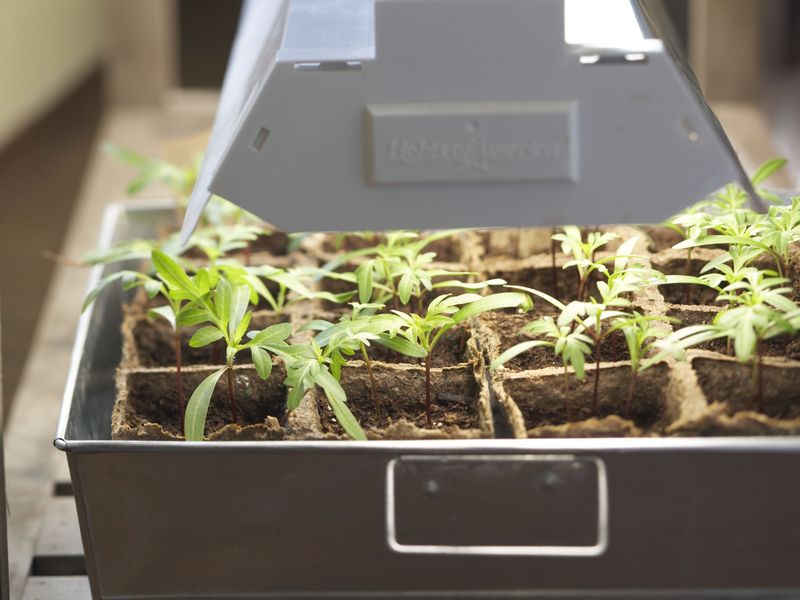
An inexpensive grow light fills the gap. Many gardeners have success hanging a daylight fluorescent or LED light about 12 inches above their geraniums and running it for around 14 to 16 hours a day.
A cheap outlet timer makes this effortless, so you never forget to switch it on or off.
You do not need a fancy setup. A basic shop light over a table works fine.
Within a few weeks, you may see tighter, greener growth and small bud clusters forming at the stem tips, which is exactly the sign you are hoping for.
3. Keep It Cool and Away From Heat Vents
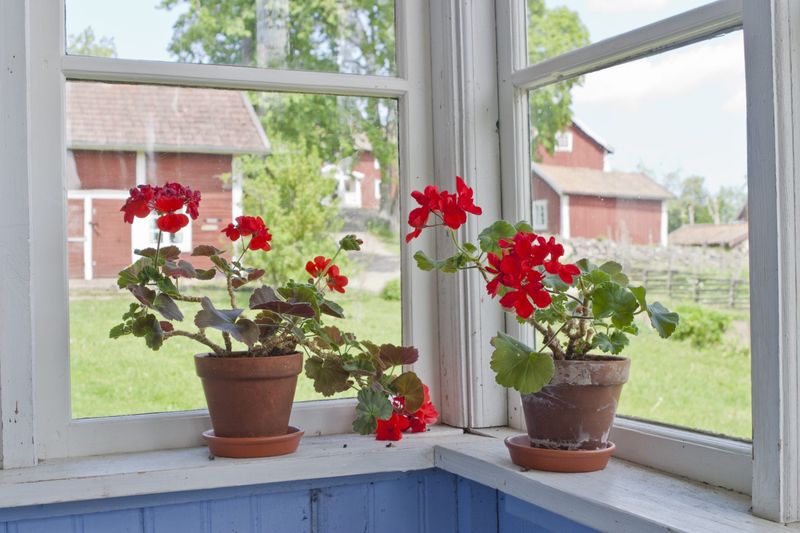
Here is a surprise for many plant owners: your cozy living room may be too warm for geraniums. These plants come from South Africa, where they handle cool nights well, and they actually bloom better when things are a little chilly.
Aim for daytime temperatures in the low 60s and nights between about 50 and 60 degrees. A spare bedroom, an enclosed porch that stays above freezing, or a window ledge often hits that range nicely.
Keep the pot away from heat vents, radiators, and space heaters. That blast of hot, dry air stresses the plant and can stop buds from forming.
Just do not let leaves touch icy glass either, since frozen spots turn mushy fast.
4. Water Less Than You Think
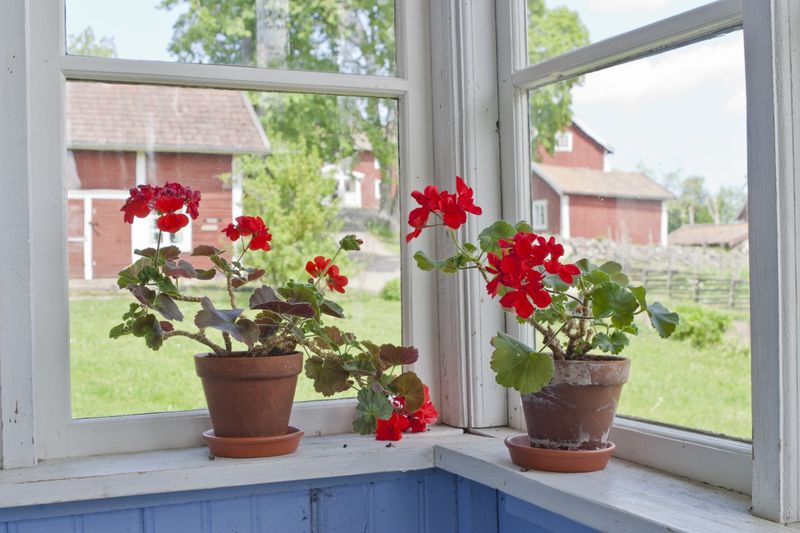
Loving a plant to death usually happens with a watering can. Indoor geraniums grow slowly in winter, so they drink far less than they did in July.
Before watering, push your finger about an inch into the soil. If it feels dry, water thoroughly until some drains out the bottom.
If it still feels damp, wait a few more days and check again.
Soggy soil leads to yellow leaves, root rot, and zero flowers. Make sure your pot has a drainage hole, and empty any saucer that collects water.
Terracotta pots help, too, because they let extra moisture escape.
Fun fact: geraniums store some water in their thick stems. That built-in reserve is why they forgive a missed watering much more easily than an extra one.
5. Feed Lightly With a Bloom Fertilizer
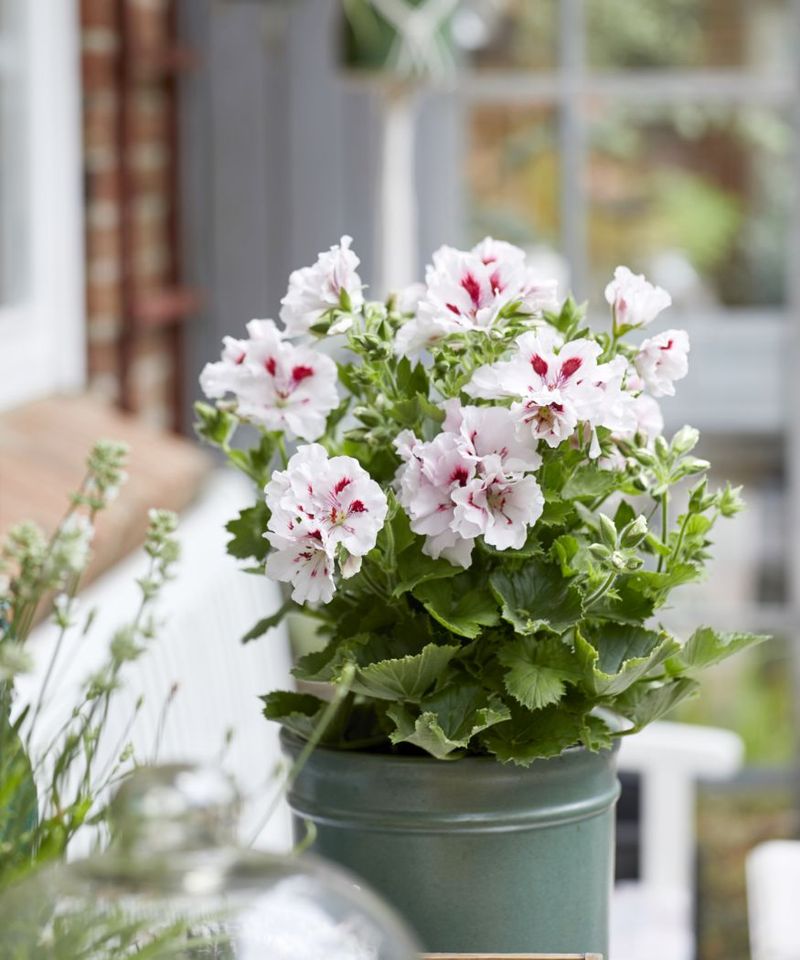
Think of winter feeding as a light snack, not a feast. Your geranium still needs nutrients, but heavy doses can backfire.
Too much nitrogen pushes the plant to grow big leaves and floppy stems instead of flowers. So skip the all-purpose plant food at full strength.
Instead, use a balanced liquid fertilizer at half or quarter strength every four to six weeks, or pick a bloom formula with more phosphorus, like a 5-10-10.
Always water first and fertilize on damp soil. Feeding a bone-dry plant can burn the roots.
If your geranium is barely growing in a cool, dim spot, hold off entirely until the days get longer.
6. Pinch, Prune, and Check for Pests
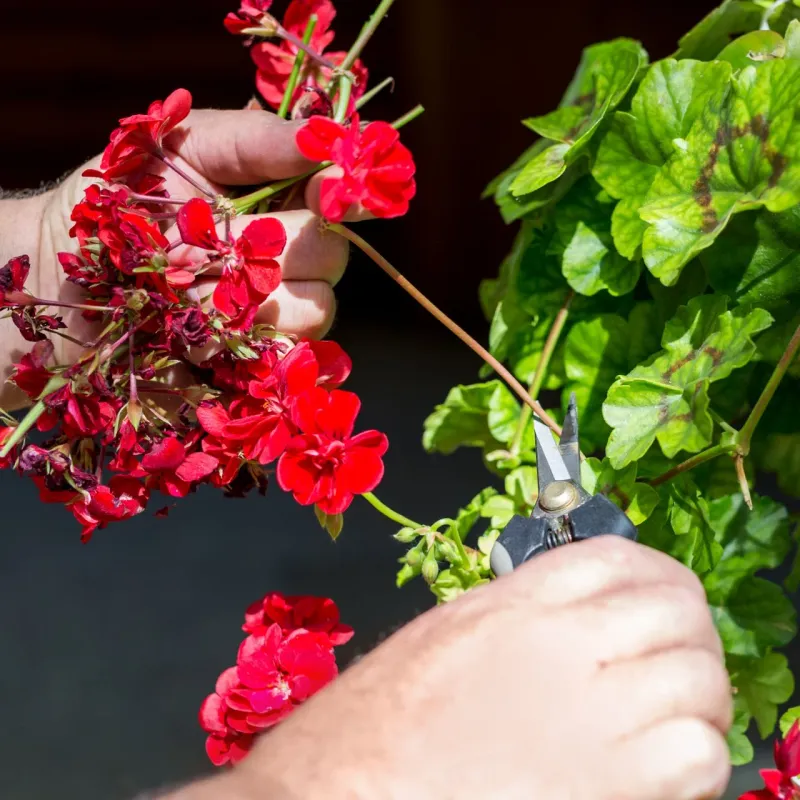
A leggy geranium with a few leaves at the top of long bare stems is not a lost cause. It just needs a haircut.
Pinch or snip stems just above a leaf node, the small bump where a leaf joins the stem. New shoots will sprout there, making the plant bushier and giving it more tips that can form buds.
Overgrown plants can be cut back by a third or even half.
Snap off faded flowers as soon as they brown. Deadheading sends energy into new blooms instead of seeds, and it removes soggy petals that can invite gray mold.
Give the plant some space for air to move around it.
While you are at it, flip a few leaves and look for whiteflies, aphids, or webbing. Catching pests early keeps them from spreading to your other houseplants, and bonus, those pruned cuttings can root in water for more geraniums.