
Your Pepper Plants Are Loaded With Green Fruit: How To Protect The Harvest Before The First Frost
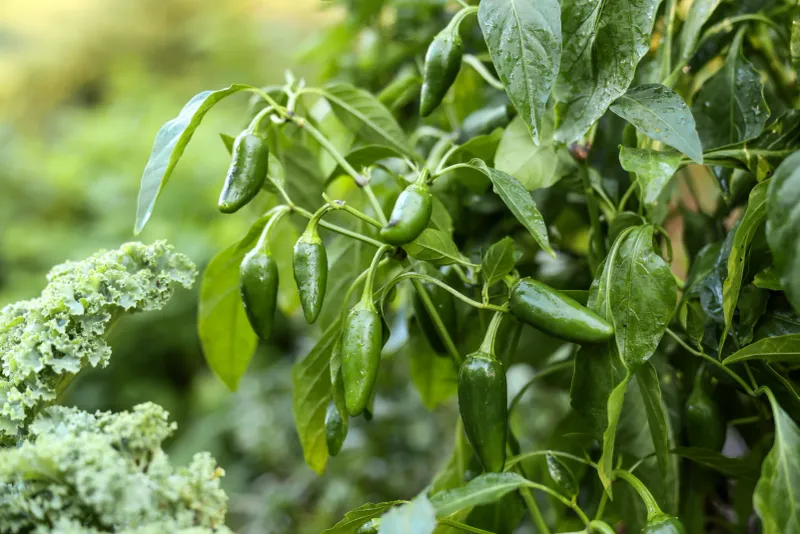
Your pepper plants are covered in glossy green fruit, and the nights are starting to turn cold. Frost can end the season fast, so it helps to know what you can do and what you can’t.
No trick can force fully green peppers to turn red overnight. But a few smart moves can buy time and help you save as many usable peppers as possible.
How much time do your peppers have?
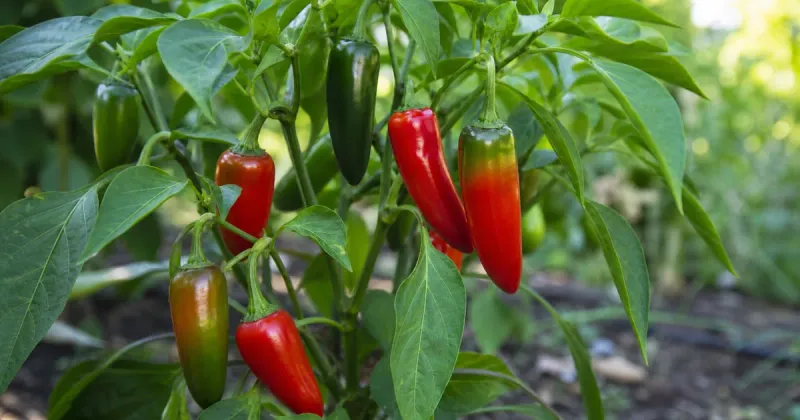
Start by counting backward from the date you expect your first frost. Utah State University Extension estimates that peppers need about 35 to 45 days from flowering to reach full color, depending on the variety and the temperature.
Treat that as a rough guide, not a promise. A cool stretch can slow things down, and a warm spell can speed them up a bit.
Another yardstick comes from transplant day. Maryland Extension notes that bell peppers may reach the mature green stage 70 to 80 days after transplanting, then need another 2 to 3 weeks to fully ripen.
If you set out your plants late, or the summer ran cool, your fruit may be behind that schedule.
Frost dates are not the same everywhere in the country. Some gardeners have weeks left, and others may be watching a forecast for this weekend.
Use your local forecast and your own notes about when your plants flowered rather than a single national date.
Here is the candid part. Peppers that set fruit recently may simply need more time than the weather will give them.
Fruit that already shows a blush of color has the best odds, while small, fully green peppers are the least likely to finish. Sorting your plant this way will help you decide what to do next.
A cover can buy time, not make peppers frostproof
Peppers cannot tolerate frost, according to South Dakota State University Extension. That makes a light frost forecast the moment to cover a healthy plant, if covering is practical for you.
The goal is simple: keep the plant going a little longer so fruit has more days to color.
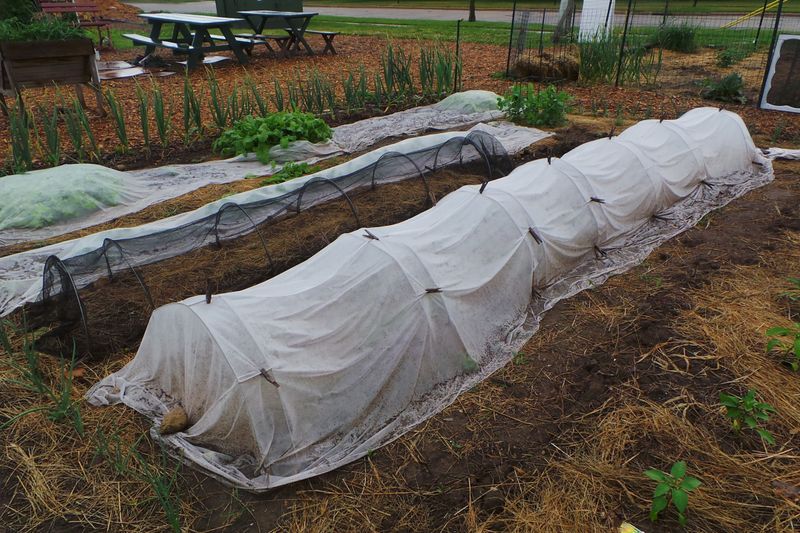
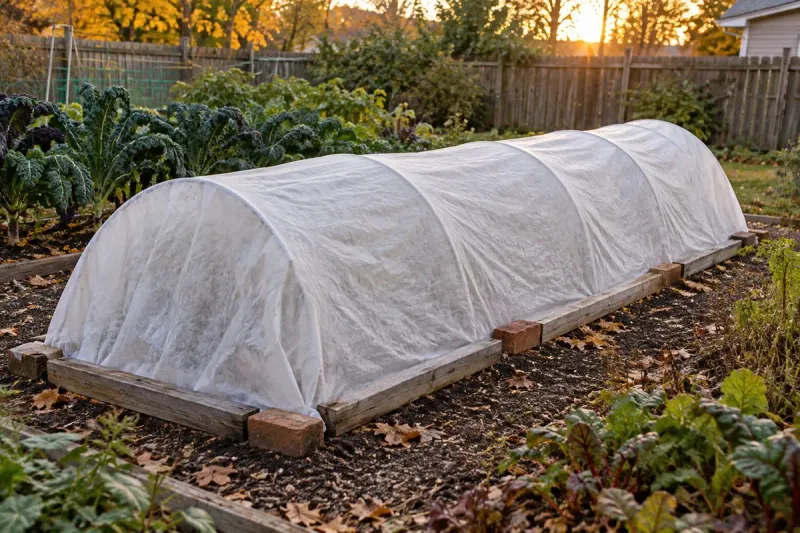
Floating row cover is a common choice. Colorado State University Extension says it can provide up to 10°F of frost protection, though the real number depends on the material, the grade, and the conditions that night.
A thin cover gives less help than a heavy one, and a windy, clear night is tougher than a calm, cloudy one.
Put the cover on in the late afternoon, and drape it over the plant or a simple frame. Secure the edges with rocks, boards, or garden staples so wind does not blow it off.
Then ventilate or remove it when daytime temperatures climb, so the plant does not overheat.
Be honest about the limits. A cover may stretch your harvest window, but it does not make peppers frost-hardy.
In a hard freeze, even a covered plant can be lost, so have a backup plan for picking full-size fruit.
Keep moisture steady instead of trying to force color
While fruit stays on the plant, aim for even soil moisture. Swinging from bone dry to soaked is hard on peppers.
University of Minnesota Extension points out that irregular or inadequate watering can contribute to flower drop and blossom-end rot.
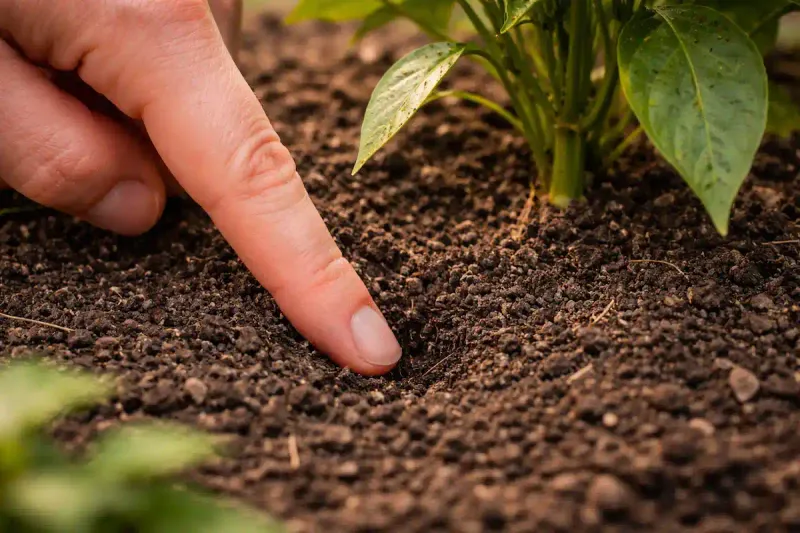
A simple check works well. Push a finger into the soil about an inch or two down, and water when it feels dry there.
Mulch helps hold moisture, and cooler fall weather usually means you need to water less often than in July.
Steady watering is plant care, not a ripening switch. Utah State ties color change mostly to time, variety, and temperature.
Pouring on extra water will not make a green pepper blush faster, and soggy soil can stress roots.
The same goes for other shortcuts you may hear about. Heavy fertilizer is not a proven way to push existing fruit to color.
Pinching off every late flower is also uncertain, so treat it as a maybe, not a rescue. Good moisture keeps the plant and fruit in decent shape while time does the real work.
When frost is too close, harvest full-size fruit
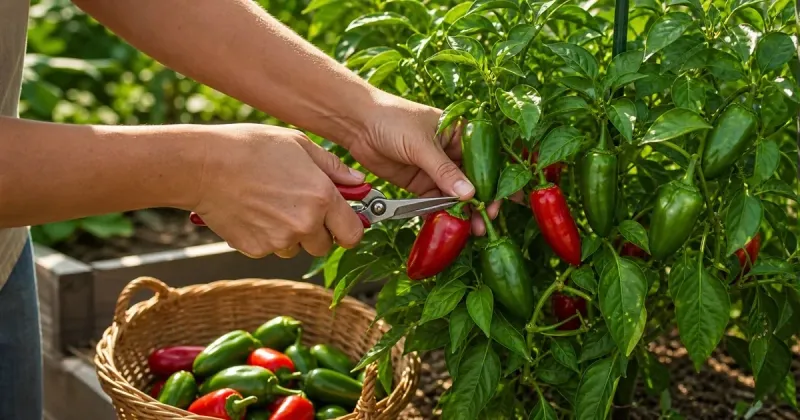
Sometimes the forecast wins. If a frost is coming and you cannot cover the plant, pick your full-size peppers rather than risk losing them all.
A green pepper you can eat beats a frozen one you can’t.
Green is not always a sign of an unfinished pepper. Many types taste good at this stage, and Maryland Extension notes that peppers can be eaten green.
Mature color also depends on the cultivar, and University of Illinois Extension explains that peppers may ripen to red, yellow, orange, purple, brown, or another color. Some varieties are meant to be picked while green or at another stage.
Use clippers or scissors, and leave a bit of stem on each pepper. University of Minnesota Extension advises clipping rather than yanking, since the stems are brittle and a hard pull can break branches.
If you are picking hot peppers, wear gloves. Wash your hands well afterward, and keep them away from your eyes and face until you do.
Pick the biggest, firmest fruit first, and skip tiny ones that have little to offer.
Will picked green peppers ripen indoors?
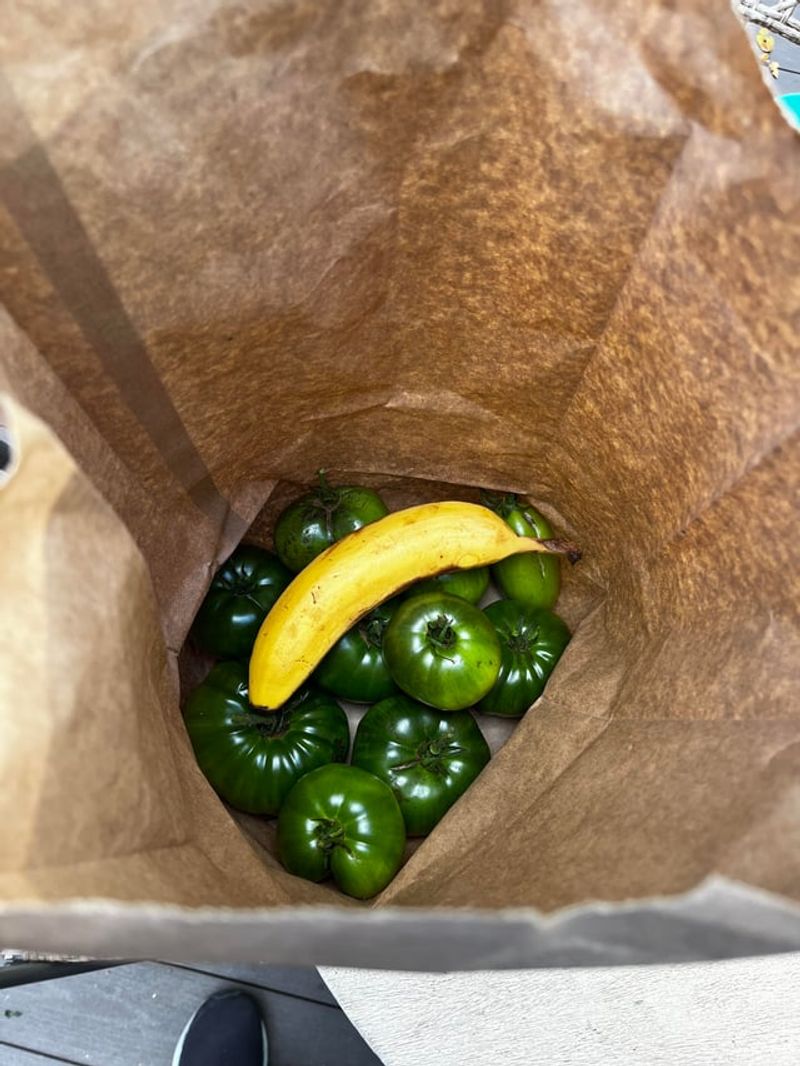
Many gardeners hope to line up green peppers on a windowsill and watch them turn red. Sadly, Maryland Extension says peppers do not ripen further after harvest.
So a fully green, detached pepper should be treated as a green pepper, and used that way.
There is one qualified exception to know about. The same source suggests you can pull an entire plant just before a killing frost and hang it in a warmer place.
That is different from a single picked fruit, because the peppers are still attached to the plant.
Partly colored peppers are another case. UC Davis reports that they can change color under warm, humid conditions.
That finding does not stretch to fully green fruit, so do not count on it for peppers with no color yet.
What about tucking peppers in a bag with a banana or apple? It is a popular tip, but not a reliable one.
UC Davis says bell peppers respond very little to ethylene, and UC Agriculture and Natural Resources does not recommend ethylene treatment to improve pepper color, since it can promote softening more than coloring. You may end up with soft peppers instead of red ones.
Choose the best move for the frost you expect
Start with a quick estimate. If fruit has color and Utah State’s 35 to 45 day guide suggests a little time is needed, watch your local forecast.
When a light frost is coming, cover a healthy plant if that is practical, since peppers cannot tolerate frost. Keep the soil evenly moist in the meantime.
If frost is close or covering is not realistic, harvest your full-size fruit. Maryland Extension notes that peppers do not ripen further once picked, so use green ones in the kitchen.
Your goal is to save usable peppers, not to promise color. A cold night does not care how much effort you put in.