
A Nightly Closet Routine May Encourage Colorful Bracts on Last Year’s Poinsettia in North Carolina Homes

That leftover poinsettia on your windowsill still has a trick up its leaves. With long, dark nights and bright days, it may grow colorful bracts again.
If you live in North Carolina and want to try it, the closet routine is simple and costs almost nothing. Here is how to do it, and what to expect if you start in late October.
Christmas color is possible, but the calendar is tight

Timing is the first thing to get straight. N.C.
Cooperative Extension suggests starting the dark treatment around October 1 for a full display by Christmas. Color often begins after about 6 to 8 weeks, and full bloom can take around 12 weeks.
If you begin on October 22, 2026, Christmas is only about nine weeks away. By that math, the first hints of color might show up somewhere between December 3 and December 17.
Full bloom could stretch toward mid-January.
So what does that mean for your plant? Some color by Christmas is possible, but it is not a sure thing.
A few tinted bracts and a fully colored plant are very different results, and a late start makes the full look less likely by December 25.
Think of this as a seasonal experiment rather than a deadline you must hit. Plenty of North Carolina households enjoy watching a leftover plant slowly change, even if the peak arrives after the holiday.
Starting now beats not starting at all, as long as you keep expectations modest.
Mark your calendar with the start date and check the plant weekly. Look at the tips of the top leaves for a shift in shade.
Those small changes are the first sign the routine is working.
What does the long night tell a poinsettia?

Poinsettias take their cue from the night, not just the day. They are often called short-day plants, but that is shorthand.
The real signal is a long stretch of uninterrupted darkness, so a plant that simply gets less daylight will not necessarily color up.
Home guides often suggest about 14 hours of darkness each night. That is a cautious target for household conditions, not a hard biological rule.
University of Georgia production guidance says flowering can be triggered by nights of at least 11.75 hours without interruption. Home growers aim higher to improve the odds, since temperature and cultivar also change the timing.
Daytime matters too. Bright light during the day feeds the plant so it can build the colorful growth the dark nights set in motion.
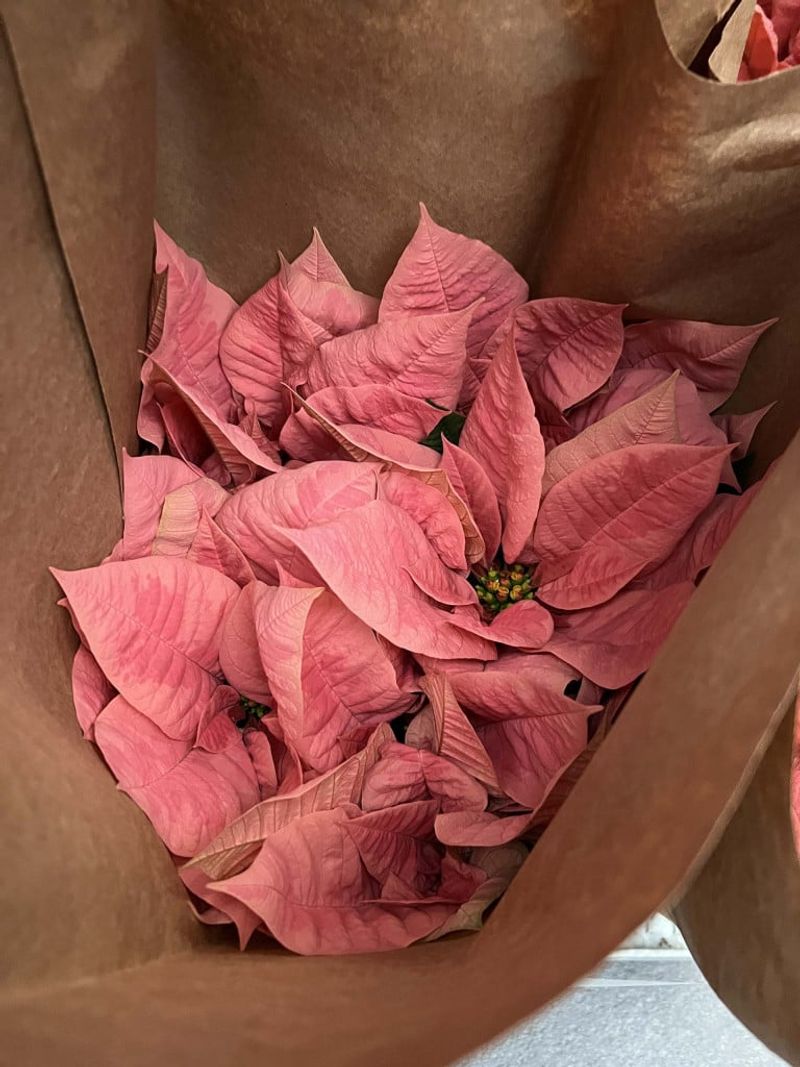
Here is a detail that surprises many people. The red, pink, or cream parts are not flowers.
They are bracts, which are modified leaves, and the true flowers are the tiny yellow clusters in the center.
Color also depends on the plant. According to University of Florida IFAS Extension, the cultivar determines bract color, and poinsettias come in other colors besides red.
If your plant was white or pink last year, expect that shade again.
A closet can make the nightly schedule easier

A routine you can repeat without thinking is the whole secret. University of Maryland Extension describes giving the plant bright light by day and about 14 hours of uninterrupted darkness at night.
One example schedule is 5 p.m. to 7 a.m.
Pick a spot that is truly dark, such as a spare bedroom closet that nobody opens at night. If a closet is not handy, an opaque cover works.
A large cardboard box or a dark, heavy container set over the plant can do the job.
The test is simple. Close the door or cover and check for glowing edges, hallway light under the door, or a charger light.
The goal is to block light, not just dim it.
Each evening around 5 p.m., carry the plant to the closet. Each morning around 7 a.m., bring it back out to your brightest window.
A phone alarm for both moments makes it easy to stay consistent.
One firm rule: do not leave the plant in darkness all day. It needs strong daytime light to stay healthy.
If you have children or pets that chew plants, choose a closet shelf out of reach, since a nibble may cause mild mouth or stomach irritation.
Steady daytime care supports reflowering
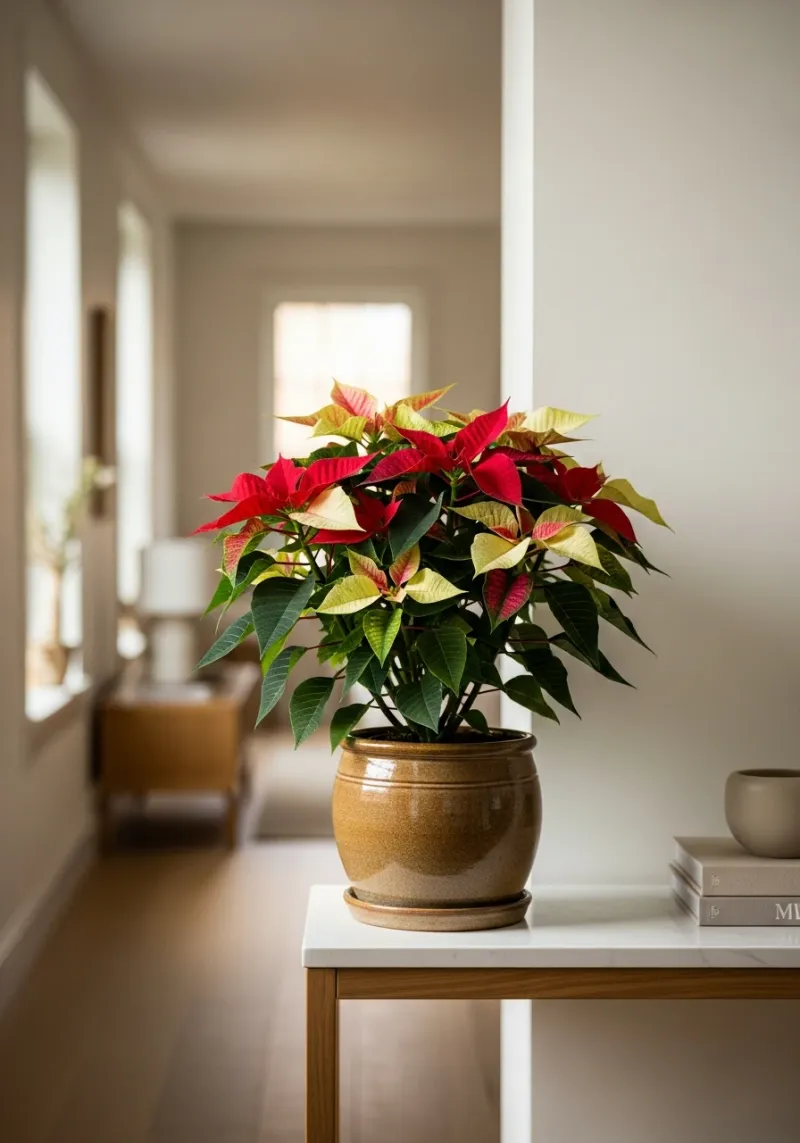
Between closet trips, the plant still needs good basic care. Park it in the brightest natural light you have, such as a south or east window, and keep it away from drafty doors and heating vents.
Stable conditions help more than fussing.
Temperature matters during this stretch. Illinois Extension advises avoiding temperatures below 60°F or above 70°F during reflowering.
Warm nights above roughly 70 to 75°F may delay or prevent flowering. Treat those numbers as a helpful recommendation, not a guarantee of bloom.
Many North Carolina homes run warm in October, especially in the Piedmont and Coastal Plain, so a cool back room can be a smart nighttime spot. A closet on an interior wall that stays near room temperature usually works fine.
Watering is the other piece. Water when the top of the soil feels dry, then let the extra drain out completely.
Sitting in a full saucer can leave the roots waterlogged, and soggy roots lead to yellowing and dropped leaves.
Lift the pot now and then to judge its weight. A light pot means it is ready for a drink.
A heavy pot means wait a day or two.
Protect the dark period without fearing every brief mistake
Consistency is what counts. Artificial light during the dark period can delay or disrupt flowering, which is why a closet or opaque cover beats a shady corner.
Maryland Extension notes that even household lamps and streetlights can interfere.
Still, one slip is not a disaster. If someone opens the closet for a coat or you forget the cover one night, the plant is not automatically ruined.
Interruptions can slow things down, so simply get back on schedule the next evening.
Repeated light at night is the bigger worry. If you spot a pattern, like a family member who grabs a jacket every night, put a note on the door or move the plant to a quieter spot.
There is good news later on. According to University of New Hampshire Extension, once bract color is visible, the plant is less sensitive to night lighting.
When you see color showing, you can relax a little.
Let color and timing set your expectations

Success may look different from the plant you bought last December. Cultivar decides bract color, as UF IFAS Extension explains, so not every plant will return to red.
Home results also rarely match the size and fullness of a greenhouse-grown holiday plant, and the nightly routine does not replace good care through spring and summer, according to Maryland Extension.
With an October 22 start, N.C. Extension’s timeline points to color arriving close to Christmas, with full bloom possibly later.
A steady routine may encourage colorful bracts, but the holiday display stays uncertain.
Even a half-colored plant is a small win for something that was headed for the compost pile.