
Does Your Clematis Need a Fall Feeding? How to Decide Without Guessing
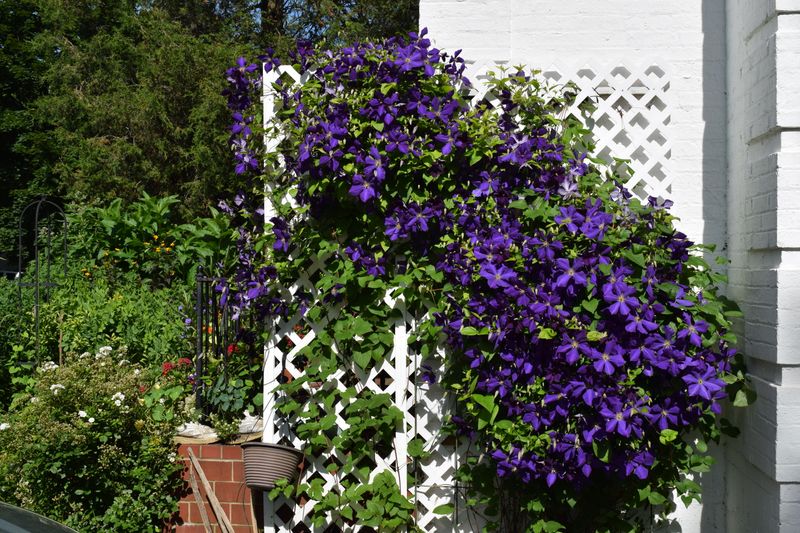
If your clematis put out lots of leaves but disappointing flowers, fertilizer may be part of the story. Many gardeners feed every vine on a schedule without asking whether the plant needs it.
Fall is when that habit kicks in, so now is a good time to stop and think. A few simple questions can help you decide what your own vine needs.
The risk is unnecessary or excessive feeding
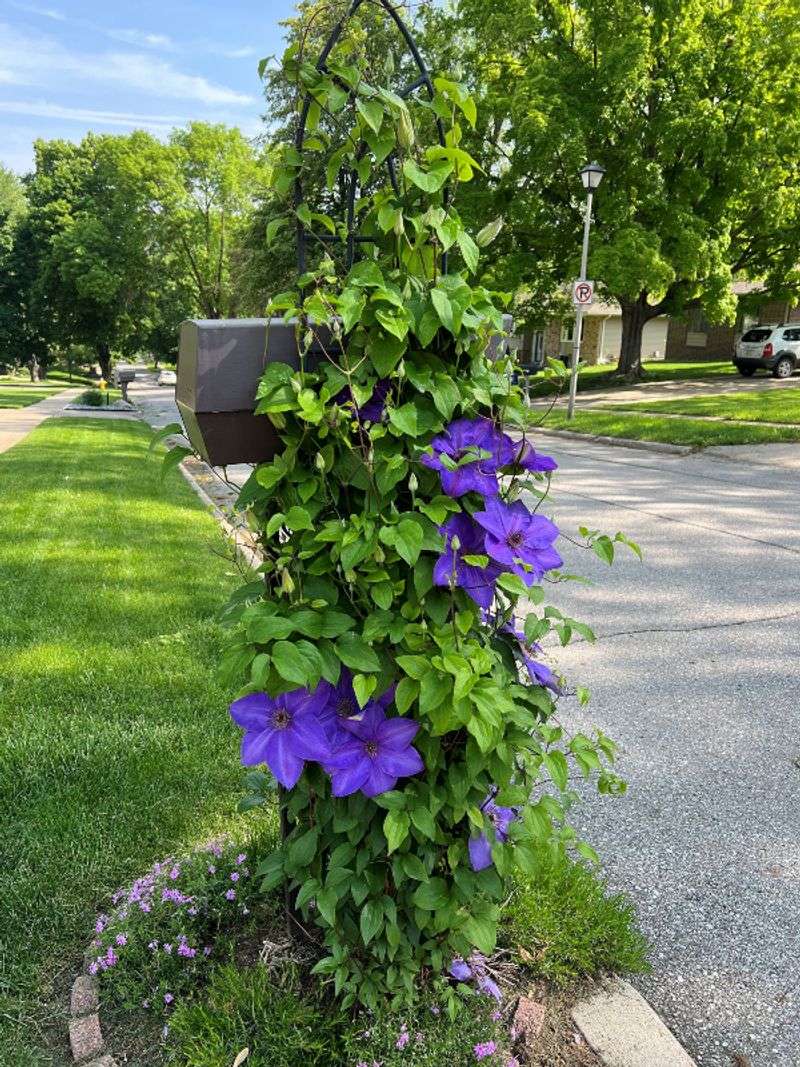
Here is the first thing to settle: a fall feeding is not automatically a mistake, and skipping one is not a trick for bigger flowers. Nothing in the sources we reviewed shows that passing on a single feeding makes next summer’s blooms larger.
The real risk is feeding without a reason, or feeding too much.
According to Iowa State Extension’s clematis guidance, too much fertilizer, especially nitrogen, can produce lots of growth but few flowers. Picture a vine that is thick with leaves and stingy with blooms.
That is the pattern to watch for.
Notice what that means in practice. Excess fertilizer is linked to fewer flowers, not to smaller individual flowers.
Those are two different problems, and mixing them up can send you chasing the wrong fix.
Too much feeding can also cause trouble below ground. University of Maryland Extension lists excess leafy growth and root damage from high fertilizer concentrations among the risks of overfeeding woody plants.
These are possible outcomes, not guaranteed ones, and a single careful application is not a disaster.
So the goal of this guide is not to scare you away from fertilizer. It is to help you decide whether your particular clematis actually needs any, based on where and how it grows.
Regional guidance differs on fall feeding
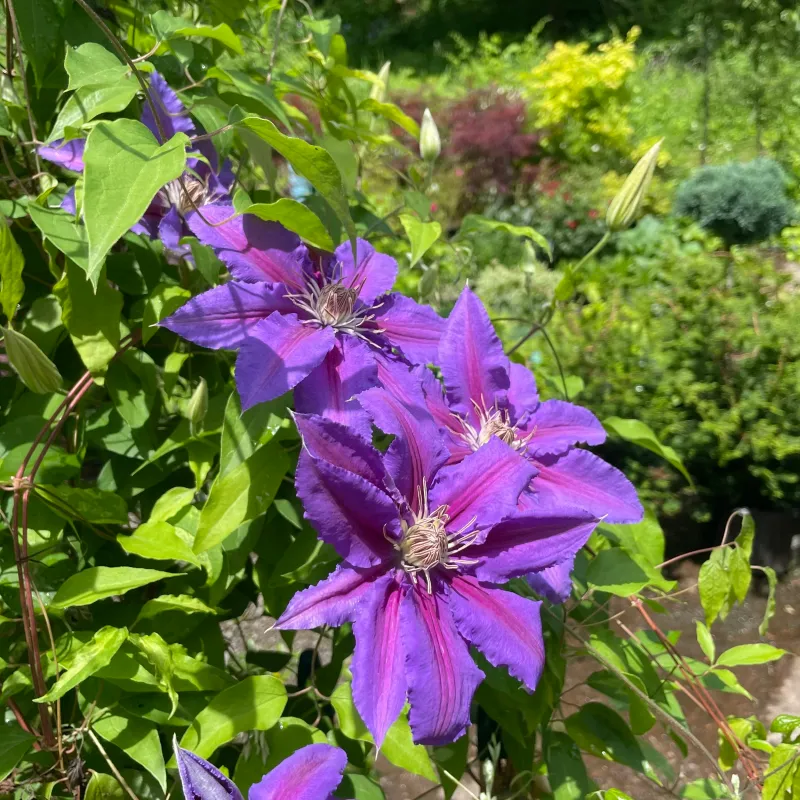
Ask four trusted sources about feeding clematis and you may get four different schedules. That is not a sign that someone is wrong.
Climate, soil, and growing setup differ from place to place.
Iowa State recommends spring feeding for established plants. University of Illinois Extension says some clematis may do fine without fertilizer.
If you do feed, it suggests a balanced fertilizer once a year, timed after first bloom for Groups 1 and 2 and after spring pruning for Group 3.
The Royal Horticultural Society, in its clematis growing guide, focuses on container plants and suggests feeding them through spring and summer.
Then there is the Pacific Northwest. Oregon State Extension recommends three feedings a year for established clematis, and fall is one of them.
That advice is written for Oregon gardens.
Put together, these sources do not say that every clematis in the country needs a fall feeding. They also do not say every clematis must avoid one.
Your best guide is the advice from your own state or region, plus what your plant is telling you.
Growing in a pot changes the decision
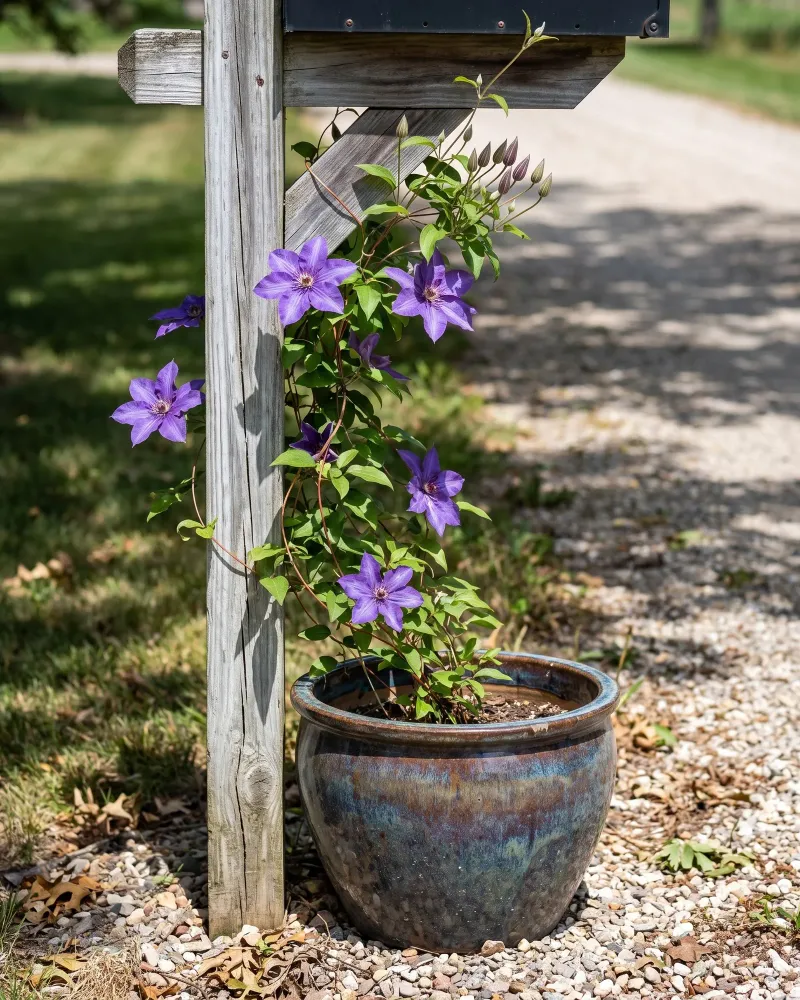
Two clematis can look alike and still need different care. One is planted in the ground, the other lives in a container.
Treat them as separate cases.
For an established in-ground vine, the RHS says clematis in fertile soil do not need regular feeding. University of Maryland Extension advises against fertilizing established plants unless there is evidence of a nutrient deficiency or a soil test recommends it.
If your vine is growing well, a routine dose may simply be unnecessary.
Pots play by different rules. The RHS guide notes that containers dry out more quickly, and that clematis in pots can benefit from feeding through spring and summer.
The roots have a limited amount of soil to draw from, so the situation is not the same as a vine rooted deep in the garden.
Do not carry in-ground advice over to a pot, or the other way around. For a container clematis, follow your local guidance and the rates printed on the product label.
Check the label rather than guessing, since the right amount depends on the product.
Use a soil test before applying a booster
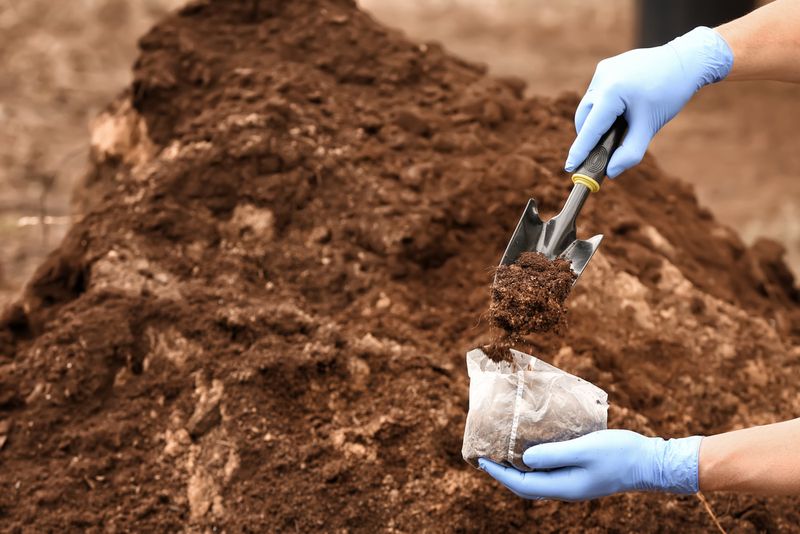
Suppose you suspect your clematis is short on something. Before buying a bloom booster, get facts.
A soil test tells you what is actually in your soil, so you are not guessing.
That is the safer approach recommended in the University of Maryland Ask Extension answer on clematis. Test first, then follow the recommendations that come back.
Your local extension office can usually tell you how to get a test done in your area.
Skipping this step has costs. As University of Maryland Extension explains, extra fertilizer can cause excessive leafy growth, and high concentrations may damage roots.
Those are risks, not certainties, but they are good reasons not to apply more than the plant needs.
There is also a bigger-picture reason. According to the EPA’s page on stormwater, excess fertilizer can add nutrients to stormwater runoff.
Fertilizer that your plant does not use can wash away instead.
No single product or amount fits every vine. Let the soil test and the label guide you, and skip the one-size-fits-all clematis booster.
Small flowers do not prove the plant is underfed

Tiny blooms can feel like a warning sign, but they often are not. Clematis come in about 300 species and thousands of hybrids, and their flower sizes vary a lot.
A small-flowered type may simply be doing what it was bred to do.
That point comes from University of Illinois Extension. So before blaming your feeding routine, check what kind of clematis you have.
The plant tag or a quick search of the cultivar name can answer a lot.
If your vine truly is not blooming well, look at the whole picture. Iowa State Extension lists several possible causes, including low light, improper pruning, winter damage, and a plant that is still young.
Fertilization is on the list too, but it is only one item.
Pruning is a common culprit. Clematis fall into groups that bloom on old wood, new wood, or both, so cutting at the wrong time can remove flower buds.
Match your pruning to your plant’s group.
Patience matters as well. A new clematis may take up to three years to settle in enough to bloom well, so a quiet first or second summer is not always a problem.
Make next season’s feeding decision plant by plant
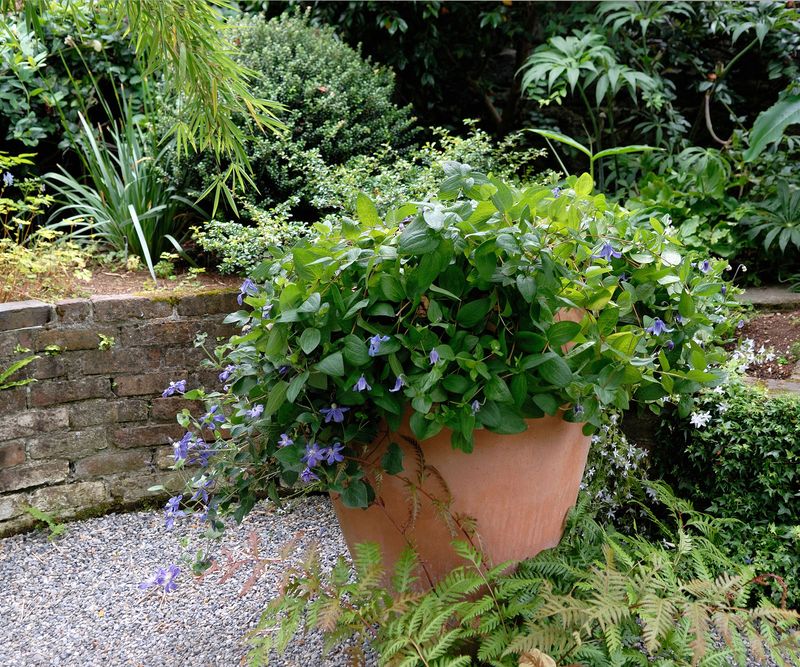
Start by asking where your clematis grows. If it is in a pot, follow container guidance, such as the RHS advice on feeding through spring and summer, and stick to the product label.
If it is an established in-ground vine that looks healthy, skip routine feeding unless a soil test or extension guidance points to a need. Then check what your own region recommends, whether that is spring timing like Iowa’s or the fall step in Oregon’s.
The realistic aim is modest: avoid unneeded fertilizer and give the plant good conditions to flower. Bigger blooms are not part of the deal.
A vine that is fed only when it needs it is already ahead of the game.