
How to Share a Backyard Feeder With Blue Jays
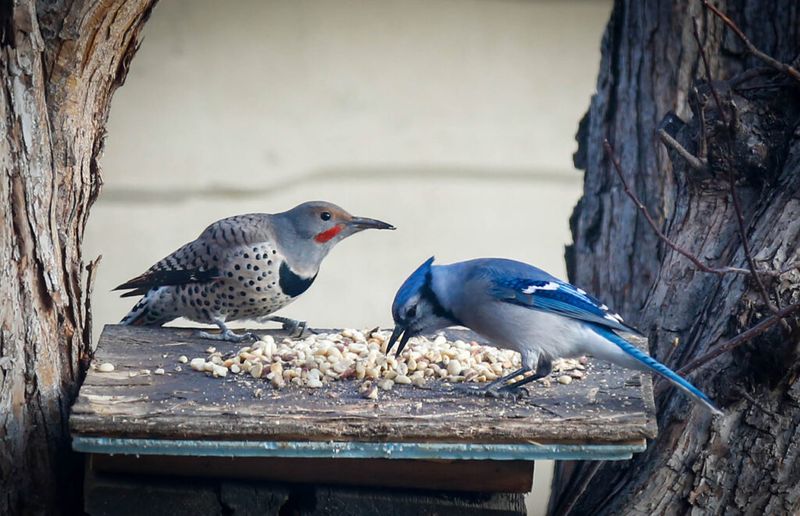
A flash of blue lands on your feeder, and suddenly the chickadees and finches are gone. It looks like trouble, and many birders wonder if they should stop feeding Blue Jays.
The real story is more balanced than the worry suggests. Here is what jays actually do, what research says about nests, and how to keep your feeders friendly for everyone.
A Blue Jay can briefly empty the feeder
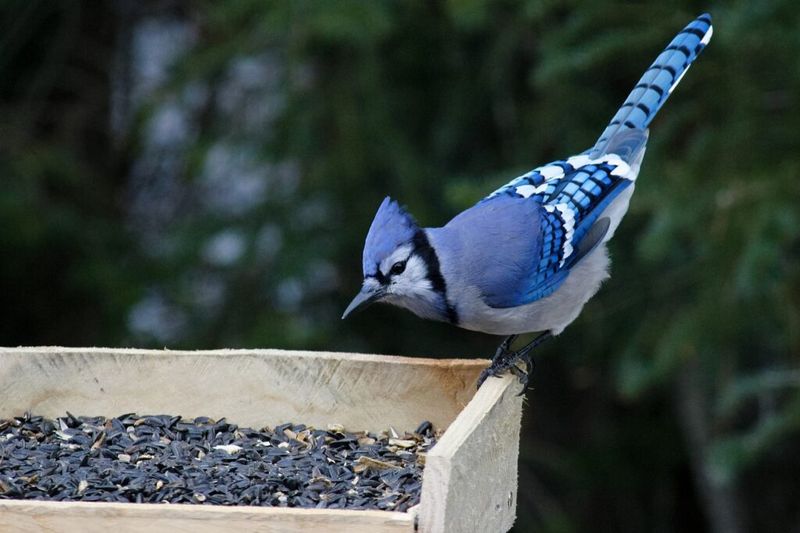
Picture a quiet morning at the feeder. Chickadees, titmice, and finches are busy, then a Blue Jay swoops in and the whole crowd vanishes in a blink.
Part of that scatter may come from a clever trick. Cornell Lab of Ornithology notes that Blue Jays can imitate hawk calls near feeders, which can make other birds flee.
Once the coast looks clear, the jay can feed with fewer visitors around.
The scare is real, and it can be easy to notice if you watch from a window. Still, it is usually a short event.
Cornell reports that birds generally return once the jay begins feeding, so smaller birds are not locked out for good.
Think of it like someone cutting in line at a busy snack bar. The line breaks up for a minute, then it re-forms.
If you sit with a cup of coffee and watch for a while, you will likely see the same small birds sneaking back in between jay visits.
That quick disruption is the first piece of the puzzle. It tells you what happens at the feeder in the moment.
It does not tell you what happens in the trees, at nests, or over a whole season, and those questions need their own look in the sections ahead.
Feeder competition depends on who is there
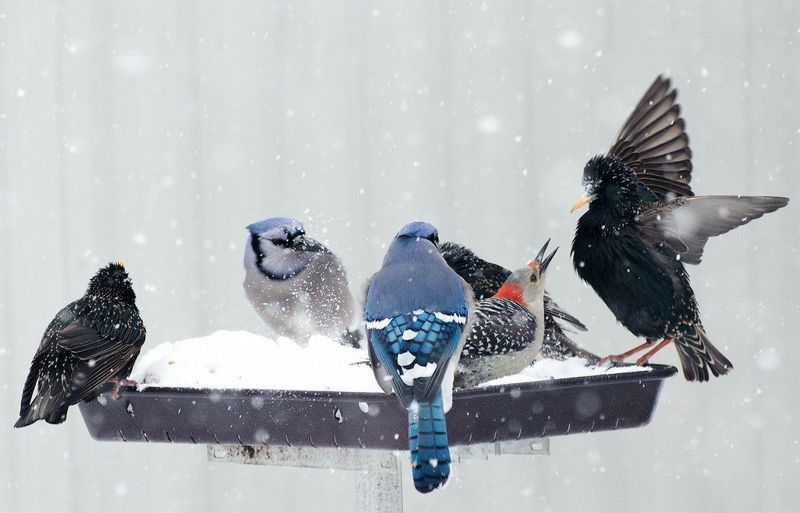
Zoom out from one jay and you see a busy social scene. Feeders are like tiny cafeterias where birds nudge, chase, and swap places all day long.
A Cornell study of about 55,000 feeder interactions across 68 species found that birds do displace one another. Body size often plays a role, with bigger birds tending to win more of these small contests.
That does not mean every jay beats every smaller bird every time. The study looked at feeder behavior broadly, and it does not show that Blue Jays always dominate or push smaller birds out for good.
Who gets the perch depends on which species are present, how crowded the feeder is, and even the mood of the moment.
Try a little backyard research of your own. Jot down who shows up at your feeder over a week and who gives way to whom.
You may find that a cardinal bullies a sparrow while a pushy chickadee holds its ground against a bigger visitor.
One more point matters here. Competition for seed is a feeder story.
Winning a perch says nothing about what a bird does near someone else’s nest, so keep those two ideas in separate boxes as you read on.
Nest-raiding is not the Blue Jay’s usual diet
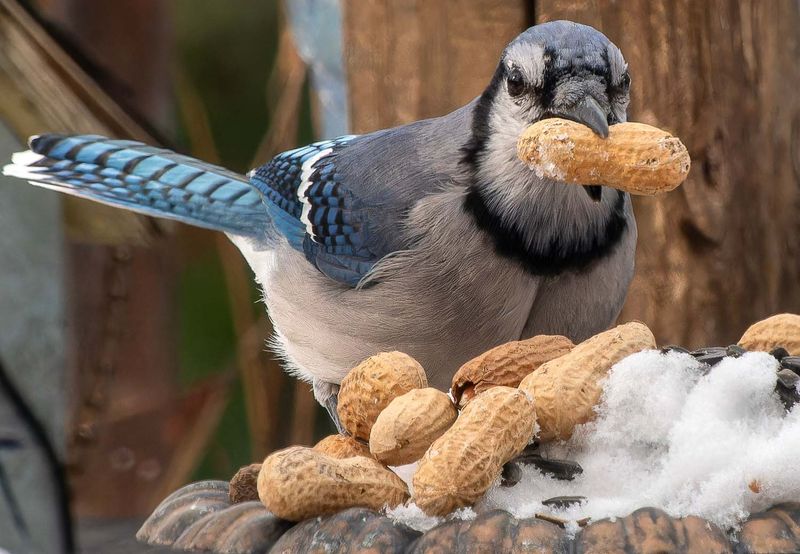
Ask what a Blue Jay eats, and the answer is mostly plants and insects. Acorns, nuts, seeds, and grains fill much of the menu, along with beetles, grasshoppers, and caterpillars.
Yes, jays sometimes take eggs or nestlings. But Cornell reports traces of eggs or nestlings in just 6 of 530 stomachs examined.
That is a small slice of the picture.
What does that tell you? It cautions against calling the Blue Jay a common egg thief or a bird that lives off other birds’ chicks.
A jay at your feeder is far more likely to be after sunflower seeds or peanuts than a meal from a neighbor’s nest.
There is a limit to what those numbers can say, though. A small share across many stomachs does not rule out a jay that raids a particular nest in a particular yard.
Local events can matter a lot to the birds involved, even when they are rare overall.
So the fair summary sits in the middle. Blue Jays are occasional nest raiders, not specialists.
If you spot one near a nest, it makes sense to pay attention, but it does not make sense to assume the worst about every jay that visits your feeder.
Do feeders put nearby nests at risk?
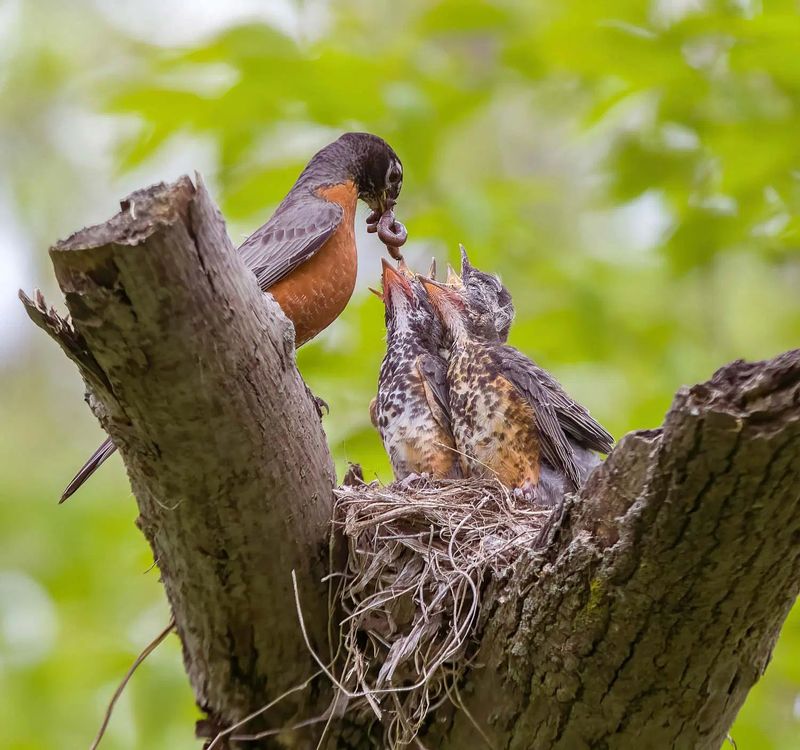
What jays eat is one question. Whether feeders change nest survival is another, and scientists have tested it in specific places with specific birds.
In an Ohio study of urban American Robins and Northern Cardinals, neighborhoods with more feeders had more American Crows and Brown-headed Cowbirds, but not more Blue Jays. Robin nest survival was lowest only where feeder numbers and crow detections were both high.
The researchers also added feeders on purpose as an experiment. That did not measurably change nest survival for robins or cardinals.
The authors concluded that results vary by predator and prey species, so there is no single rule for every yard.
Other work points to local effects in other settings. A California study involved Steller’s Jays and Dusky Flycatchers, and a UK study looked at magpies, European Jays, and gray squirrels.
Those birds and mammals are not Blue Jays in American backyards. The findings show why feeder effects deserve careful wording, but they do not prove that feeding Blue Jays causes songbird nests to fail.
That is a claim nobody has shown.
Blue Jays also help spread oak trees
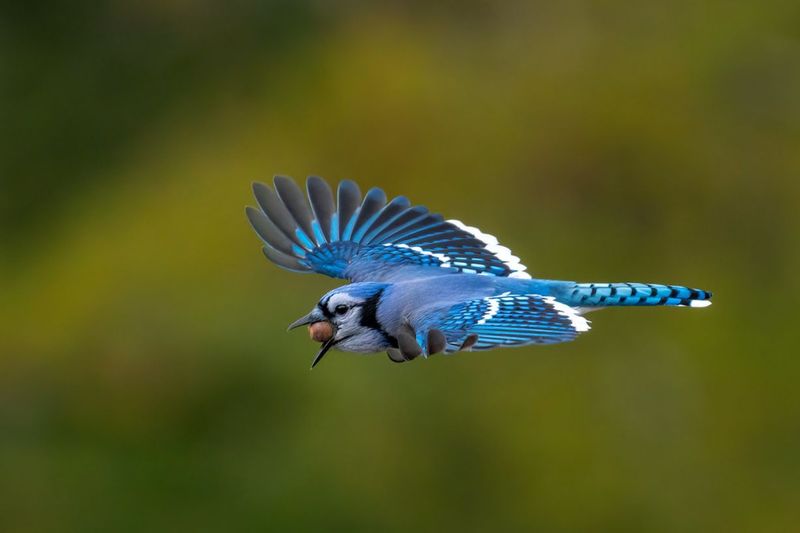
Every fall, Blue Jays turn into busy gardeners without meaning to. They gather acorns, carry them off, and tuck them into the ground for later.
According to Cornell’s life history account, this caching habit helps disperse acorns and spread oak trees. Some buried nuts never get retrieved, and a few of those can sprout into seedlings far from the parent tree.
That ecological job is a good counterweight to the feeder worries. A bird that sometimes startles chickadees or occasionally raids a nest also plays a real part in growing the forests that many other animals depend on.
One caution keeps the story honest. The oak benefit comes from the jay’s natural caching, not from visits to your feeder.
Putting out seed does not plant oaks, so do not count it as a conservation act.
Seeing the whole bird helps. A Blue Jay is loud, clever, sometimes pushy, and also useful.
Holding all of that in mind makes it easier to decide how to arrange your feeders without treating the jay as a villain.
A feeder can give smaller birds their own access
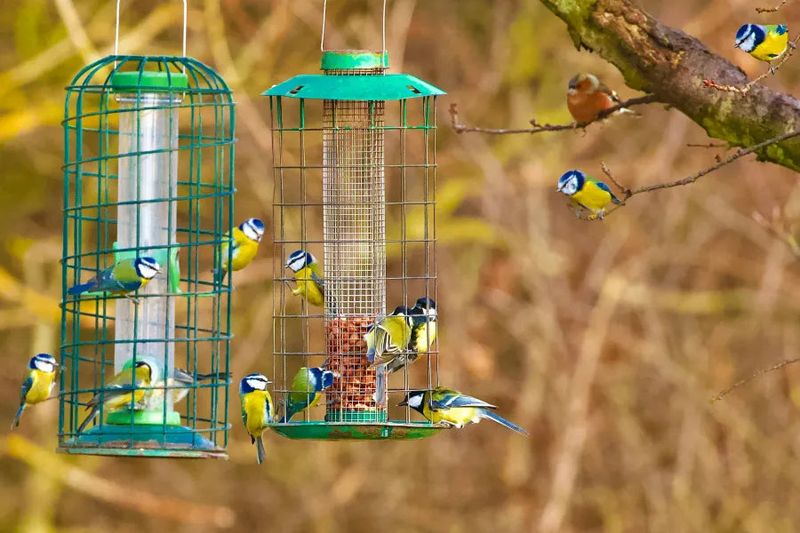
If seeing small birds scatter bothers you, feeder choice is your best tool. The goal is simple: give smaller species a spot where they can eat in peace.
Cornell suggests, in its advice on feeders overrun by larger birds, considering feeders designed to exclude bigger birds. Caged feeders have openings that small birds can pass through while larger ones stay out.
A tube feeder with small ports can also favor little birds. Penn State Extension explains that feeder type and seed choice help decide which birds can use a station.
You do not have to pick one style for the whole yard. Many people run a caged feeder for chickadees and finches and a platform or peanut feeder that jays are welcome to use.
That way everyone has a place at the table.
Treat these choices as access management. They help certain birds eat comfortably, but they are not a proven way to raise nesting success, and they are not a reason to stop feeding Blue Jays.
Clean feeders to reduce avoidable risks
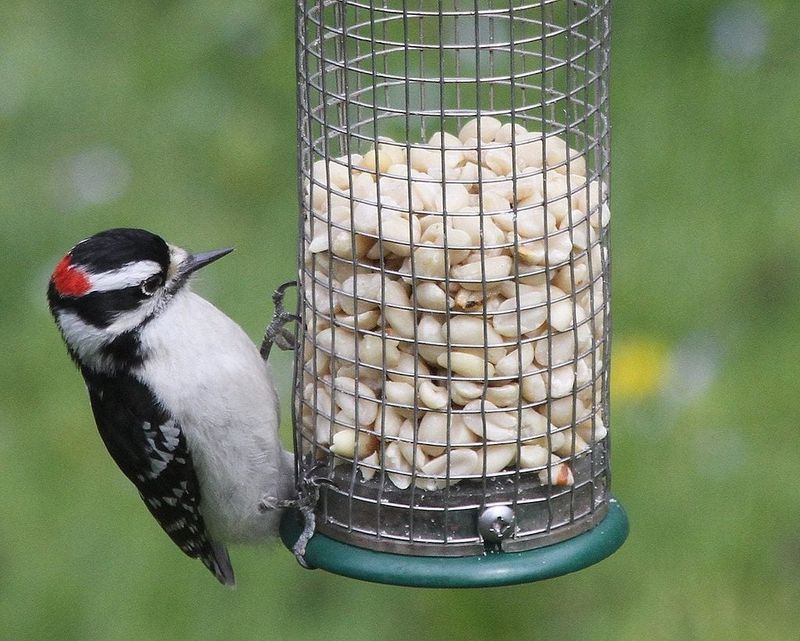
Whoever shows up at your feeder, a clean one keeps everyone safer. Dirty feeders and messy ground can spread illness among birds that crowd together.
Project FeederWatch recommends cleaning seed and suet feeders about every week or two. Clean them more often when feeders get heavy use or the weather is wet.
Let each feeder dry fully before you refill it, since damp seed can spoil. Also clear droppings, spoiled food, and hulls from the ground below so they do not pile up.
If you notice sick birds, cleaning is one option, and temporarily taking feeders down is another. Neither is required in every case.
Removal can even backfire if many feeders remain nearby, because birds may then crowd at those instead.
A simple routine helps: pick a day each week, rinse and scrub, dry, and refill. Keeping up with this habit is a practical way to look after all your visitors, jays included.
Native plants support birds beyond the feeder
Feeders are not the only way to help birds. If you cannot keep them clean or safe, plants can fill part of the gap.
Cornell’s FeederWatch guidance describes planting natives as an alternative or a complement to feeding. Native plants can offer shelter, and they sustain insects and other natural food sources that birds rely on.
Insects matter a lot, especially in the nesting season, because many songbirds feed them to growing chicks. A yard with native plants may give birds more to find without a feeder at all.
Keep expectations realistic. Planting natives does not promise to stop nest predation, and no plant choice will make a yard predator-proof.
Think of it as building a richer habitat, not a shield.
You can start small. Replace one patch of lawn or one bed with plants native to your area, and watch who stops by.
Your local extension office or native plant society can point you to good choices for your region.
Manage access without blaming the jay
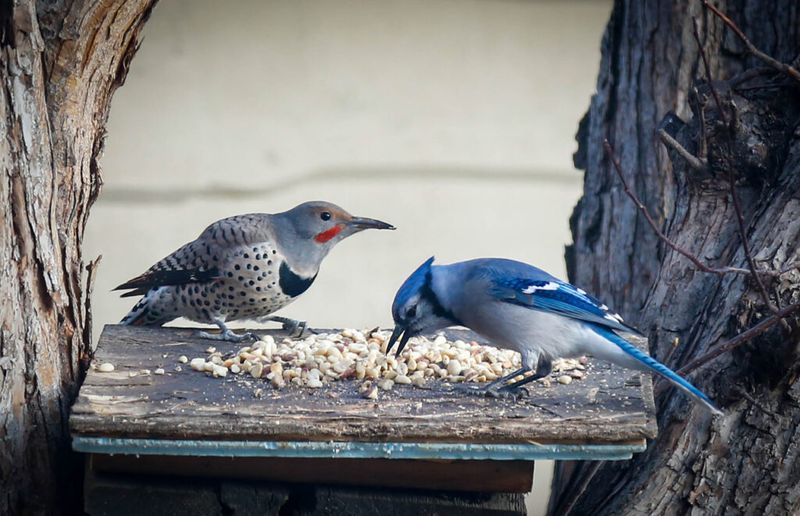
You can enjoy Blue Jays and still look out for smaller birds. Choose feeders that suit the visitors you want to help, and keep them clean on a steady schedule.
Offer a spot for jays if you like watching them, and a protected spot for the little ones. Adjust as you learn who comes and when.
The jay is just a bird doing bird things. A good feeder setup is mostly about thoughtful upkeep, and the rest is the fun of watching.