
Daily Tomato Watering: What It Really Means for Cracks, Rot, and Missing Fruit
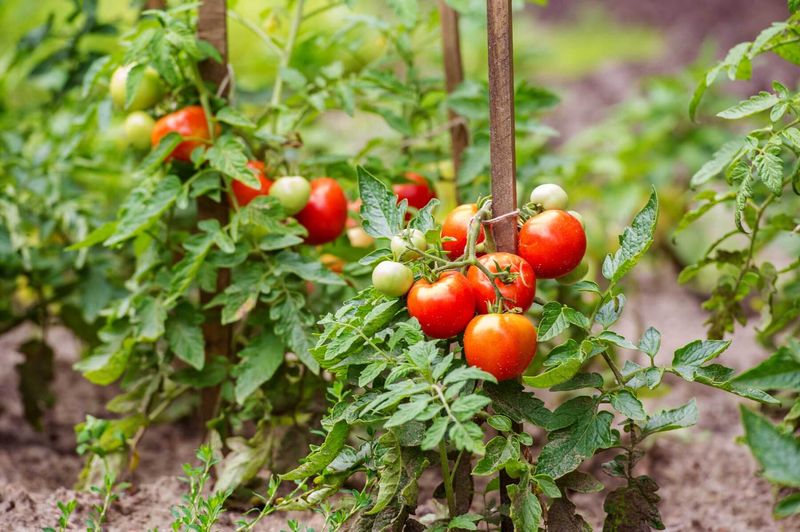
You water your tomatoes faithfully, and then the fruit splits, the bottoms turn black, or the plant just will not produce. It is easy to wonder if your routine is the culprit.
The real story is less about how often you water and more about how much reaches the roots and how steady the soil stays. Here is how to read the clues and plan a better season next year.
A daily schedule alone cannot explain a lost tomato crop
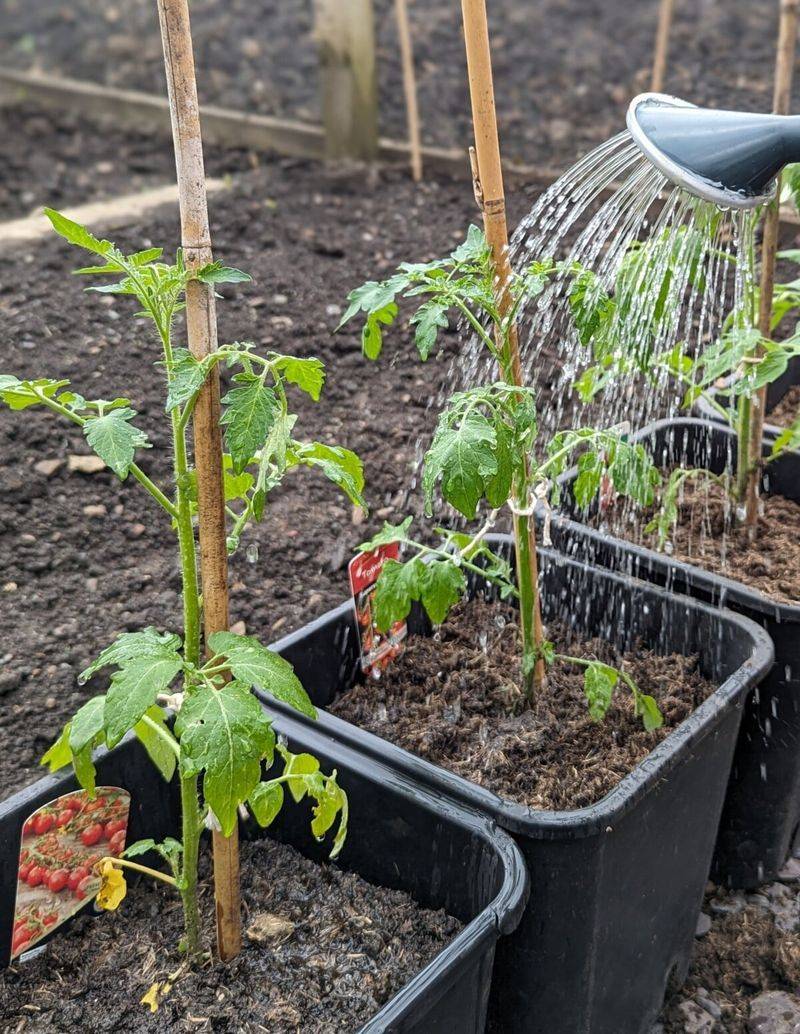
Watering every day sounds like it should be a mistake, but a schedule by itself tells you very little. A daily soak could be a cup or a gallon, and it could land on sandy soil, heavy clay, or a pot on a hot patio.
Frequency simply does not reveal how much water reaches the roots or whether the soil is staying soggy.
A more useful question is whether the soil moisture suits your plant and its setup. For in-ground tomatoes, Utah State University Extension recommends deep, infrequent watering, with 1 to 2 inches per week as general guidance.
Think of that as a starting point. Rainfall, soil type, plant size, and weather all move the target.
Containers play by different rules. Penn State Extension says most container vegetable gardens need at least daily watering during hot summer months, as long as the potting mix stays moist and not waterlogged.
So a potted tomato watered daily in July may be doing just fine.
Each symptom also has its own set of possible causes. Cracked skins, black bottoms, soggy roots, and flowers that never turn into fruit are separate problems, and heat can be part of the story for some of them.
The next sections take them one at a time, without blaming you for a habit that was well meant.
Tomato cracks follow sudden changes in moisture
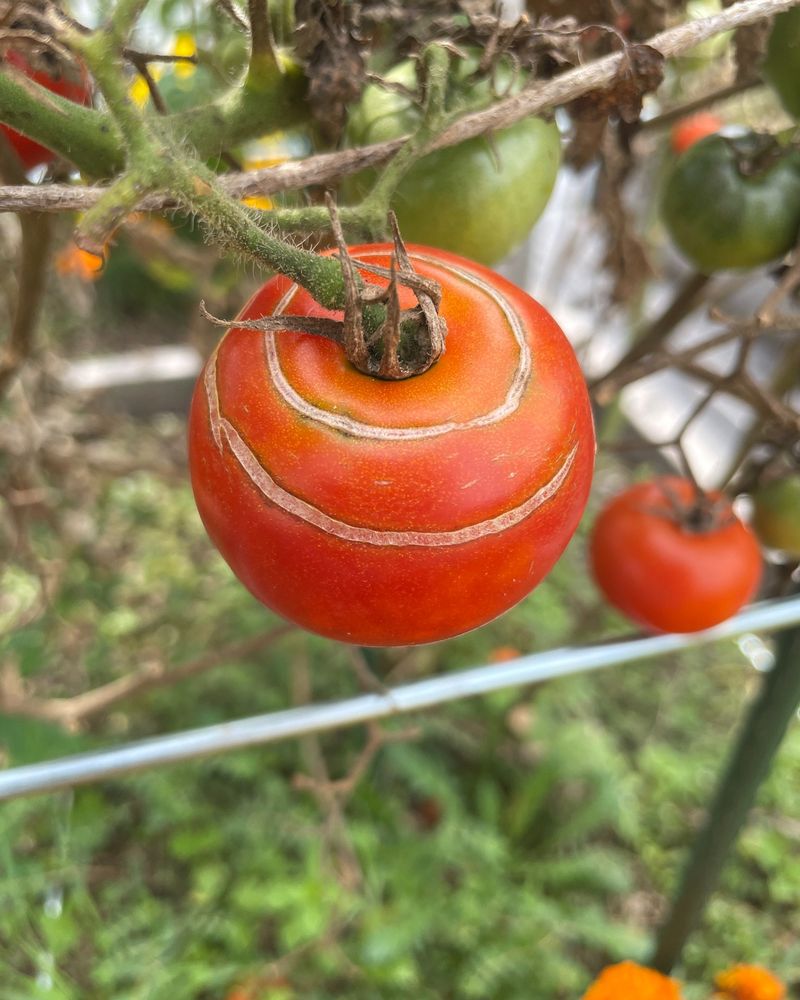
Picture a tomato that has been growing slowly through a dry spell, then a heavy storm rolls in. The plant sends a rush of water into the fruit, the inside swells faster than the skin can stretch, and the skin splits.
That pattern of dry followed by sudden wet is what University of Delaware Cooperative Extension links to cracking.
That is different from saying frequent watering splits tomatoes. Regular, moderate watering is not the trigger.
Big swings in how much water the plant takes up are the issue.
Other things matter too. Some varieties have thinner or less stretchy skin than others.
Fruit temperature, direct sun on the fruit, and how much leaf cover shades it also play a part, so two plants in the same bed can crack differently.
You cannot fully control rain, but you can lower the risk. Aim for even soil moisture, avoid over-irrigating, and spread mulch to hold moisture steady between waterings.
Keep enough leaves on the plant to shade the fruit, so go easy on pruning in hot weather. These steps can reduce cracking, though they will not guarantee a perfect crop.
If you see cracks after a storm, pick the fruit early and use it soon, since open splits invite rot.
Blossom-end rot involves calcium delivery, not just calcium in the soil
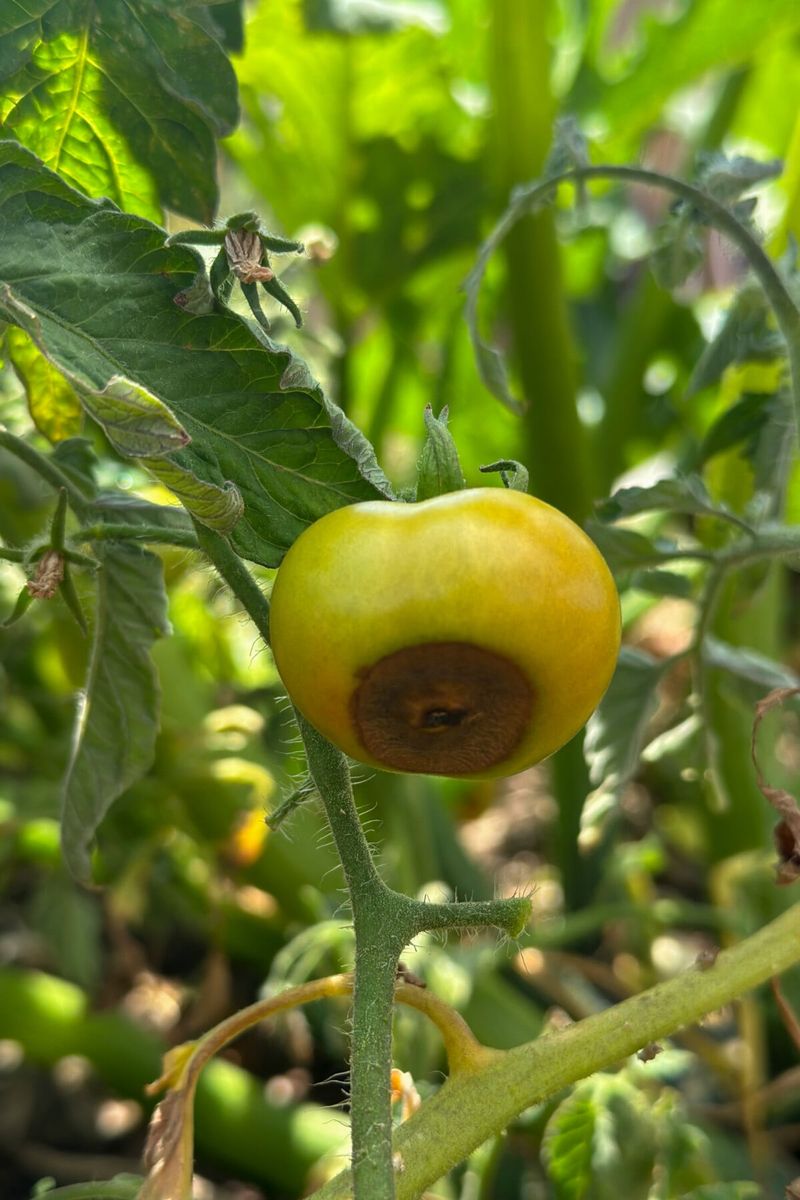
That dark, sunken patch on the bottom of a tomato is blossom-end rot, and it is one of the most frustrating sights in the garden. According to NC State Extension, it involves a calcium shortage in the developing fruit.
The catch is that the shortage can come from calcium not reaching the fruit, not only from calcium missing in the soil.
Water plays a role because calcium travels through the plant with water. Extreme swings in moisture can disrupt that delivery, and excess moisture can favor the problem as well.
Nutrient balance, salinity, and other conditions also matter.
So the rot is not proof that your soil lacks calcium. It is also not proof that you watered too often.
It is a signal that something interfered with calcium getting to the fruit.
Your best practical steps are steady moisture and a layer of mulch to slow evaporation. Water consistently rather than letting the soil bake and then flooding it.
Be cautious about reaching for a calcium product right away. A soil test can tell you what is really going on, and the cause matters.
University of Georgia Extension notes little evidence that foliar calcium sprays work, so they should not be treated as an automatic cure.
Soggy roots and heat-related blossom drop are different problems
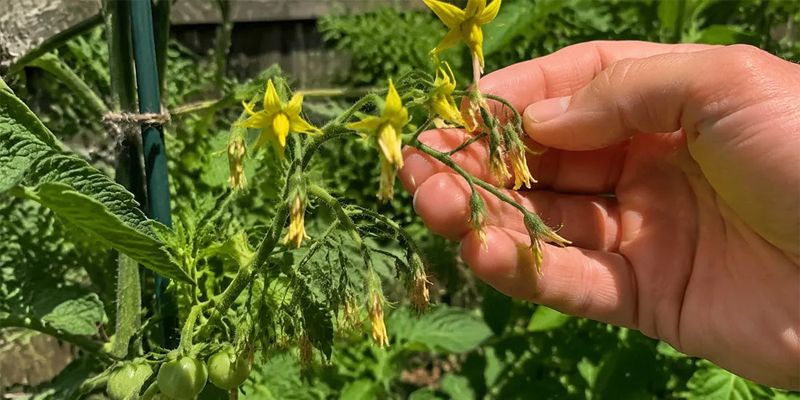
An empty tomato plant can look the same whether the roots are struggling or the flowers failed, but the causes are not the same. Roots that sit in saturated soil for long stretches are at risk.
UC IPM notes that Phytophthora root rot is favored by wet conditions, so standing water and poorly drained soil are worth avoiding.
Heat tells a different story. UGA Extension identifies warm nights as a cause of blossom drop, and Utah State notes that tomato flowers are sensitive to high temperatures during flower development and early fruit set.
In a hot spell, plants can bloom heavily and still set little fruit.
That is why an empty harvest alone should not send you into a watering overhaul. Look for clues first.
Wilting with constantly wet soil and a poorly draining spot points toward root trouble, while healthy green leaves with flowers that fall off during a heat wave point toward heat.
Check your weather notes, too. If nights stayed warm and the flowers dropped, cutting back on water would not have fixed it.
Looking at drainage, temperature, and timing together gives you a far better read than blaming the hose.
Bland fruit does not prove you watered too often
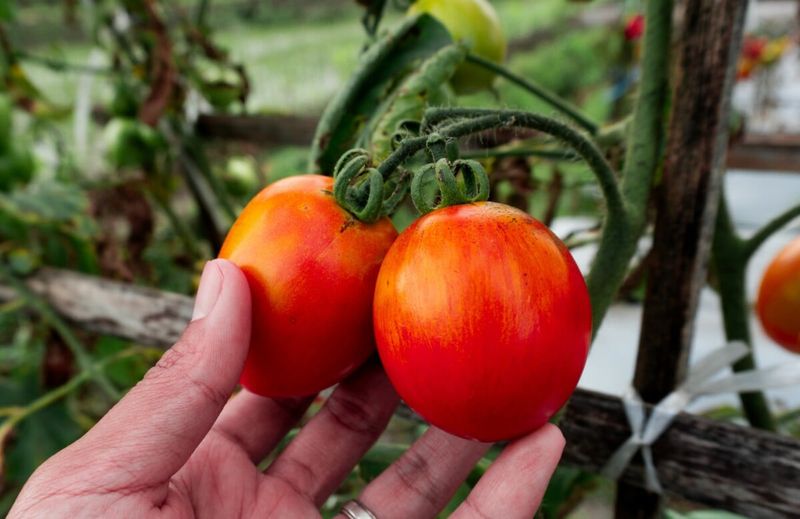
Flat-tasting tomatoes are disappointing, and it is tempting to pin them on a daily watering habit. The research does not back that up.
Nothing in the studies reviewed shows that ordinary backyard watering is a cause of bland fruit.
What the science does cover is controlled water deficit. A peer-reviewed review found that water stress can change flavor-related compounds in tomatoes and sometimes improve quality measures.
Results depend on the conditions, and there can be a tradeoff in yield.
Those studies use carefully managed treatments, so they cannot be turned into a rule for home gardens. Letting your plants dry out on purpose is not the same thing, and it could cost you fruit or invite the very cracking and rot covered above.
Flavor has many influences, including the variety you grow, ripeness when picked, sunlight, and temperature. If your tomatoes taste dull, try a different variety, let fruit ripen fully on the vine, and keep your watering steady.
Skip the plan to starve the plant for taste.
Choose a watering routine that fits the tomato’s growing setup
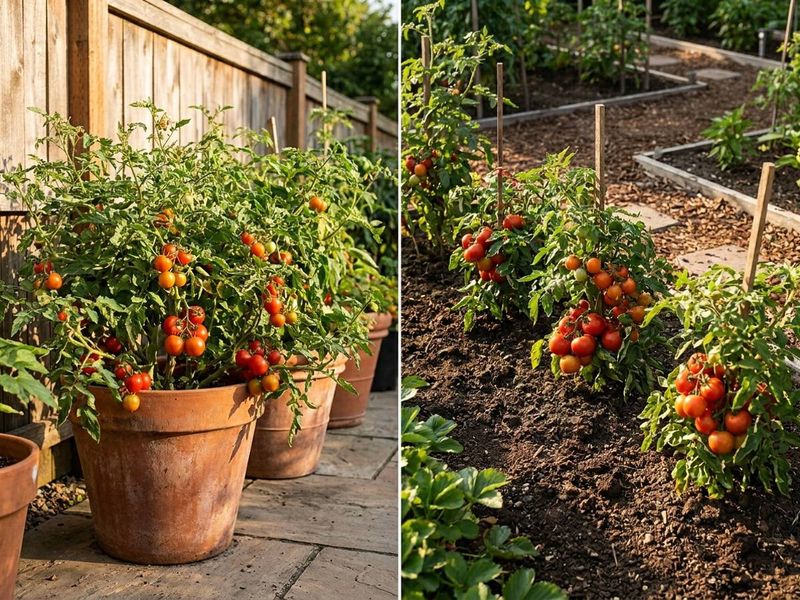
Next season, start with your setup. For tomatoes in the ground, Utah State University Extension suggests deep, infrequent watering, with about 1 to 2 inches a week as a general guide.
Count rainfall toward that total. Sandy soil, big plants, and heat may call for more, while a rainy week may call for none.
Use your finger as the gauge. Poke it a couple of inches into the soil near the plant and water when it feels dry at that depth, instead of following a calendar.
Containers need a different approach. Maryland Extension advises watering thoroughly until water runs out of the drainage holes, then waiting until the soil feels dry to the touch.
How often that happens depends on pot size, sun, plant size, and heat.
In midsummer, that may mean every day. Penn State Extension says most container vegetable gardens need at least daily watering in hot months, with the mix kept moist and not waterlogged.
So if you have been watering a potted tomato daily in a heat wave, you were probably doing the right thing.
Water at the base in the morning when you can, and soak the root zone instead of sprinkling the surface. A quick check before each watering takes seconds and beats guessing.
Set up next season for steadier soil moisture
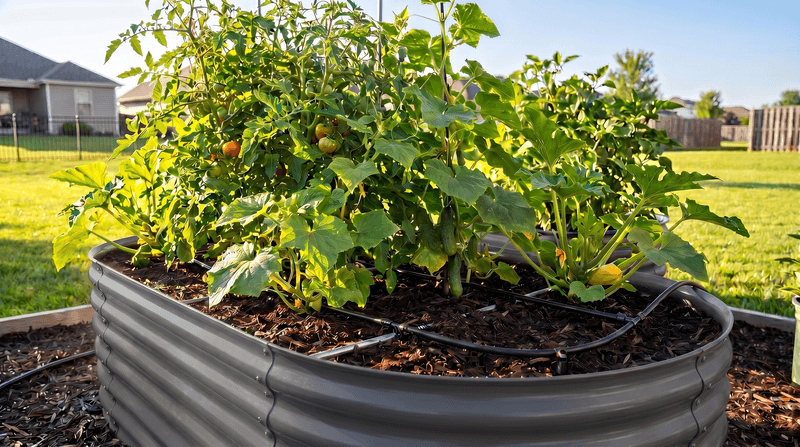
Start with drainage: raised beds, loose soil, and pots with open holes keep roots from sitting in water, which matters because wet conditions favor root rot. Add mulch to hold moisture, and keep enough leaves to shade the fruit, since cracking risk also depends on exposure.
Then adjust as the season moves. Skip watering after a good rain, and add more when heat and bigger plants raise demand, as Utah State guidance suggests.
The goal is not to quit daily watering or to keep soil soaked. It is to dodge the extremes.
A tomato asks for steadiness, not perfection.