
Spotted Lanternfly Egg Masses in North Carolina: When and How to Check Your Yard
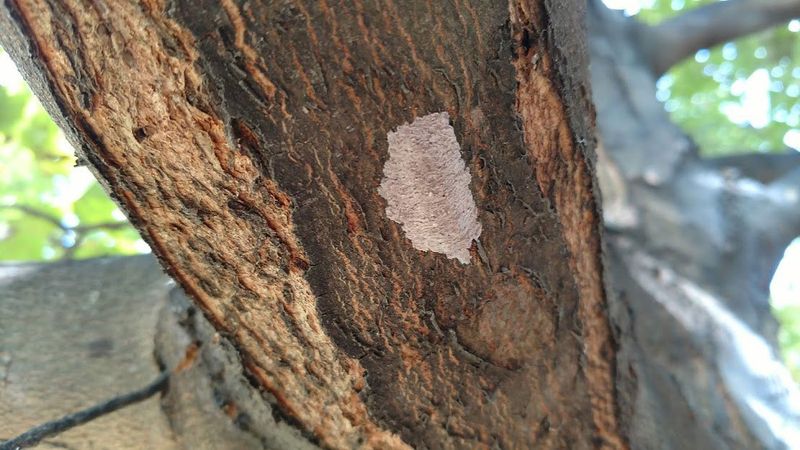
Late fall is when spotted lanternflies leave behind their next generation, tucked onto bark, rocks, and outdoor gear. In North Carolina, the pest is only confirmed in certain counties, so not every yard has a problem.
Still, a short walk around your property can tell you a lot. Here is how to spot a mass, remove one safely, and know what that does and does not accomplish.
Late fall is a reason to check, not proof of a statewide infestation
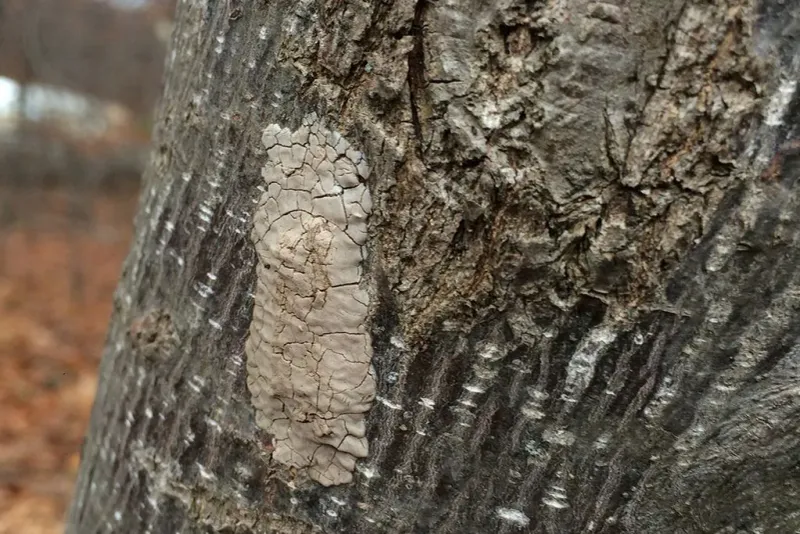
Timing is the main reason to look right now. NC State Extension says egg masses may be found from about mid-October through spring, and adults lay eggs from late summer through November.
That means the weeks after the first cool nights are a practical window for a yard check.
Timing alone does not tell you that lanternflies are in your neighborhood. In a press release dated February 10, 2026, the North Carolina Department of Agriculture and Consumer Services reported established populations in seven counties.
That figure is a snapshot from that date, not a current statewide map, and it should not be read as a sign that every region has the insect.
So think of a fall check as a low-effort habit rather than an alarm. If you live in or near a county with known populations, or you travel there often, looking around makes good sense.
If you live far from those areas, you will most likely find nothing, and that is a fine result.
A few minutes of looking also builds a skill. Once you know what a lanternfly mass looks like, you can tell it apart from the many other bumps, galls, and egg cases that show up on bark this time of year.
That knowledge is useful whether or not your yard ever has a problem, and it keeps you from scraping off things that belong there.
How to recognize a spotted lanternfly egg mass
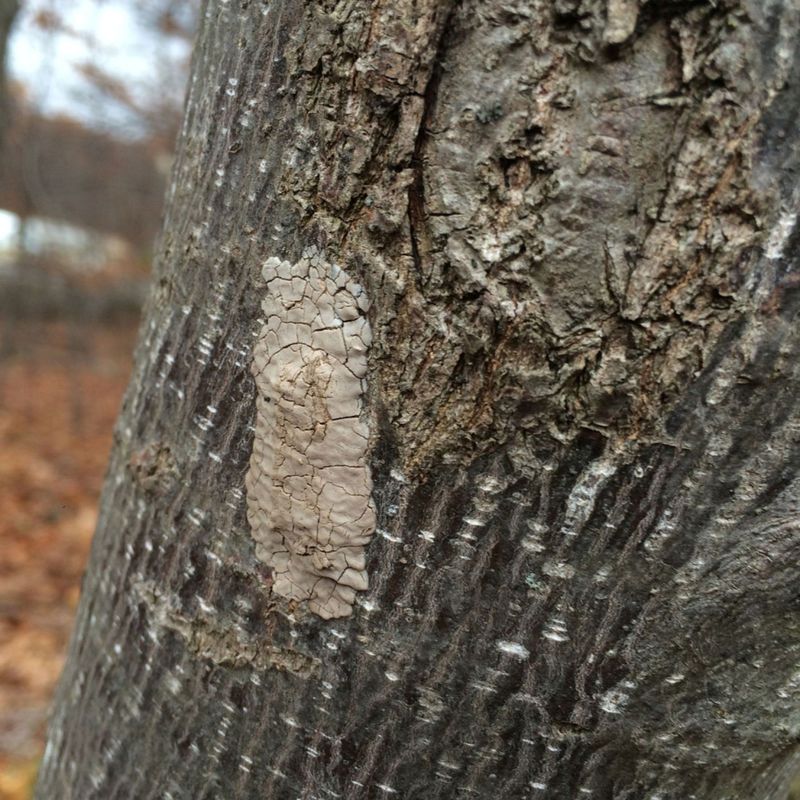
A spotted lanternfly egg mass is usually about 1 to 1.5 inches long and gray-brown. Many people say it looks like a smear of dried mud, and it can be easy to walk right past.
According to NC State Extension, each mass holds roughly 30 to 50 eggs.
Looks alone are not enough to be sure. Other insects lay eggs on bark and hard surfaces too, and some of them are helpers in your yard.
University of Maryland Extension warns that beneficial insects can also leave eggs in places where lanternflies do.
Before you touch anything, compare what you see with the look-alike resources on the NCDA&CS spotted lanternfly page. Those pages are written for North Carolina, so they help you rule out local lookalikes.
A good habit is to photograph a suspect patch first. Take one shot from a few feet away and one up close, then match it against the reference images.
If you are still unsure, leave it alone. A mass left in place for another day costs you nothing, while scraping off the wrong eggs can remove a beneficial insect from your yard.
Check trees, outdoor items, and other hard surfaces
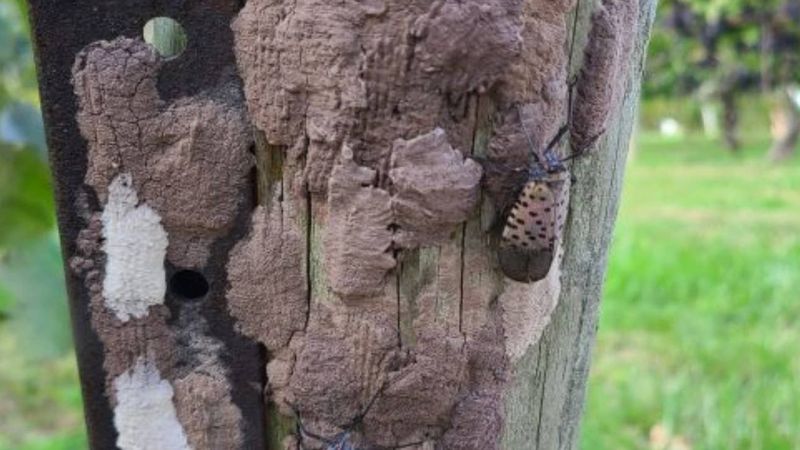
Trees are the obvious place to start, but they are not the only one. Work slowly around trunks and the lower branches you can see from the ground, then move on to rocks, fence posts, and other smooth, hard surfaces.
NC State Extension lists firewood and outdoor equipment among the items to inspect.
Next, look at the things you own. Patio chairs, tables, grills, planters, trailers, and the sides of vehicles can all carry masses.
The USDA guidance on cleaning outdoor items specifically names outdoor furniture and vehicles, because lanternflies can hitchhike on them.
Check items before you move or store them, especially if you have been in an area with an infestation. A camper packed away for winter or a load of firewood from a trip is a good example.
Look under edges, in folds, and on the undersides, where females like to hide eggs.
A simple routine helps. Walk the same loop each time, from trees to hard surfaces to stored gear, and use a flashlight on shaded spots.
Save any removal for the next step, and only once you are sure of what you found.
Remove only a confirmed mass you can safely reach
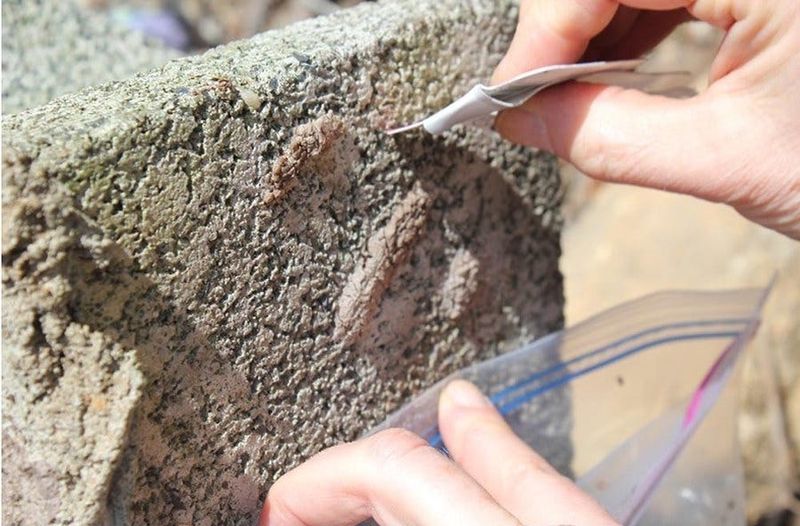
Once you are confident you have a spotted lanternfly mass and can reach it with both feet on the ground, you can remove it. The USDA and Penn State Extension describe the same basic steps.
First, scrape the mass off with a stiff plastic card or a putty knife. Work gently so the eggs do not scatter across the bark or onto the ground.
Second, kill the eggs. You can crush them, or scrape them straight into a bag holding rubbing alcohol or hand sanitizer.
Third, seal the bag and put it in the trash.
Do not climb a ladder to get at a high mass. Penn State’s removal guidance cautions against climbing to scrape hard-to-reach eggs, and a fall is a far bigger risk than a few insects.
If a mass is out of safe reach, note where it is and report it instead.
Stick to those methods. There is no need for sprays or other chemicals for this job, and the sources do not recommend them for egg masses.
Wash your tools afterward, and check the spot again later in case you missed part of the mass.
One removed mass cannot guarantee a lanternfly-free spring
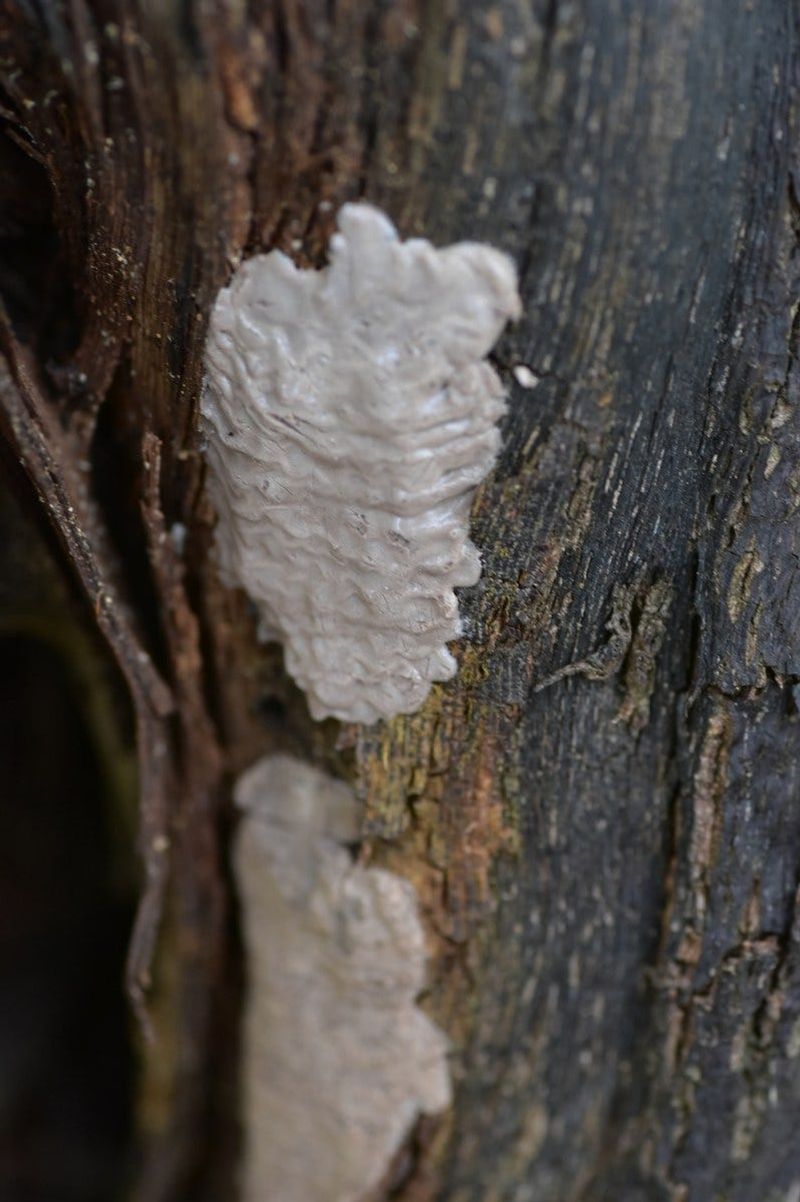
Egg masses overwinter and hatch in spring. If you fully kill the eggs in a mass you removed, those eggs will not hatch.
That is a real, if modest, result.
It does not promise a lanternfly-free yard. Other masses may sit high in the canopy, hide in cracks, or be on a neighbor’s property.
Penn State Extension says removal may reduce later numbers but is unlikely to eliminate a local population.
Keep the stakes in proportion, too. Spotted lanternflies are a serious concern for grapes and other agriculture, but in home landscapes Penn State describes them mainly as a nuisance, and says shade-tree death has not been directly linked to the insect so far.
NC State notes that heavy feeding can stress plants, and that young or not-yet-established plants have rarely been killed.
If you think you have found a lanternfly or an egg mass, follow the reporting instructions on the NCDA&CS spotted lanternfly page. The page lists an exception for residents of western Guilford County and eastern Forsyth County, so read it before you send anything in.
Make a careful check of your own yard

Start with a slow loop of trunks, rocks, furniture, vehicles, and firewood. Confirm anything suspicious against the NCDA&CS look-alike and reporting pages, and scrape only masses you are sure about and can reach from the ground.
Treat each step as targeted. Even Penn State says removal is unlikely to wipe out a local population.
A tidy check is about doing your small part, and a quiet spring is a welcome bonus.