
15 Self-Seeding Flowers You Plant Once And Never Have To Buy Again
Buying the same flower seeds every spring gets expensive fast, and it can feel like starting over each year. Some flowers save you the trouble by dropping their own seeds and popping back up on their own.
Plant them once, leave a few seed heads standing, and they keep the color coming season after season. Here are 15 easy growers that will fill your beds for free.
1. Bachelor’s Buttons
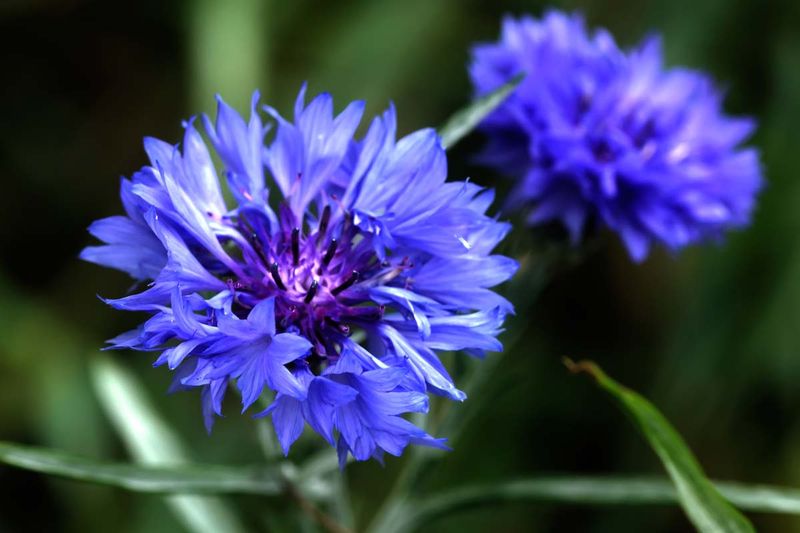
Grandma probably had a patch of these by the fence, and there is a good reason they stuck around for generations. Bachelor’s buttons are tough little annuals that come back year after year with almost no help.
You will find them in blue, pink, white, and purple.
The trick is simple restraint. At the end of the season, let the seed heads dry right on the stems and leave the whole plant in the ground instead of pulling it.
Those seeds drop, rest over winter, and sprout when the soil warms.
Snip a few blooms for a vase in early summer, then let the later flowers go to seed. You get bouquets now and free plants next spring.
2. Larkspur
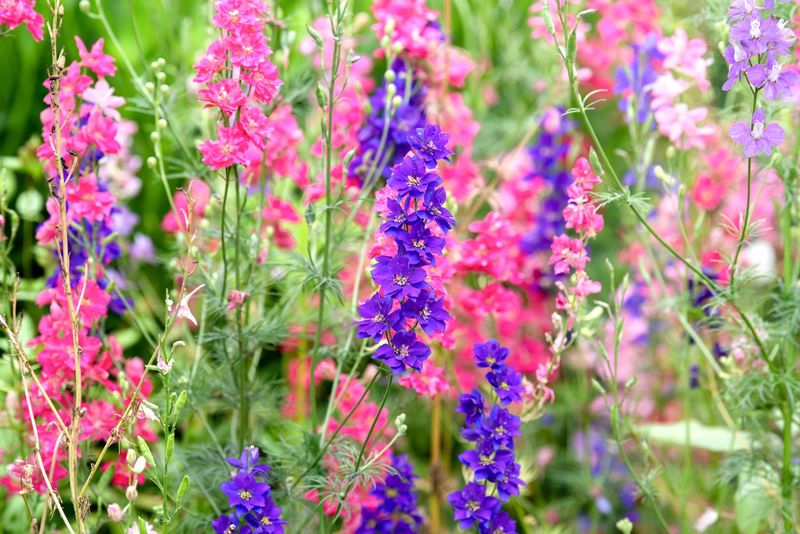
Here is a flower that plays hard to get, then never leaves. Larkspur can be fussy to start from seed the first time, and plenty of gardeners give up after one try.
Stick with it, though, because once it settles in, it reseeds readily.
Those tall spikes of blue, pink, and white are a cutting garden favorite. To keep the cycle going, allow some seedheads to fully develop and turn brown before you tidy up.
Larkspur seed likes a chill, so fall-dropped seed often sprouts better than anything you could sow in spring. Let nature handle the timing for you.
3. Sweet Peas
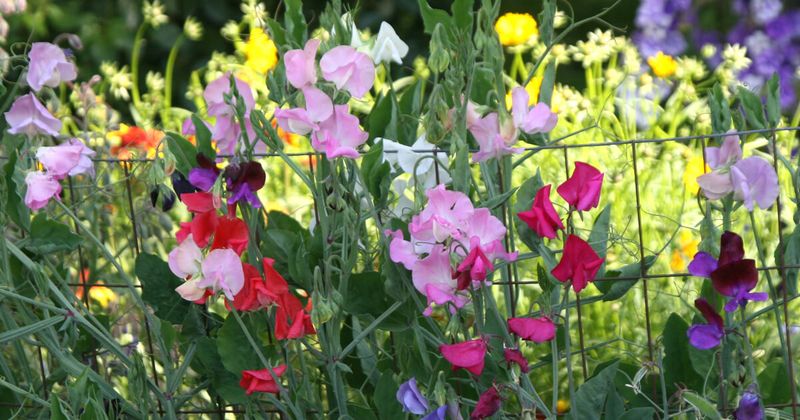
One whiff and you understand why people get hooked. Sweet peas carry one of the richest scents in the flower world, and a handful of stems can perfume an entire kitchen.
Give them a trellis or fence to climb. After the flowers fade, pea-like pods form, and if you let those pods ripen and split open, seeds scatter at the base for next year.
A safety note for families: sweet pea pods and seeds are toxic and are not the same as garden peas. Keep curious kids and pets from snacking on them, and consider planting away from your vegetable rows to avoid mix-ups.
4. Snapdragons
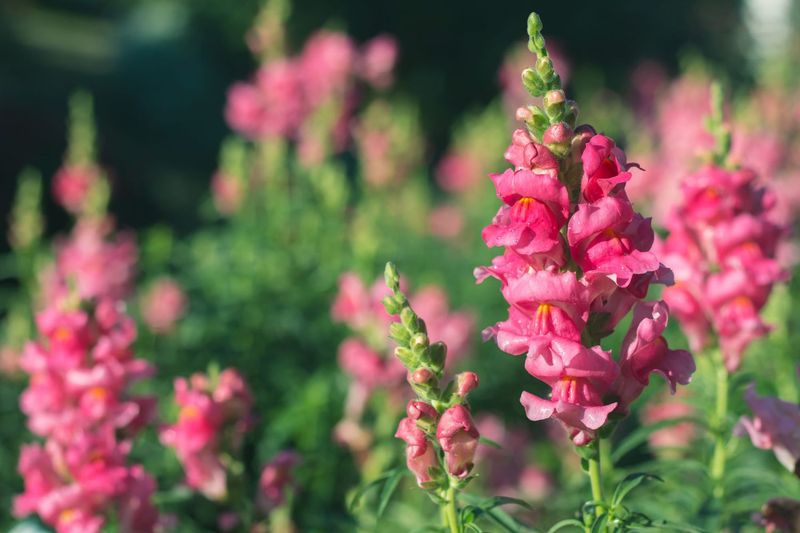
Squeeze the side of a snapdragon bloom and its little dragon mouth opens. Kids love it, and honestly, so do most grown-ups.
Beyond the fun factor, these flowers are surprisingly sturdy.
In mild-winter areas, snapdragons may hang on as short-lived perennials. In colder spots, they more reliably come back from seed dropped the year before.
Tall varieties make lovely bouquets with a spicy scent. Leave the last flush of the season standing so the seed capsules can dry and spill, and look for small seedlings near the old plants come spring.
5. Pincushion Flower
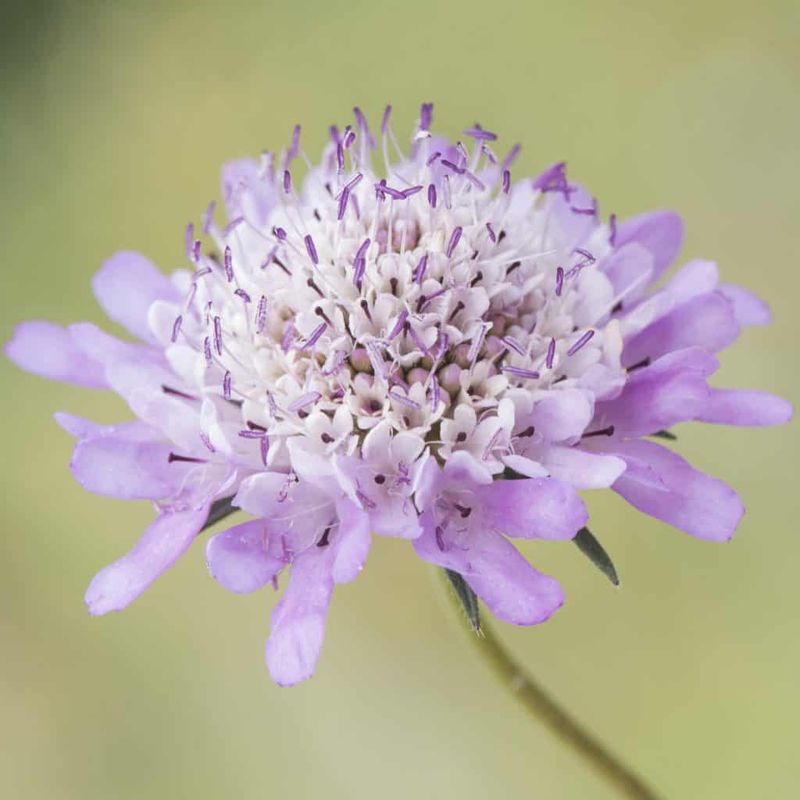
Ever notice a flower showing up somewhere you never planted it? With scabiosa, that happens a lot, and it is usually a happy surprise.
Pincushion flowers make seeds shaped like tiny shuttlecocks. The wind catches them and carries them across the yard, so new plants can appear in fresh corners the following year.
The domed blooms look like little pincushions full of pins, and pollinators visit them all summer. Leave the round seed heads up in fall, since they look neat and they do the replanting for you.
6. Cosmos
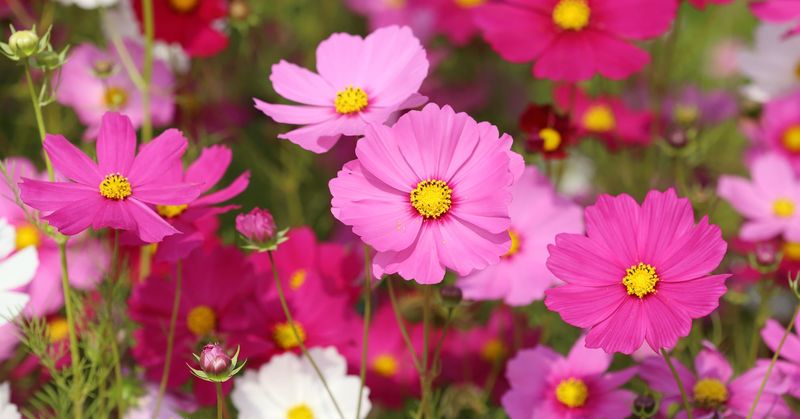
Good news if your soil is nothing special: cosmos actually prefer it that way. They thrive in average to dry ground and can get floppy with fewer flowers when the soil is too rich.
Their airy, daisy-like blooms in pink, red, and white bring in butterflies and bees by the dozen. Deadheading keeps the flowers coming, which is great in midsummer.
By late summer, ease up on the snipping. Let some heads turn into spiky seed clusters, and next year you will find a crop of feathery seedlings waiting for you.
7. Tall Verbena
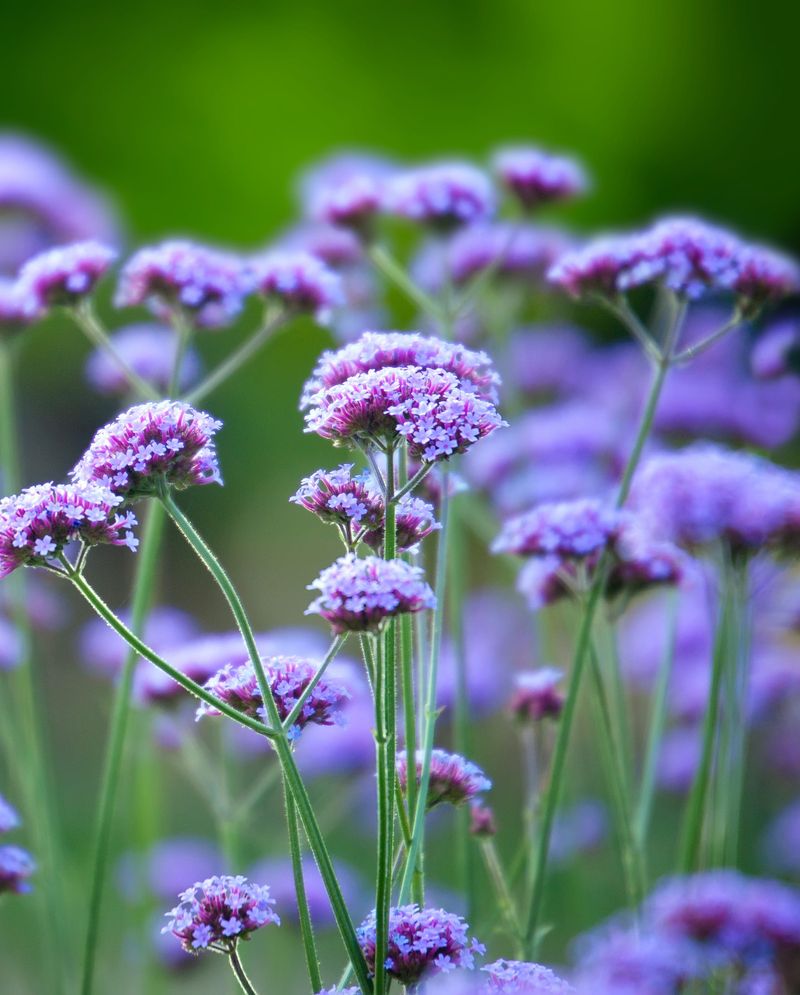
Picture purple confetti floating on stems that seem to hover above the garden. Verbena bonariensis has an open, see-through shape, so you can tuck it between other plants without blocking the view.
Pollinators flock to the small lilac clusters for months. It handles full sun to part shade and grows well in moist but well-drained soil.
Self-sowing comes easily, so expect seedlings in nearby gaps. If one sprouts in an awkward spot, it pulls out easily while small.
8. Annual Poppies
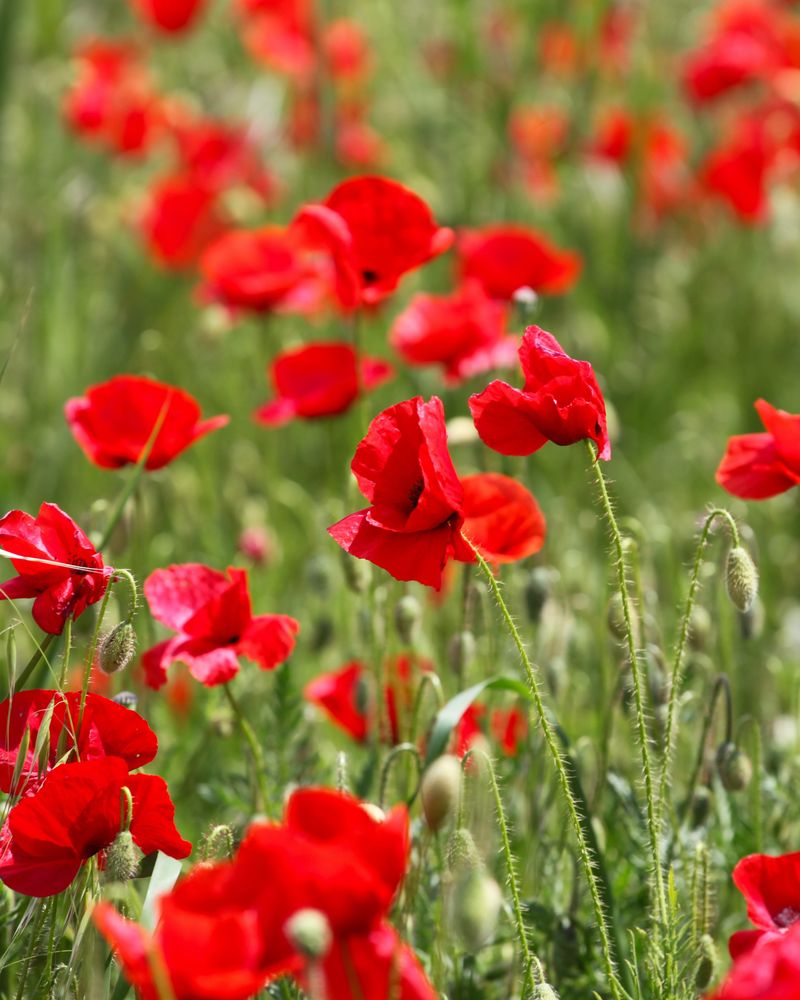
Got a hot, dry spot where everything else gives up? Poppies might be your answer.
Corn poppies, California poppies, and breadseed poppies all turn tough patches into bright color.
Poppies dislike being moved, so scattering seed directly works best. After that, they handle the job themselves.
Just leave the seedheads on the plant until they dry and rattle.
A single pod holds a surprising number of tiny seeds that shake out like salt. Expect a generous crop next year, and thin seedlings if they come up crowded.
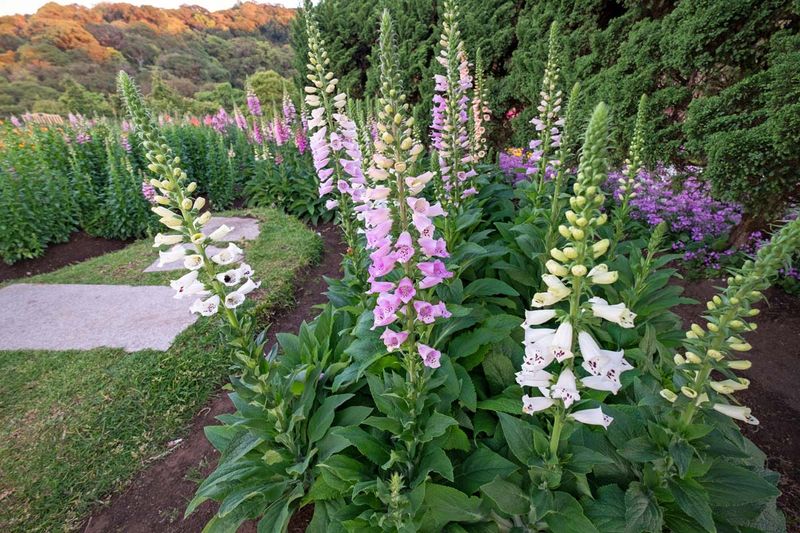
9. Foxgloves
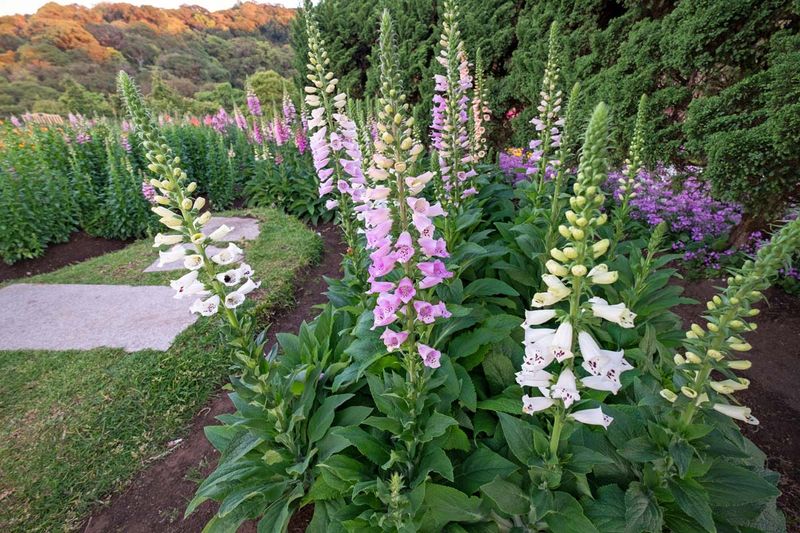
Foxgloves work on a two-year schedule. The first year they grow a low clump of leaves, and the second year they send up those tall, freckled spires before setting seed.
Because of that rhythm, letting them self-seed is the easiest way to get flowers every year instead of every other. They love dappled shade and bloom from late spring into summer in white, peach, and pink.
Over time, seedlings may wander into sunnier spots or even pots. All parts are toxic if eaten, so plant them with care around kids and pets.
10. Lady’s Mantle
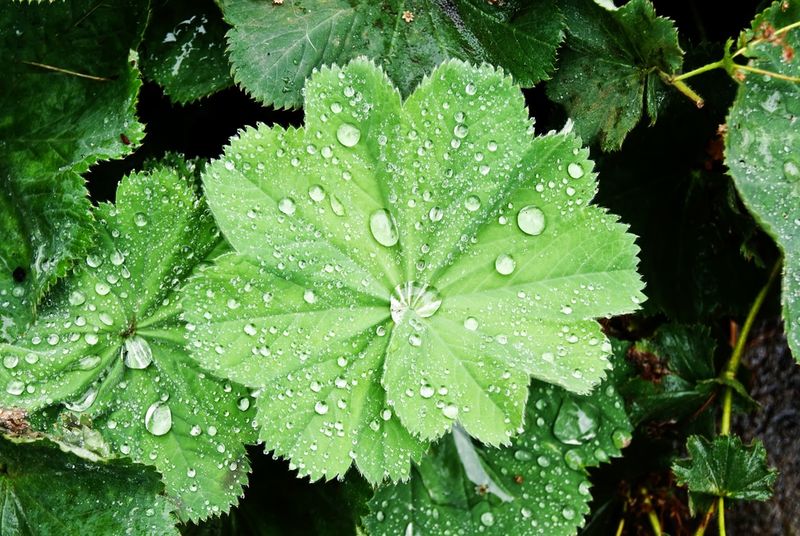
Walk out after a rain shower and you will see why people adore this plant. The soft, fuzzy leaves hold water droplets like tiny glass beads.
Lady’s mantle is a perennial that asks for very little. It grows in sun or part shade, tolerates heavy clay, and handles dry spells.
Frothy, yellow-green flowers soften path edges, and seedlings pop up readily. If you want fewer babies, trim the flowers after they fade.
For more, just let them be.
11. Columbine
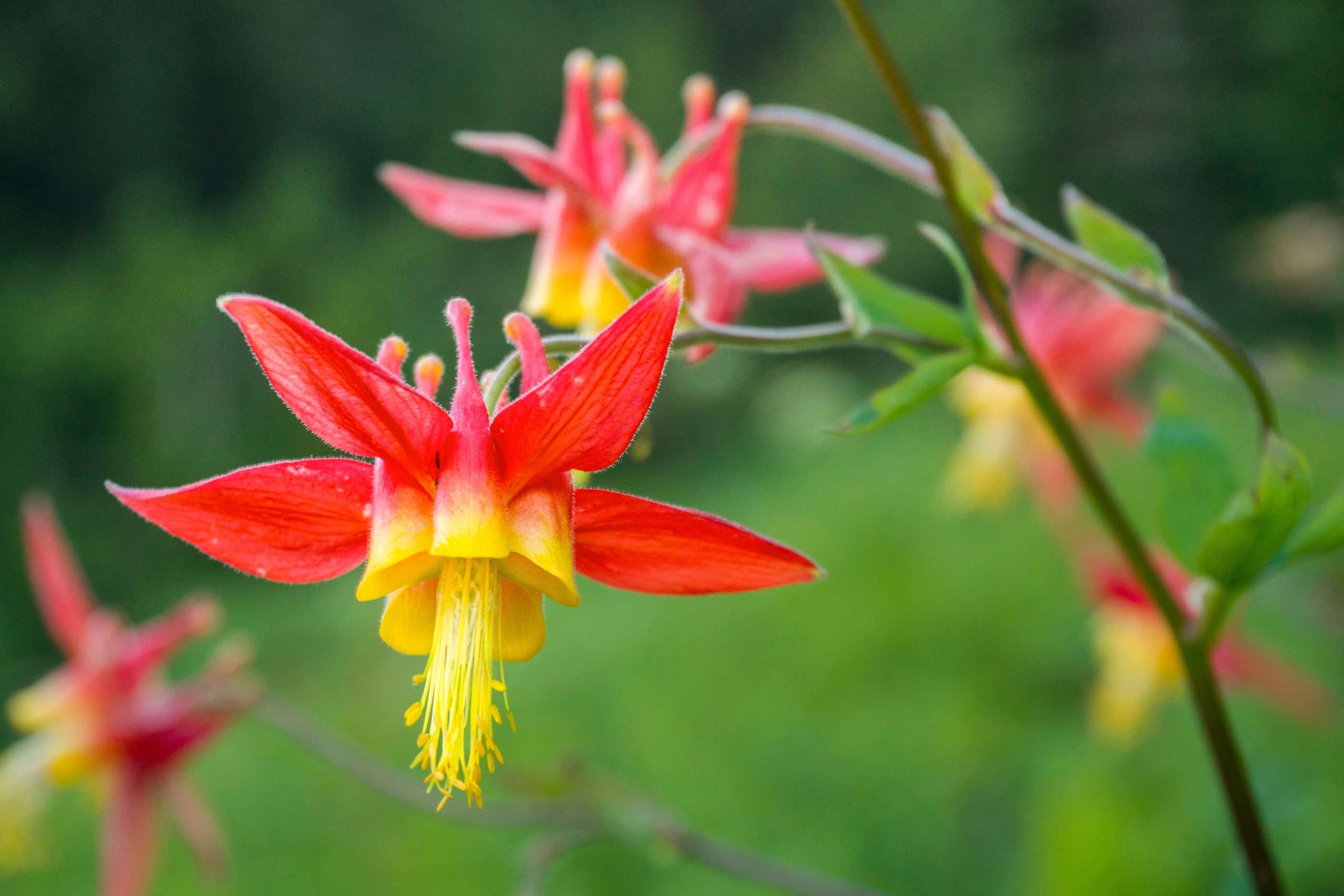
Polite is the best word for columbine. It reseeds enough to keep itself going without taking over the whole bed.
The spurred, nodding flowers come in almost every color, and hummingbirds love them in spring. Columbine likes shady spots where many flowers struggle.
Seedlings from mixed plants may surprise you with new color combinations. Leave the seed pods standing after bloom, and the plant will quietly take care of the rest.
12. Black-Eyed Susan
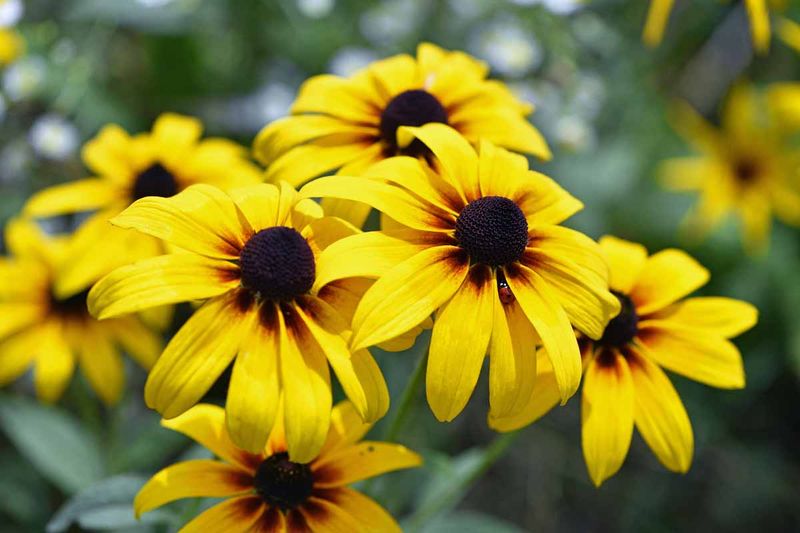
When July heat makes petunias sulk, black-eyed Susans just keep glowing. These golden flowers handle drought and heat without complaint.
Rudbeckia hirta often acts like a biennial or short-lived perennial, so any single plant may not last long. The good news is that it self-seeds reliably.
Leave the dark seed cones standing into winter. Goldfinches will snack on some, and the rest will drop and grow into next year’s plants.
13. Hardy Geraniums
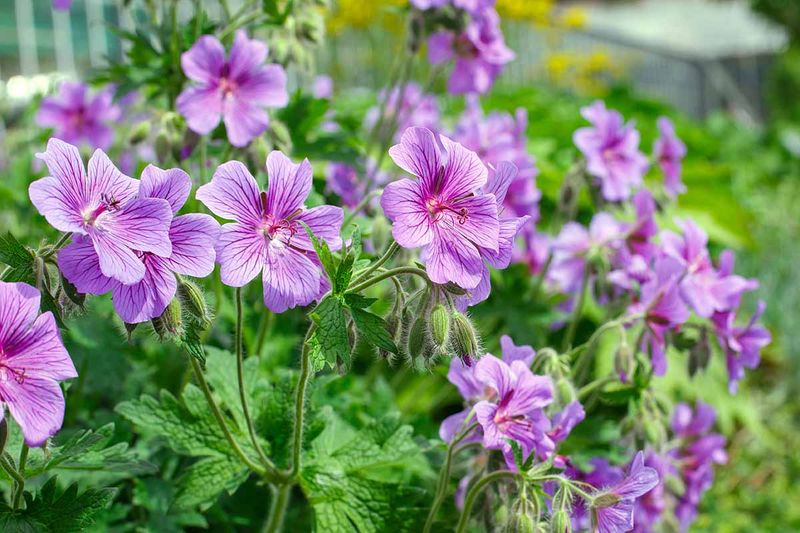
These are not the potted geraniums from the garden center. Hardy geraniums, also called cranesbills, are perennials that come back for years.
Many types self-seed, so baby plants often appear around the parent. With different bloom times and leaf styles, they keep beds interesting.
The beak-shaped seed pods can fling seeds a few feet away. Dig up extras in spring and share them.
14. Borage
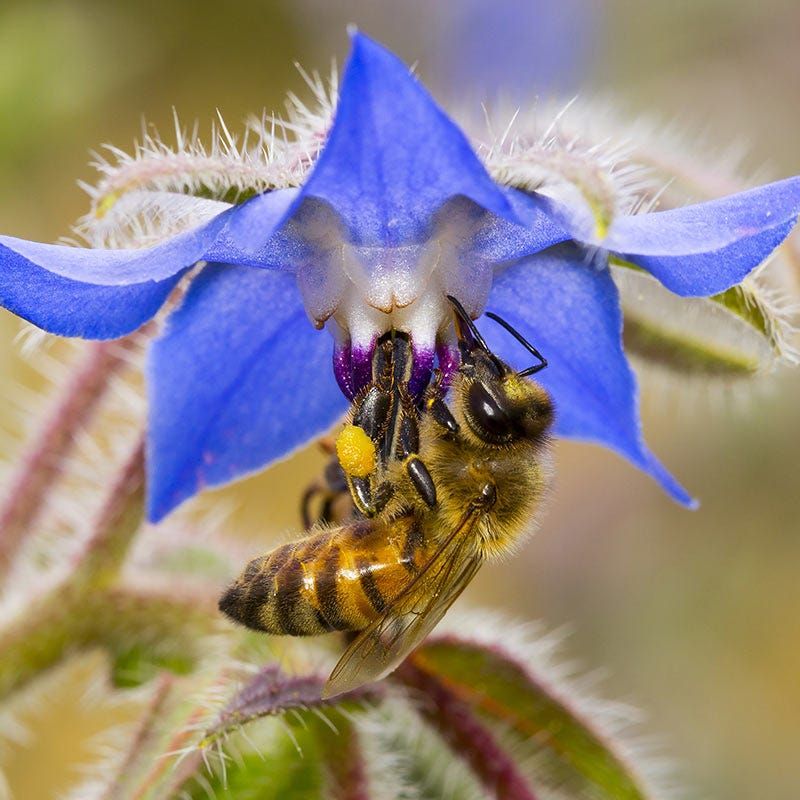
Bees go wild for borage. The star-shaped blue flowers hum with visitors from morning until evening.
The blooms are edible too, and they look lovely frozen in ice cubes or sprinkled on salads. Borage self-seeds generously.
At season’s end, leave the plants to die back where they stand. The seeds fall and sprout in spring, so be ready to thin.
15. Love-in-a-Mist
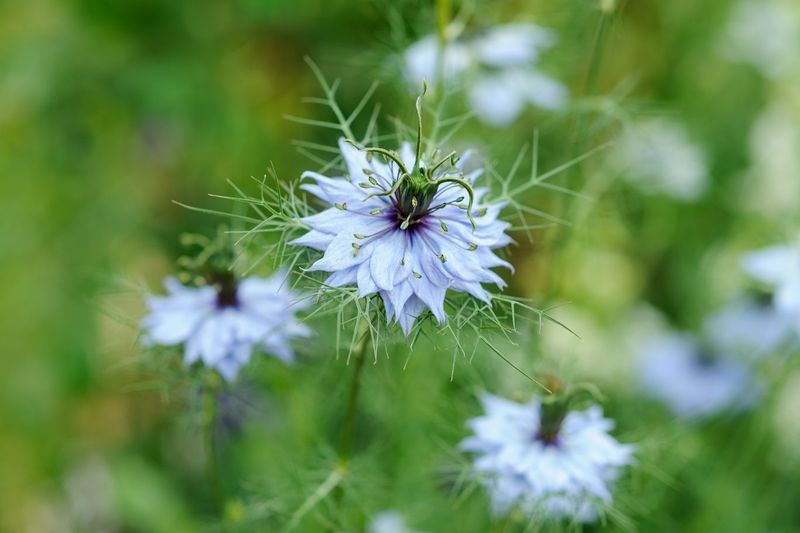
The name alone makes people smile, and the flower lives up to it. Each bloom sits in a soft cloud of lacy foliage.
After the flowers fade, puffy striped seed pods take their place. They look great in dried arrangements, and once established it spreads readily on its own.
Let a few pods split open along a path or border, and next year you will have a dreamy edging that cost you nothing.