
Mowing Height and Crabgrass: How Species-Right Mowing Can Reduce Pressure Next Spring
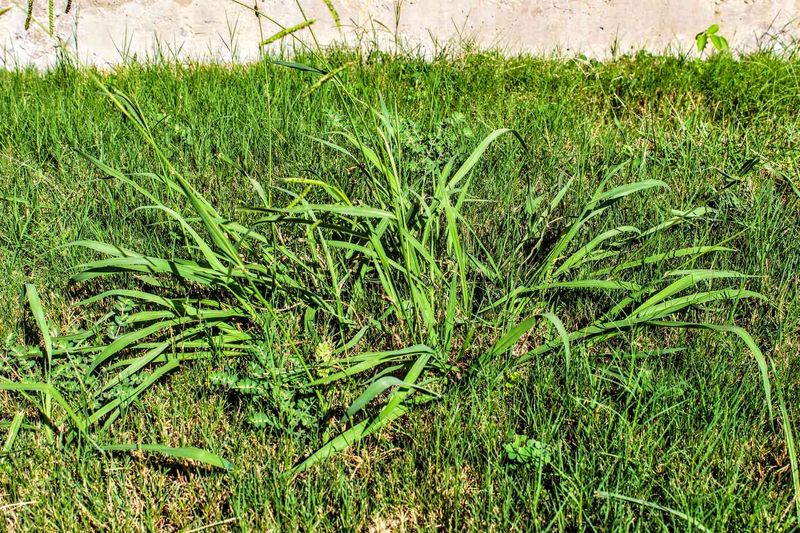
Crabgrass shows up in so many lawns that it is easy to blame one thing, like the weed killer you bought or the last mow of the year. The real story is a bit more mixed.
How tall you mow all season can change how much room crabgrass gets, but it is only one piece of the puzzle. Here is what research says, what it does not say, and what you can do with your own mower.
A short cut can give crabgrass an opening
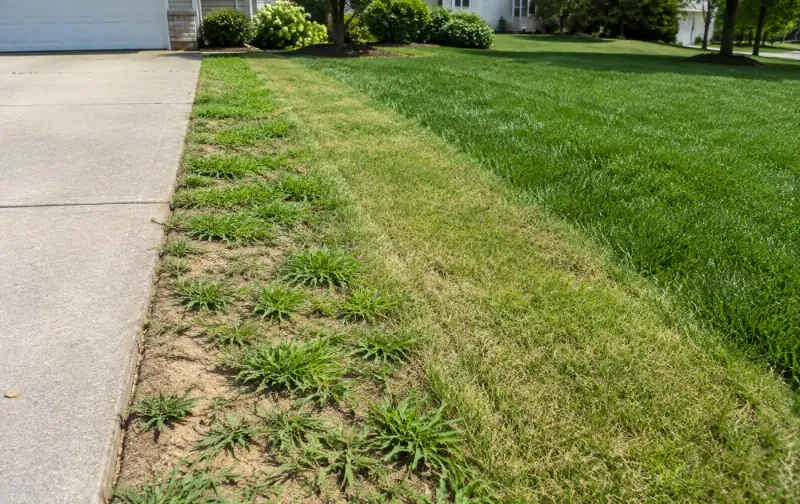
Picture a lawn mowed very short. The blades are thin, the soil shows through, and sunlight pours all the way down to the ground.
That is the kind of opening crabgrass seedlings love, because they need light and bare soil to get started.
One North Carolina tall-fescue field experiment showed how big the gap can be. By mid-September, crabgrass covered 95% of plots mowed at 1 inch, 48% at 2 inches, 13% at 3 inches, and 0% at 4 inches.
Those numbers come from that one experiment on tall fescue. They are not a promise for every lawn, grass type, or climate.
Other research points the same direction. Illinois Extension reports fewer annual-grass problems in lawns mowed above 3 inches.
Still, short mowing is one factor that can favor crabgrass, not the sole cause. Thin turf, bare spots, compaction, and watering habits all play a part.
If you have crabgrass, it does not automatically mean your weed control failed or that you did something wrong. Think of mowing height as one part of a larger prevention plan.
Set the mower for your grass, not a universal number
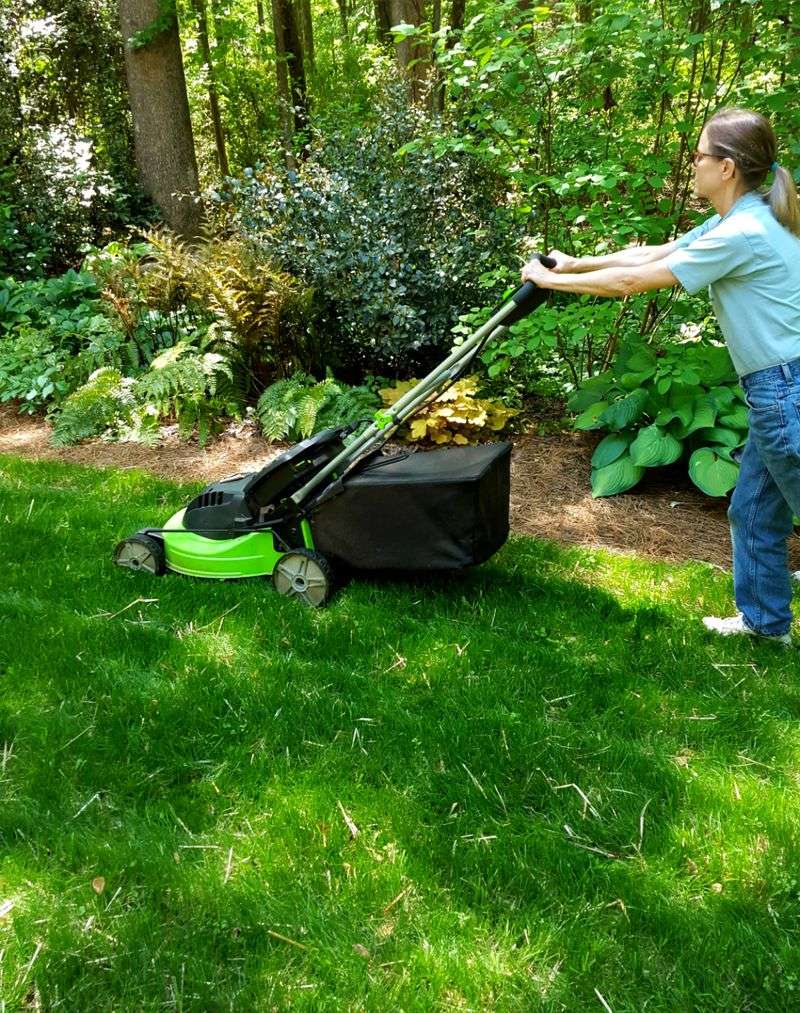
Start by figuring out what grass you actually have. Tall fescue, Kentucky bluegrass, and bermudagrass all want different mowing heights.
If you are not sure, a local Extension office can help you identify it.
Around 3 inches is a handy starting point for many common home lawns, especially cool-season ones. Maryland Extension recommends 3 to 4 inches during the growing season.
Other grasses are different. UC IPM lists tall fescue at 2 to 3 inches, while common bermudagrass is 1 to 2 inches.
Setting a bermudagrass lawn at 3 inches would be off target, just as scalping tall fescue to 1 inch would be.
Follow the one-third rule too. Cornell guidance advises removing no more than one-third of the leaf blade in a single mowing.
If the grass got tall during a rainy week, trim it down in steps rather than in one big chop.
Measure your actual cut with a ruler on a flat driveway or sidewalk, since mower settings are not always accurate. Keep that species-right height all season long.
Routine mowing matters far more than any single cut.
Crabgrass returns from seed
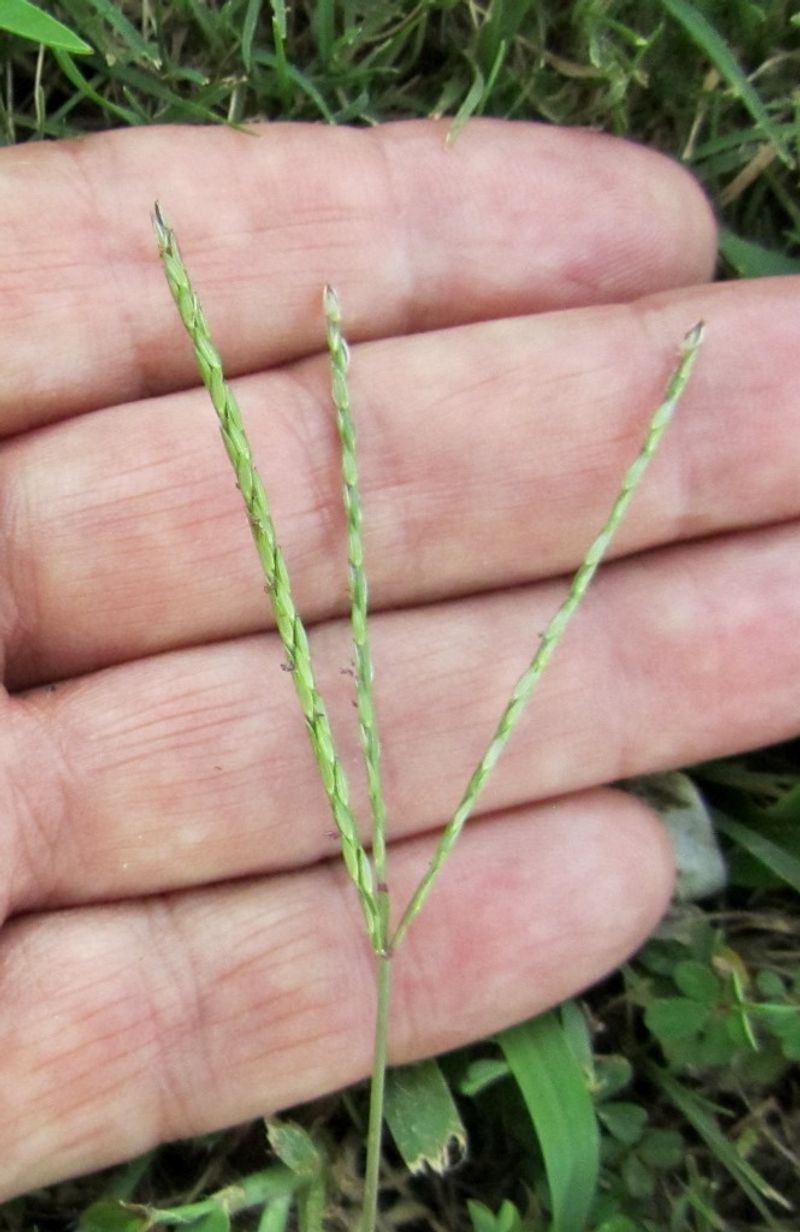
Crabgrass is generally a summer annual. It sprouts from seed, grows through summer, drops plenty of seed, and dies after frost in many regions.
So the plants you pull or see die in autumn are not coming back as plants, but their seeds are waiting.
According to Maryland Extension, those seeds germinate as soil warms in spring. The exact timing varies with location and weather, so a warm early spring in one town can look very different from a late one in another.
Seeds may already be in your soil, and they can stay viable for years. That is why a lawn can look clean one year and sprout crabgrass the next, even if you did nothing differently.
Fall lawn care sets up the next growing season by helping the turf stay healthy and thick. It does not decide whether crabgrass seeds will germinate.
The final mow of the year is not a switch that turns crabgrass on or off.
The last fall cut does not need a crabgrass-specific height
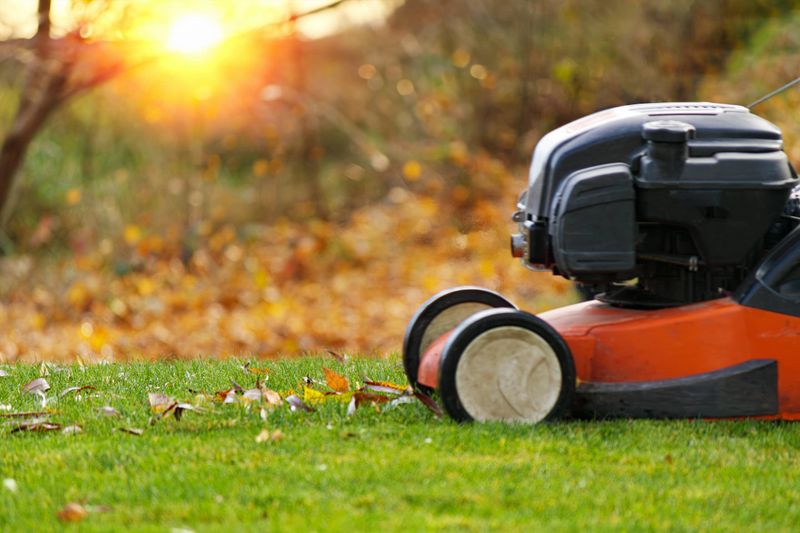
Here is the straight answer: no special final-fall mowing height has been shown to stop crabgrass the following spring. A University of Kentucky tall-fescue study compared seasonal changes in mowing height with mowing higher all the time.
The seasonal adjustments did not suppress crabgrass any better than consistently higher mowing.
So there is no magic last cut. What counts is sound mowing across the whole growing season.
Fall mowing still has its own guidance, and it is about winter care. University of Minnesota Extension says to keep mowing while the grass is growing and to keep your usual height instead of scalping.
Lawns normally kept at 2.5 to 3 inches should stay in that range before winter. If your lawn is normally kept taller, any reduction should be gradual rather than one severe cut.
Keep the purpose straight. That advice helps the lawn go into winter in good shape.
It is not a crabgrass treatment, and it should not be treated like one.
Dense turf leaves crabgrass less room to establish
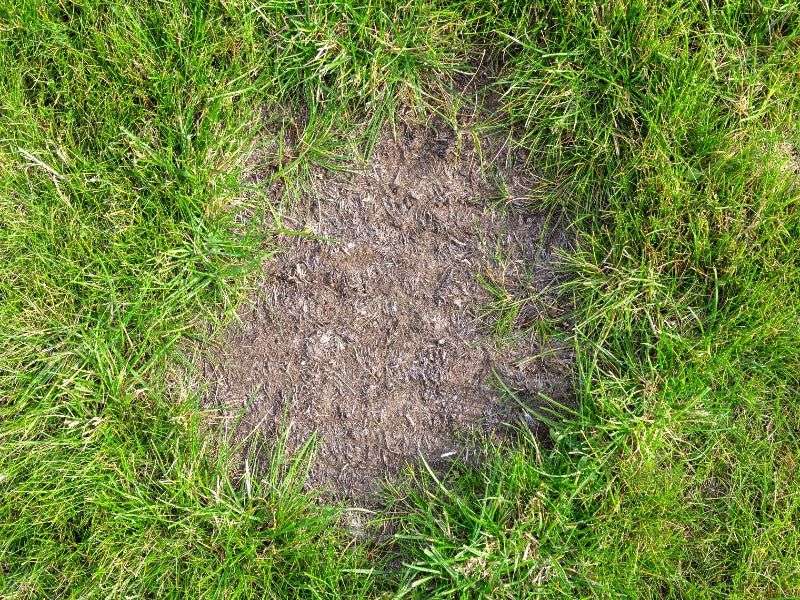
A thick, continuous lawn leaves little open soil and shades the ground, so crabgrass seedlings have a harder time getting started. Illinois Extension includes maintaining dense turf among its core strategies for crabgrass.
Walk your yard and look for trouble spots. Thin areas, worn paths, pet damage, and bare patches are the easiest places for crabgrass to move in.
Repair them with the right seed for your grass at a suitable time of year.
Then think about what made the spot thin. UC IPM notes that conditions like compaction and irrigation practices can influence invasion.
Shallow, frequent watering and hard-packed soil are common culprits worth checking.
Penn State Extension describes combining cultural practices with control measures where appropriate. Lawn repair helps, but it will not eliminate crabgrass by itself, especially if seeds are already in the soil.
Use preemergent control with local timing and label directions
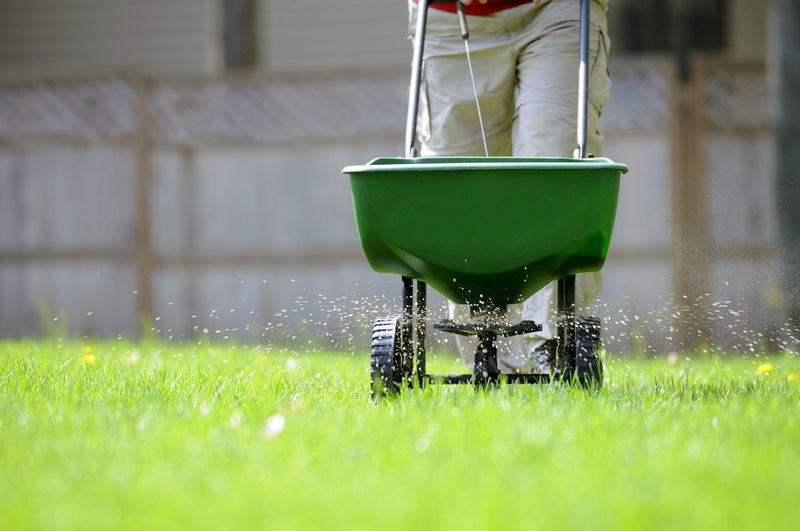
If crabgrass returns year after year even with good mowing, a preemergent herbicide may be worth considering as one part of the plan. These products work before seeds sprout, so timing matters a great deal.
Germination depends on your local conditions, not a set date on the calendar. Soil temperature around 55°F is a commonly used indicator, as described in University of Tennessee guidance.
It is a rough signal, not a nationwide trigger or a guarantee. A soil thermometer and your local Extension office can help you judge your own timing.
Always read and follow the product label for rates, timing, and safety. Plan ahead if you hope to overseed, because Illinois Extension and UC IPM both note that preemergents can interfere with grass-seed germination.
Check the label for restrictions before you apply anything.
Mowing is not a replacement for herbicide in every lawn. On the other hand, a weed killer that did not seem to work is rarely the only reason crabgrass came back.
Combining good mowing, dense turf, and properly timed control tends to make the most sense.
Build a realistic plan for next spring
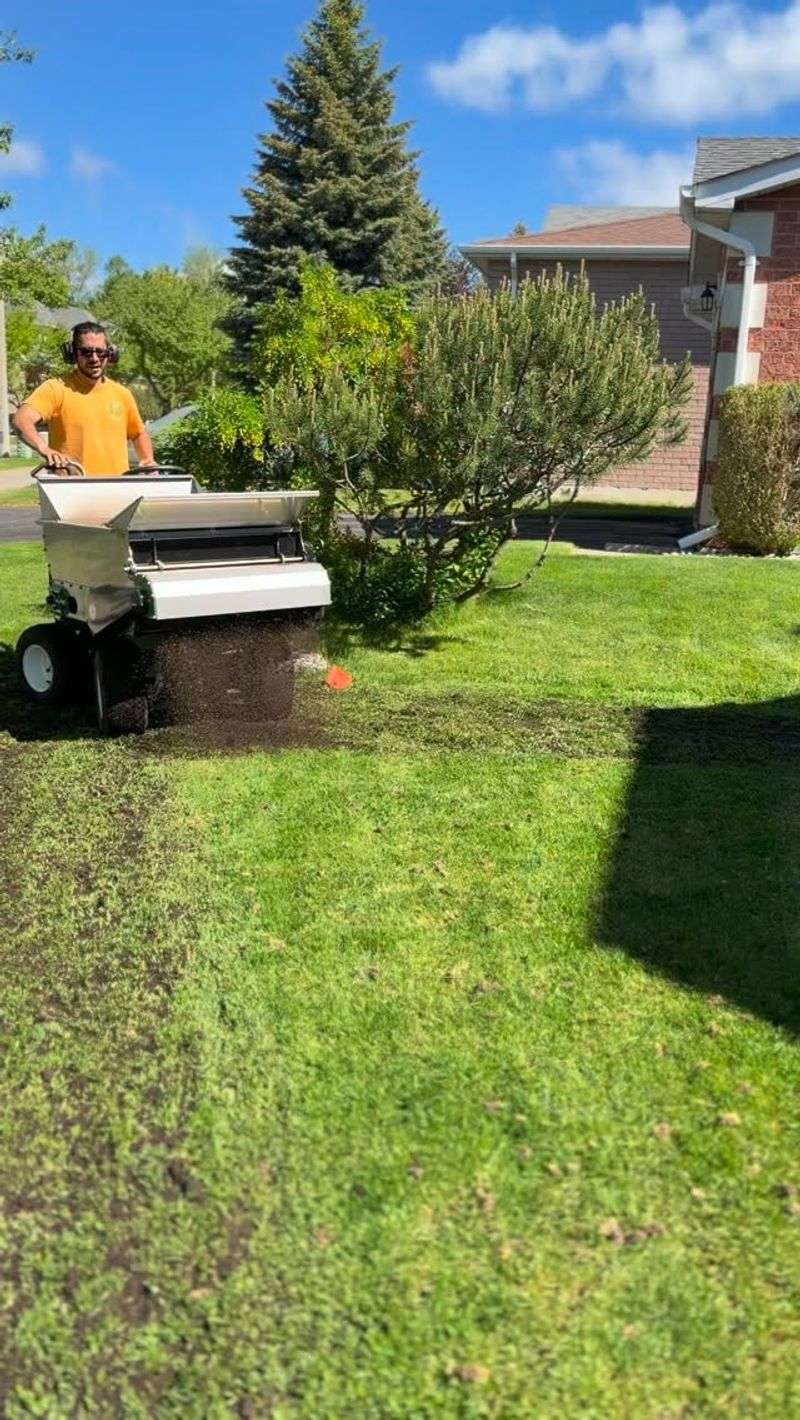
Keep it simple. Mow at the height recommended for your grass species through the growing season, and keep the final fall cut at your usual height while the grass is still growing.
Patch thin spots so the turf stays dense, as Illinois Extension advises, and follow Minnesota’s fall guidance on avoiding a scalp.
These steps can reduce the room crabgrass gets, but they cannot promise a crabgrass-free spring.
A steady mower setting all season does more for your lawn than any single dramatic cut.