
Epsom Salt for Cucumber Vines: When Magnesium Helps and When It Doesn’t
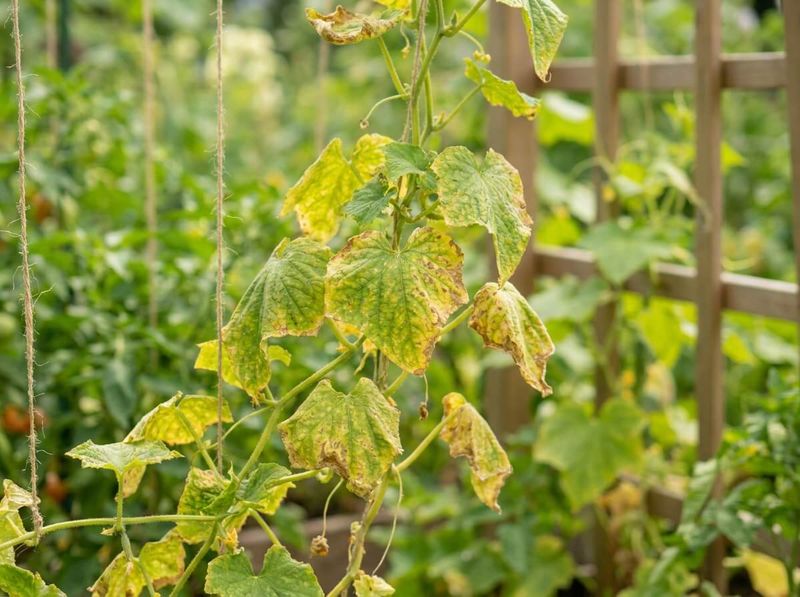
Yellow leaves on your cucumber vines can make any gardener reach for a quick fix. Epsom salt is cheap, sitting in many cupboards, and plenty of people say it works wonders.
But it only helps when a plant is truly short on magnesium, and yellow leaves have many other causes. Fall is a great time to sort out the facts and plan your soil care before next summer.
Epsom salt is not a universal cucumber fix
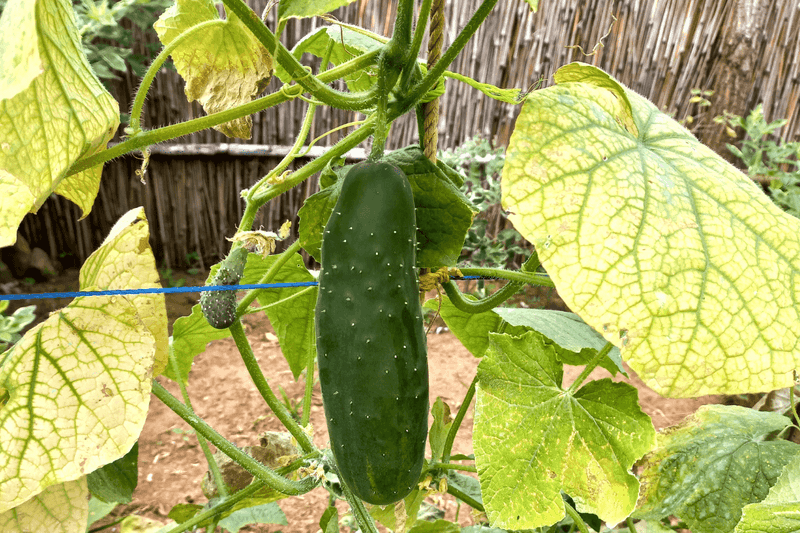
Picture your cucumber vines in late summer, a few leaves going pale, and a box of Epsom salt in the cupboard. The pull to sprinkle some on is understandable.
Epsom salt is magnesium sulfate, so it really can supply magnesium to plants.
The catch is that University of Maryland Extension guidance says to use it only when a soil test shows magnesium is low. If your soil already has enough, extra Epsom salt has no good reason to make vines greener or more productive.
Cucumbers have been tested directly. In one University of Georgia field trial, magnesium sulfate did not change leaf chlorophyll readings, which is a measure of leaf greenness.
It also had no consistent effect on marketable or total yield.
That result has limits. It was a single trial in Georgia, run in a commercial-style setup with repeated applications through drip irrigation alongside a broader fertilizer program.
It does not prove magnesium can never help a plant that is truly deficient, and it cannot be shrunk into a backyard recipe.
So think of Epsom salt as a tool for a confirmed problem, not a routine tonic. If magnesium turns out to be low in your soil, it may help.
If not, your vines are likely asking for something else.
What magnesium deficiency can look like
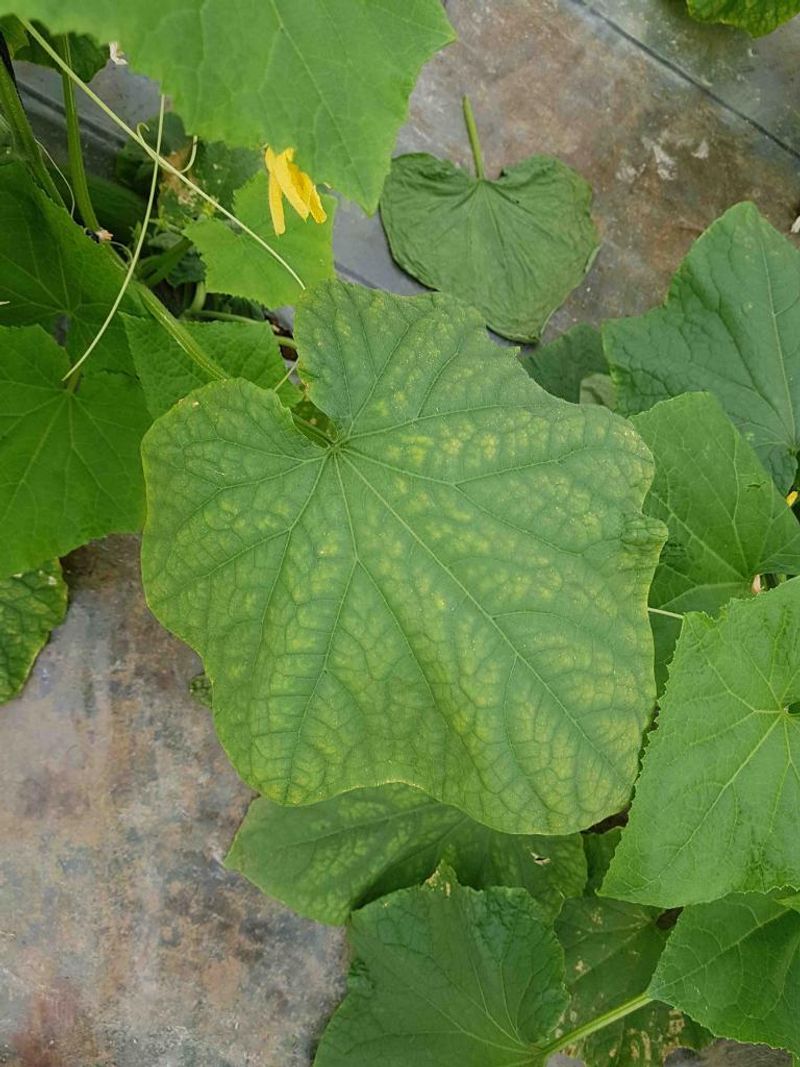
Magnesium shortage has a recognizable look. The classic clue is yellowing between the veins, with the veins themselves staying green, and it usually shows up first on older leaves near the base of the vine.
In severe cases, brown, dead patches can develop.
According to University of Kentucky guidance on cucurbit crops, deficiency is more likely in sandy, low-pH soils and during rapid growth. If your bed is light and sandy and the vines took off fast in midsummer, that fits the pattern.
Still, treat this as a clue, not a verdict. The same Kentucky source notes that visual symptoms alone do not confirm the cause.
Several other problems can produce pale or spotted leaves.
A quick way to sort things out is to check where the yellowing starts. Magnesium trouble typically begins between veins on older leaves.
Other problems may hit leaf edges, new growth at the tips, or the whole plant at once, as described in Maryland Extension’s key to common cucumber problems.
Take a photo of the affected leaves and note which ones are involved. That record will be handy when you compare notes with a soil report or call your local Extension office.
Yellow leaves can have other causes
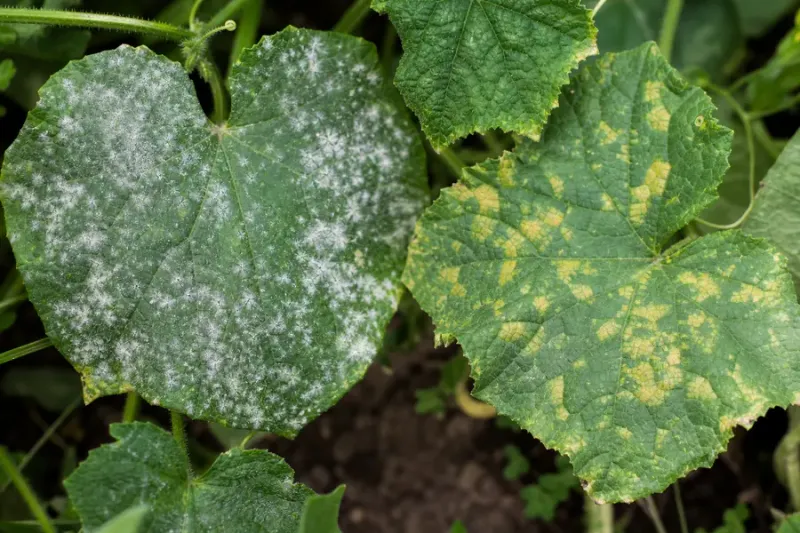
Not every pale cucumber leaf is a nutrient story. Disease, pests, other nutrient problems, and plain old age can all turn foliage yellow, and each one calls for a different response.
Downy mildew is a good example. Maryland Extension’s cucumber problem key describes angular yellow lesions that are bounded by the veins, which can look a bit like interveinal yellowing at first glance.
Spider mite feeding is another lookalike, leaving fine yellow stippling that you can spot up close, often with tiny mites on the leaf underside.
Magnesium deficiency, by contrast, tends to start between the veins of older leaves, as the Kentucky cucurbit guidance describes. Pests and disease often show other signs too, such as spots with defined shapes, webbing, or a pattern that spreads from one area of the garden.
Before you pick a remedy, take a slow walk down the row. Flip leaves over and check the undersides.
Look at old leaves versus new ones, and compare the sunniest vines with the shaded ones.
Also think about watering and recent weather. Stressed, crowded, or very old leaves can yellow without any deficiency.
Spending five minutes looking can save you from treating the wrong problem, and your vines will thank you for it.
Test garden soil this fall
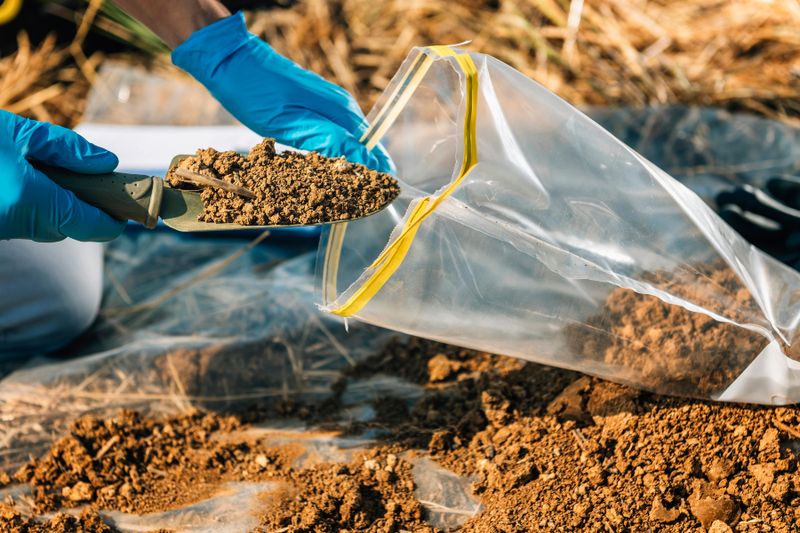
Once the cucumber season winds down, the garden gives you a quiet window to find out what your soil actually needs. Testing in fall leaves time to act on the results before spring planting.
Guidance like Penn State Extension’s advice on fall soil sampling explains why this timing works so well.
A soil test can point you toward nutrient and pH amendments tailored to your bed, instead of a guess based on a yellow leaf. That is the real swap here: replacing a hunch with site-specific information.
One detail matters a lot. Check whether the test you order includes magnesium, because some standard garden tests do not.
University of Minnesota Extension’s soil testing page is a helpful place to see what tests typically cover and how to collect a sample.
When you sample, take small scoops from several spots in the bed where cucumbers grew, mix them in a clean container, and follow your lab’s directions for submitting it. If you can, jot down what you grew and any trouble you saw.
Your state’s Extension office can usually tell you which labs are nearby and which test package makes sense for a vegetable bed.
Let the soil report guide the amendment
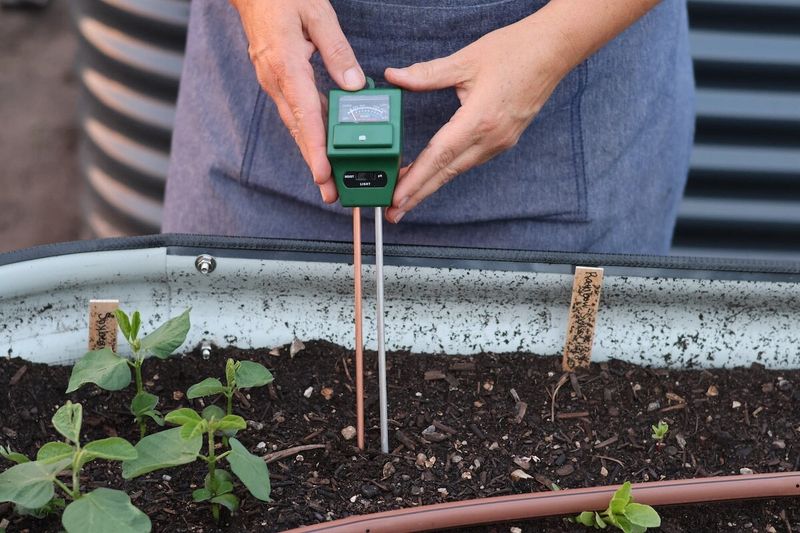
A soil report can look like a page of numbers, but it usually ends with plain recommendations. Your job is to follow those, not to swap in a favorite home remedy.
Magnesium and pH are two separate readings. Sometimes both come back low.
In that case, a lab may recommend dolomitic lime, since it supplies magnesium while raising pH. Maryland Extension’s guide to reading a soil test report walks through how to interpret these results, and the key point is to follow what the report says rather than applying lime or Epsom salt by guesswork.
If your pH is fine but magnesium is confirmed low, the next step is the same: look to the report or your local Extension office for the product and rate. Different products suit different situations, and the right amount depends on your soil and the size of your bed.
You may see Epsom salt mentioned as an option. Kentucky’s cucurbit guidance lists it among possible magnesium sources in a production setting.
That is a list of choices, not a universal backyard dose, and no source reviewed here backs a standard spoonful for every garden.
If anything on your report is unclear, call your county Extension office. They can translate the numbers into a plan for your cucumbers.
Avoid adding magnesium without evidence
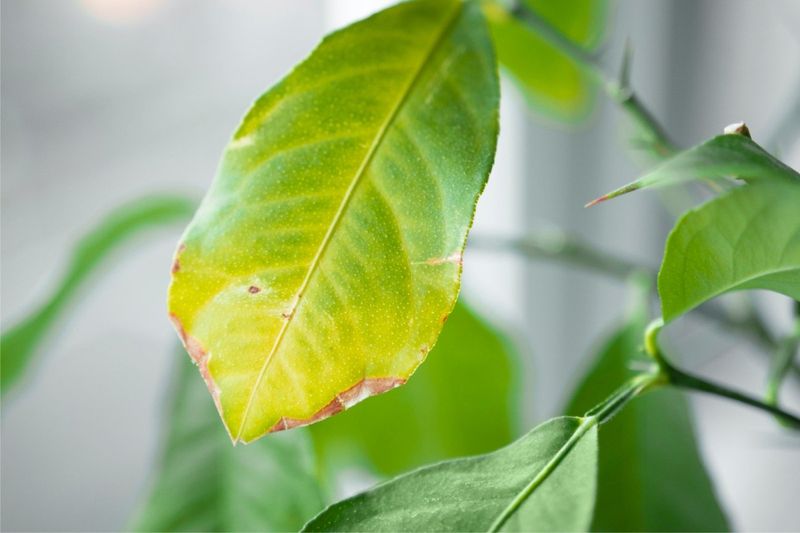
Adding something “just in case” feels harmless, but it can backfire. If yellow leaves come from disease, mites, or another nutrient problem, magnesium will not fix them, and you lose time you could have spent on the real cause.
Extension guidance adds some cautions. University of Maryland Extension warns that too much magnesium can interfere with calcium uptake, that foliar Epsom salt sprays can scorch leaves, and that excess can add to nutrient imbalance and mineral movement into water.
These risks depend on how much is used and the conditions, so they do not mean every application causes harm.
There is also the question of routine use. Washington State University Extension found no scientific support for adding Epsom salt at garden startup and cautioned against using it without regard to soil conditions and plant needs.
Nor is there good evidence that Epsom salt prevents disease or reliably boosts production in healthy plants. A cucumber vine that is already well fed has little to gain.
The practical takeaway is gentle: hold off until you have a reason. A soil test turns a guess into a decision, and it keeps your inexpensive fix for the situations where it might actually matter.
Make testing the first step before next summer
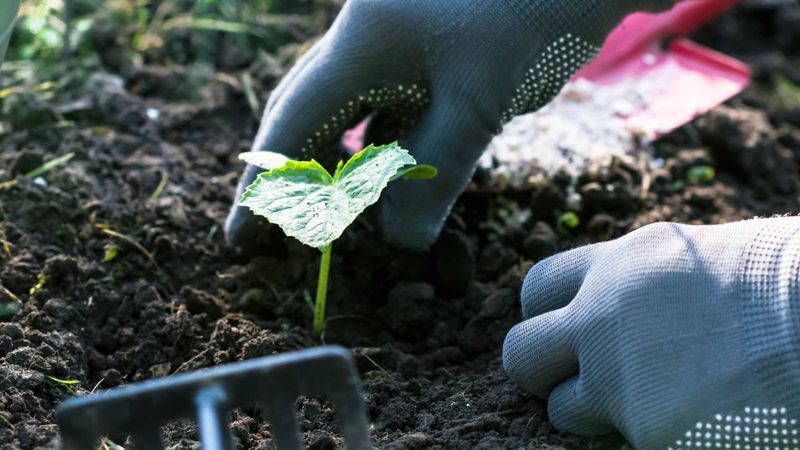
Next time cucumber leaves yellow, pause before reaching for a spoon. Note where the yellowing starts, check for mites and mildew, and rule out the usual suspects first.
Then use fall to test your soil, as Penn State Extension suggests, and make sure magnesium is included. If it is low, Epsom salt or another source may help, following your report or local Extension advice.
Good soil care starts with a question, not a shortcut.