
White Turtlehead Is a Promising Fall Bloomer for a Moist, Partly Shaded North Carolina Yard Corner
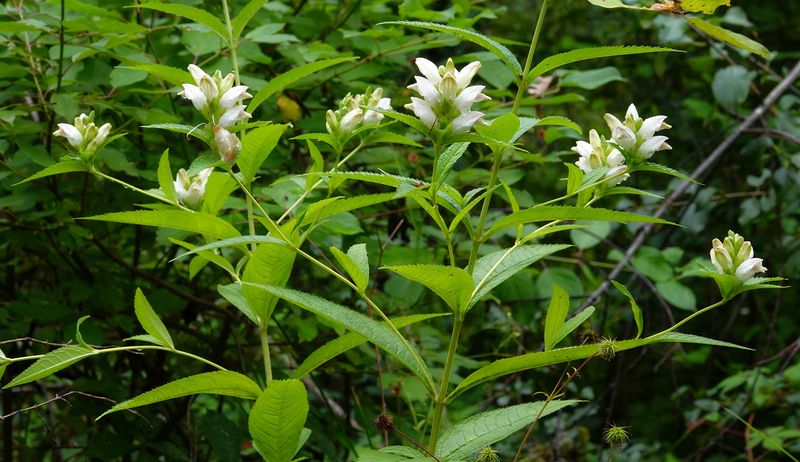
Almost every North Carolina yard has one spot where the soil stays damp and the sun never seems to settle in. Most plants sulk there, but a native called white turtlehead may be a good fit.
It blooms when many other flowers are winding down, and it plays two different roles for wildlife. Before you buy a plant, it helps to know what this one needs and what it can and cannot do.
White turtlehead offers a promising fall display
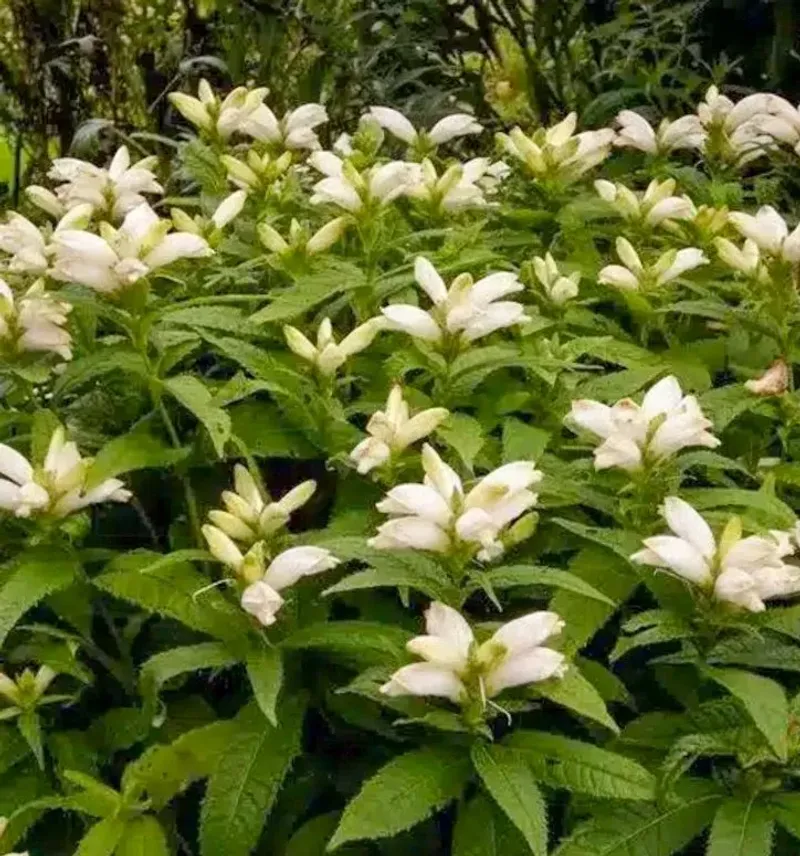
Picture a clump of upright stems topped with fat white flowers shaped a bit like the head of a turtle, often blushed with pink. That is white turtlehead, Chelone glabra, and it opens its blooms when much of the garden is fading.
NC State Extension’s plant guide lists it as native and suitable for the Coastal Plain, Piedmont, and Mountains, so it is a local choice no matter where in the state you garden.
In the wild, this plant grows in wet spots. The Vascular Plants of North Carolina account places it under hardwood canopy, in swamps and bottomlands, along seeps, and on stream margins.
That is why it comes up whenever someone asks what to plant in a damp corner.
The title of this article leans on a popular idea, that a soggy, shady corner is exactly where turtlehead does its best. The sources say something more careful.
It is a promising fit for moist soil with some light, but it can also grow in sun, and it does not need deep shade or standing water to succeed.
Bloom time runs from late summer into fall. North Carolina’s flora account gives August through October, while NC State Extension stretches the window to July through October.
Either way, you get flowers when many shade-tolerant plants have finished for the year.
The next step is a close look at your own corner. How much light it gets and how long the soil stays damp will decide whether turtlehead is a smart pick or a frustrating one.
Check the light and soil before planting

Spend a sunny day watching the corner before you plant anything. Partial shade means the spot gets some direct sun or bright, dappled light for part of the day.
If the area is dim from morning to evening under evergreens or a dense canopy, that is deep shade, and it is a poor match.
The reason is stated plainly in NC State Extension’s guidance. It recommends full sun to partial shade and fertile, moist soil, and it warns that too much shade can make the plants flop.
More shade is not better here, so a darker corner will not produce a better show.
Now test the soil. Push a trowel down about six inches a day or two after rain, and then again after a dry spell.
You want soil that stays damp and crumbles in your hand. Dry shade under a big oak is not the same thing, and turtlehead will struggle there.
Also watch for the other extreme. Wet habitats are natural for this plant, as the state flora account describes, but that does not make every flooded spot a good garden site.
If water stands for days, smells stagnant, or the ground stays like a pond, turtlehead is not a safe bet.
A good diagnostic clue is how your corner behaves a day after a hard rain. Damp and dark brown is promising.
Standing water, or bone dry with a dusty surface, means you should choose another plant or fix the drainage first.
Give the clump moisture, room, and basic care
Once the spot passes the test, planting is simple. Set the plant at the same depth it grew in its pot and water it in well.
Then keep the soil moist through the first season, especially during a dry stretch in a Piedmont summer.
A layer of mulch helps. NC State Extension notes that mulch can help retain soil moisture, and it also suggests pinching stems in spring to encourage bushier growth.
Pinching simply means snipping off the top inch or two of growth, which gives you more branches and sturdier plants.
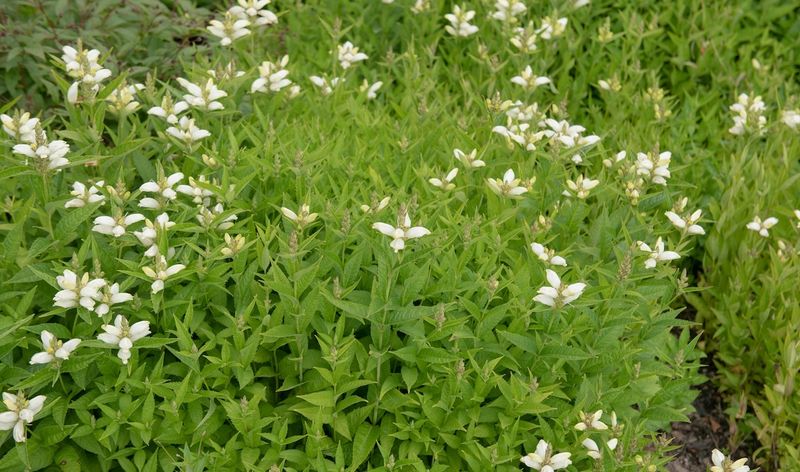
Leave space, because this is not a tiny edging plant. It reaches roughly 1 to 3 feet tall, and University of Wisconsin Extension describes turtleheads as slowly spreading by rhizomes.
Plan for a clump that widens over the years, and keep it a foot or two from small, delicate neighbors.
Native ferns, sedges, and other moisture-loving natives make good companions because they share similar conditions without being crowded out.
If you want more plants, you have two easy options. You can grow them from seed, or you can divide an established clump.
Dividing is a handy way to fill other damp corners or share with a neighbor.
The flowers attract bees, including bumblebees
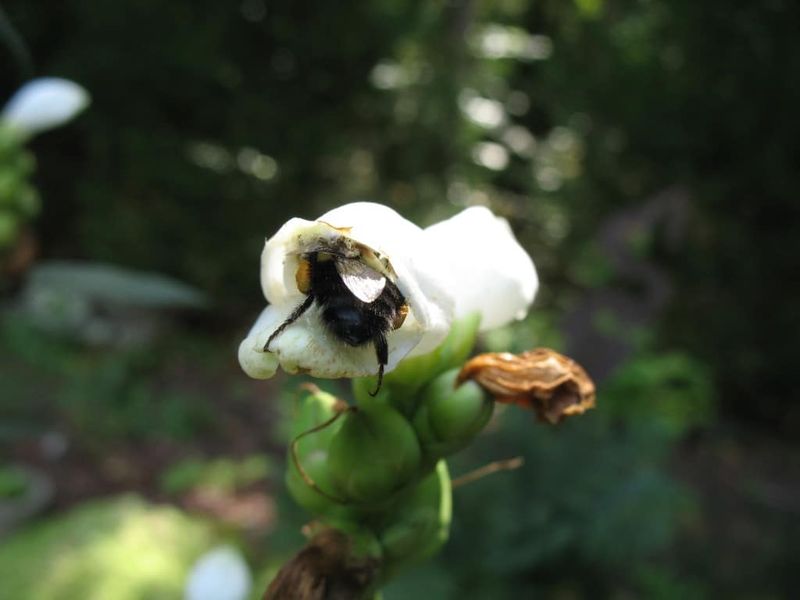
Look closely at a turtlehead flower and you will see why it suits bees. The blossom is a closed, hooded tube, and only a strong visitor can push inside.
Bumblebees are well built for that job.
A study of the species, Cooperrider’s paper on reproduction in Chelone glabra, found bumblebees to be its chief pollinators. NC State Extension also lists bees among the visitors drawn to the blooms.
It is fair to say turtlehead attracts bees and that bumblebees pollinate it. It is not fair to say that it rescues bumblebees in autumn or that it solves a food shortage.
The study does not measure how much nectar the plant supplies, and it does not tell us which North Carolina bumblebee species visit a given yard.
So treat turtlehead as one useful piece of a bee-friendly yard. Pair it with other native bloomers that open at different times, such as asters and goldenrods, so there is always something in flower.
You can check this yourself. On a warm afternoon in late summer, sit near your clump for ten minutes and watch which visitors come.
What you see in your own yard is the real result that counts.
Baltimore checkerspot caterpillars use the leaves
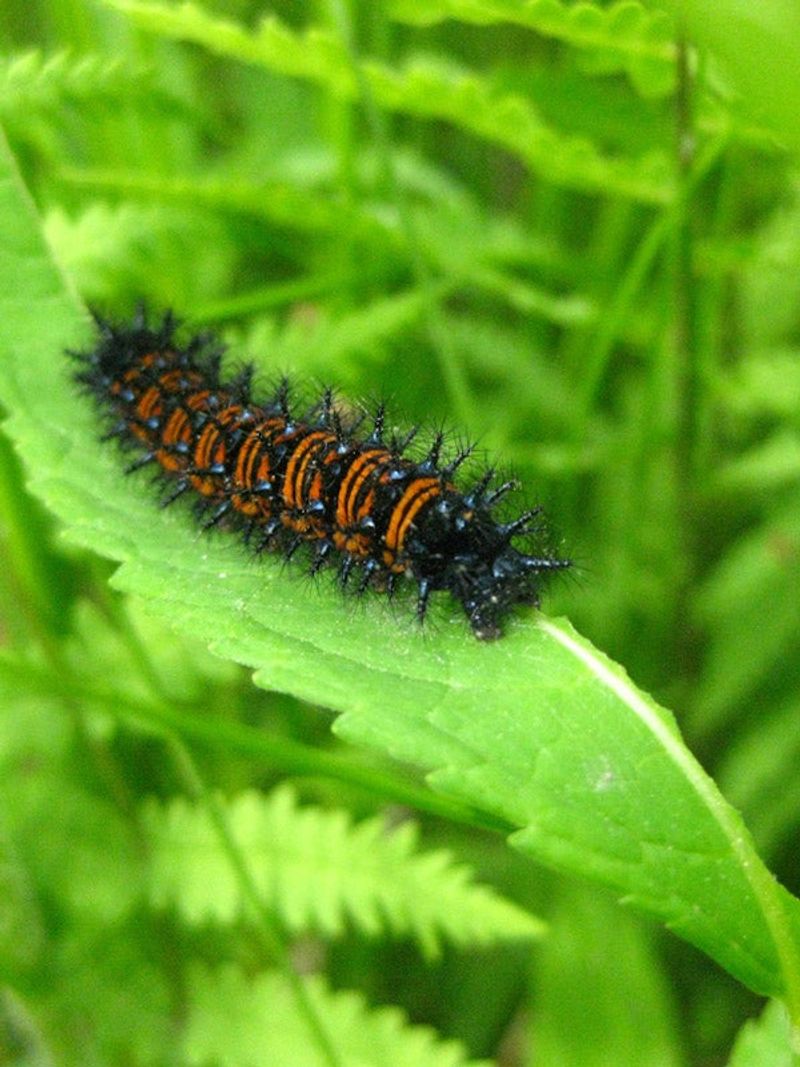
The turtlehead’s second wildlife job happens on its leaves, not its flowers. Baltimore checkerspot caterpillars eat them.
Butterflies of North Carolina lists turtleheads as primary food plants for this butterfly in the state, though not the only host plants it can use.
Timing matters here. The adult butterflies fly in spring to summer in North Carolina, with the dates shifting by elevation.
Turtlehead blooms later, so fall flowers are not a meal for adult checkerspots. The flowers serve bees, while the leaves serve caterpillars during their feeding period.
Now the reality check. The same account describes this butterfly as rare or declining and tied to specialized wetlands, with most records from such habitats.
It does mention a notable 2024 colony in Halifax County, which shows how localized the species is.
A backyard planting cannot recreate those conditions, so do not expect checkerspots just because you planted turtlehead. If caterpillars ever do show up, they will be black with orange bands, and they will chew the leaves.
Please leave them alone and skip pesticides.
Chewed leaves on turtlehead are not a failure. Plenty of native insects feed on native plants, and a few ragged leaves are a sign that your garden is doing real work.
Choose turtlehead for the conditions your yard has
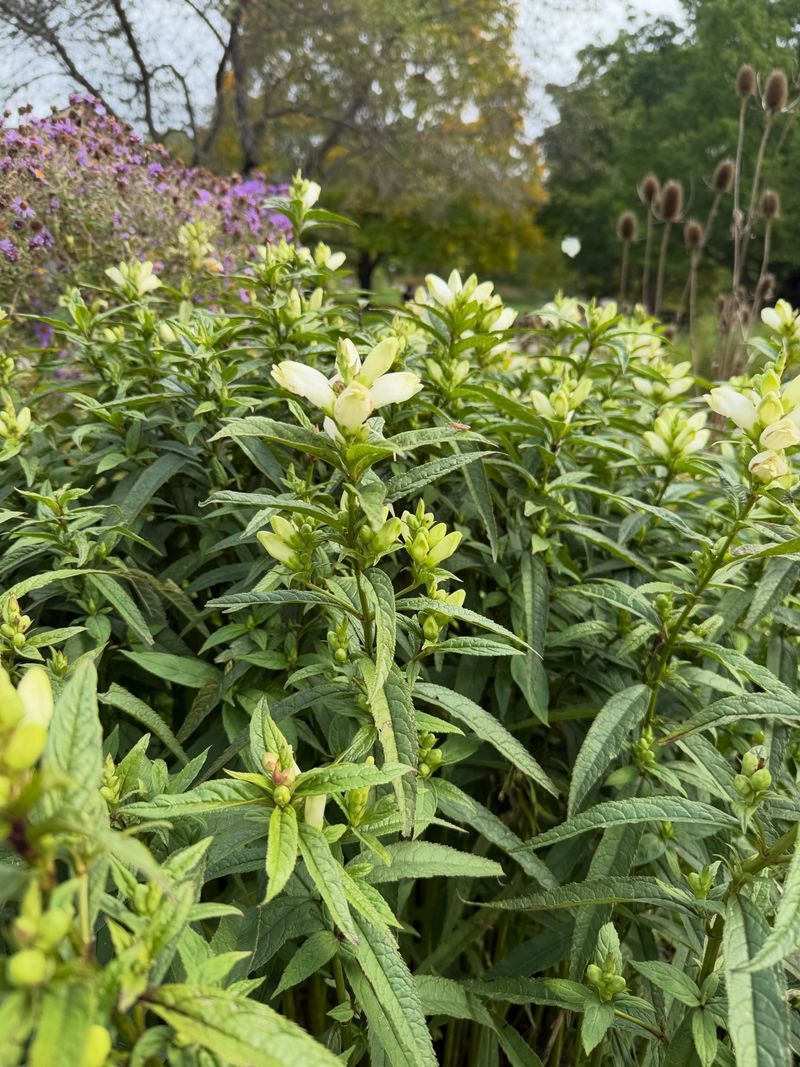
Pick white turtlehead when your corner stays moist and gets some light, and give it room to grow into a clump. Confirm the plant is Chelone glabra, as listed in NC State’s plant guide, rather than another turtlehead or a fancy cultivar.
Skip it for deep shade, dry ground, or spots that flood for days.
The payoff is two separate gifts. Bees get flowers, and caterpillars of a rare butterfly, the Baltimore checkerspot, can use the leaves if the butterfly ever lives nearby.
A damp corner does not need to be fixed so much as matched to the right native.