
Snake Plant Pups: Healthy Care, Patience, and Dividing Established Shoots
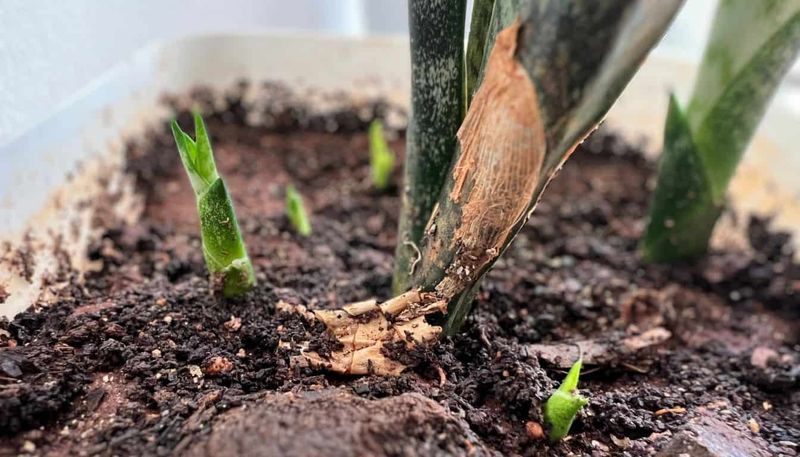
Your snake plant has been sitting on the shelf for years, and not one baby shoot has popped up. That can make you wonder if you missed some secret step.
The truth is calmer than that: pups show up on their own schedule, and good care plus a little patience is the real plan. Here is how to keep your plant healthy and what to do when a pup finally appears.
Pups come from rhizomes, but they take patience
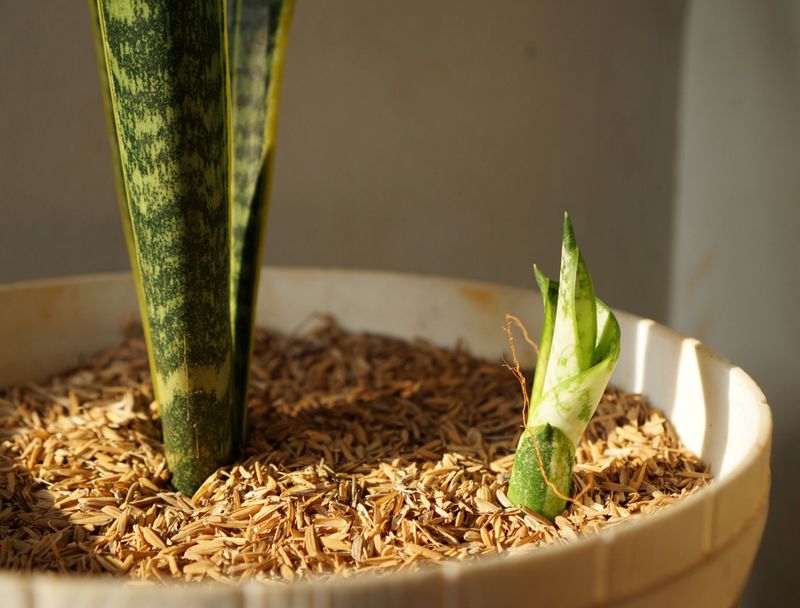
A snake plant pup is a new shoot that grows from a rhizome, which is a thick stem that creeps along under the soil. It looks like a small, upright spear of a leaf rising next to the main clump.
A flower stalk is a different thing entirely, a tall spike that carries blooms, and snake plants rarely make one indoors.
Here is the part that should ease your mind: snake plants grow slowly. According to Colorado State Extension’s PlantTalk, they are slow-growing plants, and Extension guidance from Ask Extension notes that the rhizomes may take years to fill a pot.
Seasonal slowdowns are normal too, so a quiet plant in winter is not a sign of failure.
A plant with no pups is not automatically a plant in trouble. If the leaves are firm, upright, and a healthy color, you are very likely doing fine.
Think of pups as a bonus that arrives when the plant is ready.
One honest correction to the idea that a few simple tweaks will make pups appear: nothing in the available guidance shows that a smaller pot, brighter light, or a new watering routine reliably brings them on. The adjustments in this article support a healthy plant, and a healthy, established plant is simply more likely to be one you can divide someday.
Treat them as good housekeeping, not a trick.
So the plan is simple. Give the plant sensible light, water it only when the soil says so, keep it in a pot that fits, and watch the soil surface for new spears.
When one shows up with roots of its own, you will know what to do.
Give the plant useful light, not a supposed pup trigger
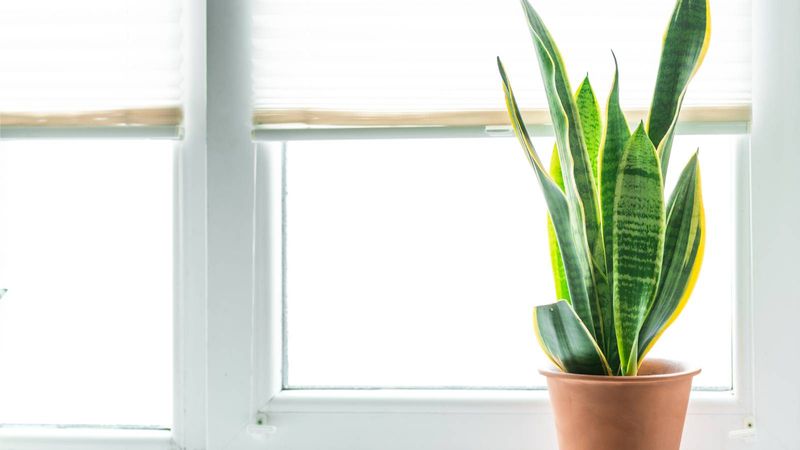
Snake plants have a reputation as survivors, and they do tolerate low light. Tolerating it is not the same as thriving in it, though.
NC State Extension describes a plant that adapts to a wide range of light, and medium to bright indirect light is a reasonable target for steady, healthy growth.
Take a look at where your plant sits right now. If it lives in a dim hallway corner and the leaves look floppy or growth has stalled for a long time, a brighter spot may help the plant overall.
If it already has decent light and looks sturdy, there is no reason to move it.
Make changes in small steps. A shelf a few feet from an east or north window, or a spot back from a south or west window, often gives plenty of glow without harsh rays.
Hot, direct afternoon sun through glass can scorch leaves, so a sheer curtain is a handy buffer.
A simple check: hold your hand a foot above the leaves in the middle of the day. If you see a soft, fuzzy shadow, the light is likely in the useful range.
A sharp, dark shadow means strong direct light.
Keep your expectations grounded here. Brighter light is a care condition, not a proven pup switch, and Colorado State’s guidance does not claim it makes offsets appear.
The goal is a plant that holds its color and grows steadily at its own pace.
Let the soil dry before you water again
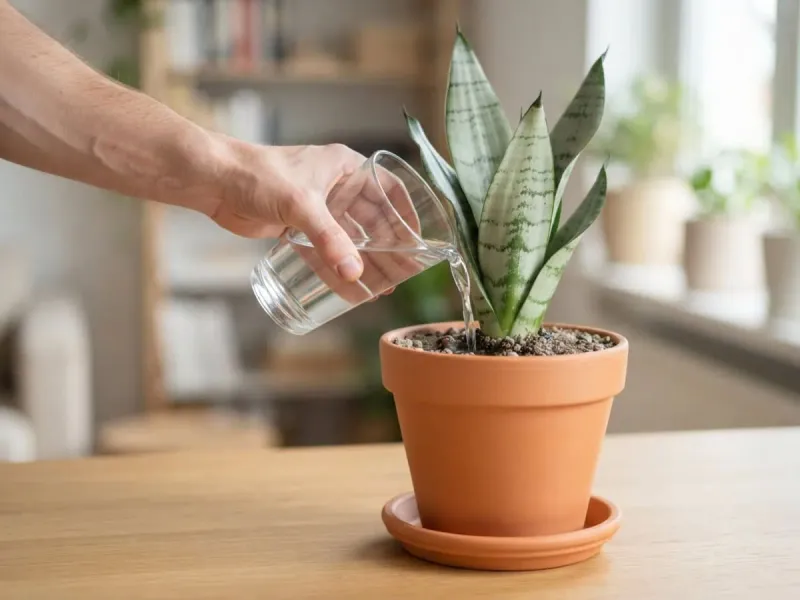
Overwatering is the classic way to hurt a snake plant. Wet soil that never dries can lead to root rot, and the thick leaves already store water for lean times.
So skip the calendar and let the soil tell you when it is time.
The easiest test is your finger. Push it a couple of inches into the mix, and if you feel any damp, wait a few more days.
Lifting the pot also helps, since a dry pot feels much lighter than a wet one.
Sources differ a little on how dry is dry enough. Illinois Extension says to let the mix dry completely, while Colorado State suggests letting it dry slightly between waterings during active growth.
A sensible middle path is to lean drier in cool, dim months and a bit more generous when the plant is growing in warm, bright conditions.
Drainage matters as much as timing. Use a pot with a hole in the bottom, and empty the saucer after watering so the roots are not sitting in a puddle.
Care notes from NC State also point to well-drained soil as the foundation of good care.
None of this is a method for coaxing pups. It simply protects the roots and rhizomes, which is where pups come from in the first place.
Healthy underground growth is the best foundation you can offer.
A crowded plant can be divided; a bigger pot will not force pups
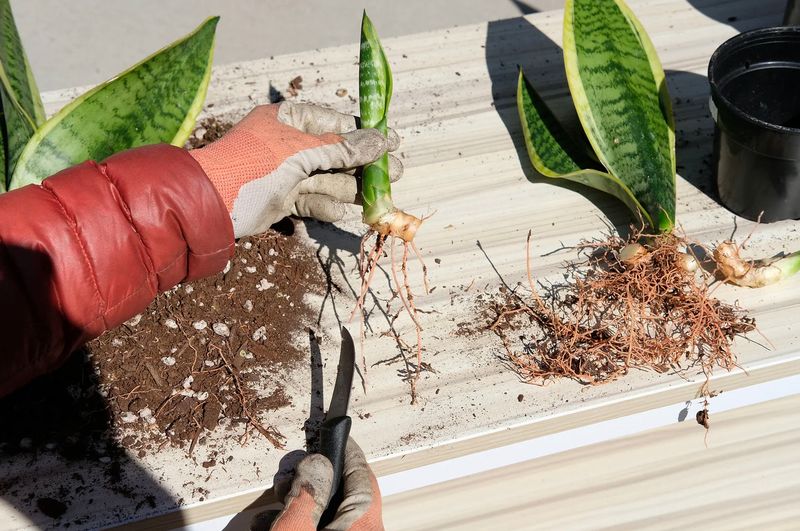
Pot size is a maintenance choice, not a pup-making trick. A snake plant is perfectly happy staying snug, and it does not need regular upgrades.
Guidance from Ask Extension backs this up, noting that crowded plants can be divided when it is time.
Going too big causes its own trouble. A pot far wider than the root mass holds extra soil, and that soil stays wet long after the plant has finished drinking.
That is the setup for rot, so avoid jumping to a giant container hoping for a growth spurt.
You may also have heard that you should keep a snake plant root-bound to force offsets. The sources do not support that for pups.
Slight root restriction shows up in a Mississippi State Extension article about flowering, which is a different matter from making new shoots.
So when should you act? Look for signs of a mature, crowded plant: roots circling the pot, leaves leaning or toppling, a bulging or cracked container, or soil that dries out in a day or two.
Then you have two choices, move up to a pot only an inch or two wider, or divide the clump.
For general repotting habits, Penn State Extension’s repotting guide is a handy reference. Repot when the plant needs it, not on a set schedule, and let the plant’s condition make the call.
Separate an established pup with healthy roots
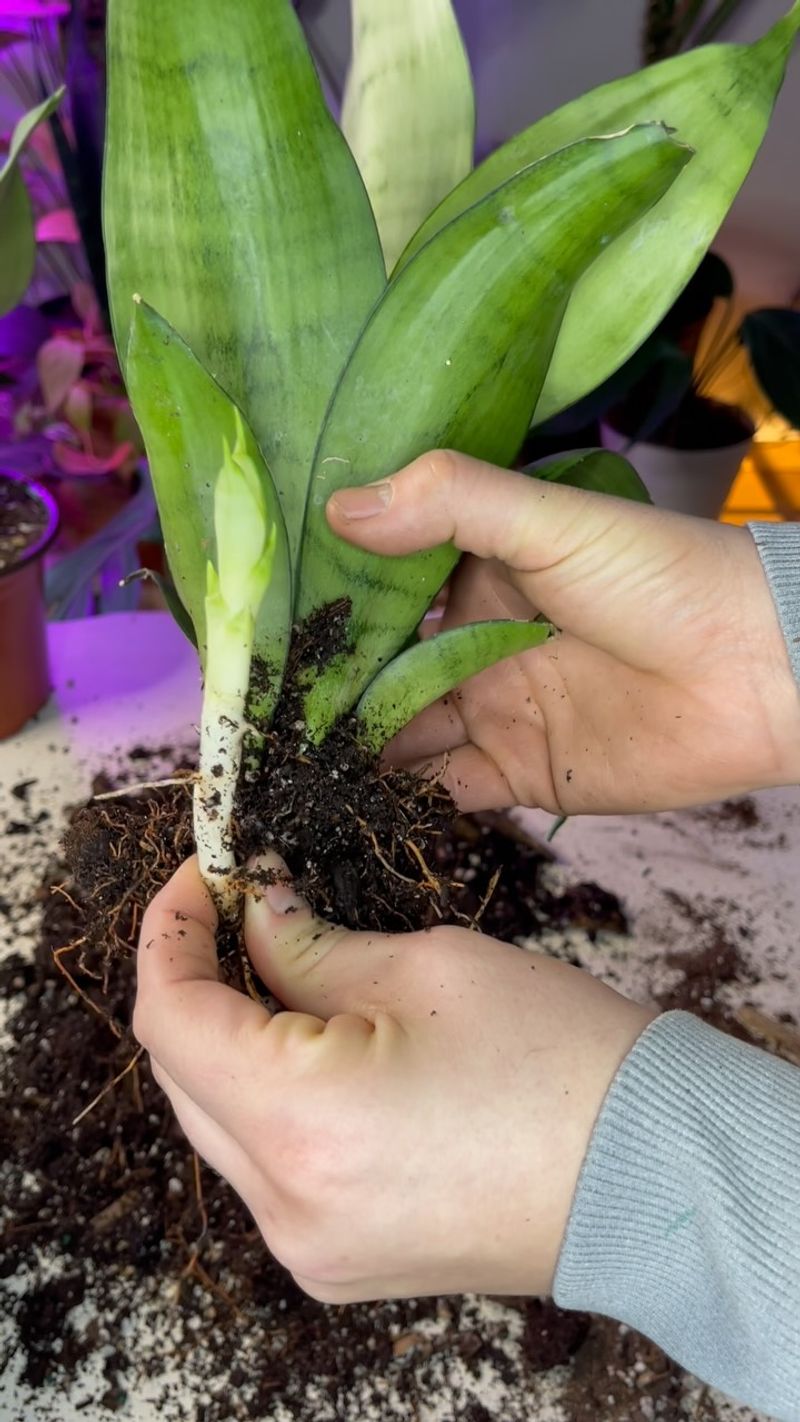
When a pup has been growing for a while, you may be able to give it a home of its own. Iowa State Extension lists snake plant among the houseplants that suit division, so this is a recognized, reliable method.
It only works on shoots that already exist, though, and cannot create a pup that has not appeared.
Start by choosing the right candidate. Look for a shoot with healthy leaves and its own roots, ideally one that has some size to it.
Larger divisions generally recover faster, while tiny shoots can sulk for a long time.
Next, ease the whole plant out of its pot. Tip it gently and loosen the soil with your fingers so you can see how the shoot connects to the parent.
Often the rhizome will pull apart with a little wiggling.
If the connection is tough, use a clean, sharp knife or pruners. Wipe the blade with rubbing alcohol first, then make one clean cut through the rhizome between the pup and the parent.
Try to keep as many roots on the shoot as you can.
Leave unrooted growth alone. A pup with no roots yet is better off staying attached and drawing from the parent.
Pulling it apart too soon is the most common way people lose a shoot.
Once you have the division, set both plants aside on newspaper and check them over. Trim any mushy or damaged roots, and the parent can go back into its pot with fresh mix.
Settle the new plant in before you share it
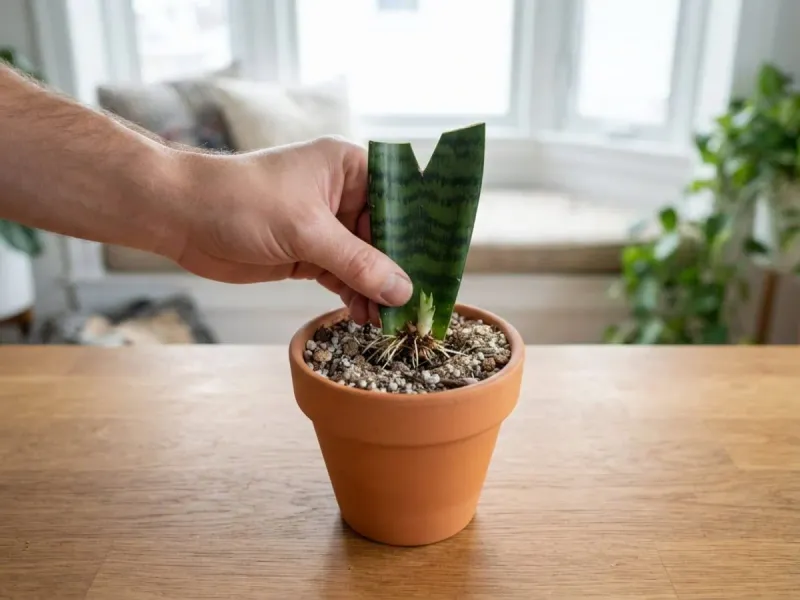
Planting comes next, and a small container is your friend. Choose a pot that fits the roots without a lot of spare room, and make sure it has drainage.
Fill it with a well-draining mix, set the division at the same depth it grew before, and firm the soil lightly.
Water to settle the soil around the roots, as Iowa State Extension’s division guidance recommends, then let the pot drain fully. Place it in bright indirect light and go easy on water afterward, letting the mix dry before the next drink.
Give the newcomer a few weeks before handing it off. A plant that stands upright and holds its color is ready for a new home, while a droopy one needs more time.
Smaller divisions may take longer to look settled, so be patient.
Dividing has a perk for variegated plants. According to University of Florida IFAS, division preserves the parent’s pattern, while leaf cuttings may not give you the same look.
If you love your striped snake plant, division is the safer way to share it.
One safety note before gifting: the ASPCA lists snake plant as toxic to cats and dogs if ingested, with possible nausea, vomiting, and diarrhea. Let friends know, and place your own divisions out of reach of curious pets.
A snake plant rewards the people who leave it alone, and a pup is worth the wait.