
Want Your Snake Plant to Make Pups? Here’s How to Support Its Growth
You check your snake plant again, and still no baby shoots around the pot. It’s easy to worry that you’re doing something wrong.
The truth is more relaxed than that, and a few simple care adjustments can help your plant grow well. Here’s what really happens under the soil and what you can do about it.
How snake plant pups grow
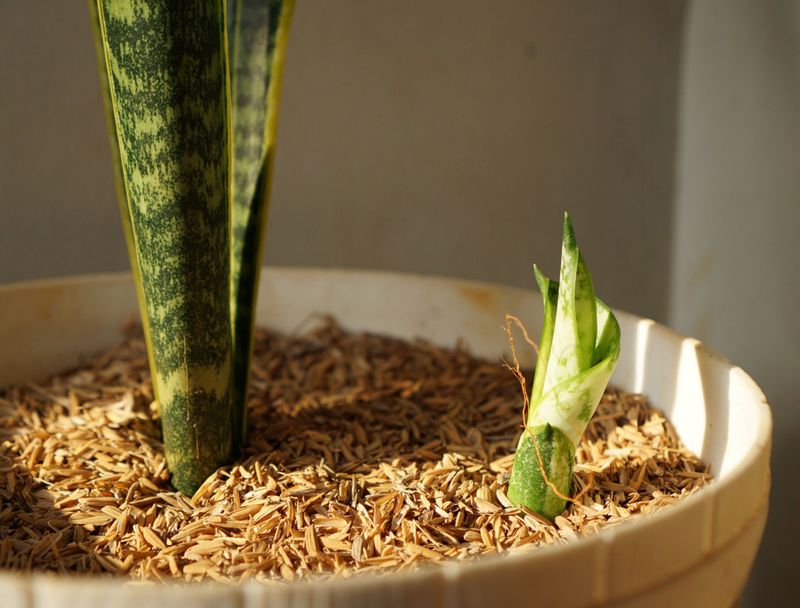
Those little upright shoots that appear beside a mature snake plant are called pups. They are new shoots sent up by rhizomes, which are thick stems that creep along underground.
According to Colorado State University PlantTalk, snake plants spread this way, and the pups can be left to fill out the pot.
Because the action happens below the soil line, you can’t see it until a shoot pokes through. A plant might be busy building rhizomes for months before anything shows.
That is one reason a pup-free pot doesn’t automatically mean a problem.
You may have seen articles promising one secret trick that switches pup production on. No such trick has been proven.
Light, watering, and the general growing environment all play a part, but none of them works like a button you can press.
What you can do is give the plant conditions that support steady, healthy growth. When a plant is comfortable, its rhizomes have the best chance to send up new shoots.
The timing, though, is up to the plant. Some pots fill up quickly, while others stay a single clump for a long stretch.
Think of your role as a helpful host rather than a manager with a deadline. The next few sections cover the adjustments that are worth making, and the popular ideas you can skip.
Could very dim light be slowing growth?
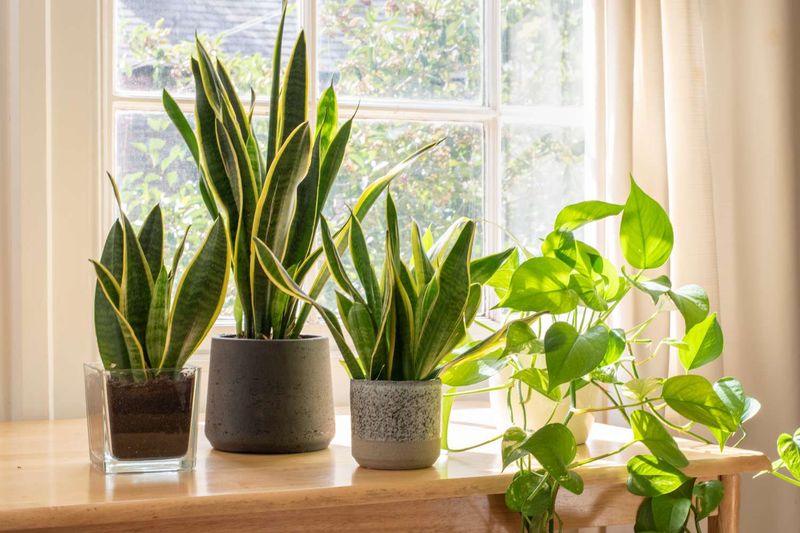
Snake plants have a reputation for surviving almost anywhere, and that reputation is earned. Guidance from the Royal Horticultural Society notes that they tolerate lower light but generally grow better in brighter spots.
Surviving and thriving are two different things.
If yours has lived in a dark hallway or a far corner of the room for years, slow growth may simply be the price of that spot. A plant that isn’t growing much overall isn’t likely to be busy sending up new shoots either.
Extension guidance such as this University of Minnesota resource on indoor lighting explains that plants in low light tend to grow more slowly.
Here is the honest caveat. Dim light is only one possible reason for a lack of pups, and it doesn’t explain every plant.
A snake plant in a bright window can go a long time without a pup, and a plant in modest light may produce them anyway.
A useful clue is the plant’s overall behavior. If you rarely see any new leaves at all, the light may be worth a second look.
If new leaves appear now and then, your plant is probably growing just fine at its own pace.
So treat brighter conditions as a way to support active growth, not as a guarantee. It’s a low-cost change that can help a plant stuck in a very dim spot.
Move the plant to brighter indirect light
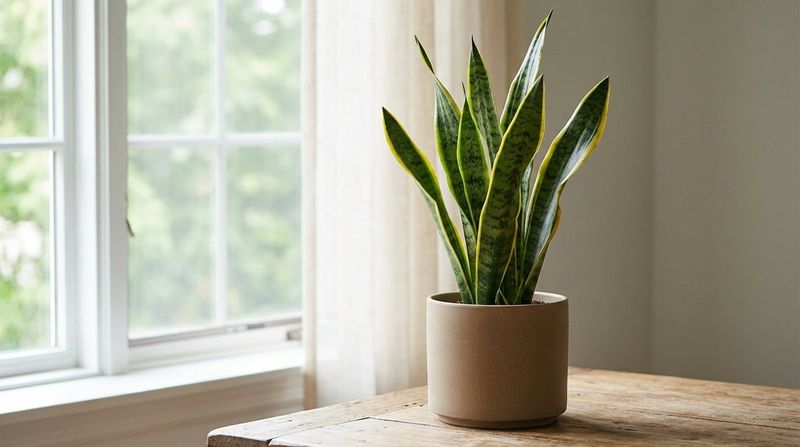
Moving a plant is the easiest change on this list, and it costs nothing. If your snake plant has been tucked into a dark corner, try shifting it somewhere with more daylight.
A spot near a window, set back a little from the glass, is a good place to start.
Aim for bright but indirect light. The Royal Horticultural Society suggests keeping snake plants out of harsh midday sun, which can scorch the leaves.
Scorched leaves show up as pale, dry, or brown patches that don’t heal.
If you can, move the plant in steps rather than all at once. Slide it a bit closer to the window over a couple of weeks and watch how the leaves respond.
A plant that has lived in shade for years may need time to adjust.
An east-facing window is often gentle, while a sheer curtain can soften a strong south or west window. Rotate the pot every so often so the leaves grow evenly instead of leaning toward the glass.
Keep your expectations modest. Better light may help a sluggish plant grow more actively, but it won’t promise a pup next month or ever.
Consider it a way to give your plant a fair chance.
Water when the mix has dried
Reach for the watering can less often than you think. Snake plants store water in their thick leaves, and their roots dislike sitting wet.
Guidance from Colorado State University PlantTalk warns that overwatering is a common problem and can lead to root rot.
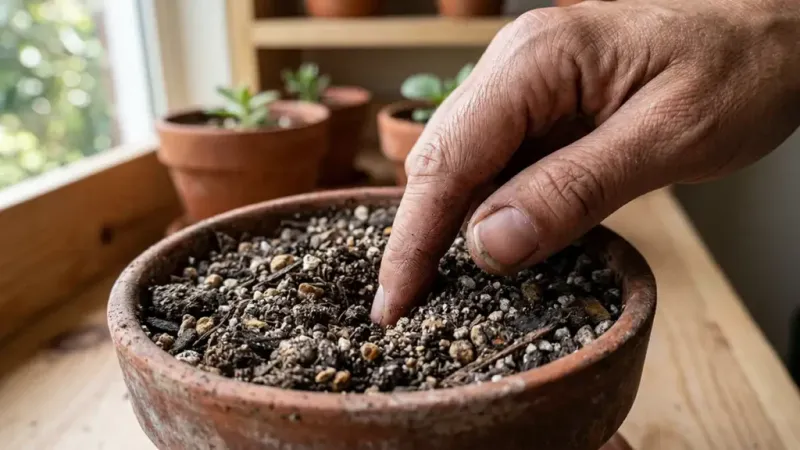
Skip the calendar and check the soil instead. Push a finger a couple of inches into the mix, or lift the pot to feel how light it is.
If the mix is still damp, wait. When it has dried out, give the plant a good drink.
The pot and mix matter just as much as the schedule. The RHS growing guide recommends a free-draining mix, and a pot with drainage holes lets extra water escape.
After watering, empty the saucer so the roots aren’t standing in a puddle.
It’s tempting to think more water means more growth. With snake plants, it usually means soggy roots.
Watering more often to force pups is not a safe plan.
Healthy roots are the foundation for everything else, including the rhizomes that make pups. Mushy, foul-smelling roots or leaves that turn soft and yellow at the base are signs the plant has had too much water.
Keeping the mix on the dry side between drinks protects the plant while it does its slow work.
A crowded pot does not guarantee pups
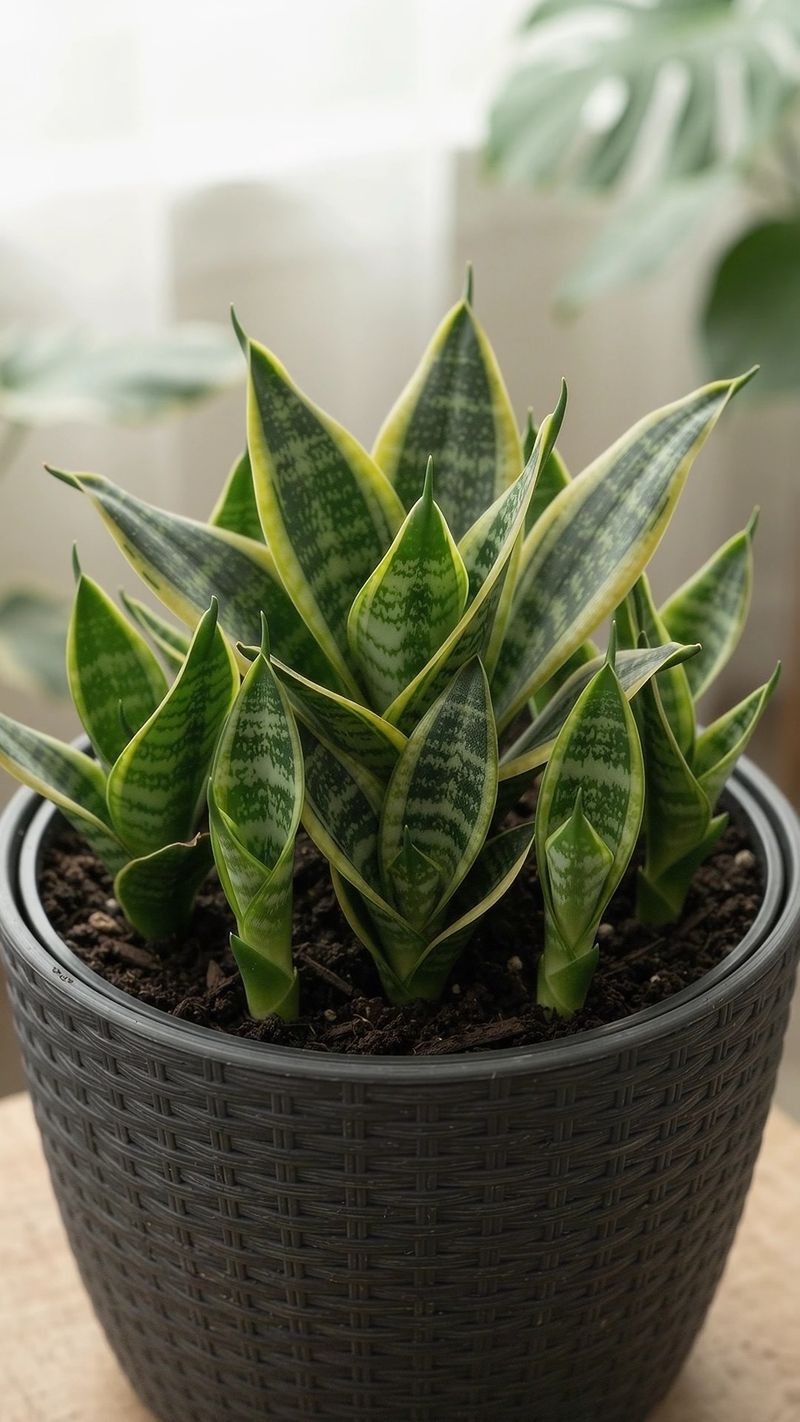
You may have heard that snake plants only make pups when their roots are packed tight. It’s a popular idea, and it’s not entirely made up.
Some growers, and sources like this University of Arkansas plant profile, note that snake plants don’t mind being snug in the pot.
Advice to repot only when the plant is crowded is about easy care, though. It doesn’t show that crowding causes pups.
A snug pot is fine for a snake plant, but it isn’t a switch you can flip.
The RHS plant details also describe repotting as something to do when needed rather than on a schedule. So there is no need to squeeze a plant on purpose or fuss over its roots.
Going the other way has its own risk. A much bigger pot holds extra soil that stays wet longer, and a Maryland Extension answer on snake plant pots points toward moderate pot sizing.
Wet soil is just what raises the chance of root rot.
If your plant is cracking its pot or its roots are circling the drainage holes, repotting makes sense. Choose a container only slightly larger, with drainage.
Otherwise, leave it be and let the plant settle in.
Divide an offset once it is established
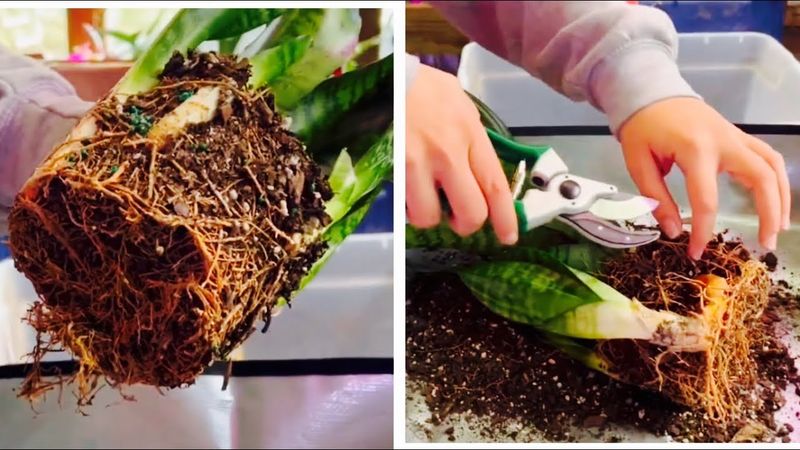
Once pups do appear, you have two choices. You can leave them where they are and let the pot fill in, or you can separate an established offset to start a new plant.
Both are fine, so go with whatever suits your space.
If you divide, each piece needs healthy roots and a healthy shoot of its own. Iowa State University Extension describes dividing plants and offsets this way.
Use a clean, sharp tool if you need to cut the rhizome, then pot each section in an appropriately sized container with drainage.
Early spring is an ideal time to divide, according to the same Iowa State guidance. It isn’t the only possible time, since many houseplants can be divided at other times.
If your pup is well rooted, you don’t have to wait for a particular month.
Wait until the offset looks established, with some size and roots of its own. A tiny shoot with no roots has less to live on once it is cut away.
Variegated plants need one extra note. If yours has yellow-edged leaves, division is the safer way to keep the pattern.
Virginia Cooperative Extension explains that plants grown from leaf cuttings may come back solid green, and University of Florida IFAS describes division as a way to carry the parent plant forward. So don’t count on leaf cuttings to copy the stripes.
One last safety note: snake plants are toxic to cats and dogs, so keep new divisions out of pets’ reach.
Give a slow-growing plant time
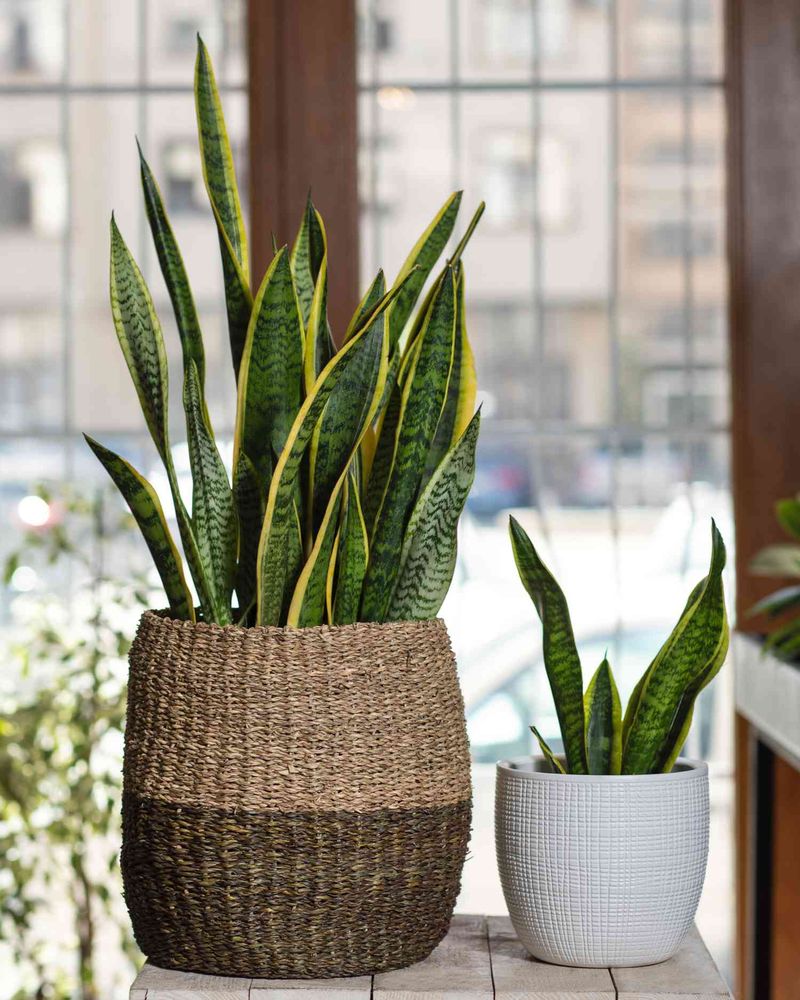
Brighten a too-dark spot, water only when the mix has dried, and then let the plant do its thing. Snake plants are slow growers, and the RHS growing guide and a Maryland Extension answer both fit that picture, with growth slowing even more in winter.
A plant without recent pups is not necessarily failing. If the leaves are firm and green, your plant is likely content.
Pups will come when the rhizomes are ready, and not a day sooner.