
What It Really Means When Wasps Keep Hanging Around Your North Carolina Porch Into Fall
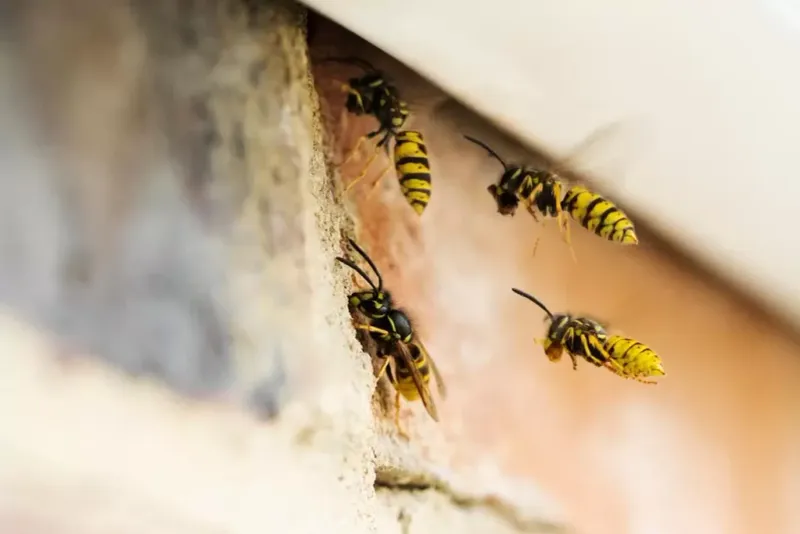
You are sipping tea on the porch in October, and a wasp is still circling the rail. It feels like summer should have sent them packing by now.
In North Carolina, fall is actually a busy time for some wasps, and the reasons are more ordinary than you might fear. Knowing what you are looking at helps you protect your family and the helpful insects in your yard.
October activity reflects a late-season cycle
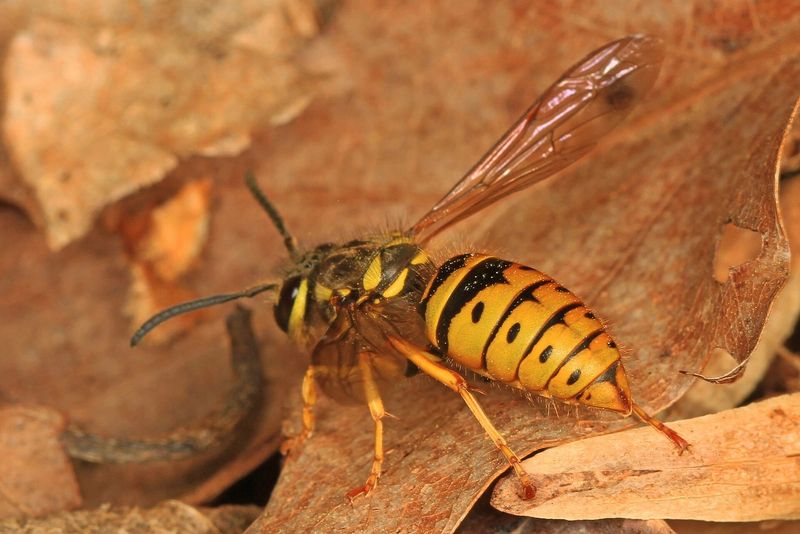
Late summer and fall are prime time for yellowjackets. NC State Extension notes that these wasps are especially active then, and the eastern yellowjacket is the most abundant species in the state.
So a few wasps on your porch in October can be perfectly normal.
There is a seasonal reason behind the busy weeks. Late in the year, colonies produce new queens and males.
After mating, the new queens leave to find sheltered places to spend the winter, as described in NC State turf pest guidance.
That cycle can explain a lot of activity, but it does not prove that a colony is trying to move into your house. A wasp on the porch could be a worker out looking for food, and you cannot tell its job just by watching it land.
The old colony itself typically dies out as freezing weather arrives, though Burke County Extension makes clear that the timing depends on weather and location. In a mild Piedmont or Coastal Plain autumn, wasps may keep flying well into the season, while a cold snap in the mountains can end things sooner.
Think of October wasps as part of the calendar, not automatically a warning sign. The useful questions are where they are going and what they are after.
Food can keep workers returning to the porch
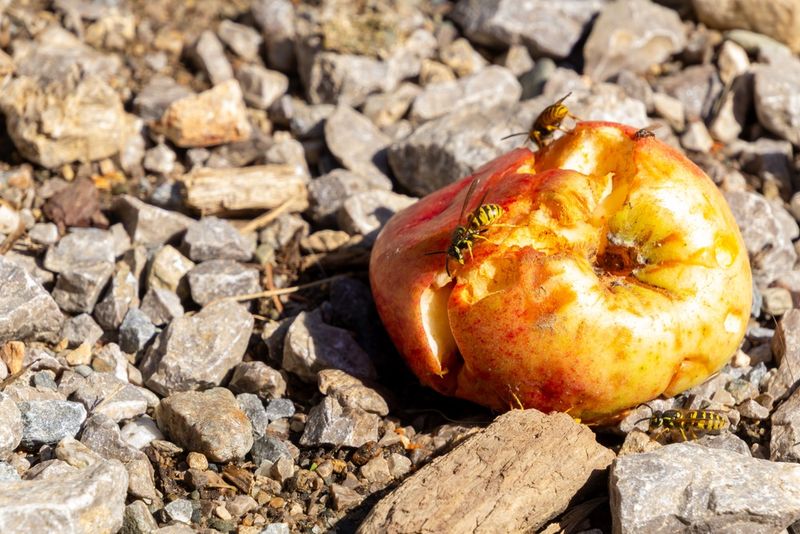
Sweet drinks and ripe fruit are strong magnets. NC State Extension reports that yellowjackets are drawn to sugary sources like ripe fruit and drink cans, and they also hunt for protein foods such as meat scraps.
A porch with snacks, cider, or a cookout leftover can look like a buffet.
A few simple habits make your porch less appealing. Pick up fallen or overripe fruit from under your persimmon, fig, or apple trees.
Keep food and drinks covered while you eat outside, and check a can before you sip, since a wasp may be inside.
Trash matters too. Use a tight-lidded container, and rinse recyclable cans and bottles before they go outside.
Pet food bowls left on the porch can also draw foragers.
Food does not explain every visit, though. Some wasps are simply passing through, hunting insects, or checking a surface.
If you clean up and still see steady traffic, that is useful information, and the next section helps you read it without guessing.
What does repeated traffic actually tell you?
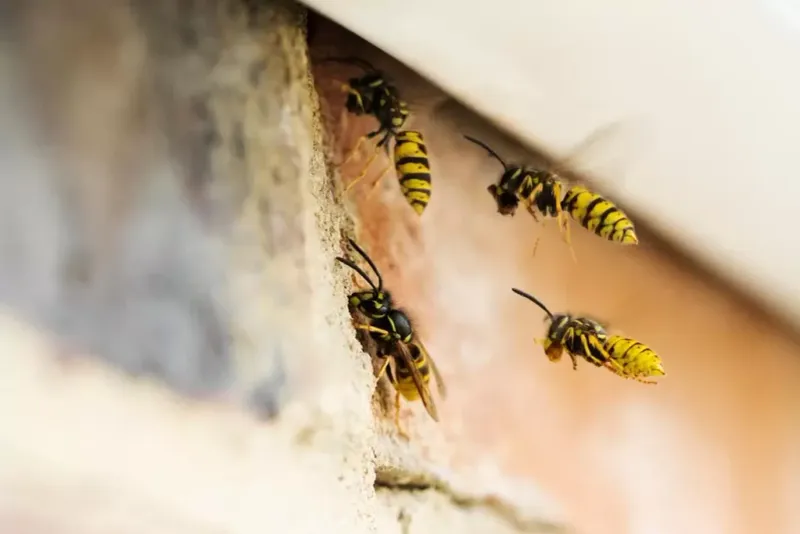
A single wasp drifting by tells you very little. A steady stream of wasps flying to and from one spot is more meaningful, because it can point to a nest nearby.
Even then, the nest may not be where you first assume.
Nesting habits differ by type. According to NC State guidance, most yellowjacket nests in the state are underground, often in old rodent burrows, though some are in building cavities such as wall voids or attics.
A line of wasps vanishing into a small hole in the lawn or a mulch edge may be just that.
Paper wasps are different. NC State Extension describes their open-comb nests, which look like small upside-down umbrellas, commonly attached under eaves, overhangs, and other sheltered surfaces.
You can often see these without going near them.
Hornets are another separate group, and some are attracted to lights at night, so a visitor around a porch light is not the same story as a yellowjacket at a soda can.
Seeing wasps on the outside of your house also does not prove they are getting in. Watch from a comfortable distance for a few minutes, note where they land and leave, and avoid poking around.
Patterns tell you more than any one insect.
A queen seeking shelter is not a colony moving in
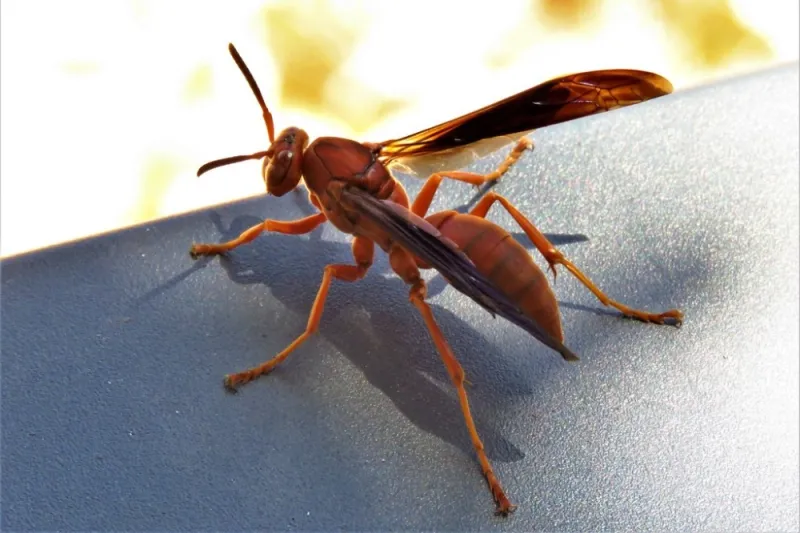
Fall sheltering is a real thing, and it is quiet. NC State Extension explains that reproductive paper wasps mate in early fall and look for protected winter sites, including attics, chimneys, and spaces under siding.
A single queen tucked away for winter is not the same as an active colony. A colony means many wasps coming and going all day.
A sheltering queen is one insect waiting out the cold.
Meanwhile, the workers eventually die, and the old paper-wasp nest is not reused the following year. A leftover nest under an eave is just an empty shell, and it does not signal a structural problem with your house.
Yellowjacket nests are not reused either.
Be careful about turning this into a diagnosis. The wasp on your railing may be a worker foraging, and nothing about its visit tells you whether it is a queen or where it plans to spend winter.
If you do spot a lone wasp slowly crawling on a sunny wall, that is only an observation, not proof of what is inside.
Reduce porch visits while preserving useful predators
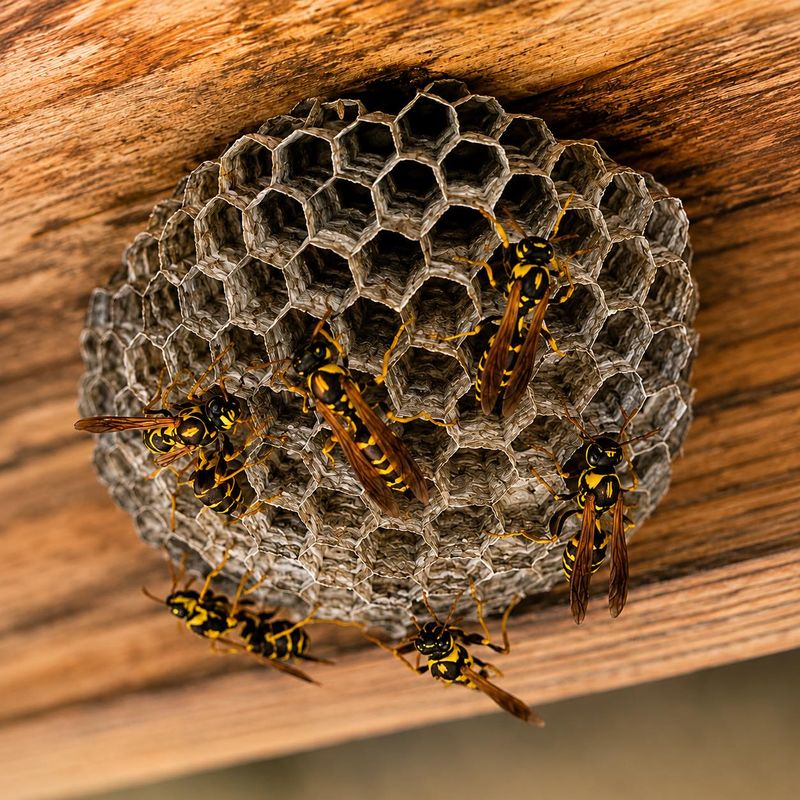
Wasps do real work in a backyard. They hunt insects, and NC State Extension describes paper wasps as beneficial predators of caterpillars that chew on garden plants.
Yellowjackets are predators as well, so a wasp in the tomato bed may be doing you a favor.
Start with the easy fixes. Clear accessible food and fallen fruit, keep drinks covered, and use a lidded trash can, as NC State’s yellowjacket guidance suggests.
Next, think about where people walk and sit. If a nest is tucked away from the places your family uses, leaving it alone is often the practical choice.
Avoid disturbing any nest, and do not shake, bump, or hose one.
Blanket control is rarely the answer. Spraying around the yard can harm pollinators, native bees, and other wildlife you care about, and it will not tell you which wasps are the problem.
Choose the least disruptive step that fits your situation, and save stronger measures for nests that truly create regular risk.
Choose a cautious response when a nest is near people
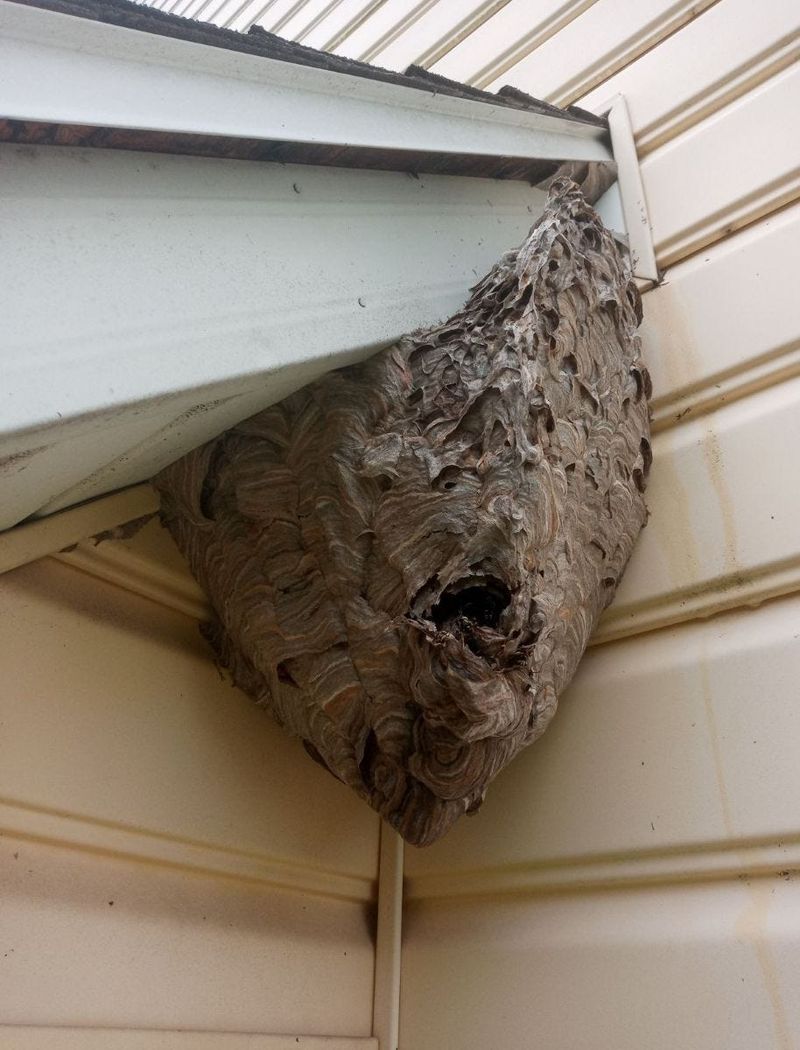
Location changes the picture. A nest near a doorway, seating area, or children’s play space may pose a greater practical risk, because people are more likely to bump into it.
There is no single safe distance that fits every yard, so think about how often people use the area and how easily the nest could be disturbed, as Penn State Extension discusses.
Do not approach, knock down, or spray a nest just to figure out what it is. Disturbing a nest can trigger defensive stinging.
Do not seal or spray an opening that may lead to a hidden nest as a casual fix either.
If wasps are entering a wall, attic, or another spot you cannot reach, NC Cooperative Extension material points toward a pest control professional. If treatment is ever needed, follow the product label, since the EPA explains that labels govern how products may be used and some warn about risks to pollinators.
Health comes first. Mayo Clinic advises immediate emergency care for signs of a severe allergic reaction, such as trouble breathing, swelling of the face or throat, or dizziness.
Anyone with a prescribed epinephrine autoinjector should use it as directed and still seek emergency care.
Read the pattern, not a single visitor
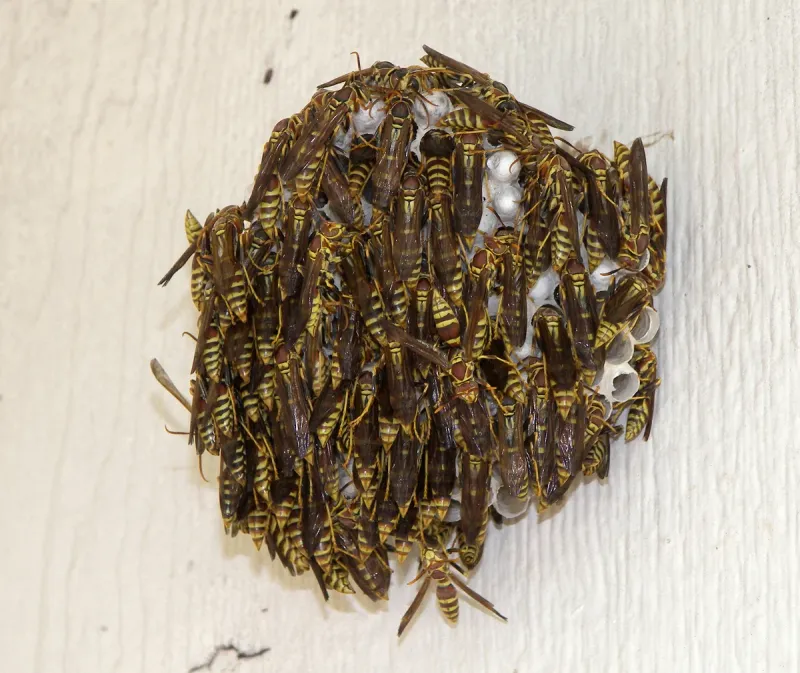
One wasp on your porch is a clue, not an answer. It may be a forager, part of the seasonal cycle, or simply passing by, and it cannot by itself locate a nest or identify a queen.
Clear away food, watch quietly from a distance, and call for appropriate help when a nest sits where your family walks every day. Wasps are in no hurry to leave in October, but with a little patience you can share the season with them.