
A Three-Plant Fall Porch Pot That Brings Seasonal Color Into a North Carolina Winter
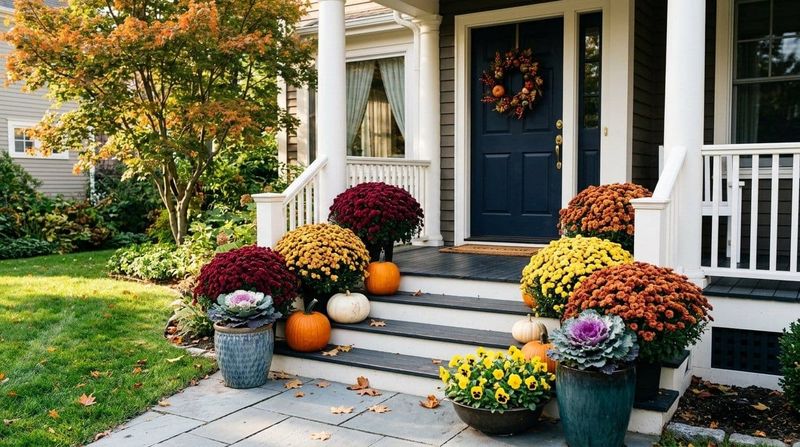
A front porch pot can look sharp in late October and still be worth a glance in January. The trick is picking plants that take turns, so one pot is not asking for flowers all season long.
Mums, pansies, and ornamental kale make a simple trio that does this well in North Carolina. Weather will have a say, so here is how to build the pot and what to expect.
The display changes as the season advances
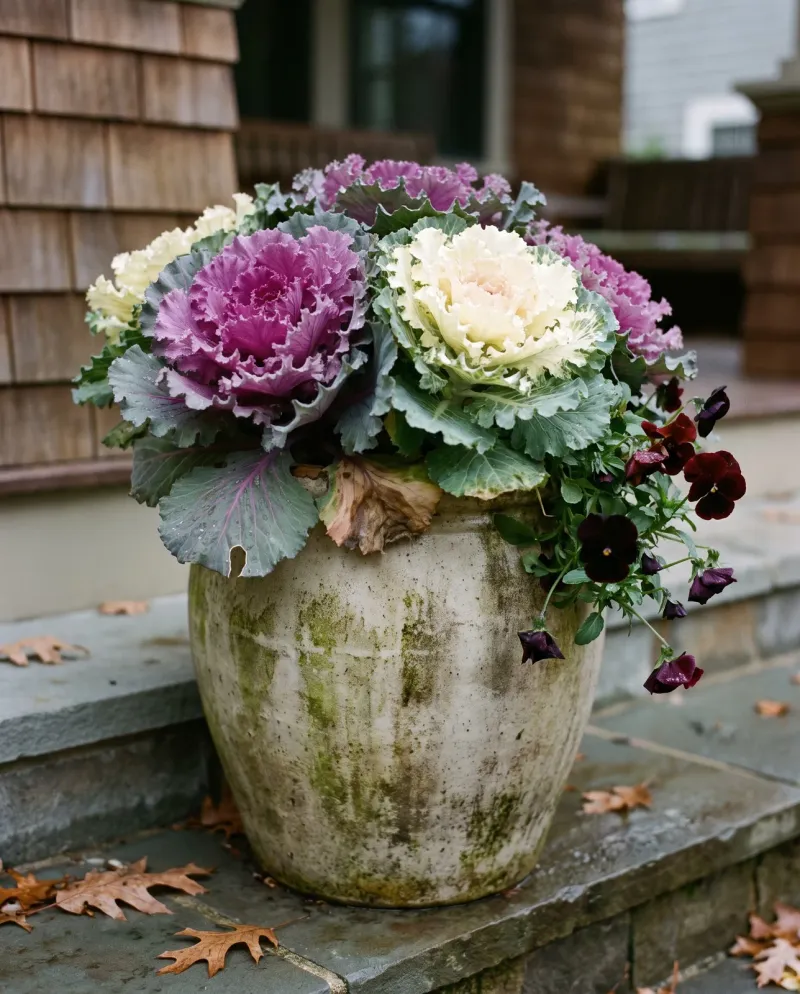
Think of this pot as a relay, not a sprint. Each plant carries the color for a stretch, then hands it off.
Garden mums bring the flowers that make a porch feel like fall. Their bloom display is not a dependable all-winter feature, so expect the flowers to fade as the cold settles in.
Virginia Cooperative Extension treats mum flowering and mum survival as separate questions, and that is a good way to look at your pot too.
Pansies fill in next. NC State Extension recommends them for fall planting and lists bloom in winter and early spring.
Bloom can vary with your weather, so a cold snap may pause the flowers for a while.
Ornamental kale supplies the foliage color. NC State’s plant profile says its white, red, or purple color gets stronger as temperatures drop below 50°F.
That means kale often looks better in December than it did in October.
So the honest promise is color that may carry into winter, shifting from mum flowers toward pansy blooms and kale leaves. It will not stay unchanged, and it will look different in Asheville than in Wilmington.
Plan for a pot that evolves, and you will be pleased rather than disappointed.
Choose a pot with room and working drainage
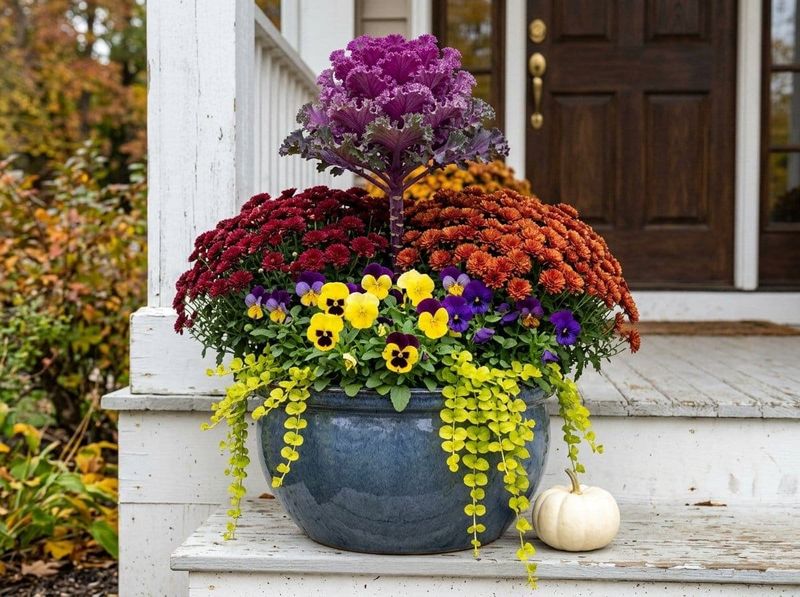
Start with the container, because everything else depends on it. Pick a generously sized pot with drainage holes, and fill it with potting mix instead of garden soil.
NC State’s container gardening guide backs this approach, since water has to be able to leave the pot.
Size matters more than most people expect. NC State lists mums at 1 to 2 feet wide, and pansies at 9 to 12 inches wide.
Kale can reach a similar spread. Those are mature sizes, but a small pot packed with three plants will crowd them and make moisture harder to manage.
There is no magic diameter here. Instead, buy compact, healthy nursery plants and choose the biggest pot your porch and budget can handle.
A bigger pot also holds more mix, which gives roots a bit more of a buffer.
Skip the layer of gravel in the bottom. It does not fix drainage, so rely on open holes and good potting mix.
If the holes are blocked by a saucer or a flat porch floor, lift the pot on pot feet so water can escape.
Arrange the plants for a one-sided porch view
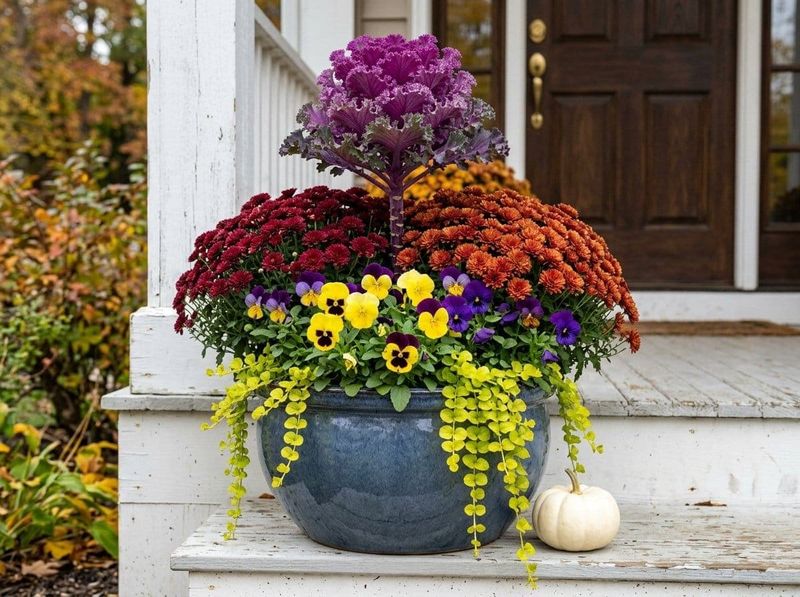
Most porch pots get seen from one direction: the walkway or the steps. Design for that view, and the pot will look full without being crowded.
Here is a layout that works as a starting point. Put the kale toward the back or center, since NC State lists it at about 1 to 2 feet tall and wide.
Let the mum serve as the other upright mass, and tuck pansies toward the front and rim where they can spill a little.
Treat this as a design suggestion, not a tested formula. Your pot shape, porch light, and plant sizes may call for a different order.
A tall, narrow pot might suit kale in the middle, while a wide bowl may let you set the mum off to one side.
Before you plant, set the nursery pots on top of the mix, still in their containers. Walk back to the steps and look.
Turn the plants until the best faces point outward.
Leave breathing room. Mums can grow to 1 to 2 feet wide, and pansies 9 to 12 inches.
If the arrangement looks tight on day one, edit it now rather than later.
Set out the transplants without crowding them
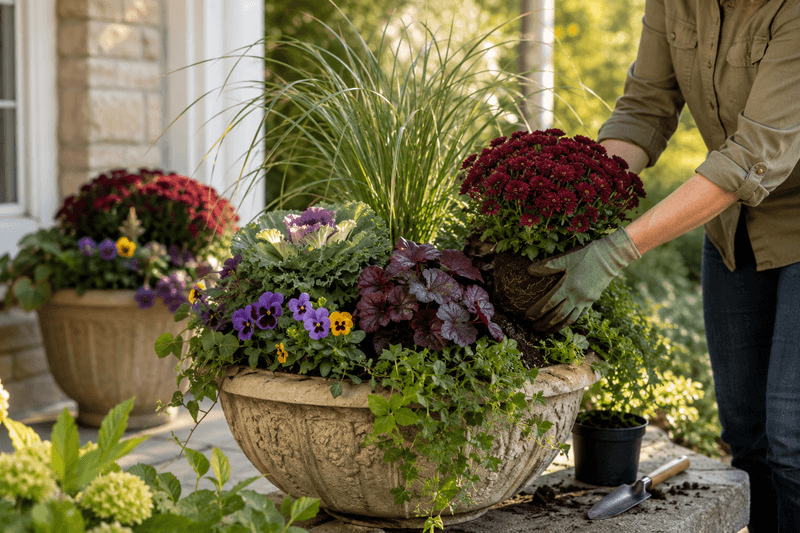
Once you like the layout, planting goes quickly. Fill the pot with potting mix, leaving a little room below the rim so water does not wash over the edge.
NC State’s container guidance is the place to check if you want more detail on mixes.
Take each plant out of its nursery pot and loosen the root ball slightly if it looks tight. Set the kale and the mum first, since they take up the most space.
Then slip the pansies in along the front and edges.
Plant each one at about the same depth it was growing in the nursery pot. Press the mix gently around the roots to remove big air pockets, but do not pack it down hard.
Water everything in slowly until moisture runs out of the drainage holes. That settles the mix around the roots.
If it sinks, add a bit more mix.
Careful placement keeps the look you planned while leaving each plant room to fill out. If you find yourself squeezing a plant in, step back and move something instead.
Check moisture and remove spent pansy flowers
Forget the calendar and use your finger. Push it into the potting mix about an inch or two.
If it feels dry, water until it drains from the bottom, and if it still feels damp, wait.
The goal is mix that stays moist but never soggy. NC State’s container gardening guide points to checking the mix and watering when it is dry.
Pots dry out faster on sunny, breezy porches and slower in cool, cloudy stretches, so your routine will shift.
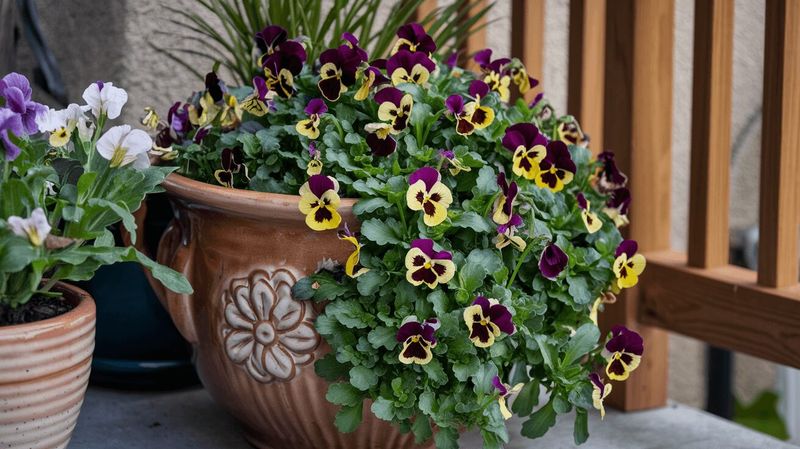
Pansies like full sun to part shade and consistent moisture. NC State notes that deadheading spent flowers can prolong bloom.
Pinch off faded blooms at the stem, along with any that have gone mushy after a cold night.
Do not nibble on the flowers for a snack or garnish. Nursery pansies may have been treated with systemic pesticides, and mums are listed as poisonous to humans.
Foliage contact can also cause a rash in sensitive people, so gloves are a good idea.
This is routine care. Protecting the pot from a hard freeze is a separate job, covered next.
Shelter the pot when severe cold threatens
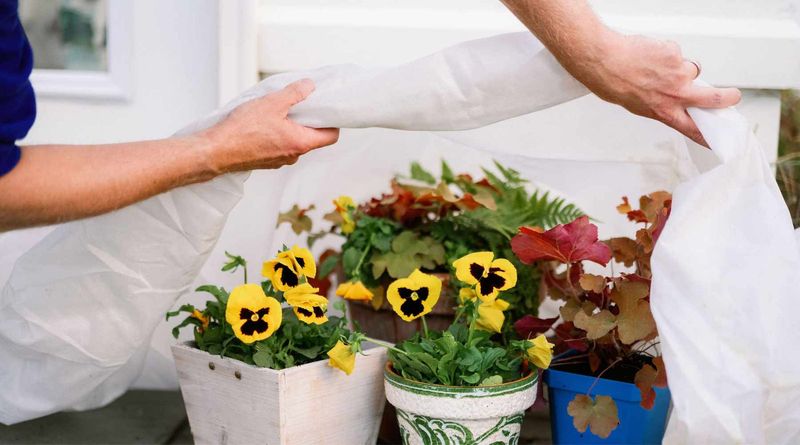
Plants in the ground have the earth around them for insulation. A pot has only its walls, so roots in a container get hit by cold from every side.
NC State’s container guidance says to move pots to a sheltered spot in severe cold and to consider insulating them.
That is why kale’s listed cold tolerance to 5°F is not a promise for your pot. The number describes the plant, not an exposed root ball in a mixed container.
Tucking the pot against the house, under the porch roof, or into a garage during a hard freeze gives it a better chance, but no guarantee.
Where you live changes the risk. NC State Extension describes the Blue Ridge and western mountains as generally colder than the Piedmont and Coastal regions, and local elevation and exposure matter too.
A sheltered porch in Wilmington is a different place than an open one at 3,000 feet. Watch your own forecast rather than a calendar date.
As for the mum, NC State notes that garden mums can overwinter outdoors in the South. Even so, Virginia Cooperative Extension says survival varies by cultivar, planting time, location, and winter severity.
Enjoy a fall mum as seasonal color, and call it a bonus if it returns.
Treat the pot as seasonal color, not a winter guarantee
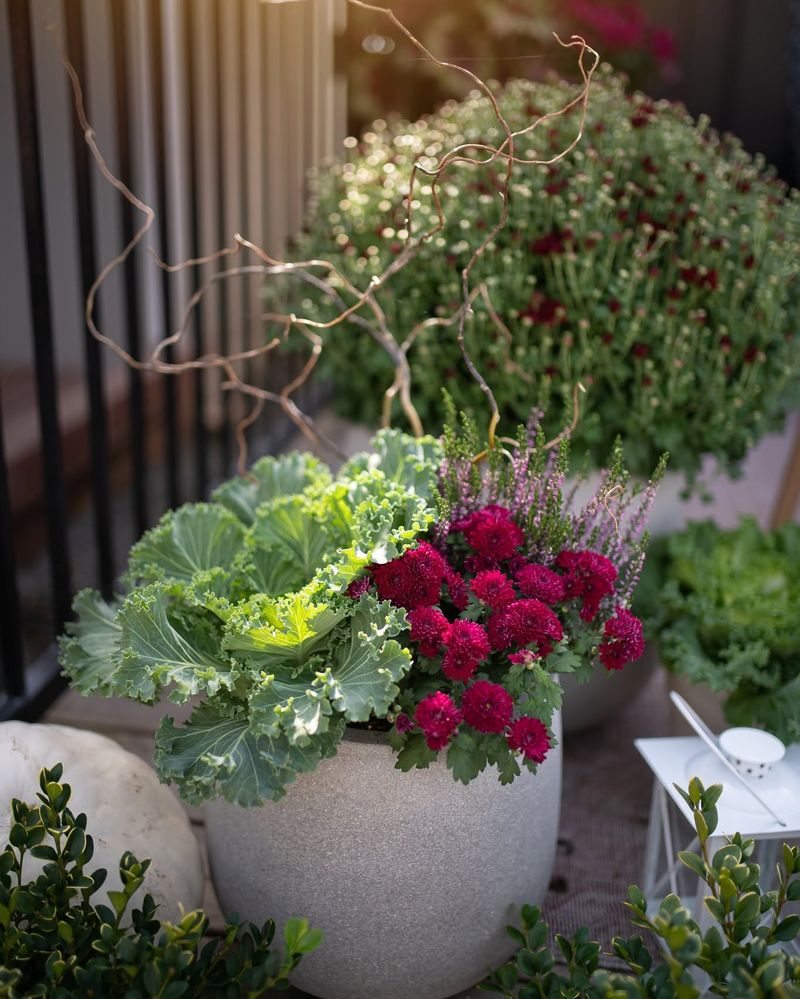
The sequence is simple: a roomy pot with drainage holes, three plants arranged for the porch view, water when the mix feels dry, and shelter when severe cold is coming. Mums open the show, then pansies and kale can carry it onward.
Local weather decides how long the pot looks good, and container roots are always more exposed than garden roots. Some years the pot will look good into January, and some years a hard freeze will end it early.
Either way, a porch pot is a short, pretty season you get to enjoy, and replacing a tired plant is part of the fun.