
Mole Tunnels Are a Clue to Underground Prey and Habitat, Not a Grub Diagnosis
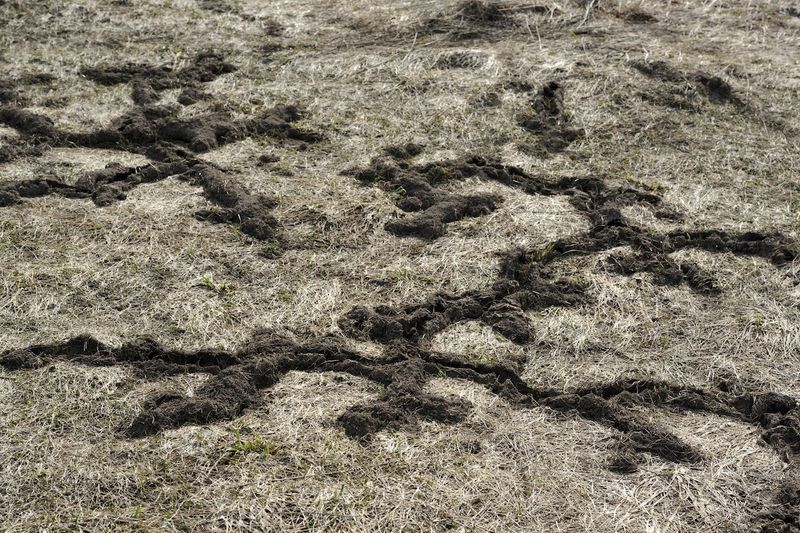
Raised ridges snaking across your lawn can make your stomach drop. Many people see them and assume grubs are eating the grass from below.
The real story is a little more complicated, and knowing it can save you time and money. A few simple checks will show you what your yard actually needs.
Mole tunnels point to prey, not a grub diagnosis
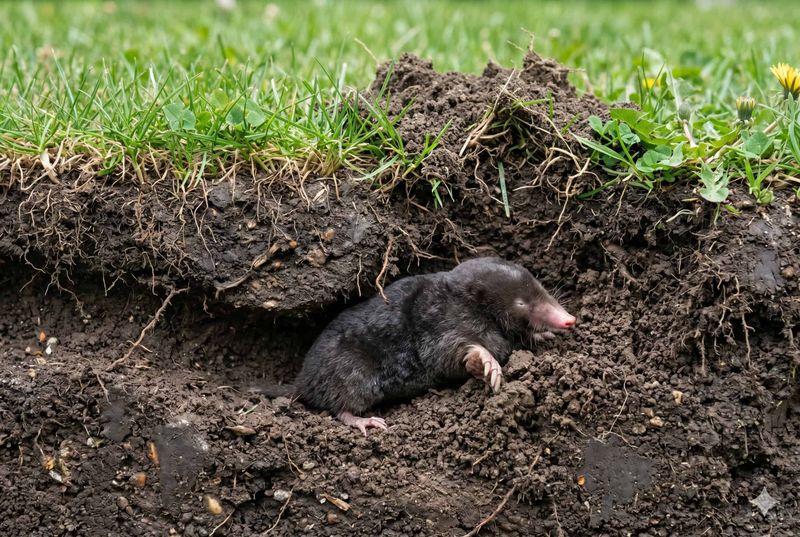
A mole is hunting when it tunnels. Moles are insect-eating mammals, and Penn State Extension notes that they feed on earthworms, grubs, beetle larvae, and other soil animals.
Fresh tunnels tell you that some kind of underground prey is probably available and that the soil is easy to dig through.
What the tunnels cannot tell you is which prey is down there. A ridge in the front yard does not prove grubs, and a mound by the garden bed does not mean a pest problem is brewing.
Moles can stay in a lawn even when grubs are completely absent, because earthworms alone can keep them fed.
Mole damage also comes from a different source than many people expect. According to University of Missouri Extension, moles are not typically root eaters.
The harm comes from tunneling, which can disturb roots, expose them to air, and heave up the turf.
So think of the tunnels as a reason to investigate rather than a reason to spray. Seeing them does not mean you did something wrong with your lawn care.
The next steps are to confirm that a mole made the damage and then look in the soil to see what is really there before you buy any treatment.
First, make sure a mole made the damage
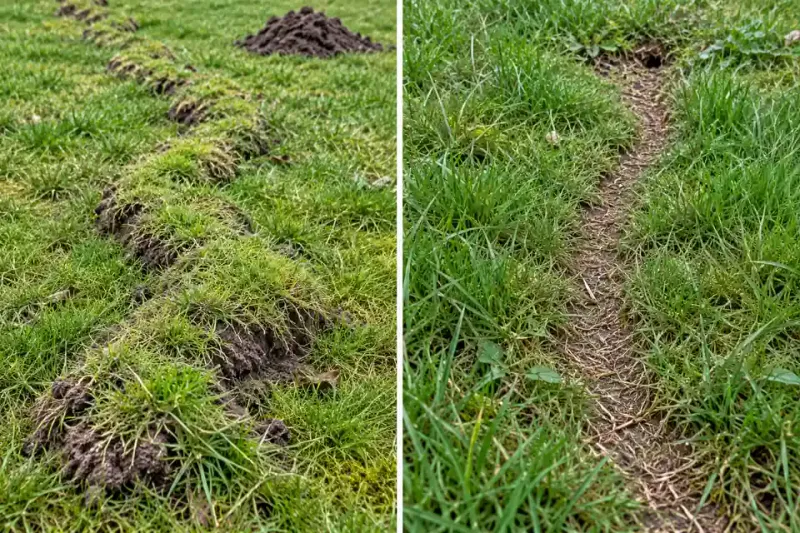
Not every lawn scar comes from a mole. Voles are small, plant-eating rodents that also leave trails in the grass, and mixing them up leads to the wrong fix.
A quick walk across the yard can sort it out.
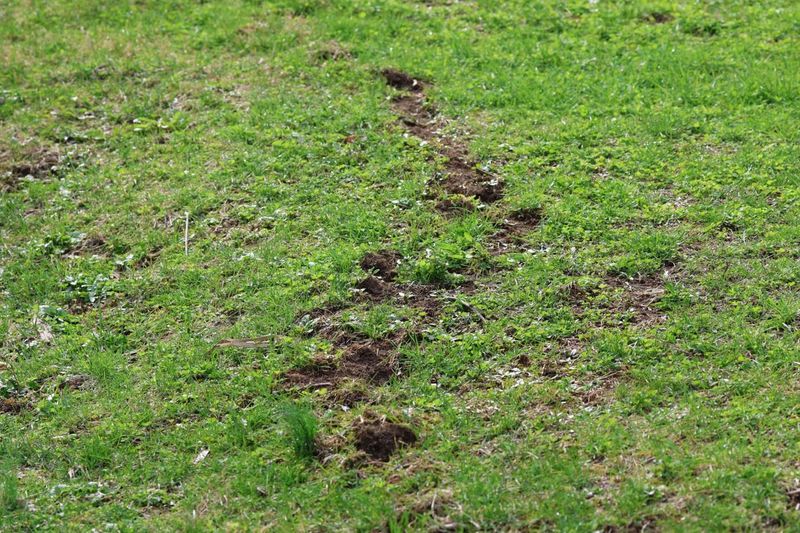
Moles leave raised ridges of soil and cone-shaped mounds, and the tunnels run underground. The grass above them may feel spongy underfoot.
According to Penn State Extension’s identification guide, voles leave surface runways and clipped grass, and they eat plants.
That difference matters a lot. Moles hunt soil animals, while voles chew on stems, roots, and bark.
A grub treatment will do nothing for a vole problem, and vole control will not help a mole ridge.
Look closely at what the damage looks like at ground level. Shallow, open pathways with trimmed grass blades point toward voles.
Pushed-up soil with no clipped grass points toward a mole.
Take a few photos and note where the damage sits in the yard. If you are unsure, your local extension office can help identify what you have.
Getting the animal right comes first, before you think about grubs.
Inspect damaged turf for evidence of grubs
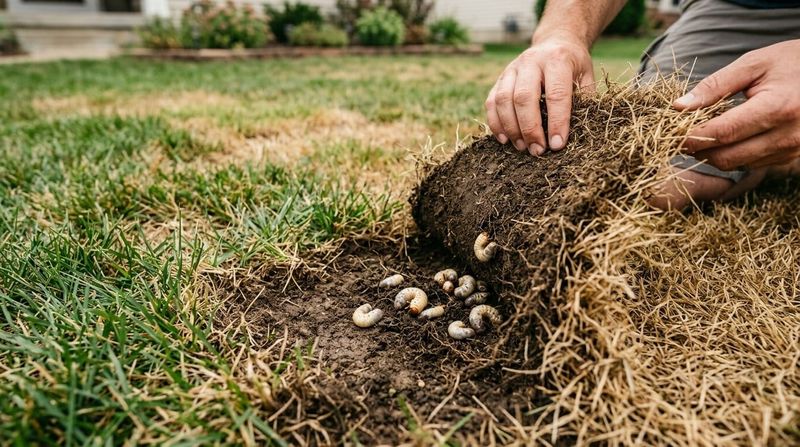
Grab a spade and look at the soil, because that is where the answer lives. Cut a few small flaps of turf beneath damaged areas and fold them back.
Check several spots, not just one, since grubs are often patchy.
Now put the clues together. Penn State Extension’s grub guidance points to brown or dying grass, weak roots, and sod that lifts easily.
Then look for C-shaped, creamy white grubs in the top few inches of soil.
No single sign settles it. Brown grass can come from drought, disease, or heat, and loose sod can come from other causes too.
You are looking for several clues showing up together.
Remember that two different problems can overlap. Grubs can feed on roots and weaken the turf.
Moles can tunnel through the same area and disturb those roots. Both can happen at once, but the two are not interchangeable signs.
If you find tunnels but healthy roots and no grubs, you have learned something useful. Tunnels alone do not establish grub damage.
Write down what you find and where, because that record helps if you later talk with local experts.
When do grub numbers justify treatment?
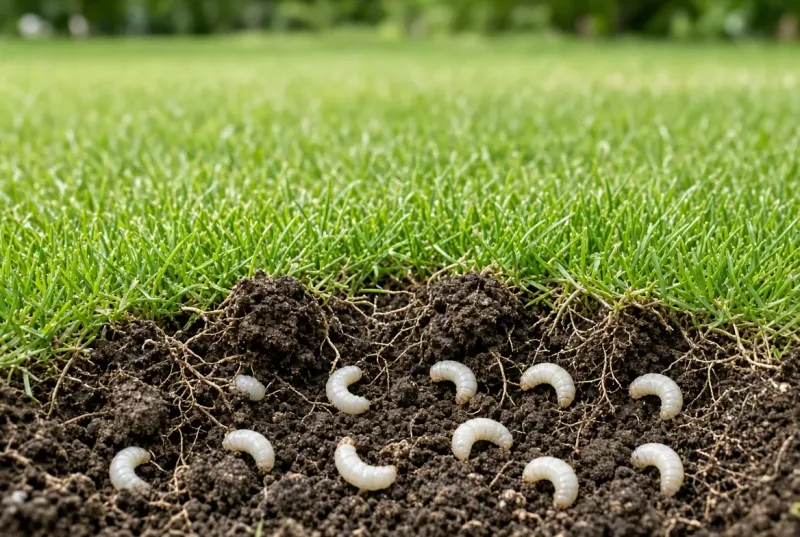
Finding a few grubs is common and does not automatically call for treatment. Treatment makes sense when an inspection shows a damaging population, and local recommendations back it up.
Mole presence alone is not enough.
Counts vary by region. Penn State describes roughly 5 to 10 grubs per square foot as a commonly used threshold.
Illinois Extension cites around 10 to 12. The gap shows why no single number applies nationwide.
Both figures are regional guidance. The right number depends on the grub species, the type of turf, local conditions, and how much damage you are willing to tolerate.
A healthy, well-watered lawn may handle more grubs than a stressed one.
Timing varies too. As University of Wisconsin-Madison Extension explains in its grub control guidance, the best window depends on species, region, and the product you choose.
There is no universal calendar date.
Your best move is to call or visit your state extension service. Ask what counts as a damaging level where you live and when to apply.
Then read the product label closely and follow it exactly.
If mole damage is the problem, manage the mole separately
Treating grubs and controlling a mole are two separate choices. One deals with a possible turf pest, and the other deals with an animal whose tunneling bothers you.
Mixing them up can leave you with the same ridges and a wasted product.
Grub removal may not drive a mole away. Other prey, like earthworms, can remain.
Penn State Extension also warns that cutting back food can lead a mole to dig more while it searches for meals.
If the tunneling is more than you want to live with, start by finding the active runs. Penn State suggests flattening sections of surface runs and checking back the next day.
If the mole repairs them, that run is in use.
For control, Penn State Extension describes trapping active runways as the most effective method in its guidance. That is not a guarantee, and results depend on setting traps in the right spots and checking local rules.
Some people prefer to hire a licensed wildlife professional.
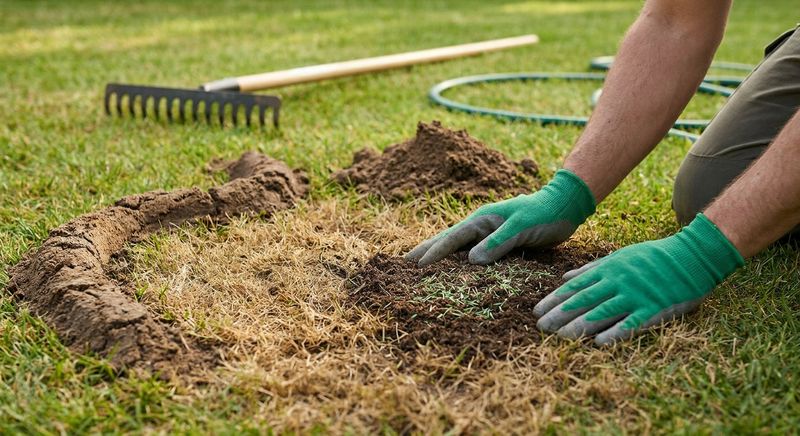
In the meantime, you can press ridges flat so roots settle back into the soil. A little patience helps, and watering lightly after repairs can support recovery.
Why eliminating every underground food source can backfire
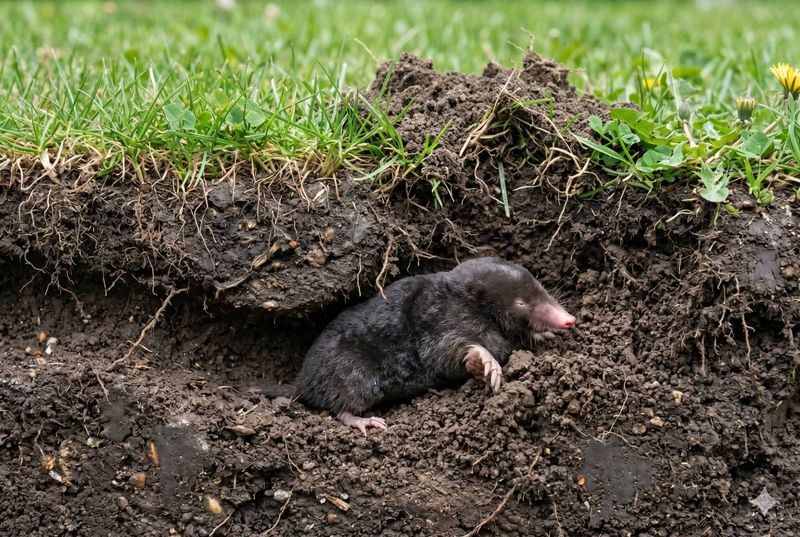
It can be tempting to wipe out everything a mole might eat. Earthworms are a major mole food, so some people wonder about getting rid of them.
That idea does not hold up.
Earthworms are generally good for soil. University of Wisconsin-Madison Extension says there is no evidence that eliminating them solves mole problems, and no pesticides are registered for earthworm control.
Products toxic to worms can harm their populations and the soil life around them.
Other quick fixes carry risks as well. A University of Wisconsin mole management guide notes that drier or more compacted soil may be less attractive to moles.
But too little water or compaction can hurt your grass, so neither is a risk-free fix.
Skip household chemicals, broken glass, and similar tunnel remedies. Penn State warns against them.
They can harm pets, kids, and the soil without solving anything.
If you do use a pesticide, make sure inspection has confirmed a target. The EPA’s wildlife tips advise following the label closely.
Your local extension office can help you choose a safer path.
Let the inspection—not the tunnels—decide your next step
Start by confirming the animal, using Penn State’s identification tips. Next, dig into damaged turf and look for weak roots, loose sod, and C-shaped grubs, as Penn State’s grub page describes.
Check local guidance before any treatment, and handle mole control separately, as Penn State’s mole guidance explains, if the tunneling stays unacceptable.
The ridges are a clue worth following, not a verdict. The soil will tell you more than the tunnels ever could.