
That Pothos On Your Bookshelf Has A Very Different Reputation Once It Crosses Your Front Door
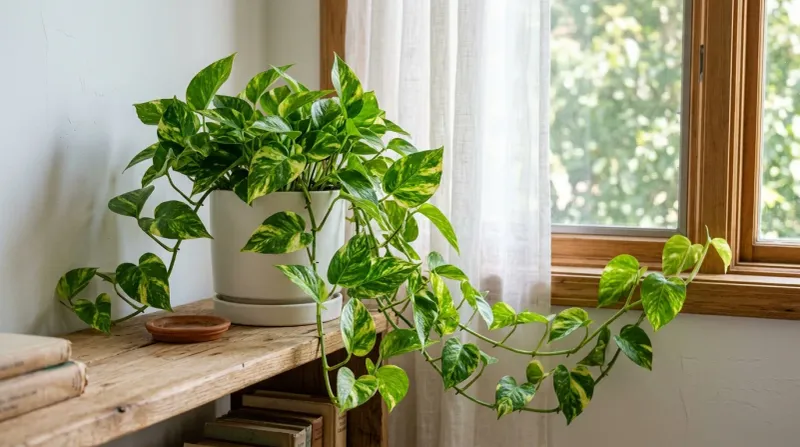
Pothos is one of the most common houseplants in American homes, and it trails happily from shelves, desks, and hanging pots. It is also a plant that can hurt a curious mouth.
If you share your home with a toddler, a cat, or a dog, where you put it matters a lot. The good news is that you can often keep it, as long as you plan the spot carefully.
The danger starts with a bite, not a bookshelf
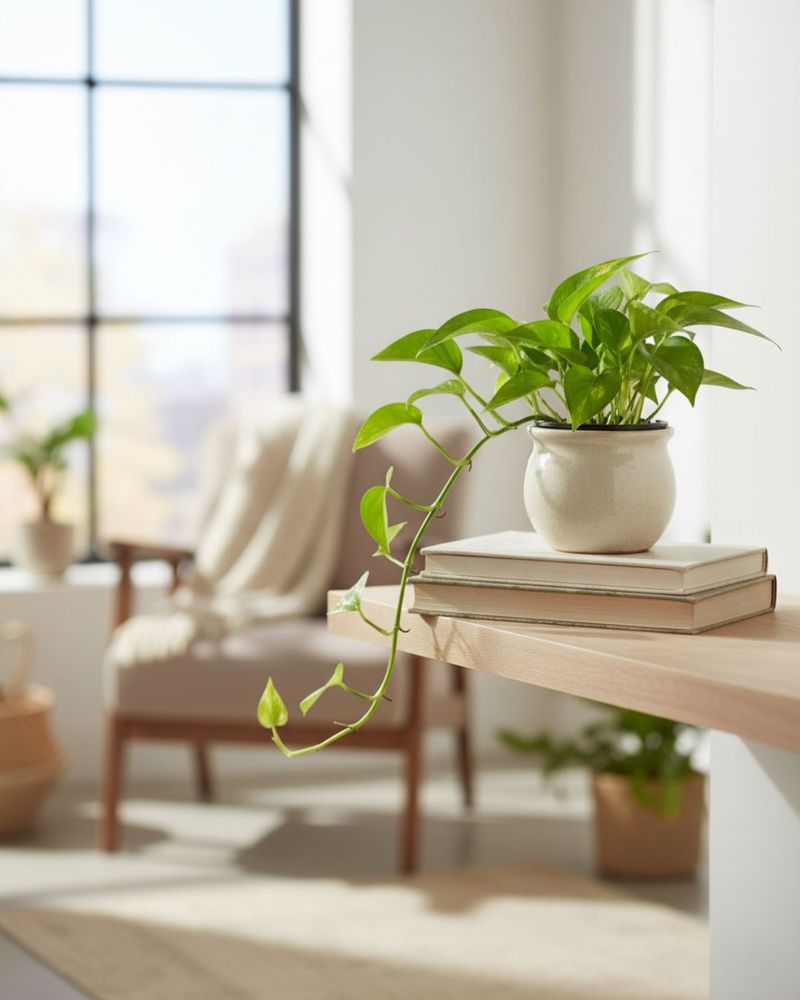
Picture a pothos sitting calmly on a shelf. Nothing about the plant is hurting anyone just by being there.
The trouble begins when a child or a pet chews on a leaf or stem.
Pothos goes by a few names. Its scientific name is Epipremnum aureum, and you may see it sold as golden pothos or devil’s ivy.
According to the ASPCA’s golden pothos listing, the plant is toxic to cats and dogs when they chew or swallow it.
People can feel it too. University of Utah Poison Control lists pothos as a plant that irritates the mouth when someone chews it.
That is the exposure to worry about: plant tissue getting into a mouth.
This changes how you think about the plant. You do not need to fear the room it lives in, and breathing the air near it is not the problem.
What you need to ask is a simple question: could a small child or a pet reach any part of this plant and bite it?
If the answer is no, the plant can stay. If the answer is maybe, the rest of this article will help you sort out what to do.
Knowing the true risk keeps you from tossing a perfectly good plant, and it keeps you from leaving one where a puppy can reach it.
Why does chewing pothos hurt?
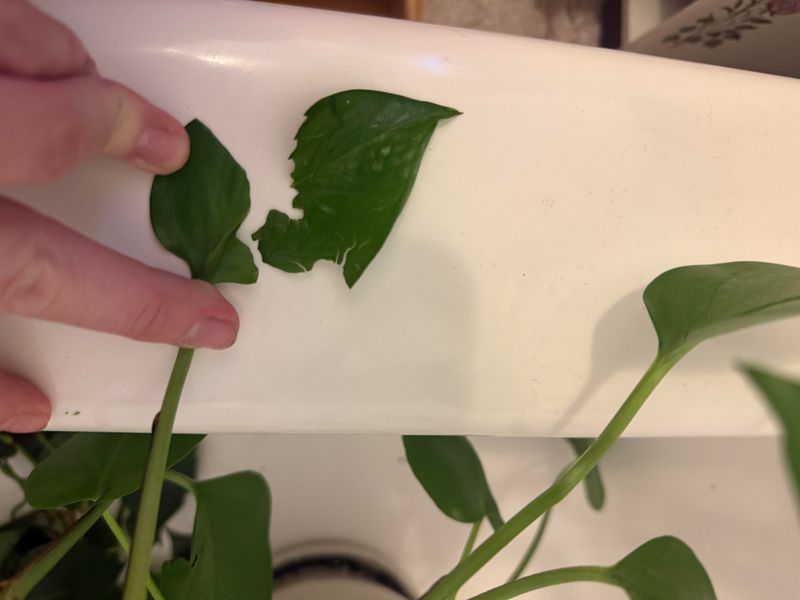
The pain comes from tiny crystals inside the plant’s tissue. Pothos contains insoluble calcium oxalate, which forms needle-shaped crystals.
They stay locked in the leaves and stems until something chews or crushes them.
Once the plant is bitten, the crystals are released and press into the soft lining of the mouth and throat. As the Merck Veterinary Manual explains, this causes immediate irritation and pain.
Think of it as a mechanical sting rather than a slow-acting poison.
Animals often show it right away. Pet Poison Helpline describes signs such as drooling, pawing at the face, gagging, and vomiting.
Some pets have trouble swallowing, and they may refuse food because their mouths hurt.
A child can have similar discomfort. Burning in the mouth, crying, drooling, or spitting out the plant are common clues that something got chewed.
Because the pain starts fast, it is often the first sign a parent notices.
A useful clue is the timing. These signs usually show up within minutes of a bite, not hours later.
If a pet is suddenly drooling and shaking its head near a plant with a nibbled leaf, the plant is a reasonable suspect.
What to do next is covered in later sections. For now, remember the basic idea: the damage comes from chewing, and the crystals only reach the mouth when someone bites the plant.
Most exposures cause irritation, but breathing trouble matters
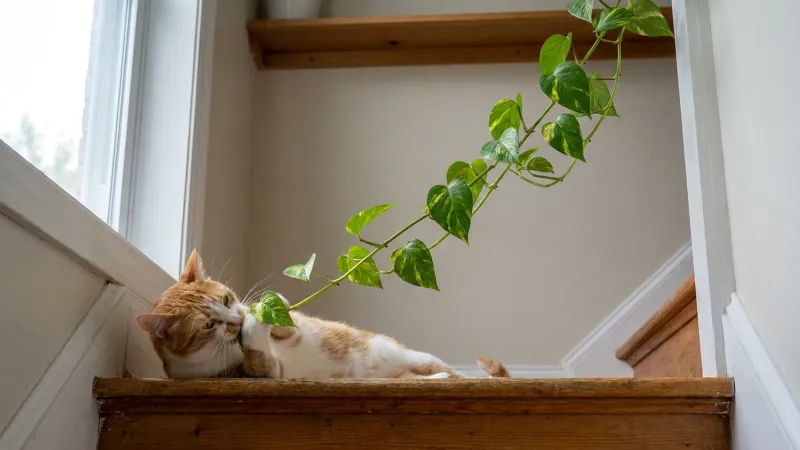
Here is the realistic picture. Most pothos chewing leads to a sore, irritated mouth and not much more.
Still, that does not make it harmless.
For kids, the Children’s Hospital of Philadelphia says significant poisoning from plants like this is rare. One reason is that the mouth pain is so strong that a child usually stops eating the plant quickly.
That is a reason for calm, not a reason to leave the plant within reach.
For animals, the Merck Veterinary Manual reports a good to excellent outlook in most cases. Even so, painful swelling in the mouth can happen.
In uncommon cases, swelling in the throat can make breathing hard, and that is the signal that turns a minor mishap into an emergency.
You may have heard that oxalate plants cause kidney failure. That worry comes from soluble oxalates, found in other plants, which behave differently in the body.
Merck says the insoluble oxalates in pothos do not pose a kidney injury concern.
So a nibble from your cat is not likely to damage her kidneys. It is more likely to leave her drooling and unhappy.
Watch for noisy breathing, trouble swallowing, or swelling around the face, and treat any of those as urgent.
Where can pothos stay out of reach?
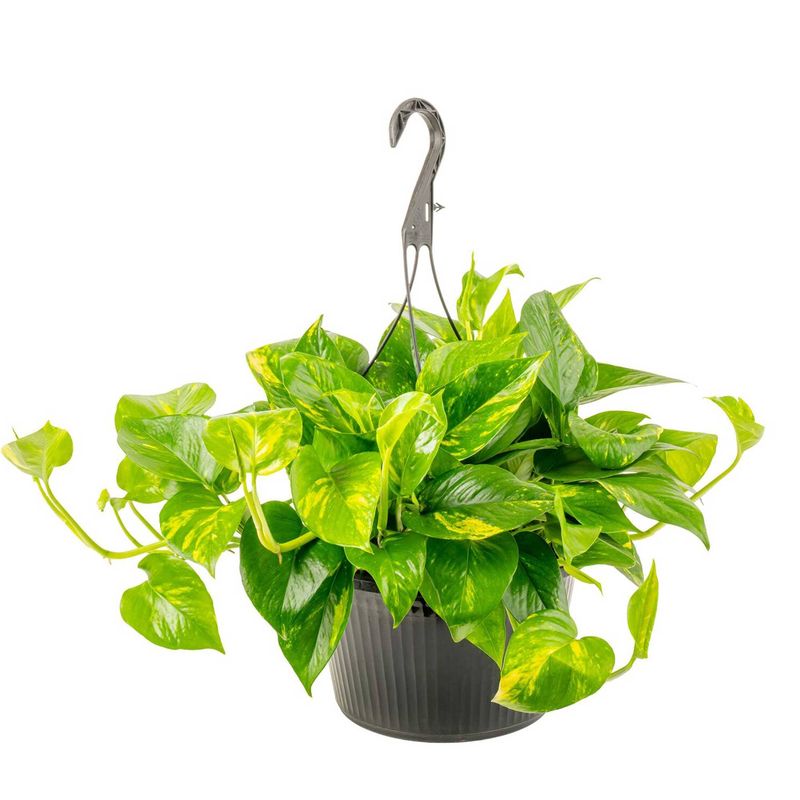
Try a simple test. Stand where your child can stand, then where your cat can jump, and ask whether any leaf or vine can be touched.
If anything can, the spot fails.
Poison experts agree on the basic rule. Poison Control advises keeping houseplants where children cannot reach them, and NYC Health says the same for children and pets.
Pothos makes this tricky because it trails. A pot on a high shelf may look safe, but a vine can dangle down to a cat’s paw.
Check the full length of every stem, not just the pot.
Good options include a hanging basket on a high hook with vines trimmed short, or a closed room that pets and children cannot enter. Cats are strong climbers, so a shelf that looks tall to you may be an easy jump for them.
Trim any vine that sags below the safe zone, and pick up fallen leaves right away.
Also think ahead. A baby who is not yet crawling will soon be, and a new kitten will explore.
A spot that works today may not work in six months.
If you cannot find a place that is reliably out of reach, you have choices. Moving the plant to a different home, giving it to a friend without small kids or pets, or swapping it for a pet-friendly plant are all reasonable.
Keeping it only makes sense when access is truly blocked.
If a child chews pothos, contact Poison Control
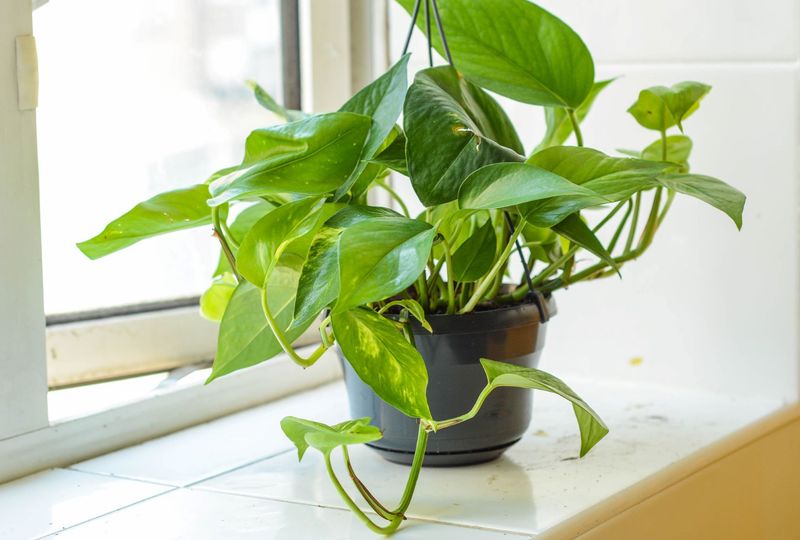
Acting calmly and quickly is the best plan. First, gently take away any plant pieces and wipe out any bits you can see in the mouth.
Next, call Poison Control at 1-800-222-1222. The call is free, and the staff can give advice based on your child’s age, size, and what happened.
Significant poisoning from these plants is rare, as CHOP notes, but that does not make the call unnecessary. A quick check is how you learn whether your child needs anything more.
Do not try to make your child vomit. Poison Control’s first aid guidance says not to induce vomiting.
If your child is awake and able to swallow, you may offer only a small amount of water or milk to soothe the mouth.
If your child is not fully alert or cannot swallow safely, skip the drink. Call 911 right away if your child has trouble breathing, noisy breathing, or swelling of the lips or face.
It helps to know the plant’s name when you call. Say pothos, or Epipremnum aureum, because common names can refer to different plants.
If you have the plant nearby, keep it handy so you can describe it or read the tag.
A pet exposure needs veterinary guidance
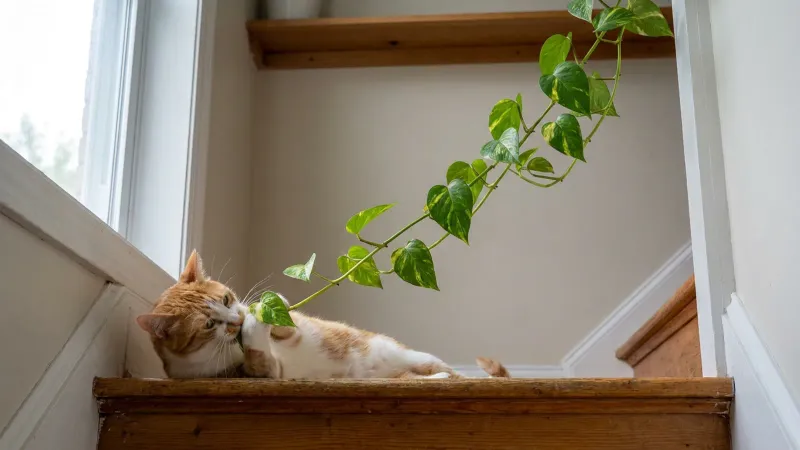
Pets are not small people, so human first aid advice does not apply to them. If you think your cat or dog ate pothos, call a veterinarian or an animal poison-control service promptly.
The ASPCA lists golden pothos as toxic to cats and dogs. Its poison-control number is 888-426-4435, and it may charge a consultation fee.
Your regular vet or an emergency clinic can also guide you.
Signs to watch for include burning in the mouth, drooling, vomiting, and difficulty swallowing. A pet may paw at its face, shake its head, or stop eating.
Any of these after chewing a plant is a good reason to call.
Skip home remedies. Do not give milk, food, or medicine, and do not try to make your pet vomit unless a professional tells you to.
The right step depends on the animal and what it ate.
When you call, say it was pothos, also called golden pothos or devil’s ivy. Mention your pet’s species, weight, and roughly how much was chewed.
Take a photo or a cutting of the plant with you if you go to the clinic.
If your pet has trouble breathing or swelling around the face, go to an emergency vet right away.
Make access—not fear—the deciding factor
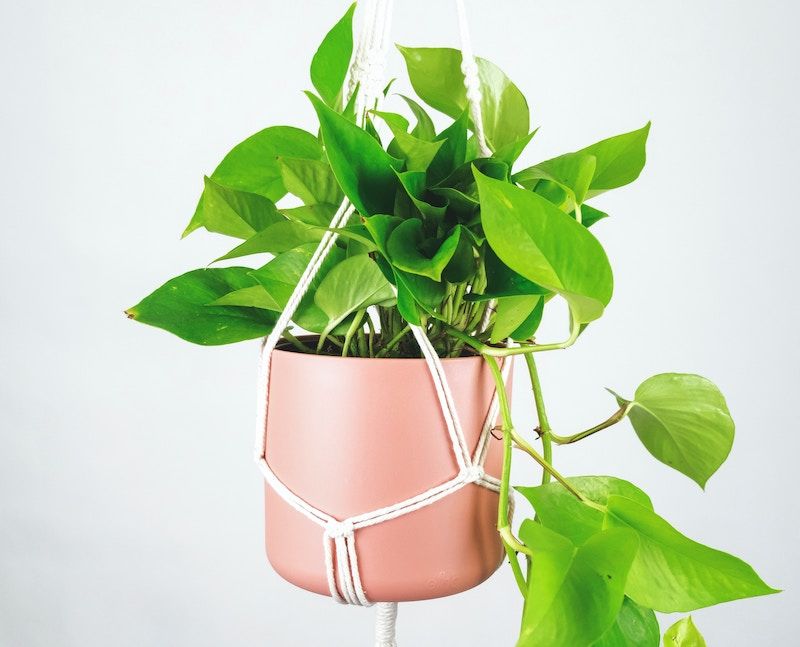
Your pothos is not a threat just because it lives in your home. The risk only appears when a mouth meets the plant.
So the rule is simple. If you can keep every leaf and vine out of reach, as Poison Control and NYC Health recommend, keep it.
If you cannot, move it or find it a new home.
A houseplant is a good guest when it stays where it belongs.