
Does Raking Every Leaf From Your North Carolina Flower Beds Disturb Queen Bumblebee Winter Shelter?
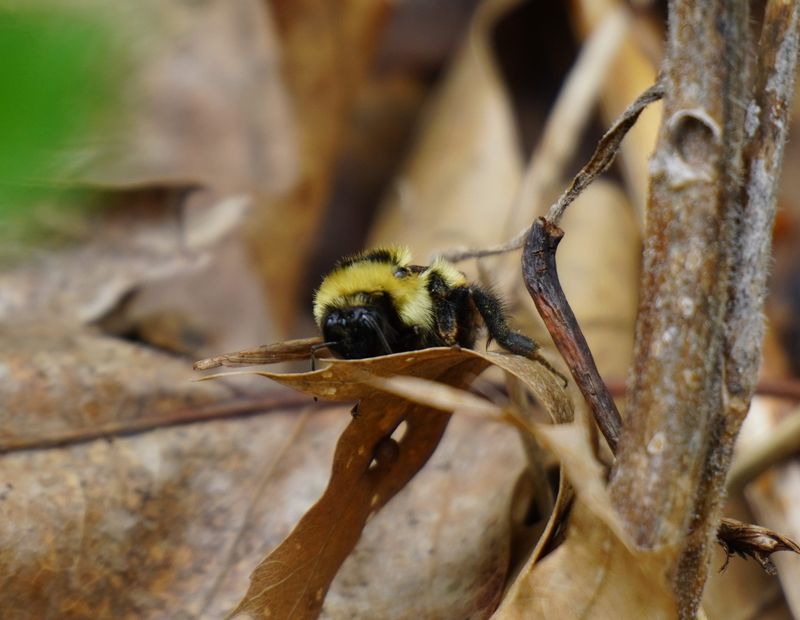
Come fall, many North Carolina yards get raked down to bare soil. But a few leaves left in the right spots may shelter the queen bumblebees that start next spring’s colonies.
Cleanup can disturb that possible winter habitat, though it does not leave queens with nowhere to go. A few smart choices let you keep your yard safe and still give bees a place to rest.
Fall cleanup can disturb potential overwintering habitat
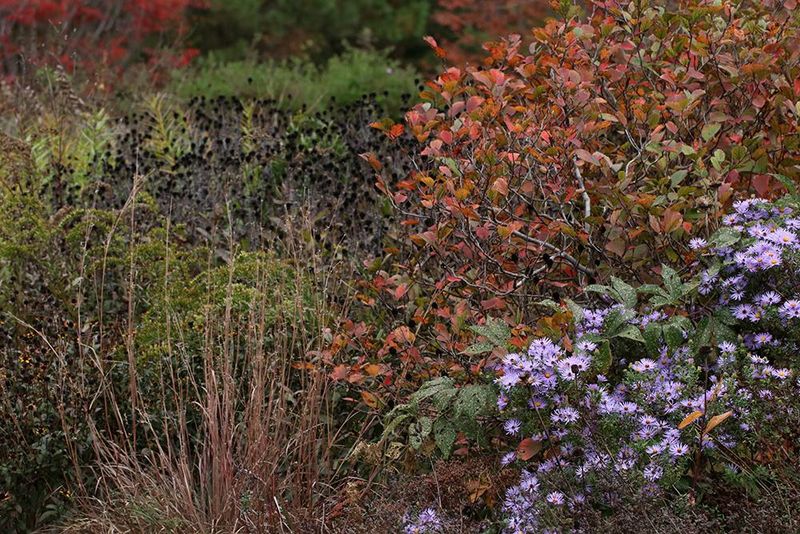
Picture two bed edges in the same Piedmont yard in November. One has been raked down to bare soil, and the other still has a loose blanket of oak leaves tucked under a shrub.
The bare one has lost something a bumblebee queen might have used for winter shelter.
That is the real cost of an over-tidy cleanup. Aggressive raking, mowing, and tilling can remove or disturb the leaf litter and the top layer of soil where a queen may be resting.
Still, a bare bed edge does not mean every queen in your neighborhood has lost her shelter. NC State Extension explains that mated queens spend winter in places like soil or logs, and leaf litter is one of several spots they may use.
Nobody can say how often North Carolina queens sleep at flower-bed edges. What conservation groups do say is that leaving leaf litter and avoiding early raking or mowing helps protect them.
USDA and Xerces Society guidance makes that recommendation for bumblebee conservation.
So the practical answer is not to quit raking. Keep a few undisturbed patches of cover, and clear the spots that truly need it, like walkways, drains, and tick-prone areas near the house.
Only new queens overwinter and start colonies in spring
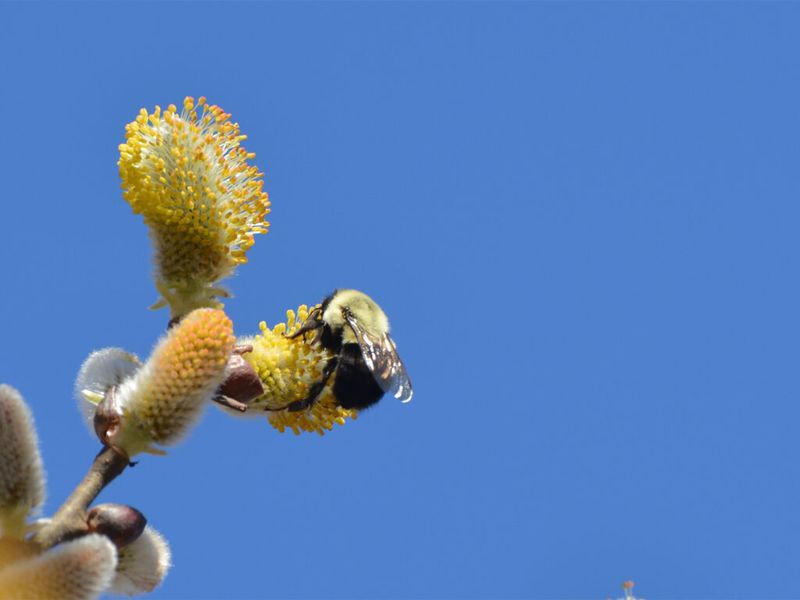
A bumblebee colony lives only one season. By late fall, the workers, the males, and the old queen are gone.
The only ones that carry on are new, mated queens, which find a sheltered spot and wait out the cold, as described by NC State Extension.
When spring warms up, each surviving queen comes out to feed on early blooms and look for a nest site. She starts a brand-new colony by herself.
Every bumblebee you see buzzing around your summer garden traces back to a queen that made it through winter.
That is why winter shelter matters. The USDA and Xerces Society guide describes the same yearly cycle and points to protecting overwintering ground as part of helping bumblebees.
Keep the scale in perspective, though. One yard’s cleanup does not decide how many bumblebees live in your county, and a raked bed does not necessarily harm a queen.
Think of your yard as one small piece of a much larger patchwork of neighborhood habitat. Each undisturbed corner adds a bit of possible shelter.
If you see a big, fuzzy bumblebee on a cool March day, she may be one of those queens starting over.
Queens may use several sheltered sites
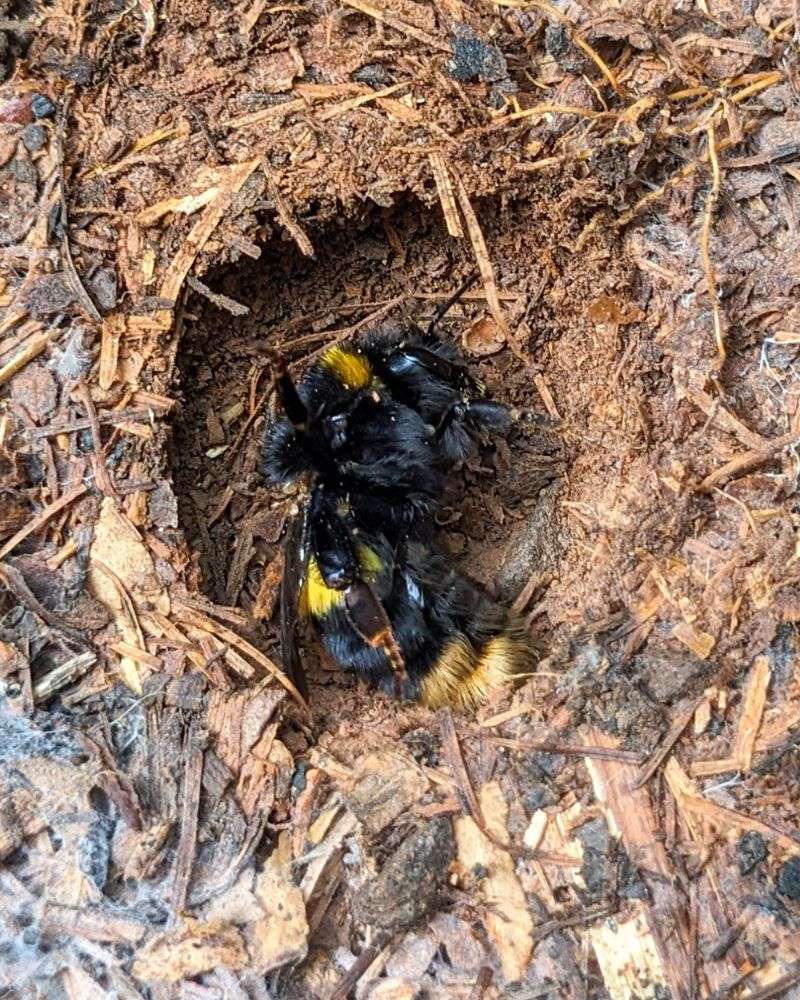
Leaves are not the only option. NC State Extension says mated queens overwinter in soil or logs, roughly 2 to 5 inches deep.
Another NC State Extension article lists shelter beneath stones or leaves, in logs, or in soil.
That means a queen may be under the surface rather than sitting in loose leaves. A leaf layer can be part of the picture, but soil, rotting wood, and other sheltered ground may matter just as much.
One of the clearest looks at this comes from California, not North Carolina. In a 2019 field study of western bumblebee species, researchers found 10 queens beneath cypress litter, right where decomposed litter met mineral soil.
That study shows what is possible, but it does not tell us where queens settle in Piedmont, Coastal Plain, or mountain yards. Different species and different landscapes can behave differently.
The takeaway is to protect variety. Undisturbed ground cover, a small brush or log pile, and some untilled soil all offer potential shelter.
Do not assume every bed edge hosts a queen, only that varied, quiet, sheltered ground gives them more options than a bare, tidy yard.
Keep a patchwork of leaf cover
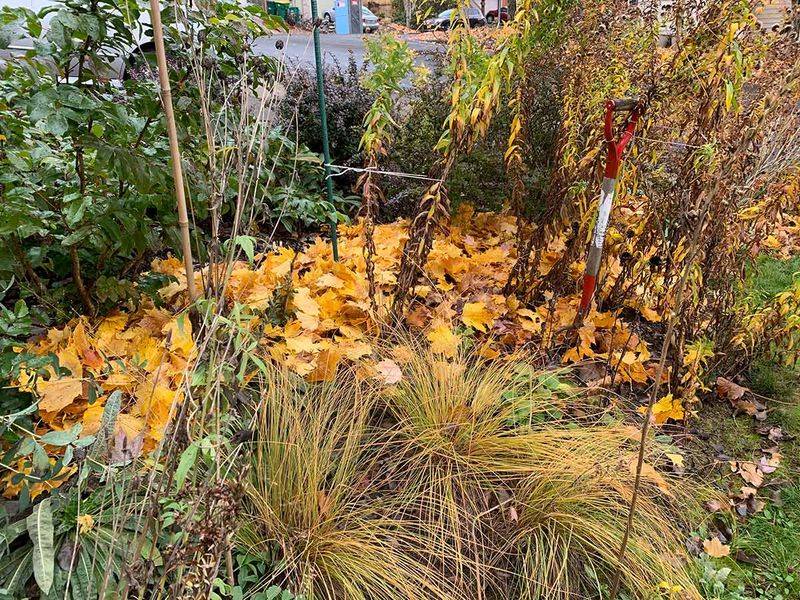
A middle path works well for most yards. Leave some leaves where they can rest undisturbed, and clear them elsewhere.
New Hanover County Cooperative Extension recommends managing leaves as a patchwork, not leaving them everywhere.
Good spots for leaf patches include the ground under shrubs and trees, and along bed edges that are out of the way. Skip tilling or digging in those patches, since that disturbs both the leaves and the soil beneath.
Cover like this also feeds the soil as it breaks down.
Why bother? A 2025 study of pesticide-free yards in Maryland found that removing autumn leaves cut spring emergence by 17% overall.
That number covered the groups it measured together: moths and butterflies, beetles, spiders, flies, and parasitic wasps. It was not a count of bumblebee queens, so do not read it as a queen loss rate.
It does show that leaf litter shelters many small animals.
The USDA and Xerces guidance also asks gardeners to hold off on early raking and mowing.
There is no single layout that fits every yard. A small townhouse lot might keep one patch beneath a crape myrtle, while a larger lot might set aside a few corners.
Start small and see what works for you.
Clear leaves where they create a real problem
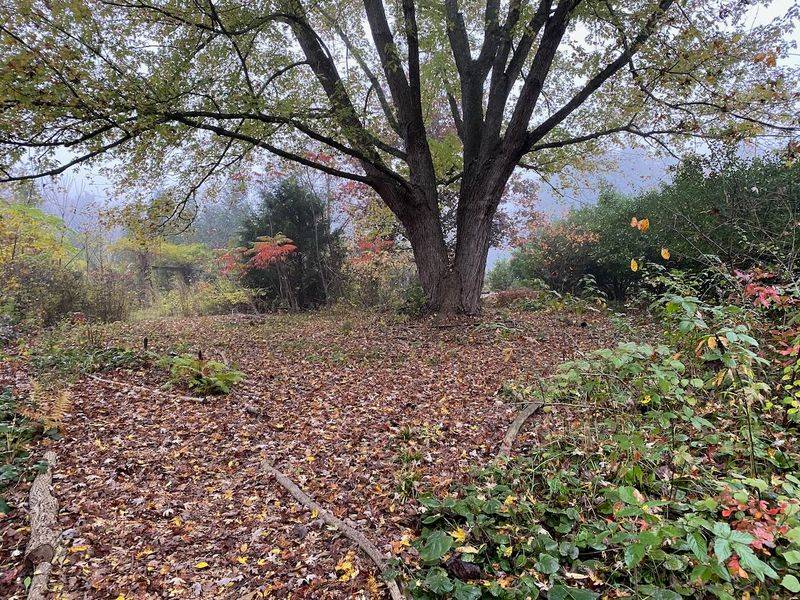
Some leaves really do need to go. Rake them off walkways, where wet leaves get slippery, and out of storm drains so water can flow.
Heavy leaf cover can also smother turf, so clear thick layers off the lawn. New Hanover County Extension supports this selective approach.
Disease is another good reason. If your roses, hollies, or other ornamentals have had leaf spot or similar trouble, remove that plant material instead of leaving it beneath the plants.
Lee County Cooperative Extension advises removing diseased tissue and says doing so selectively need not undermine pollinator conservation across the whole garden.
Ticks are the other worry for many of us. CDC guidance lists leaf litter removal among the yard measures that reduce blacklegged tick habitat.
That is a real tradeoff with keeping insect cover.
The way through is to match the effort to how you use the space. Clear leaves around the house, along paths, near play areas, and at lawn edges where people and pets spend time.
A quiet bed at the back of the yard that nobody walks through can keep its leaves. Having a few reasons to rake does not mean every bed needs it.
Leave selected refuges undisturbed
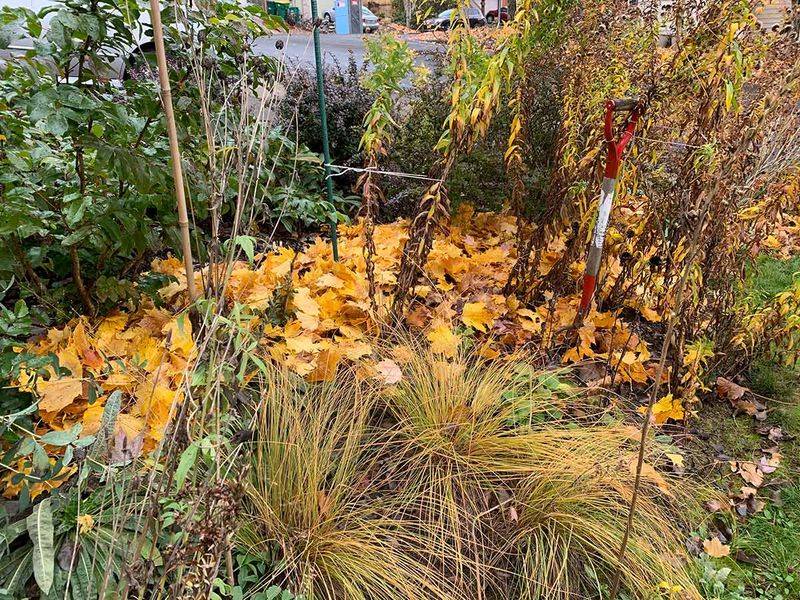
This fall, walk your yard and pick two or three spots worth leaving alone, such as the ground under a shrub or a quiet corner of a bed. Rake the paths, drains, lawn, and any tick-prone or diseased areas as needed, and skip the rest.
Extension guidance backs this patchwork idea, and no one can promise where a queen will settle.
A few quiet patches may be all a sleeping queen needs from you.