
Brown Peace Lily Tips: What to Check Before Changing How You Water
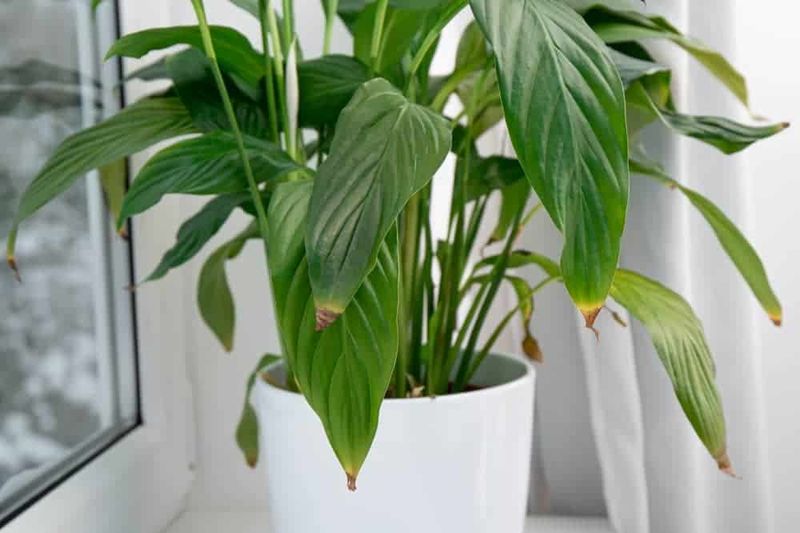
Seeing brown tips on your peace lily can make your stomach drop. It is easy to blame yourself and start watering more, or less, right away.
But those crispy edges are a clue that something is off, and many different things can cause them. A few simple checks can help you find the real reason before you change anything.
Brown tips are a clue, not a watering diagnosis
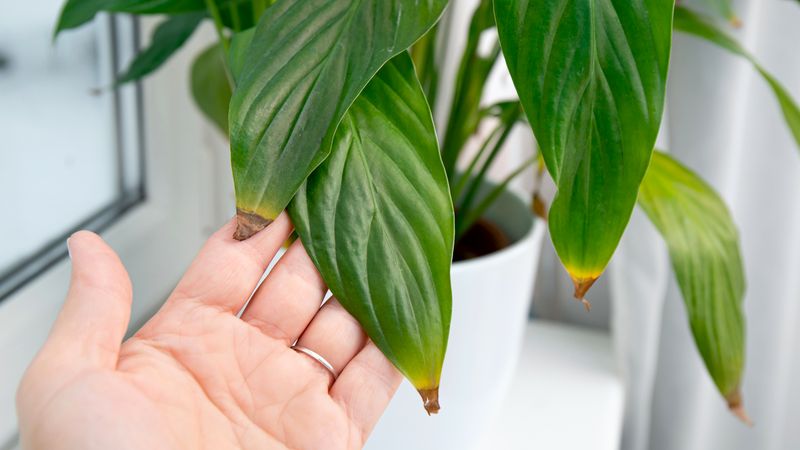
Crispy brown edges on a peace lily look like a loud alarm, but they are a quiet, vague signal. They show up with several different problems, and the tips alone cannot tell you whether the plant needs more water or less.
Extension sources list a handful of look-alike causes. LSU AgCenter points to things like severe drying between waterings, soil that stays soggy, and low humidity.
Too much fertilizer or dissolved salts in the mix can also burn the tips, and so can low light.
There is one more suspect that is specific to this plant. Maryland Extension notes that peace lilies may be sensitive to fluoride.
Browning can fit with that, but it does not prove it, because the same brown edge can come from any of the causes above.
The NC State Extension profile also warns that excess fertilizer and salt buildup can harm tips and roots. So no single cause deserves the automatic blame, and that includes your watering habits.
The better plan is to treat the brown tips like a detective treats a clue. Look at the soil, the pot, the light, the air, and the water you use.
The next sections walk through those checks one at a time, so you can fix the real problem instead of guessing.
When should you water?
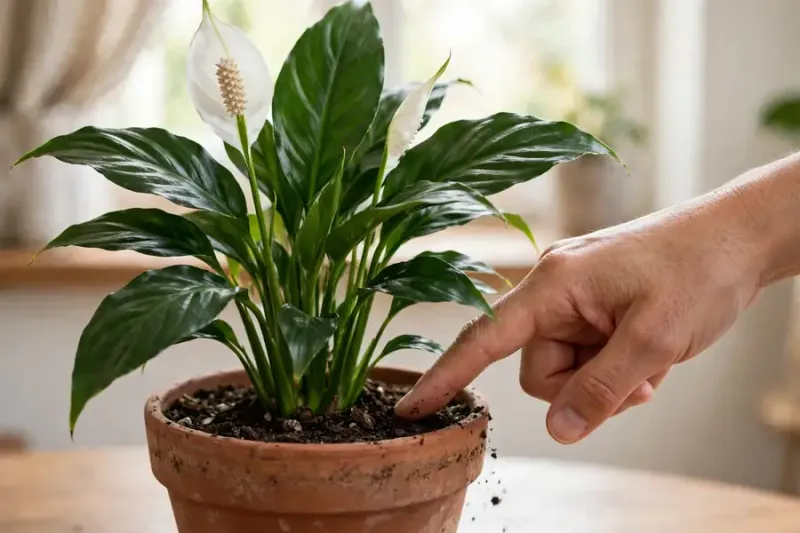
Your potting mix is a better guide than your calendar. A simple test is to push a finger into the soil.
A recent NC Extension answer suggests watering when the top 1 to 2 inches feel dry.
The goal is a mix that feels moist but not soggy. NC State Extension advises letting it dry a bit between waterings rather than keeping it wet all the time.
Mud-like soil that never dries is a problem, and so is a pot that turns bone dry.
Peace lilies do droop when thirsty, which tempts people to use wilting as a signal. Try not to rely on it.
LSU AgCenter lists severe drying as one possible reason for brown tips, so regular big droops are a habit worth breaking.
There is no magic number of days that fits every home. WSU Extension makes clear that needs shift with conditions.
Pot size, light, temperature, humidity, season, and how fast the plant is growing all change how quickly the mix dries out.
A plant in a small pot by a sunny window may need a drink twice as often as a big one in a dim corner. Check your own plant for a couple of weeks and you will learn its pattern.
That pattern beats any schedule you read online.
A thorough drink still needs an exit
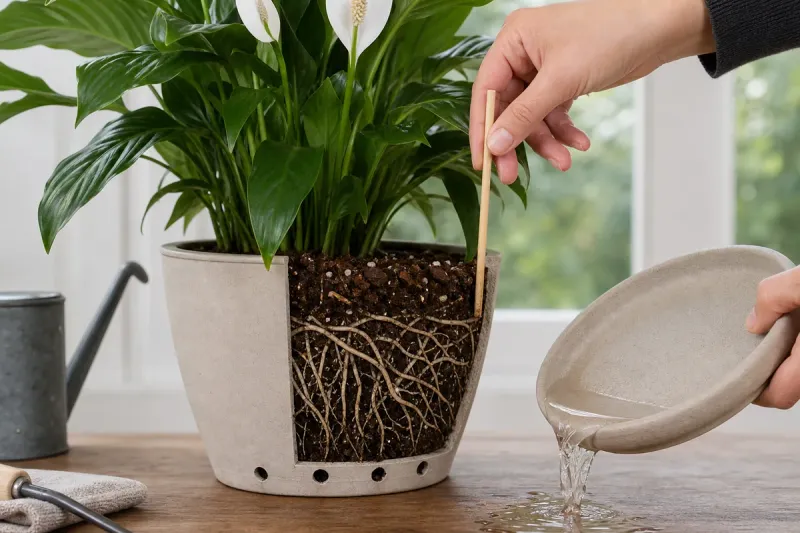
Once you decide it is time to water, how you do it matters. Pour slowly until the whole root ball is wet, then stop and let the extra water run out.
A quick splash on top can leave dry pockets deeper in the pot.
The NC Extension guidance fits this approach: wet the mix well and let the excess drain. Setting the pot in the sink for a few minutes makes this easy.
Next, check the container itself. It needs working drainage holes, and the holes should not be clogged with roots or soil.
After the water stops dripping, empty the saucer or cache pot so the plant is not left sitting in drained water.
Good drainage does two jobs. It keeps the mix from staying saturated, which roots dislike.
It can also help carry soluble salts out of the soil, as Maryland Extension explains in its guide to mineral and fertilizer deposits.
Drainage does not mean the plant should stay wet. The NC State Extension goal is still moist, not soggy.
Think of it as a full drink followed by a clear exit for the leftovers.
Salt buildup can burn the edges
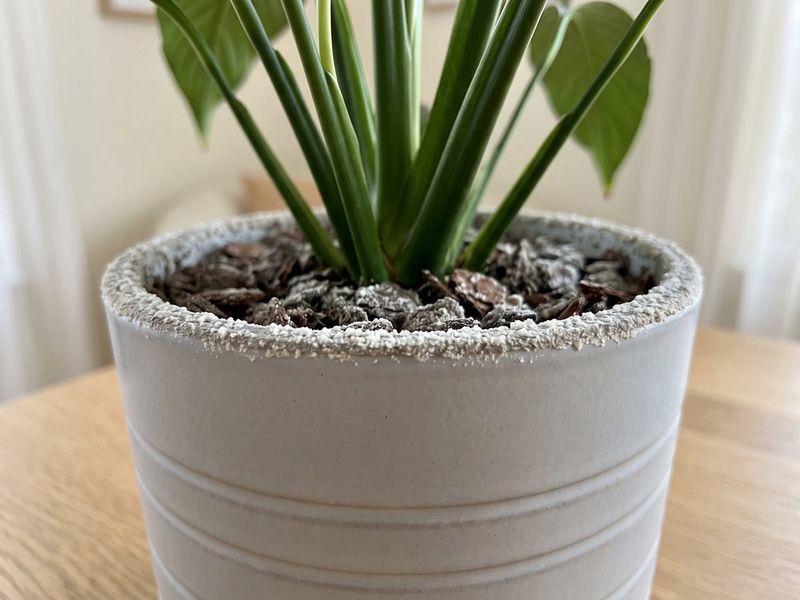
Salts can sneak up on a houseplant. Fertilizer and minerals in water stay behind in the pot as the water evaporates or gets used, and over time they can pile up.
NC State Extension warns that too much fertilizer and salt buildup can burn peace lily tips and roots.
Look for clues. A white crust on the soil surface or around the pot rim is a common sign.
So is a history of frequent fertilizer or watering with hard or softened water.
Keep in mind that these are hints, not proof. A crusty pot can sit under a plant whose tips are browning for a different reason, such as dry air or low light.
If you suspect buildup, Maryland Extension suggests flushing the pot from above with several volumes of low-mineral water. Its general houseplant advice is at least three times the pot volume.
Then let the pot drain completely before it goes back on its saucer.
Flushing is not a default fix for every brown tip. Use it when you see signs of buildup, and hold off on fertilizer for a while afterward.
If the crust is gone and the soil is fine, look elsewhere for the cause.
Could your water be part of it?
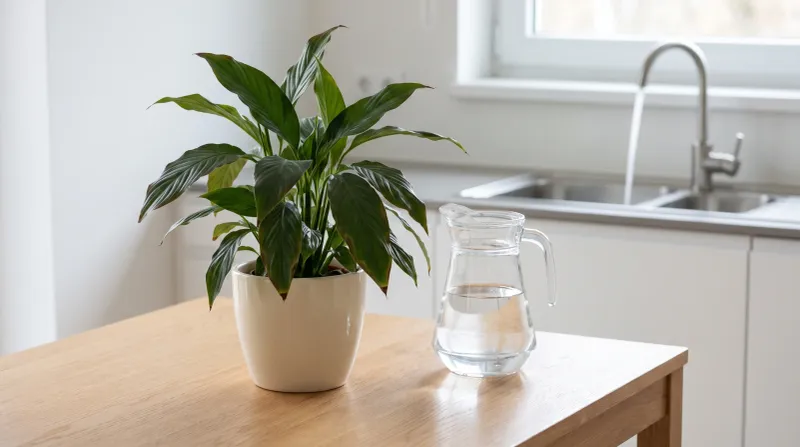
Water quality is one possibility worth thinking about. WSU Extension identifies peace lilies as sensitive to fluoride, and Maryland Extension raises it too.
That makes it a plausible concern, but not a verdict.
Brown tips do not tell you fluoride is the cause. Tap water differs from town to town, and Missouri Extension says ordinary tap or well water is usually fine for plants, while still listing peace lily tips as a possible fluoride symptom.
It also helps to keep the different water ingredients apart. Free chlorine, chloramine, fluoride, hardness minerals, and sodium from softened water are not the same thing.
Each one behaves differently.
That is why letting water sit out is not a cure-all. Standing can let free chlorine dissipate, but EPA fluoride guidance says boiling does not remove fluoride and typical charcoal filters do not either.
Distillation and reverse osmosis can reduce it. EPA also notes standing does not remove monochloramine.
Some gardeners switch to distilled or purified water. If you try it, know that prolonged use may leach nutrients from the mix, so it is not a necessary or universal fix.
Treat it as an experiment, not a promise.
Check the whole setup before changing the routine
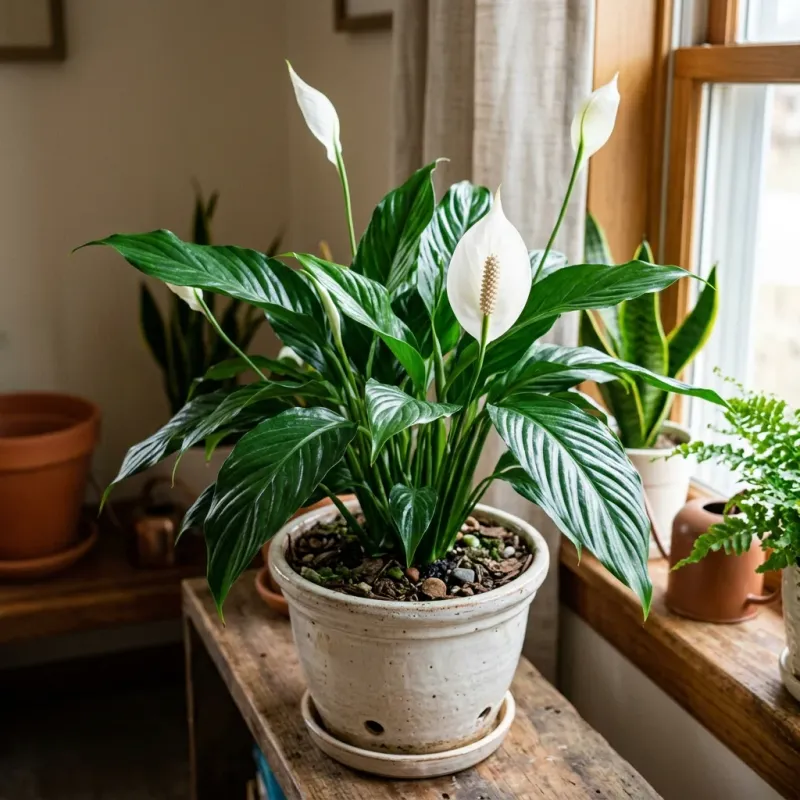
Work through the checks in order, and change only one thing at a time. First, feel the mix.
Is it severely dry or stuck in sogginess?
Second, confirm the pot drains and the saucer is empty. Third, look for white crust and think about how often you fertilize.
Fourth, consider the water you use and the room itself. LSU AgCenter lists humidity and light among the possible contributors, and Maryland Extension adds water quality to the list.
The NC State plant profile is a handy reference for the plant’s basic needs.
Pick the check that turned up something odd and fix just that. Then give the plant a few weeks.
Old brown tips will not turn green again, so judge progress by the new leaves.
Brown tips are a reason to look closer, not a reason to panic. Your peace lily is asking a question, and the answer is rarely written on the leaf itself.