
Got Paperwhite Bulbs for the Holidays? Plant Them This Way for Blooms in About Six Weeks
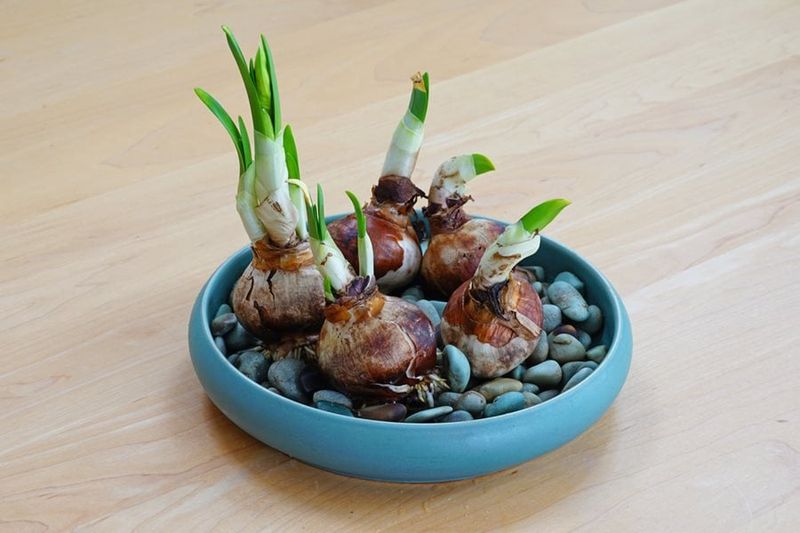
Paperwhite bulbs are one of the easiest ways to get fresh flowers on your table in winter. But many gardeners end up with tall, floppy stems that tip over right when guests arrive.
A few simple choices at the start can make a big difference. Here is how to plan the timing and set up your bulbs so they have the best shot at looking good for the holidays.
Count Back From the Holiday, but Leave Room for Variation
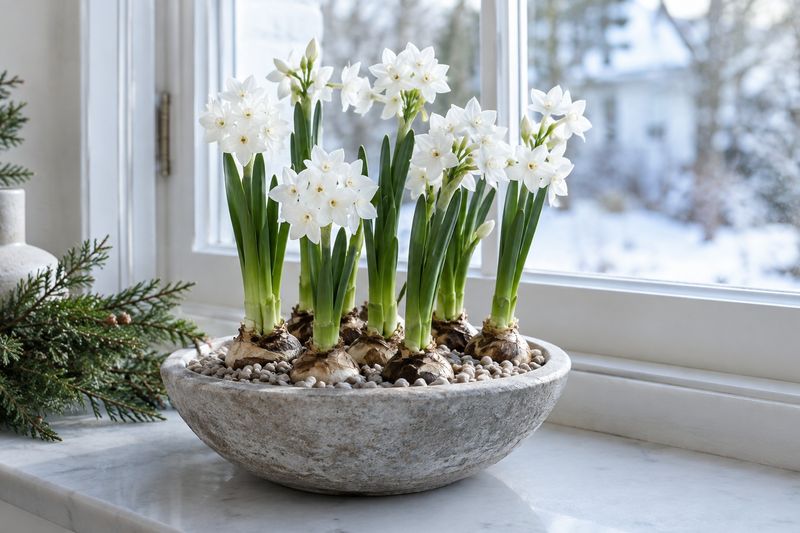
Grab a calendar and work backward from the day you want flowers. For a December 25, 2026 display, six weeks earlier lands on November 13.
Treat that as a planning date, not a deadline, and start sooner if you can.
Here is why the cushion matters. Published estimates do not agree.
University of Wisconsin Extension reports roughly three to five weeks, while Colorado State University Extension gives four to eight weeks. Your variety and the conditions in your home can also nudge bloom time earlier or later.
A smart approach is to plant your first batch in early November. If you want to be safe, set up a second pot a week or two later.
That way you are more likely to have something in flower around the date you care about, even if one pot runs fast or slow.
Timing is only half the story. How you handle temperature, water, and light in the early weeks can also affect how tall and sturdy the stems get, so the next sections walk through each step.
Paperwhites Skip a Long Chill, Not Temperature Management
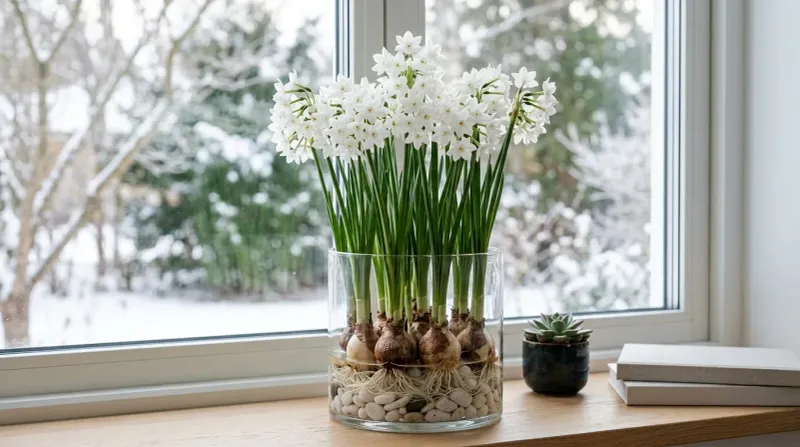
Many forced bulbs, like tulips and hyacinths, need weeks of cold storage before they will bloom. Paperwhites are different.
They can be forced without that long chilling period, which is why they are so popular for quick indoor color.
That does not mean temperature stops mattering. Forcing guidance from Iowa State University Extension still calls for a cool rooting period before the bulbs move into brighter, warmer conditions.
University of Wisconsin Extension also describes paperwhites as needing no cold treatment, yet forcing them is still a managed process.
Think of it this way. A long chill is a requirement for some bulbs.
A short, cool, dim start for paperwhites is a helpful step that can influence growth and timing, though it will not guarantee a result.
Before you worry about the cool spot, decide how you will pot the bulbs. Your setup controls how the bulbs sit and how much moisture they get, and both affect rooting.
Choose Pebbles or Potting Soil for the Display
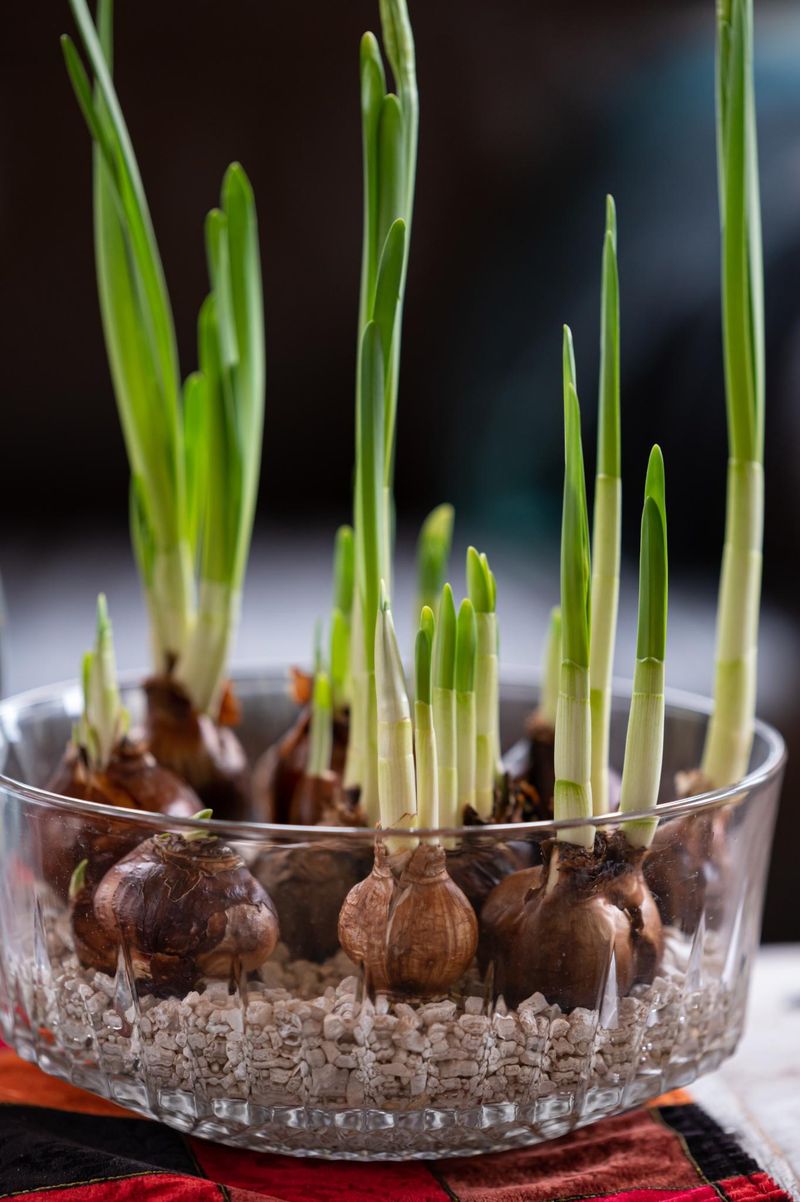
You have two good options, and either one can work. Pebbles look tidy in glass and let you watch the roots grow.
Potting soil gives roots a more natural home and can be easier to keep consistent.
For pebbles, Iowa State University Extension describes setting bulbs on gravel or stones with the pointed tips showing. Add water so it reaches just the base of the bulbs.
Do not cover the bulbs, because bulbs sitting in water can rot, a point also made by University of Wisconsin Extension.
For soil, choose a pot with drainage holes and fill it with moist, well-drained potting mix. Nestle the bulbs in with the tips exposed.
Colorado State University Extension notes that soil should stay moist, but not waterlogged.
Pack the bulbs fairly close together for a full look, but leave them a little breathing room. Once they are set up, check the water level or soil every few days, then move the whole container to its cool, dim rooting spot.
Give the Bulbs a Cool, Dim Rooting Period
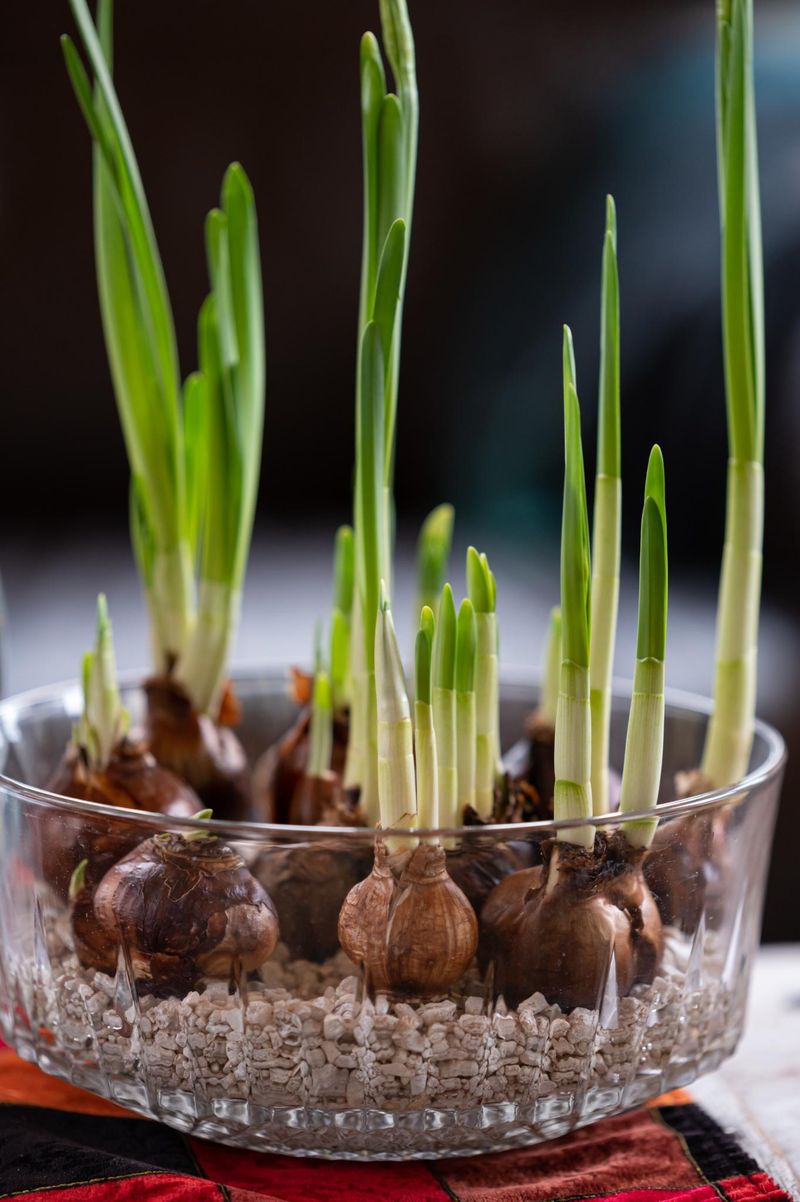
Once your bulbs are planted, find a spot that stays cool and dim. A common method is about 45 to 50°F for roughly two to three weeks, which gives roots time to develop.
An unheated room, a cool basement, or a protected garage can work, as long as it does not freeze.
Guidance from Iowa State University Extension and Colorado State University Extension supports starting bulbs this way instead of in a warm room, where growth can turn leggy.
Keep expectations realistic. This stage is part of the forcing process and a way to manage growth.
It does not lock in a bloom date, and it will not stop every stem from flopping.
Check the pots every few days. Top up water in pebble dishes, or keep the soil lightly damp.
When you see healthy roots and green shoots rising, you are ready to bring the bulbs into the light.
Move Developing Shoots Into Brighter Conditions
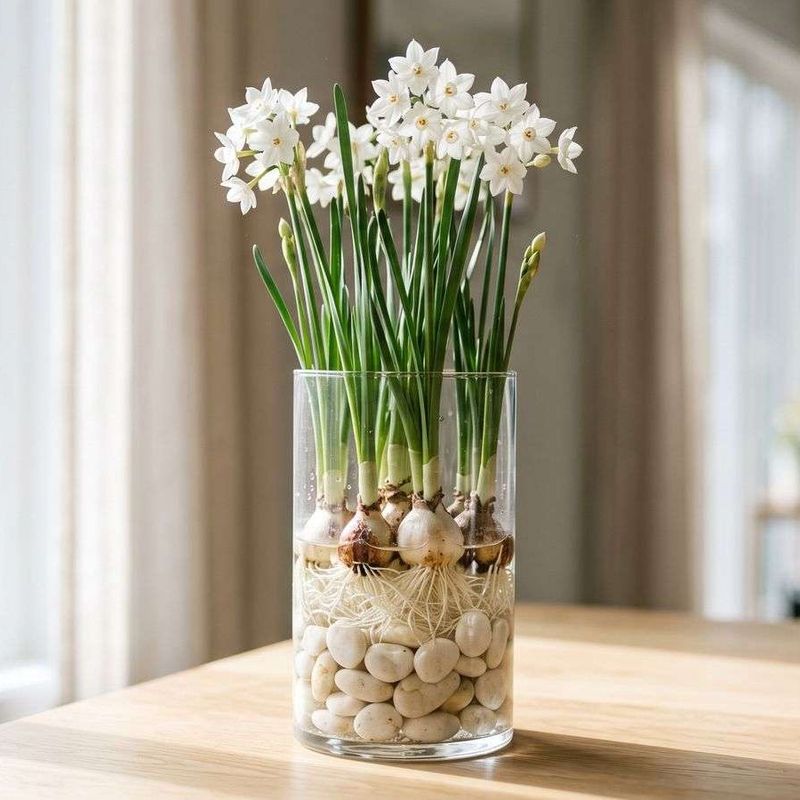
Leggy, flopping stems are the classic paperwhite problem. One known trigger is starting bulbs in a warm room, which can push fast, stretched growth.
That is why the cool start comes first, and the move to brighter conditions comes after.
Sources differ on when to make the switch. Iowa State University Extension recommends moving shoots to 60 to 70°F once they reach about 3 inches.
Colorado State University Extension suggests bright indirect light after shoots reach 1 to 2 inches. Neither number is universal, so use them as a range and watch your plants.
Even with good care, paperwhites can grow tall. Keep a few thin stakes and soft twine handy, and loosely support stems before they lean.
Do not blame light alone if they tip over.
Some gardeners try diluted alcohol to shorten stems. A Cornell study tested it on ‘Ziva’ paperwhites in pebble culture, and 1 to 5 percent ethanol in the root zone reduced growth, while beer and wine caused unhealthy results.
It is optional, and other varieties or setups may respond differently.
Keep Paperwhites Away From Pets That Might Chew Them
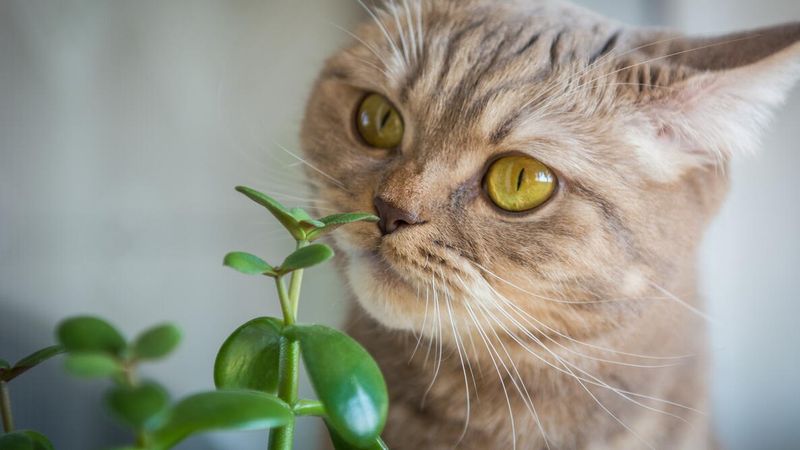
Holiday flowers are lovely, but paperwhites need a safe spot. The ASPCA lists narcissus as toxic to dogs, cats, and horses, and it identifies the bulbs as the most poisonous part.
If you have a pet that likes to chew plants, keep the display and any loose bulbs well out of reach. That includes bulbs waiting to be planted and any pots resting in a cool spot at floor level.
If you think a pet has eaten any part of a paperwhite, contact a veterinarian or a poison control service right away.
Know What to Expect After Flowering
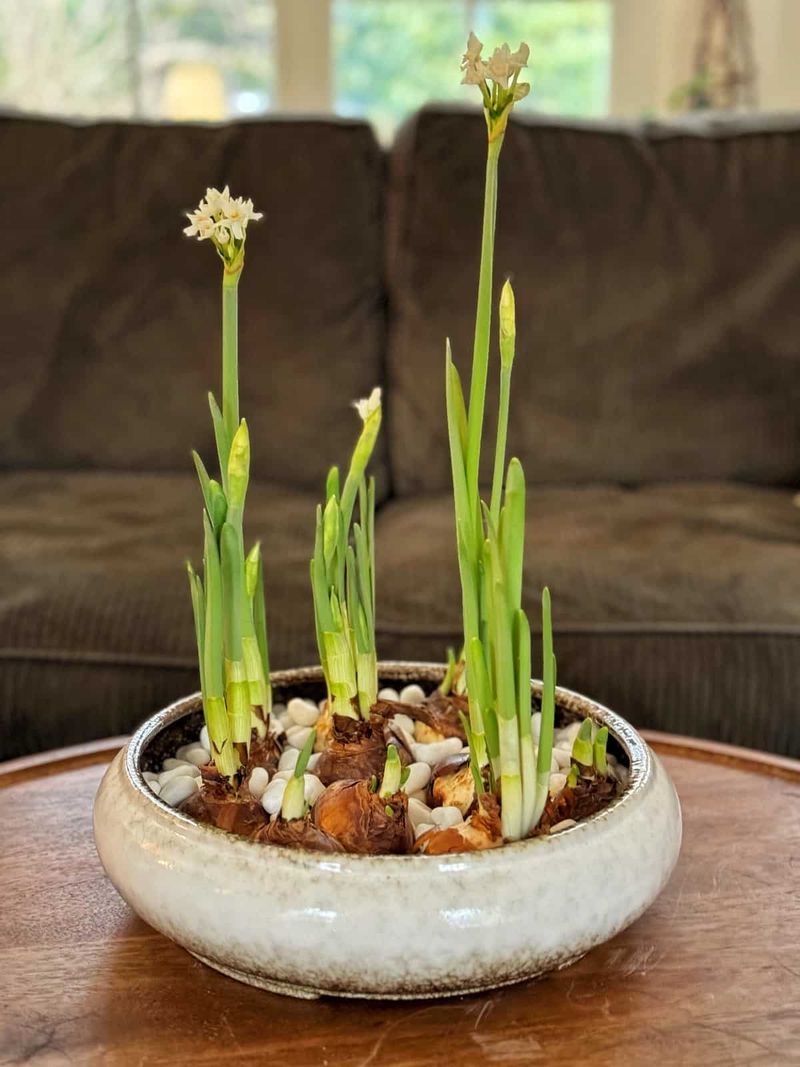
Forcing paperwhites does not require fertilizer, so you can skip it while you are growing them for the display. That is a statement about forcing only, not a rule for what to do afterward.
When the flowers fade, plan for the bulbs to be finished. Colorado State University Extension advises discarding bulbs after flowering.
Iowa State University Extension says paperwhites are not winter-hardy outdoors, so planting them in the garden is not a dependable plan.
Think of them as a seasonal show, and enjoy every week of it. Next year, a fresh batch and a calendar date are all you need to start again.