
10 Plants That Hold North Carolina Slopes Together When Heavy Rain Starts Washing Your Yard Away
One hard summer storm can carve a muddy gully right through the middle of your North Carolina yard. Bare slopes lose soil fast, and that runoff carries mulch, seeds, and even small creatures right down to the street.
The good news is that native plants with deep, grabbing roots can lock that soil in place while feeding birds, bees, and box turtles. Here are ten local heroes that keep your hillside where it belongs.
1. River Birch (Betula nigra)
Picture the bottom of a slope where water pools after every storm and the grass just gives up. River birch was practically built for that spot.
It grows wild along streams all over North Carolina, so soggy feet do not bother it one bit.
Its wide, spreading root system knits together loose, wet soil and helps slow water as it rushes downhill. The tree grows quickly too, which matters when you are watching your yard slide away each spring.
Many homeowners notice a real difference within a few seasons.
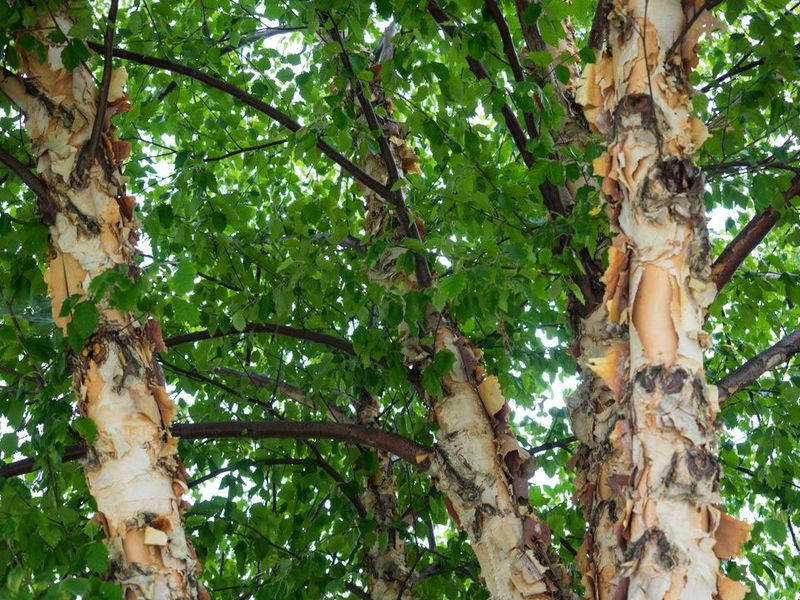
Then there is the bark. It peels in curly sheets of cream, salmon, and cinnamon, giving you something pretty to look at even in January.
Birds like goldfinches and pine siskins also pick at the seeds.
Give it room, since mature trees can reach 40 to 70 feet. Plant it at least 20 feet from your house and away from septic lines.
2. Catawba Rhododendron (Rhododendron catawbiense)
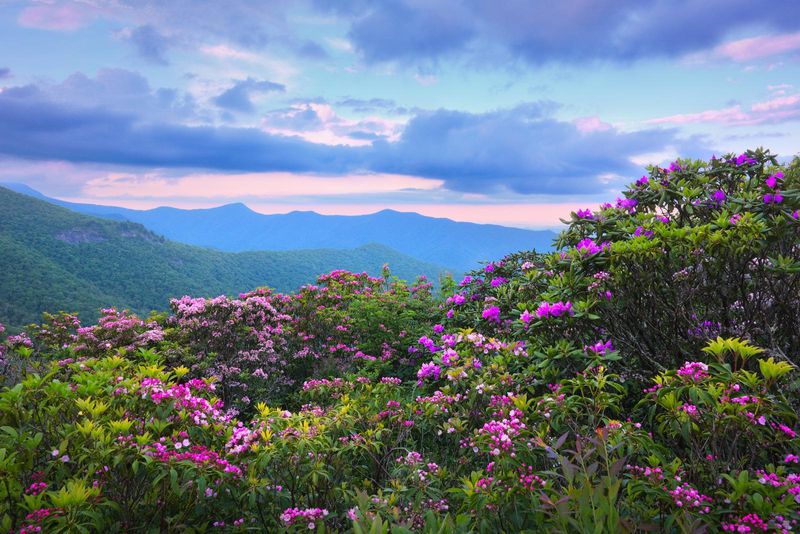
Anyone who has driven the Blue Ridge Parkway in June knows the purple glow of wild rhododendron on steep mountainsides. Those slopes stay put for a reason.
The shrubs form thick tangles of roots that grip acidic, rocky mountain soil like a fist.
For mountain homeowners, native rhododendron is a natural fit for a shady bank under oaks or pines. It stays green all winter, so your slope never sits bare when cold rains arrive.
The dense branches also shelter songbirds from wind and hawks.
Skip the flashy non-native hybrids at big box stores when you can. Look for Catawba rhododendron or rosebay rhododendron, both true NC natives.
Mulch with pine needles or shredded leaves and water during the first dry summer. After that, it mostly takes care of itself.
3. Mountain Laurel (Kalmia latifolia)
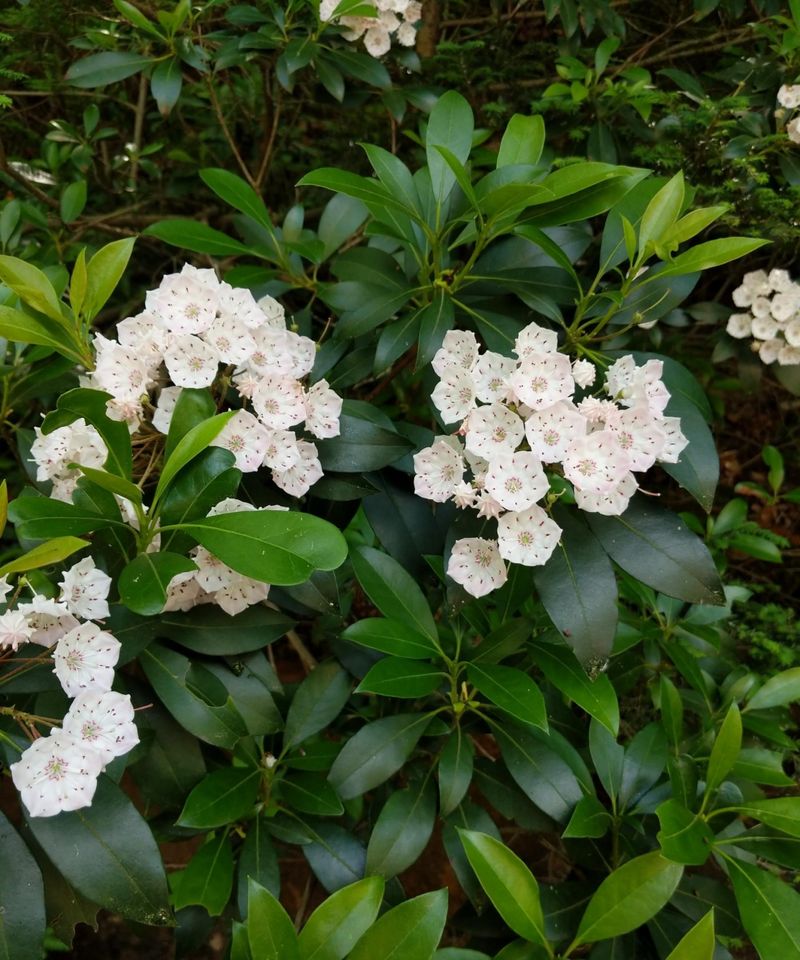
Fun fact: each mountain laurel flower has tiny spring-loaded stamens that flick pollen onto visiting bees. It is like a little catapult hiding in every bloom.
Bumblebees are the main customers.
Beyond the cool trick, mountain laurel is tough. It handles dry, rocky, south-facing slopes that would bake most shrubs, and its dense root ball holds soil firmly in place.
You will find it everywhere from the mountains to parts of the Piedmont.
Plant it where you have acidic soil and some afternoon shade. Growth is slow, so tuck in a groundcover nearby for quick coverage while the laurel fills in.
One warning for families: all parts are toxic if eaten. Keep that in mind near play areas and pets.
4. Virginia Sweetspire (Itea virginica)
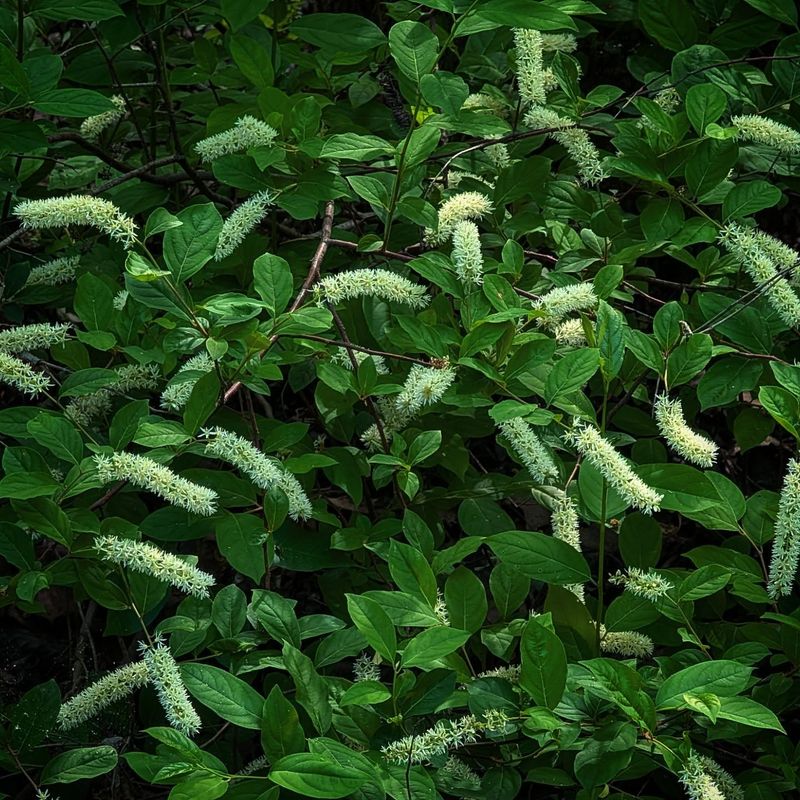
Ever notice a damp, sloped corner that stays muddy for days after rain? Virginia sweetspire might be the easiest fix you will ever plant there.
It handles wet soil, partial shade, and even short dry spells without complaint.
The magic is in how it spreads. Sweetspire sends up new stems from underground runners, slowly building a thicket that holds soil tighter every year.
On a slope, that is exactly the behavior you want.
In late spring, fragrant white flower spikes pull in native bees and butterflies. Come fall, the leaves turn ruby red and hang on well into winter.
It also makes a great swap for invasive privet or burning bush. Pull those out in fall and drop sweetspire right into their old spots.
5. Little Bluestem (Schizachyrium scoparium)
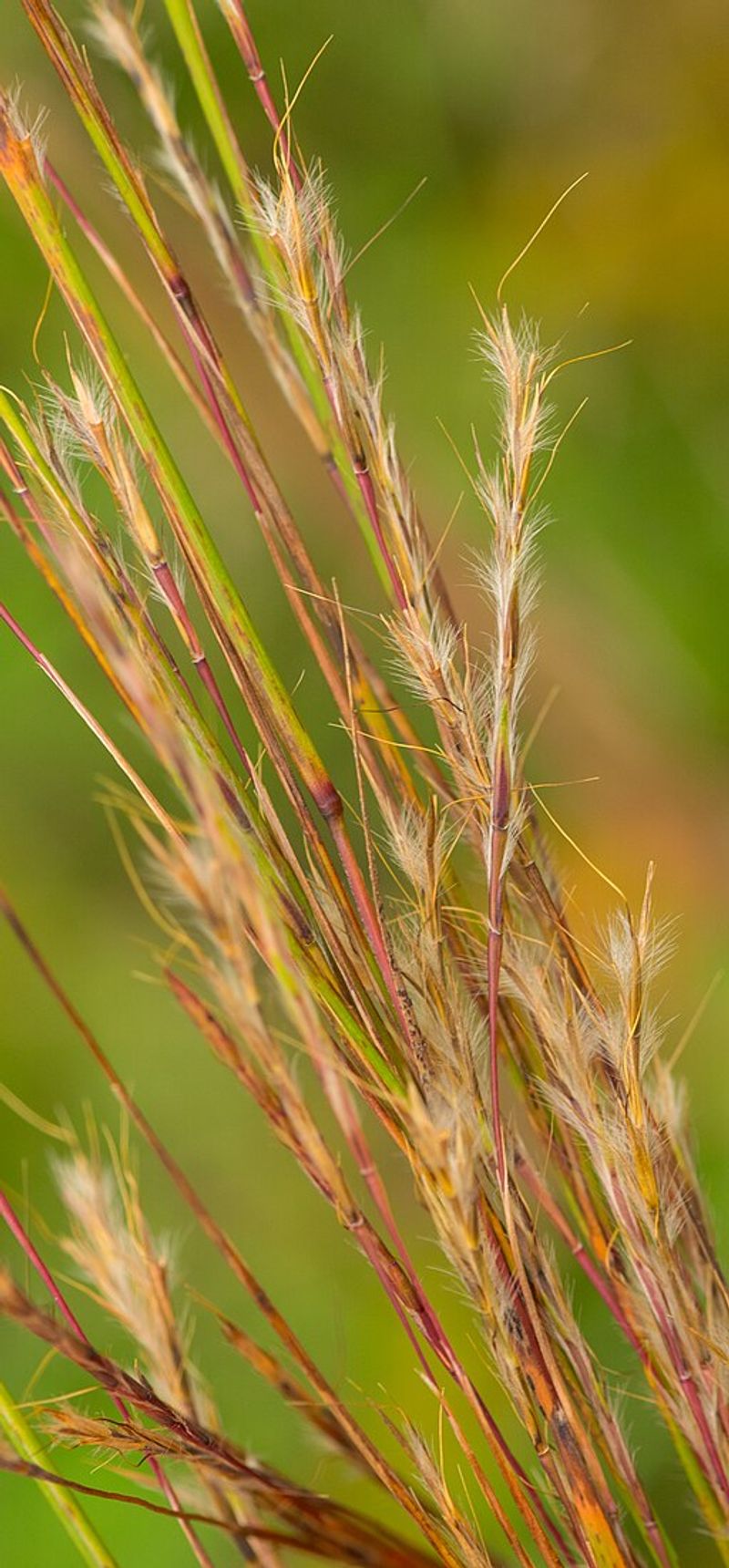
Above ground, little bluestem looks modest, just a knee-high clump of blue-green blades. Below ground is a different story.
Its roots can dive five feet or more, weaving a dense net that holds red Piedmont clay together through the worst downpours.
This native grass loves full sun and shrugs off drought once established. It is a strong pick for that hot, dry bank where turf grass keeps dying out and washing away.
Fall is when it really shows off, turning copper, orange, and wine red. The seed heads feed sparrows and juncos through winter, and the clumps give shelter to beneficial insects.
Leave the stems standing until late winter. Then cut them back before new growth starts in March.
6. Pink Muhly Grass (Muhlenbergia capillaris)
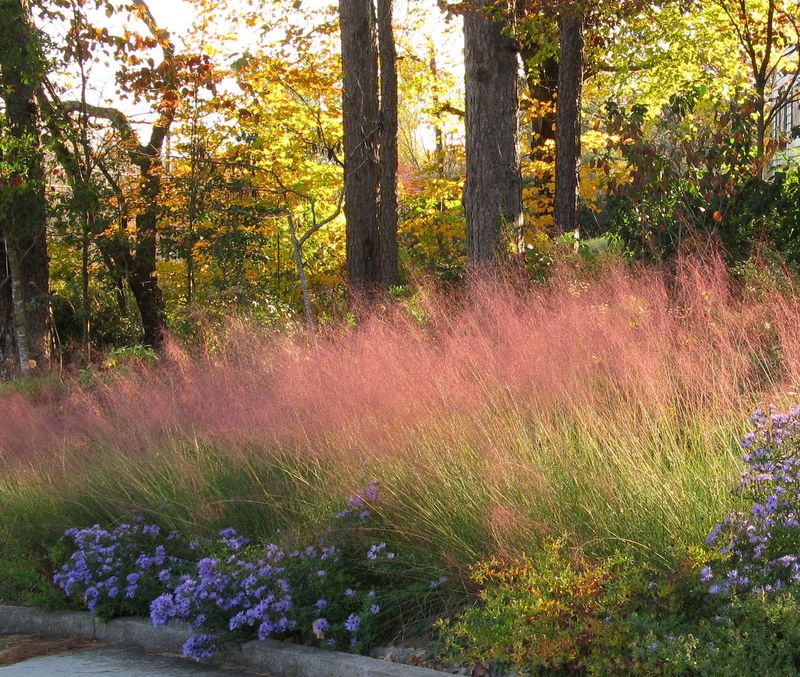
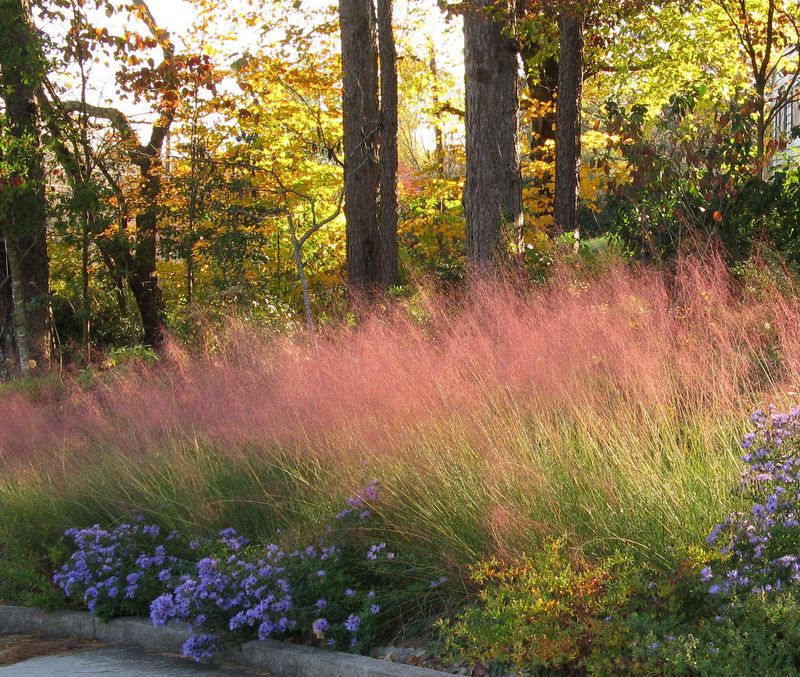
Neighbors will stop their cars in October. Pink muhly grass erupts into a cloud of rosy plumes that looks almost unreal in the evening light.
The beauty comes with real muscle. A tough, fibrous root system grips sandy coastal soil and Piedmont clay alike, making this a favorite for sunny slopes along driveways and front walks.
It handles salt spray, heat, and drought, so beach-town gardeners love it too.
Plant clumps about two to three feet apart in a staggered zigzag pattern across the slope. That layout catches water as it runs downhill instead of letting it race through open lanes.
Small critters like lizards and ground-nesting bees appreciate the cover. Trim old foliage back in late winter to keep it tidy.
7. Creeping Phlox (Phlox subulata)
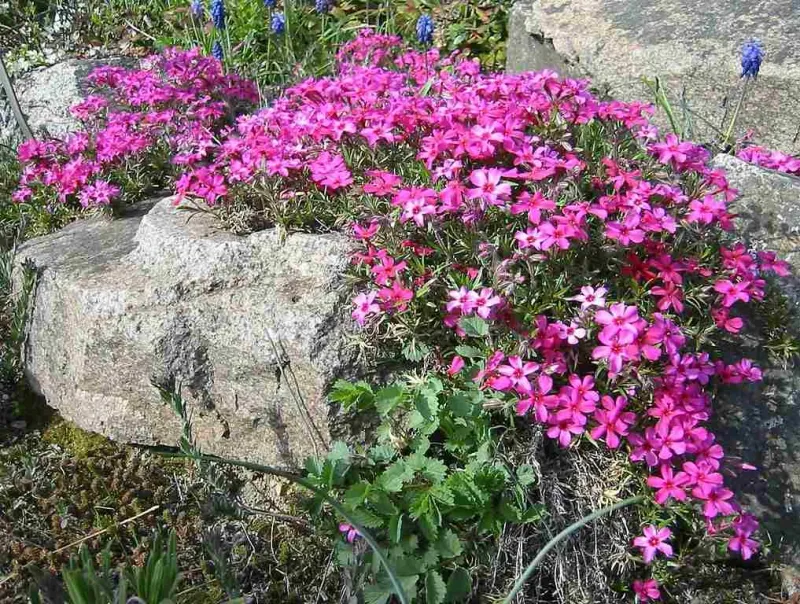
Spring arrives on North Carolina hillsides as a carpet of pink, lavender, and white. Creeping phlox, often called moss phlox, spreads into thick mats that cover bare dirt before weeds and rain can claim it.
Its needle-like evergreen leaves stay low and tight all year. Each stem roots where it touches the ground, so the mat gets stronger with time.
Sunny, well-drained slopes and rock walls are its favorite places. Early butterflies and native bees visit the blooms when little else is flowering yet.
Have shade instead? Try woodland phlox, Phlox divaricata, another native that thrives under trees.
Plant either type in spring or fall, spacing plants about a foot apart.
8. Allegheny Spurge (Pachysandra procumbens)
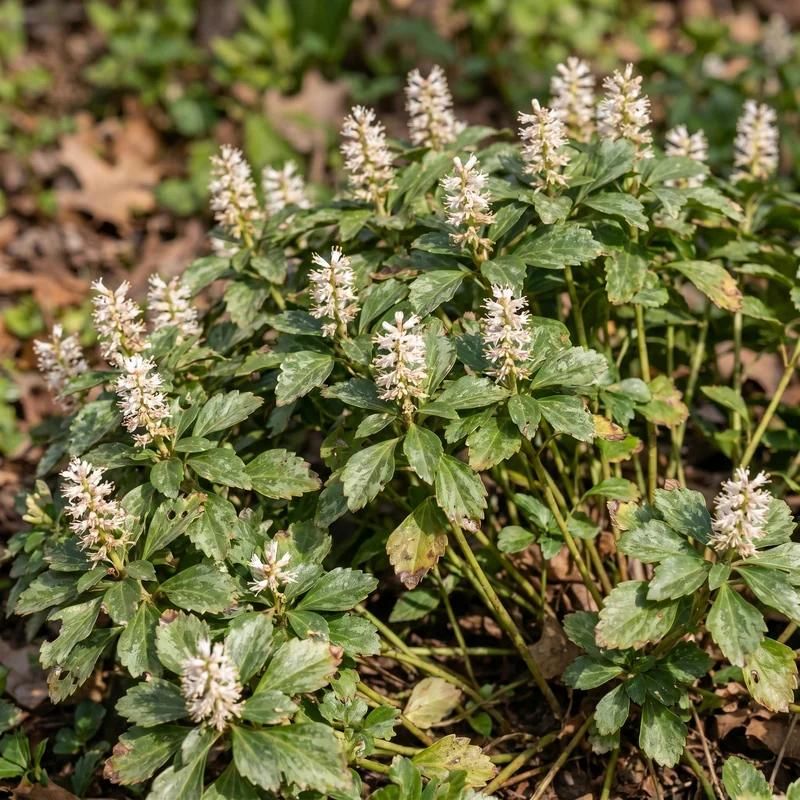
Here is a swap that does real good. Japanese pachysandra has covered countless shady NC slopes, but it spreads into woods and crowds out native wildflowers.
Allegheny spurge is the native cousin, and it deserves that spot instead.
It forms a low, dense mat of mottled leaves that holds soil under trees where grass refuses to grow. In early spring, fuzzy white bottlebrush flowers appear and attract early native bees.
Growth is slower than the invasive version, so be patient. Plant about a foot apart and keep leaf mulch around them while they settle in.
Removing Japanese pachysandra works best in fall or winter. Dig it out by the roots, bag it, and replant with spurge right away so bare soil does not wash downhill.
9. Pennsylvania Sedge and Eastern Woodland Sedge (Carex)
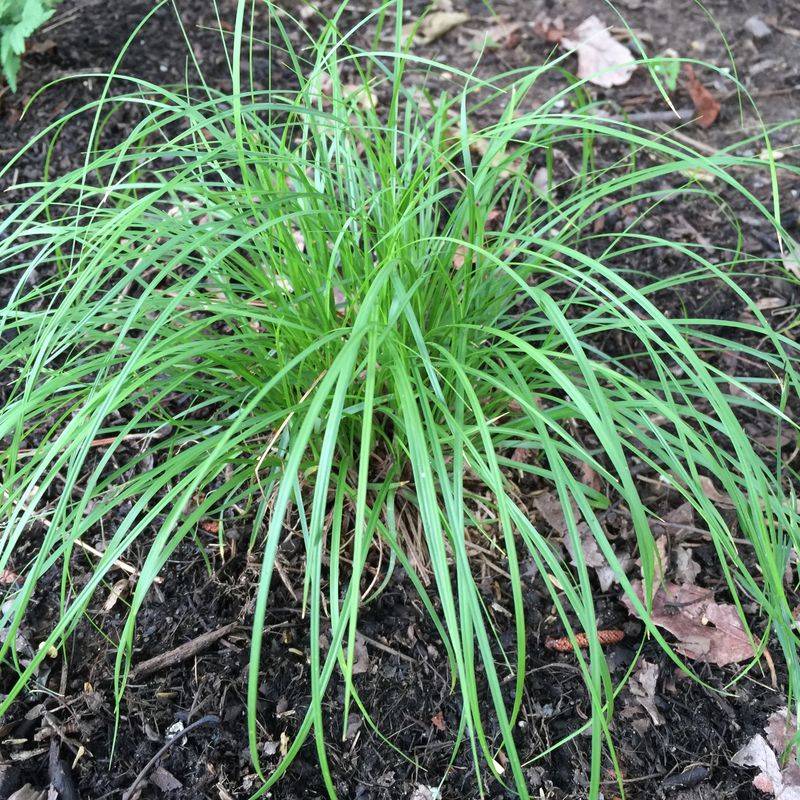
Think of sedges as the quiet workers of the slope. They look like soft, fine grass, but their roots form a dense web that grabs and holds soil in both sun and shade.
Pennsylvania sedge makes a lovely no-mow lawn under trees, staying under a foot tall. Eastern woodland sedge is even tougher, tolerating clay, compaction, and wet patches.
Both make smart choices for spots where turf keeps thinning out and washing away. Plant plugs about 8 to 12 inches apart, and they will knit together in a season or two.
Box turtles and ground-feeding birds like the sheltered cover sedges provide. Plus, you can skip most mowing, which keeps turtles safer during their spring wanderings.
10. Virginia Creeper (Parthenocissus quinquefolia)
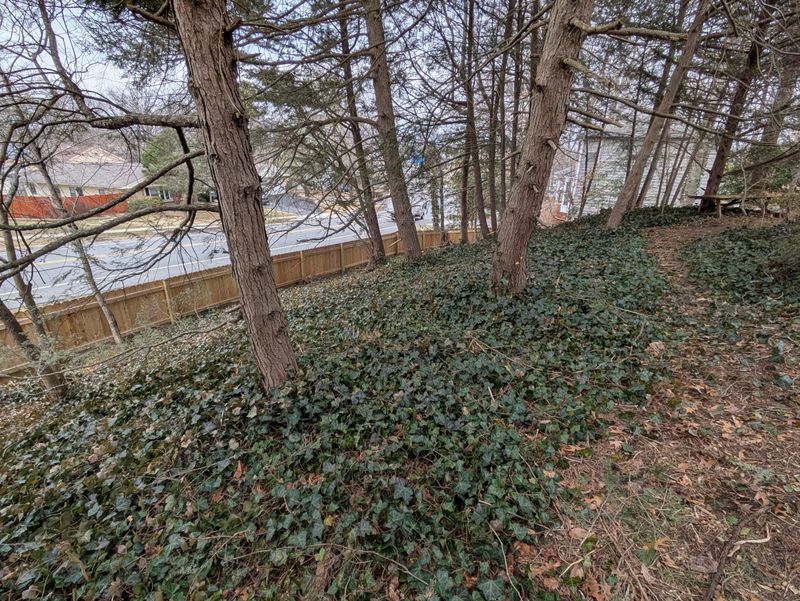
Got a steep, ugly bank you just want covered fast? Virginia creeper is your answer.
This native vine sprawls across the ground quickly, rooting as it goes and stitching loose soil together.
Do not confuse it with poison ivy. Creeper has five leaflets while poison ivy has three, so remember the old saying, leaves of three, let it be.
In fall the leaves turn blazing scarlet, and the dark blue berries feed bluebirds, mockingbirds, and woodpeckers. It also replaces invasive English ivy beautifully, offering the same coverage without strangling your trees.
Keep it on the ground and away from your siding, since it will happily climb anything. A quick trim once or twice a year keeps it in line.