
Your Spider Plant Is Telling You How It Wants To Be Watered – 17 Signs To Read (And How To Keep It Thriving For Years)
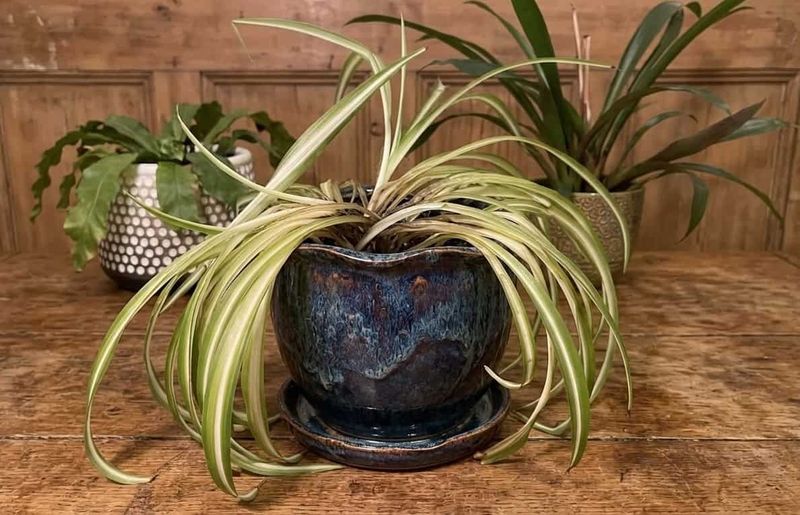
Your spider plant can’t talk, but it drops plenty of hints about how much water it really wants. A yellow leaf here, a crispy tip there, or a pot that feels light as a feather can all be clues.
Learning to read those signals is the difference between a plant that barely hangs on and one that fills your home with baby spiderettes for years. Here are 17 signs to watch for, plus simple fixes you can try today.
1. Yellowing Lower Leaves
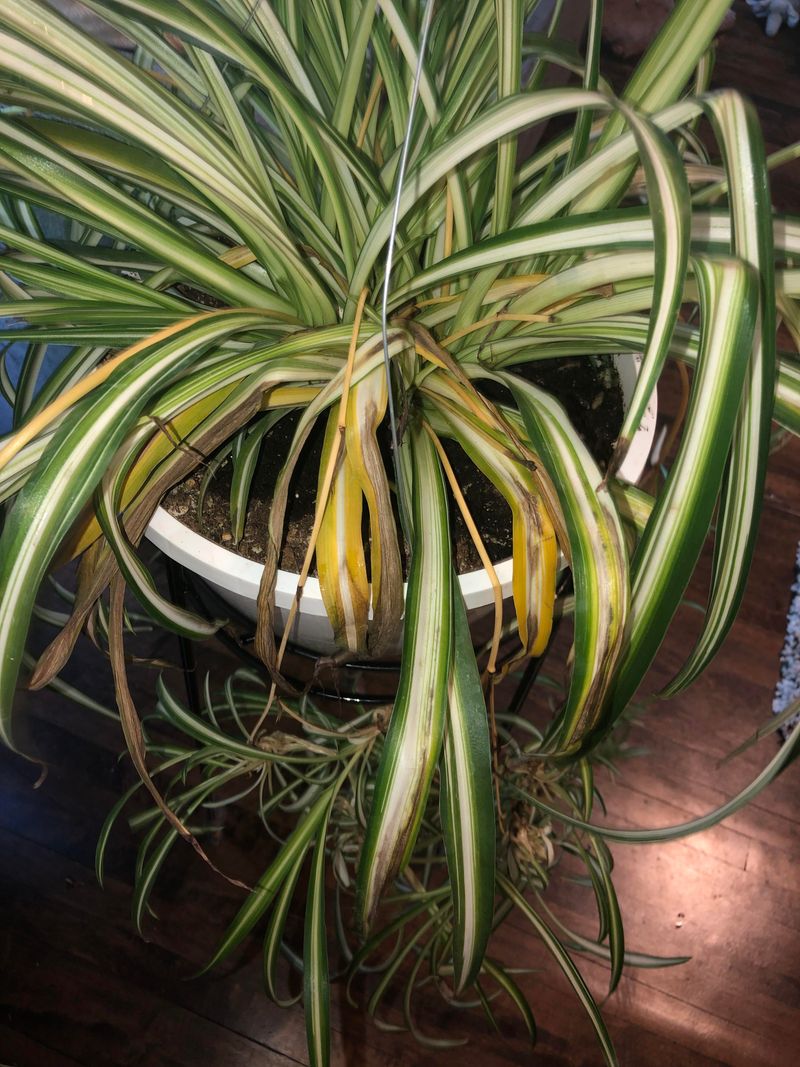
Older leaves near the base are usually the first to raise a flag when roots are sitting in too much water. If those bottom blades turn butter yellow and feel floppy, your spider plant is probably drowning a little.
Soggy soil squeezes out the air roots need, so they stop pulling up nutrients properly. The plant then sacrifices its oldest leaves first to save the newer growth in the center.
Hold off on watering until the top inch or two of soil feels dry. Snip the yellow leaves off at the base with clean scissors so the plant stops spending energy on them.
2. Drooping Leaves in Wet Soil
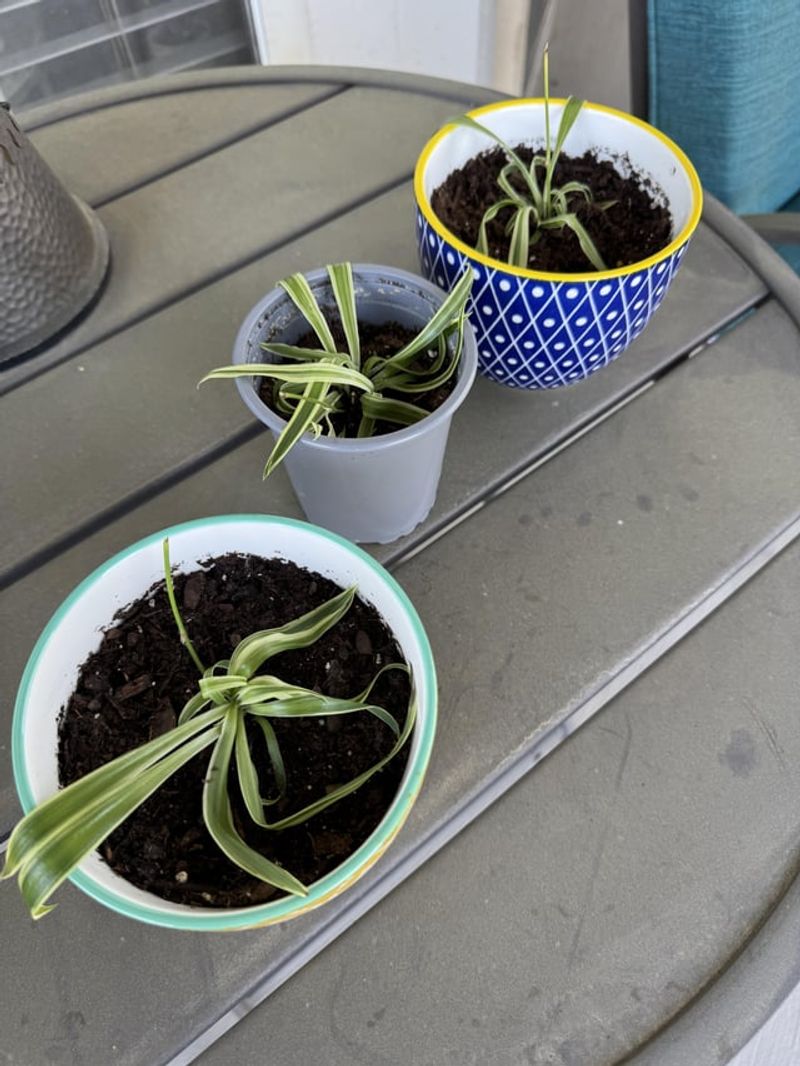
Here’s the confusing one. Your plant looks thirsty, so you water it, and it droops even more.
When soil stays wet for too long, roots get damaged and simply can’t move water up into the leaves anymore. The result looks exactly like dehydration, even though the pot is soaked.
Always poke a finger into the soil before reaching for the watering can. If it’s damp and the leaves still sag, stop watering completely and let things dry out.
If the wilting hangs on for more than a week, slide the plant out and check the roots.
3. Soft or Mushy Stems
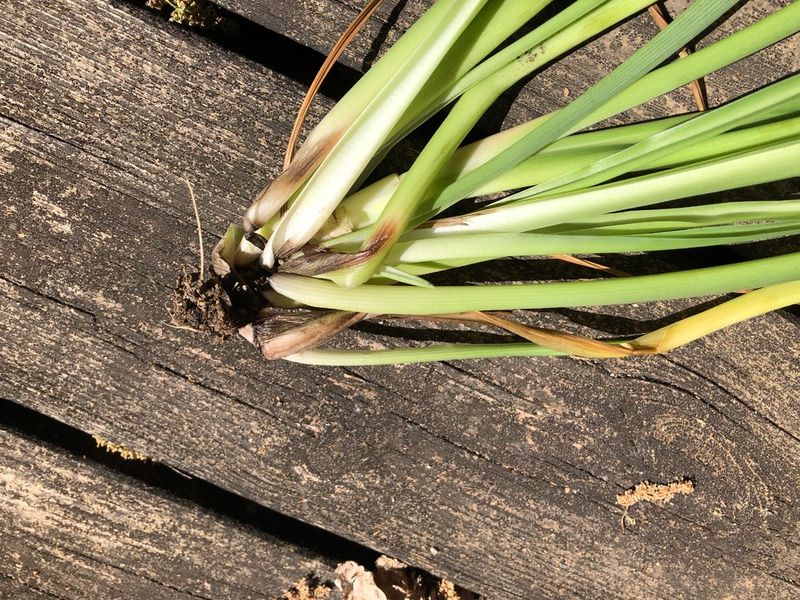
Give the base of your plant a gentle squeeze. Healthy spider plant stems feel firm and springy, almost like celery.
Mushiness near the soil line is a red alert. It often means rot has started working its way up from the roots, and it can spread fast in warm, wet conditions.
Don’t wait on this one. Unpot the plant right away, inspect the roots, and cut away anything soft.
If only part of the clump is affected, you can often save the healthy sections by dividing and repotting them in fresh, fast-draining mix.
4. Dark, Soggy Brown Tips
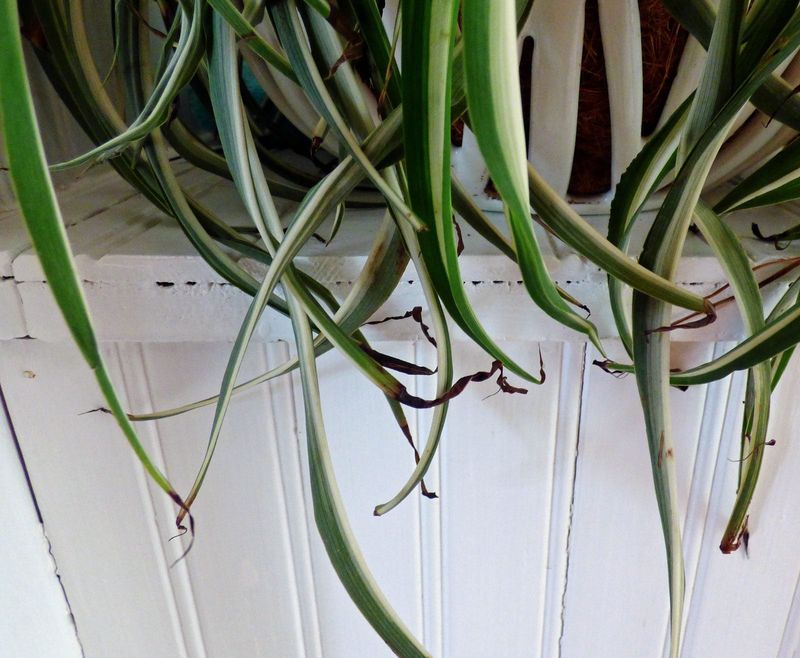
Not all brown tips are created equal. Spider plants are famous for browning at the ends, but the texture tells the real story.
Tips that look dark, almost black, and feel soft or damp usually point to excess water rather than dryness. Crispy, papery tips are a different issue, which you’ll meet later on this list.
Touch a few tips to figure out which camp you’re in. Soft and dark means it’s time to stretch out the gap between waterings and make sure the pot drains freely.
5. Rotten Smell and Black Roots
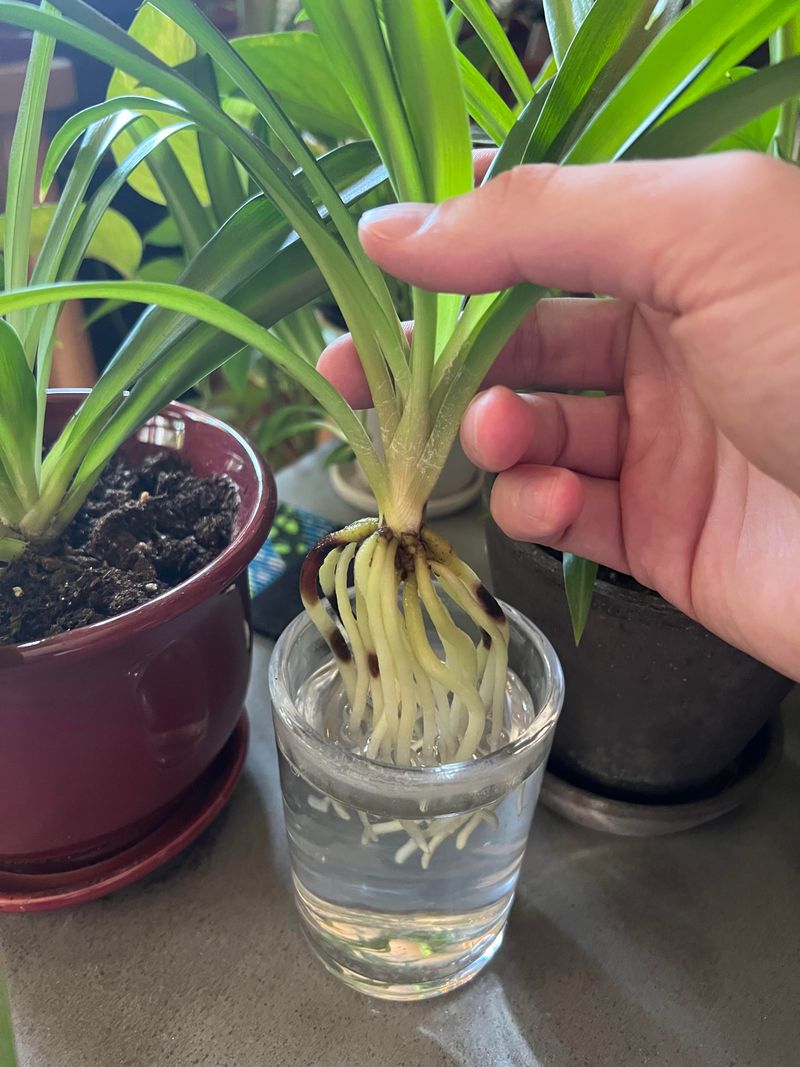
Your nose can be one of your best plant tools. A sour, swampy smell rising from the pot almost always means root rot has moved in.
Healthy spider plant roots are pale and thick, with plump white tubers that store water. Rotting roots turn brown or black, feel slimy, and may slide apart when touched.
To rescue it, rinse the old soil off and trim every mushy root with sterilized scissors. Repot into a clean container with drainage holes and fresh potting mix, then water lightly.
Fun fact: those fleshy tubers are why spider plants can go a while without water, so they rarely need as much as people give them.
6. Mold on the Soil Surface
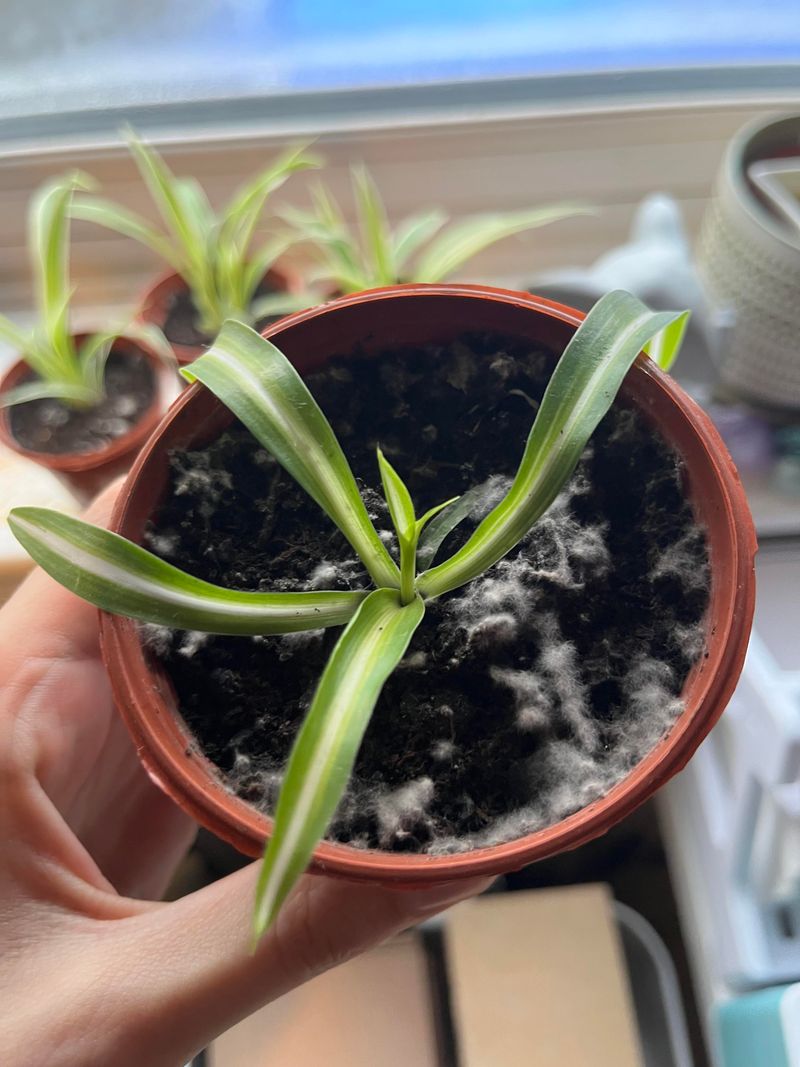
Spotted a fuzzy white or gray film on top of the soil? Mold is basically a sign that says the surface hasn’t dried out in a long time.
It usually isn’t harmful to the plant by itself, but it tells you the watering routine and airflow need adjusting. Left alone, the same damp conditions can invite rot below.
Scrape off the moldy top layer with a spoon and toss it. Water less often, and move the plant somewhere with a little more air movement, even a spot near a gently running fan.
7. Fungus Gnats Hovering Around
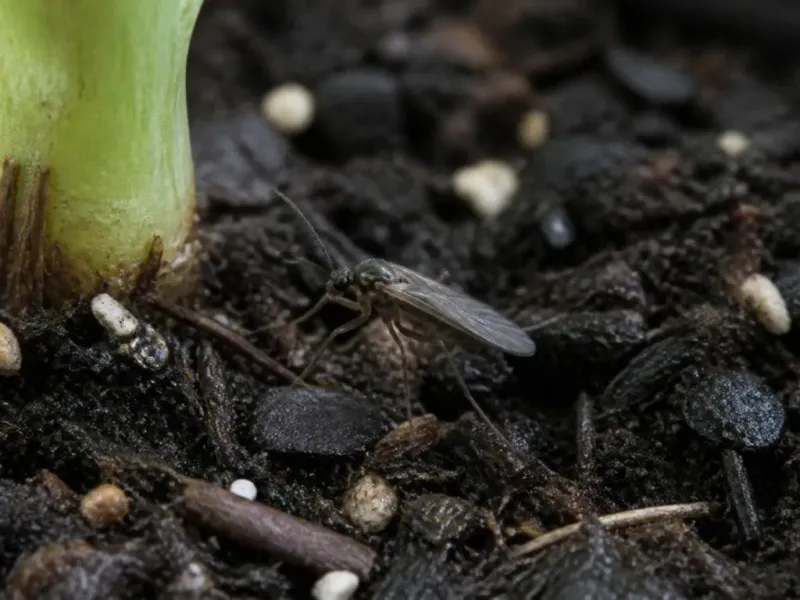
Those tiny black flies drifting up every time you bump the pot are more than a nuisance. Fungus gnats lay their eggs in constantly moist soil, and their larvae feed on decaying material and tender roots.
If they’ve moved in, your spider plant is almost certainly being kept too wet. The good news is that drying out the soil works like an eviction notice.
Let the top couple of inches dry fully between waterings to break their life cycle. Yellow sticky traps can catch the adults while you wait.
Bottom watering also helps, since it keeps the very top layer drier.
8. Soil That Stays Soggy for Days
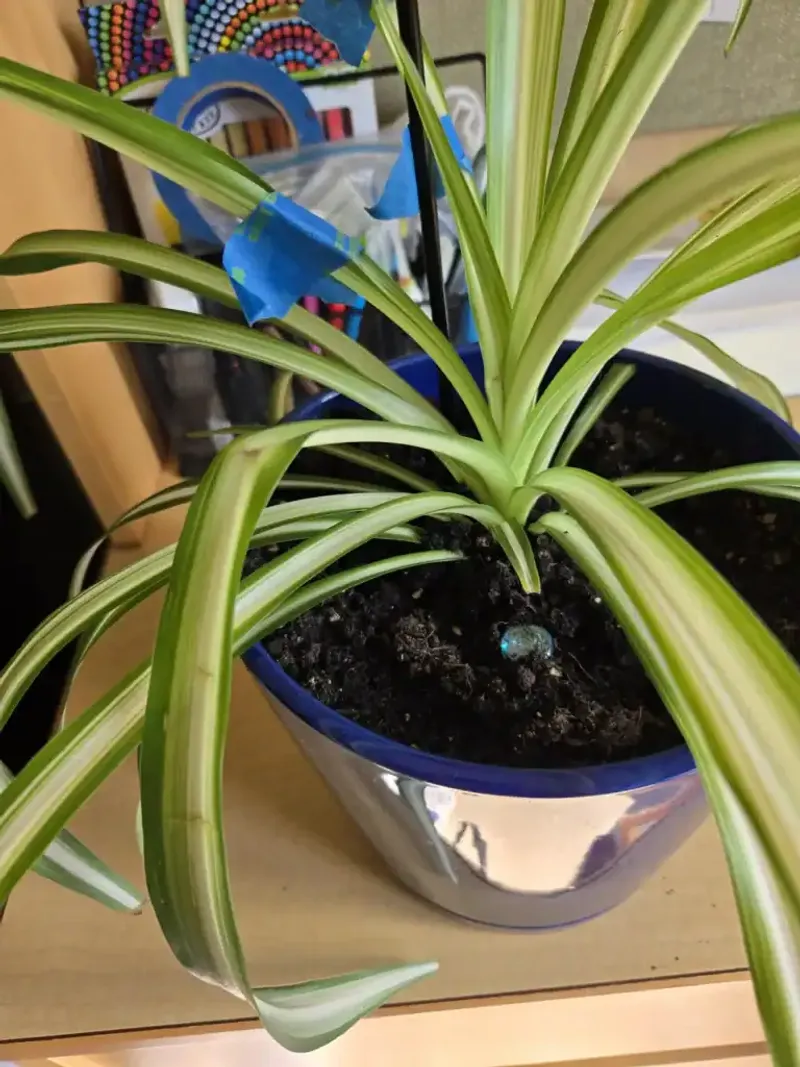
A healthy pot should feel noticeably drier within a few days of watering. If it’s still muddy a week later, something is holding onto too much moisture.
Old potting mix breaks down and packs tight over time, and pots without drainage holes trap water at the bottom. A saucer full of standing water makes it worse.
Gently poke a few holes with a chopstick or fork to let air in, and always dump the saucer after watering. If the mix is dense and heavy, repot into a fresh blend with some perlite for better drainage.
9. Leaves That Feel Swollen or Soft
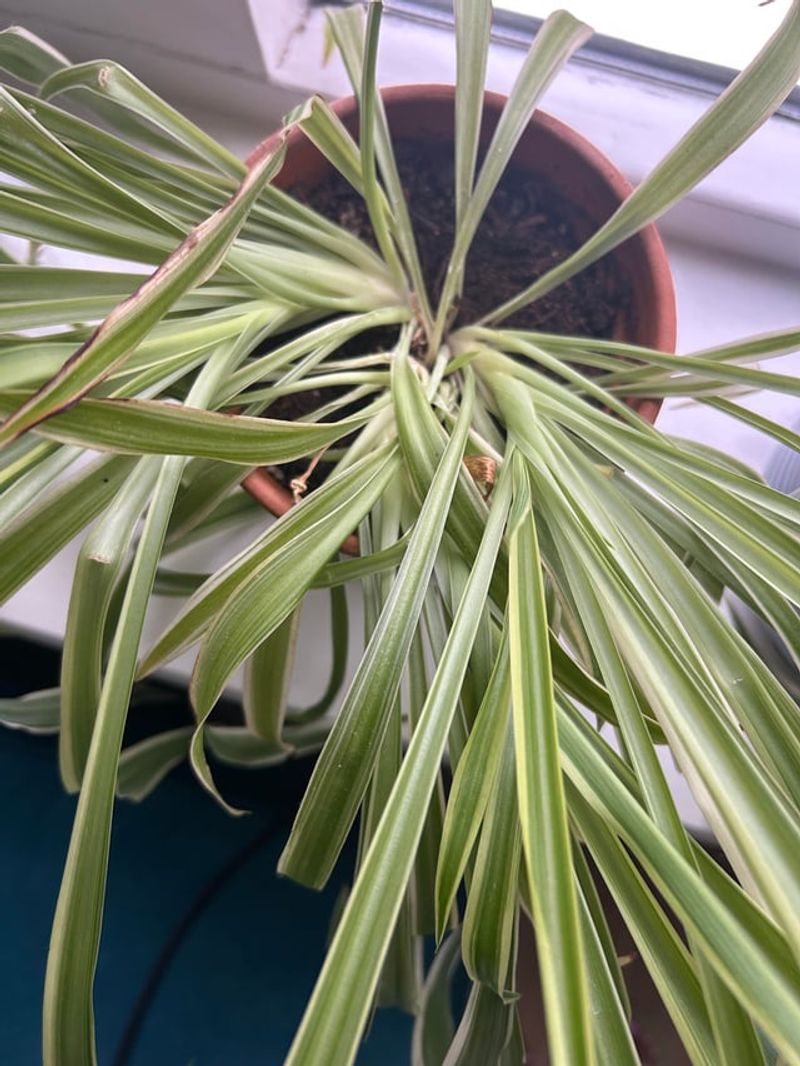
Run a leaf between your fingers. A happy spider plant leaf feels smooth, flexible, and slightly firm.
Overwatered leaves can feel soft, puffy, or even a bit translucent before they ever change color. It’s an early warning, and catching it here saves you from the yellowing and rot that come next.
Treat it as a nudge to back off. Water only when the soil is dry a couple of inches down, and the new growth should come in crisp and normal.
10. Wilting With Bone-Dry Soil
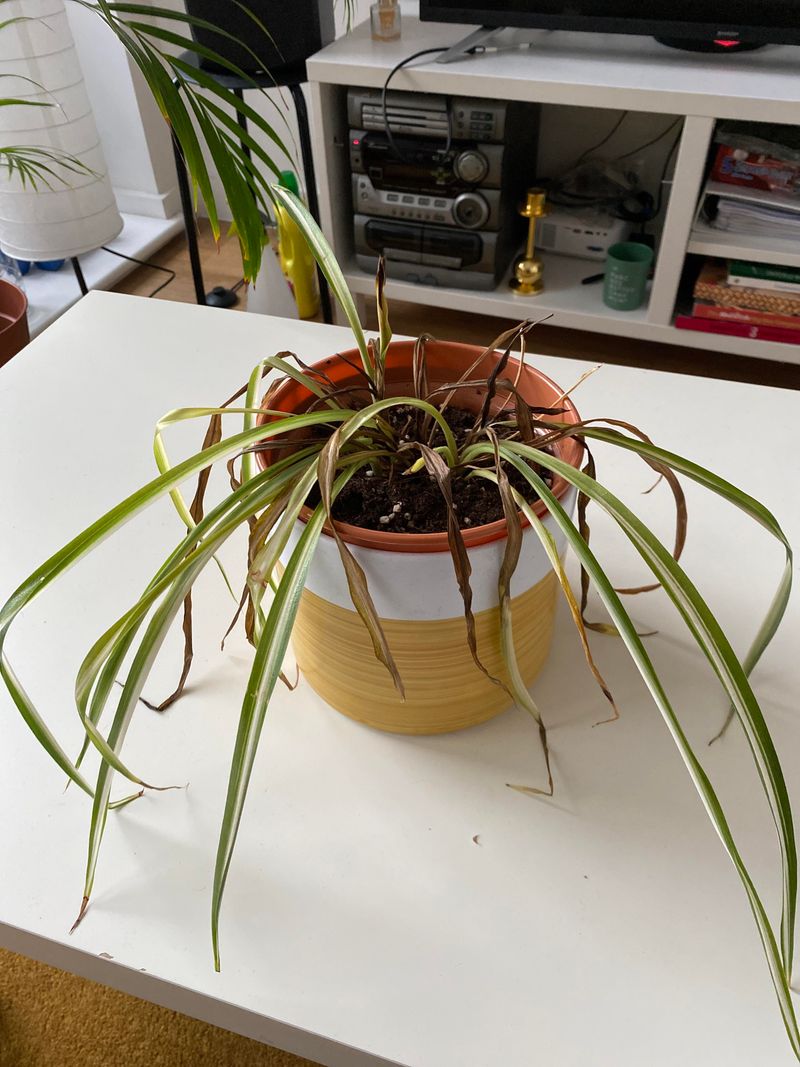
Now we flip to the thirsty side. If the leaves are hanging limp and the soil feels dry as dust, your spider plant is simply asking for a drink.
Thanks to those water-storing roots, spider plants bounce back from this surprisingly well. Most perk up within a few hours of a good soak.
Water slowly and deeply until it runs out the drainage holes. Then empty the saucer and jot down the date, so you get a feel for how long your pot lasts between drinks.
11. Crispy Brown Tips and Edges
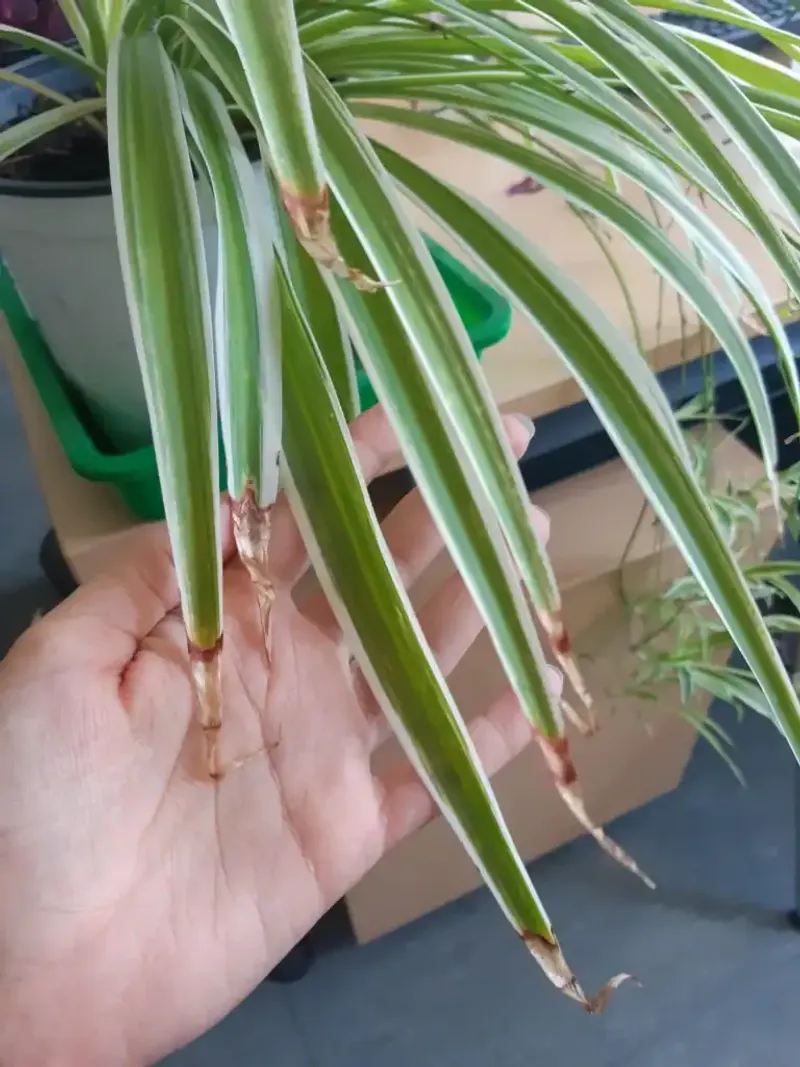
Ask almost any spider plant owner about their biggest frustration and you’ll hear about crispy brown tips. Dry, papery ends often mean the plant isn’t getting water consistently.
Low humidity and minerals in tap water can also play a role. Spider plants may be sensitive to fluoride and chlorine, which can build up in the leaf tips over time.
Water a bit more regularly, and try rainwater, distilled water, or tap water left out overnight. You can trim the brown ends at an angle with sharp scissors to keep the natural pointed look.
12. Soil Pulling Away From the Pot
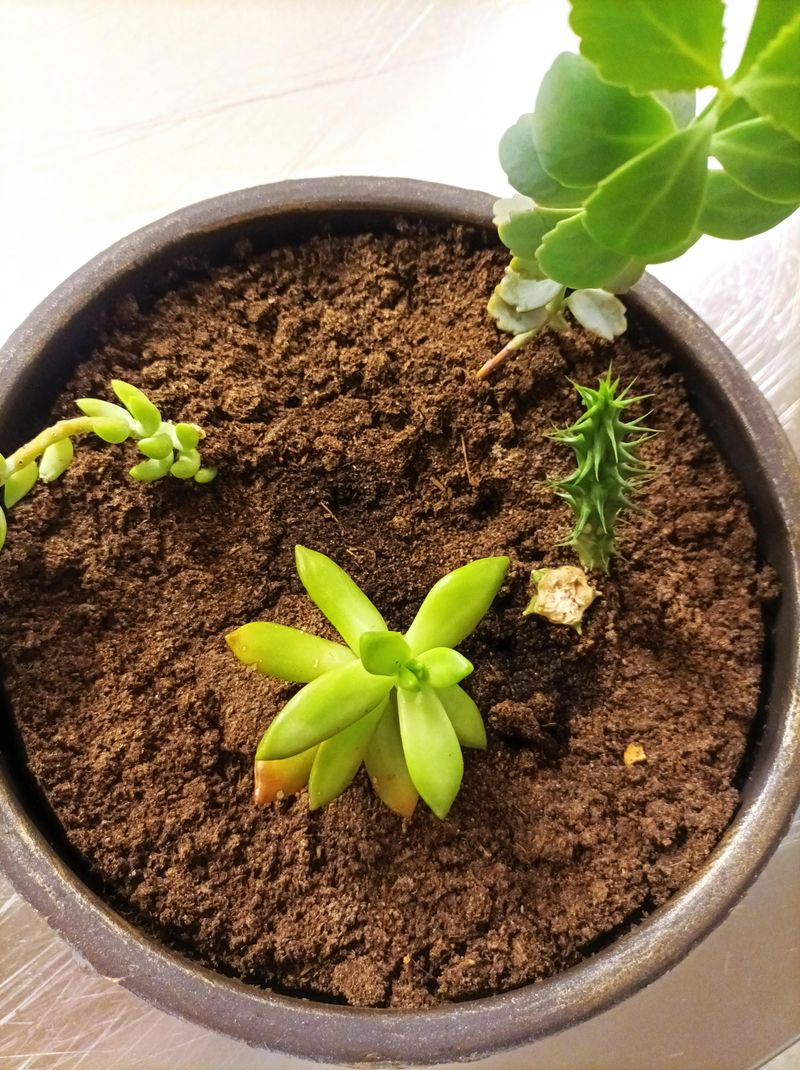
That gap between the soil and the pot rim is a dead giveaway. When potting mix dries out completely, it shrinks into a hard, tight ball.
The tricky part is that water poured on top just races down that gap and out the bottom. The roots barely get a sip.
Bottom watering is the fix. Set the pot in a sink or bowl with a few inches of water for 20 to 30 minutes, letting the soil soak it up from below.
Once it’s evenly moist, the soil should swell back against the sides.
13. Pale, Washed-Out Color
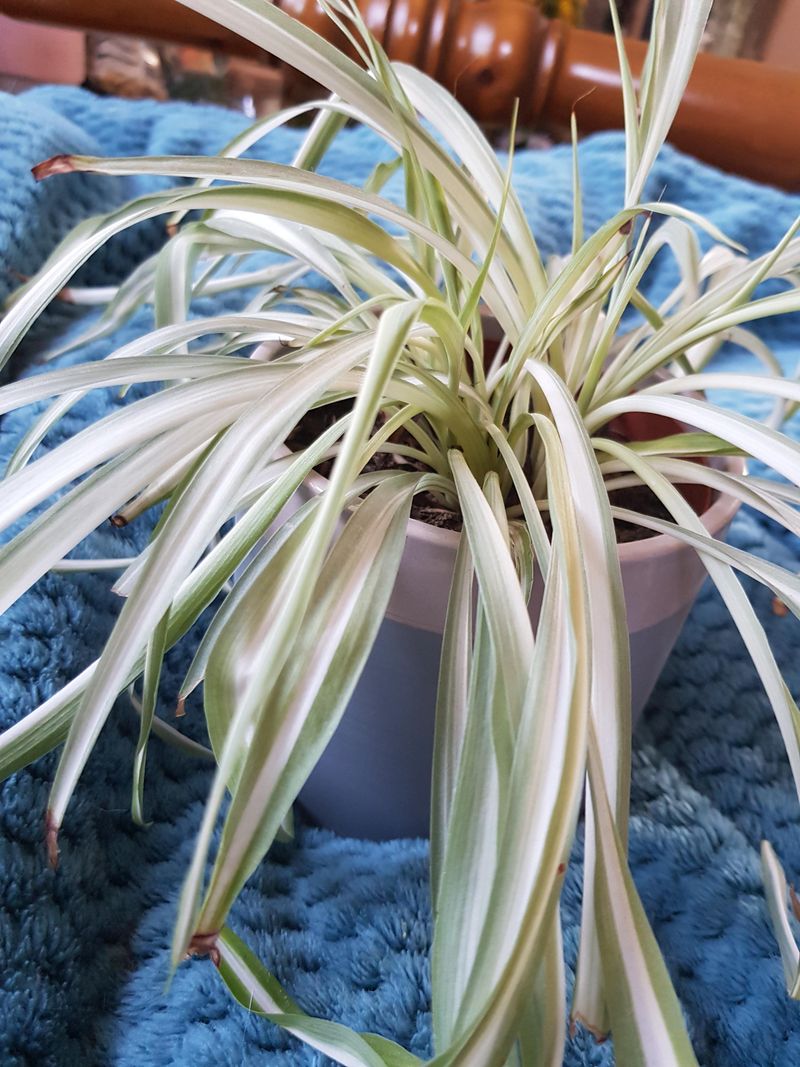
A thriving spider plant has bold green and creamy white stripes that almost glow. When that color fades to a tired, washed-out shade, a steady lack of water could be the cause.
Without enough moisture, the plant can’t move nutrients around well, and the leaves lose some of their richness. Too much harsh sun can bleach them too.
Aim for a consistent routine instead of long dry spells followed by big floods. Keep it in bright, indirect light, and fresh growth should come in with its usual punch.
14. Curling Leaves
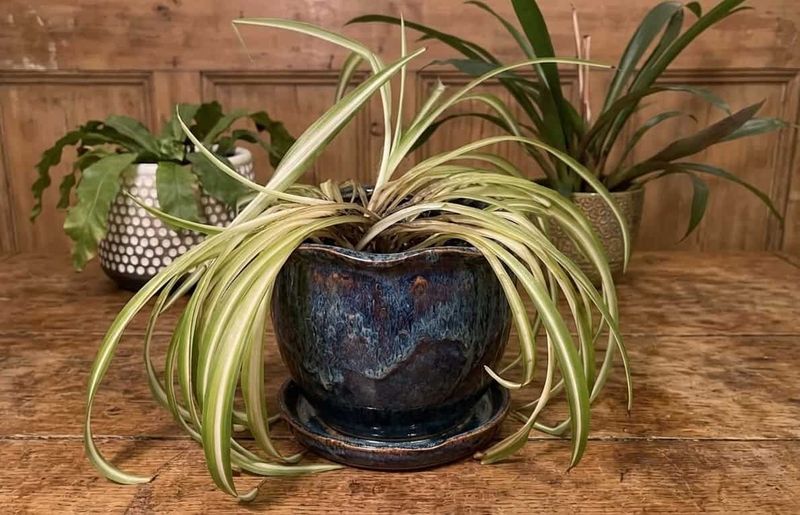
Leaves curling inward are your plant’s way of conserving water. Rolling up shrinks the surface area, which slows moisture loss.
You’ll often see this in summer heat or when a pot sits near a heater, radiator, or sunny window that bakes it all afternoon. Dry air speeds everything up.
Give it a thorough watering and move it a few feet away from heat sources. A pebble tray or a nearby humidifier may help the leaves relax and flatten out over time.
15. Slow Growth and No Spiderettes
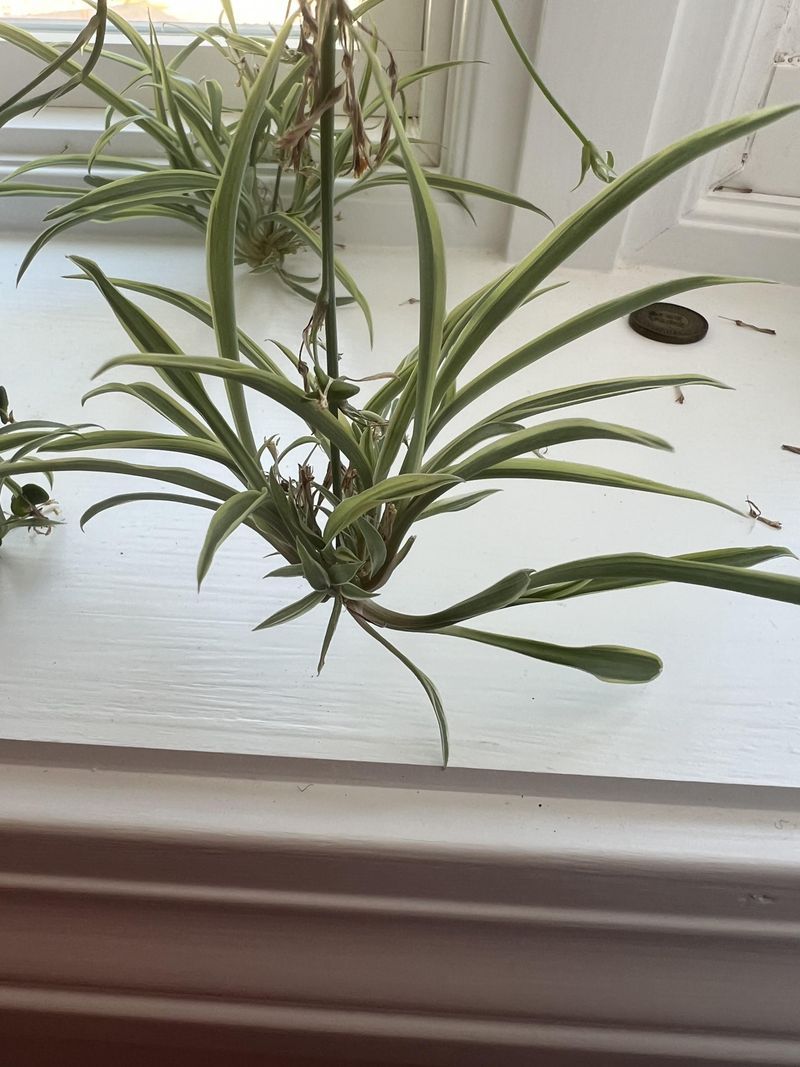
Few houseplants are as generous as a healthy spider plant. Long runners dangling baby spiderettes are a sign it feels secure and well cared for.
When growth stalls and no babies appear, chronic dryness is a common culprit. A plant scraping by on too little water focuses on survival, not reproduction.
Check your routine during spring and summer, when it grows most. Water once the top inch or two dries, feed lightly with a balanced houseplant fertilizer once a month, and give it bright, indirect light.
Patience usually pays off with a flush of new runners.
16. A Pot That Feels Featherlight
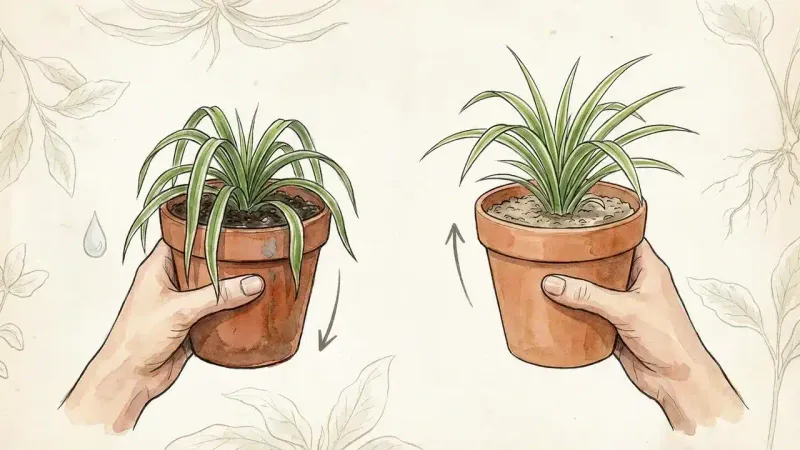
Here’s a trick experienced growers swear by: pick up the pot. Wet soil is heavy, and dry soil feels surprisingly light.
Right after a good watering, lift the pot and remember how it feels. A few days later, lift it again, and you’ll quickly learn what thirsty feels like.
It takes the guesswork out of watering, especially for hanging baskets where poking the soil is awkward. Pair it with a quick finger test and you’ll rarely overdo or underdo it again.
17. Foliage Collapsing Inward
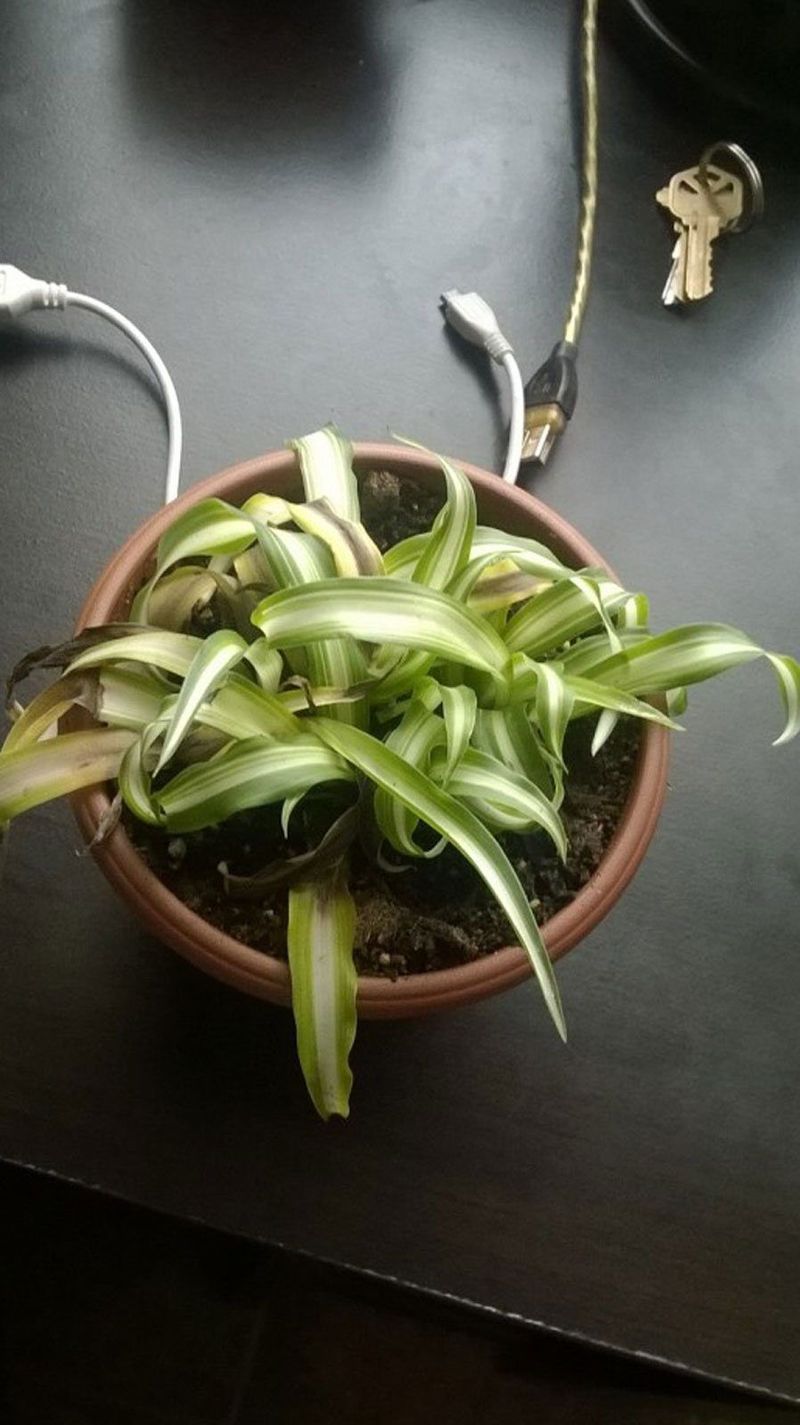
When the whole plant slumps and the leaves fold in on themselves, it’s in serious need. This is extreme thirst, often after a vacation or a busy stretch when watering slipped.
Don’t panic. Spider plants are tough, and those stored-water roots give them a real shot at recovery.
Soak the entire pot in a sink or bucket for about 30 minutes until bubbles stop rising, then let it drain completely. Trim any fully dried leaves.
Going forward, check soil weekly, water deeply and drain well, ease up in fall and winter, and repot every year or two. Read those 17 signs, and your spider plant can keep sending out babies for years.