
Wrapping Your Fig Tree For Winter Takes One Afternoon, And It Saves Next Summer’s Whole Crop
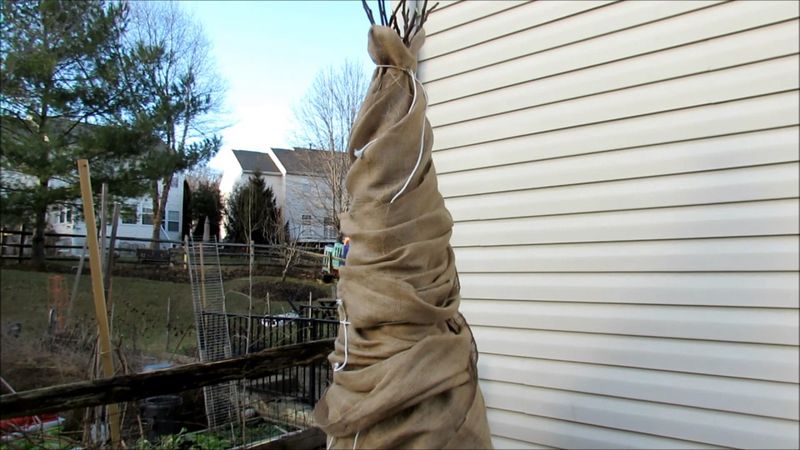
A fig tree that looked lush in September can look sad by April if a hard winter gets to its branches. Winter protection can lower that risk, though it is not a magic shield.
Here is how to protect an in-ground or potted fig, and what to do when spring arrives. A little planning now can help your tree bounce back with less stress.
What does winter protection actually save?
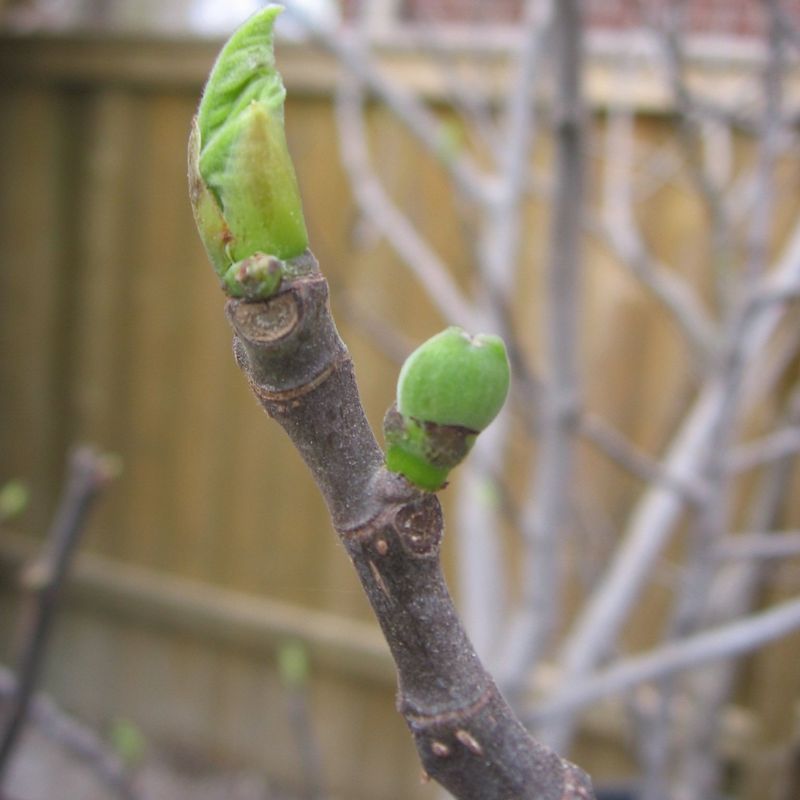
Picture a hard freeze settling over your backyard. Sustained severe cold can injure the aboveground wood of a fig, and that wood is what you are trying to protect.
In the Mid-Atlantic, University of Maryland Extension points to sustained temperatures below about 20°F as a danger for stems.
That number is regional guidance from Maryland and New Jersey, not a universal line for every fig. Cold duration, cultivar, how exposed your site is, and whether you are worried about stems or roots all matter. A fig tucked beside a warm wall may fare differently than one in an open, windy yard.
If the stems die, a fig can resprout from its roots. Those shoots rarely ripen fruit that same season, so a tree that is alive is not the same as a tree that gives you a normal harvest.
Severe injury can take two growing seasons to restore regular production.
Here is the part that surprises people. Most figs set their main crop on the current season’s growth, so a few dead branch tips do not automatically mean no figs.
Older wood matters most for the breba crop, an early crop of figs on last year’s branches that only some cultivars produce, as UC Statewide IPM Program explains in its pruning guidance.
So think of wrapping as risk reduction. It can help keep more living wood, but it cannot promise a full crop, and not every fig needs it.
Gardeners in milder areas may do fine with a little dieback and regrowth.
Wait for dormancy, not a calendar date
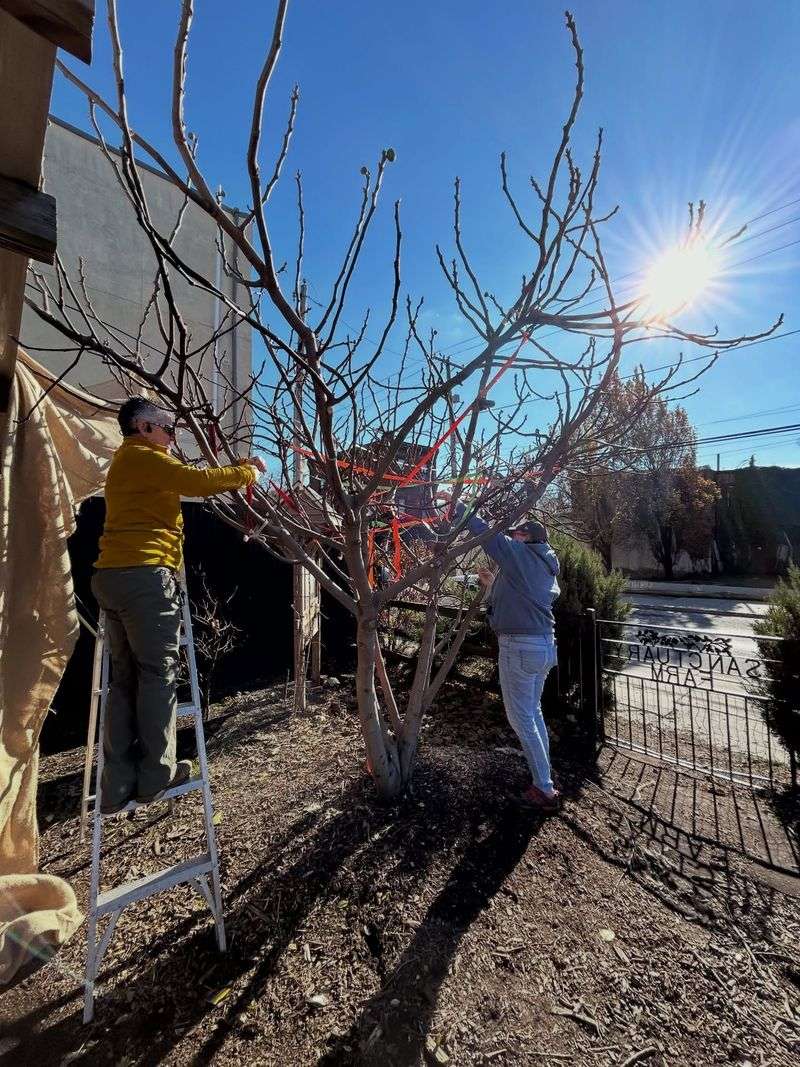
Your neighbor two states over may wrap in November while you wait until December. That is normal.
Timing should follow your local weather and your tree’s behavior, not a date printed on a calendar.
Look for leaf drop or a hard frost, which signals that the fig has gone dormant. Guidance such as Virginia Cooperative Extension’s fig guide places protection after that point, so the tree is not sealed up while it is still active.
Once the leaves have dropped or frost has blackened them, pull off any leaves still clinging to the branches. Remove unripe fruit too, since small green figs left behind will not finish ripening and can rot.
A quick walk around the tree with a bucket is all this step needs.
Then gather your materials before the cold snap arrives. Mulch, burlap, ties, and straw are much easier to handle on a mild day than in a freezing wind.
Protection generally stays in place through winter until the danger of spring frost has passed, as Rutgers Cooperative Extension describes. That date also varies by location, so watch your local forecast and loosen things gradually rather than all at once.
How should you wrap an in-ground fig?
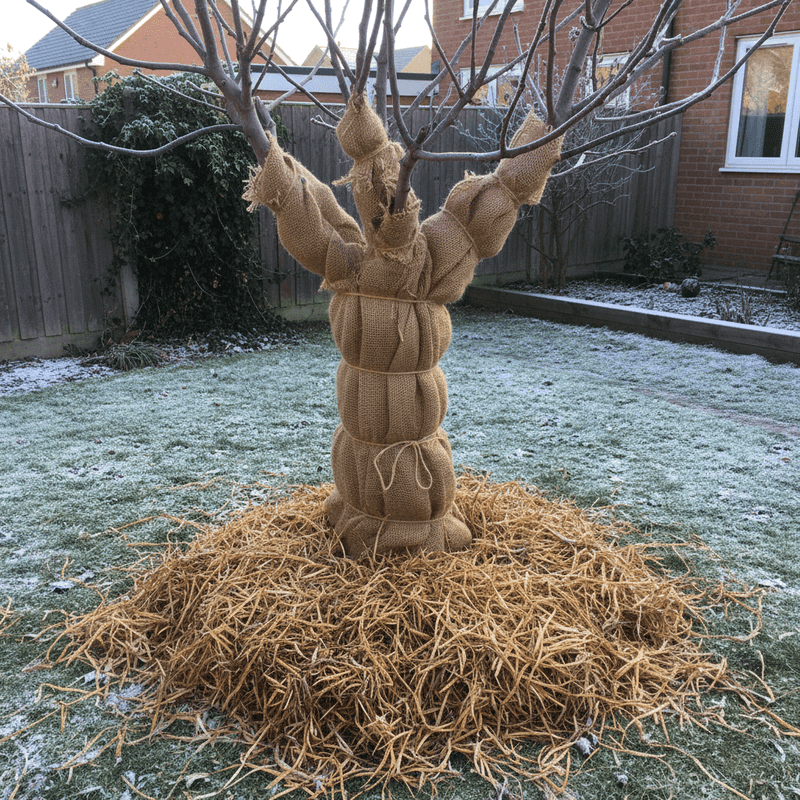
Start at the bottom. Pile organic mulch around the base of the trunk; one Virginia Cooperative Extension guide recommends 6 to 12 inches.
This helps shield the crown and roots, which are what let a fig regrow if the stems suffer.
Next, gently gather the flexible branches and tie them together into a bundle. Go slowly and do not force stiff or brittle wood, because a snapped branch defeats the purpose.
Soft twine or fabric strips work well.
Now cover the bundle with a breathable material such as burlap or canvas. These fabrics let moisture escape, which matters more than most people expect.
Secure the cover so wind does not peel it off.
For extra insulation, you can build a loose enclosure around the tree, such as a wire cylinder or wooden frame, and fill it with dry straw or similar material. University of Maryland Extension describes this approach, and Penn State Extension outlines options that range from a simple wrap to a filled cage or even burying branches.
How much you do depends on your climate, your cultivar, and the size of the tree. A small young fig may take little time, while a large one with a cage takes longer, and no source gives a standard work time.
A mild-winter gardener may need only mulch, while a colder region may call for the full enclosure.
For a potted fig, consider cool protected storage
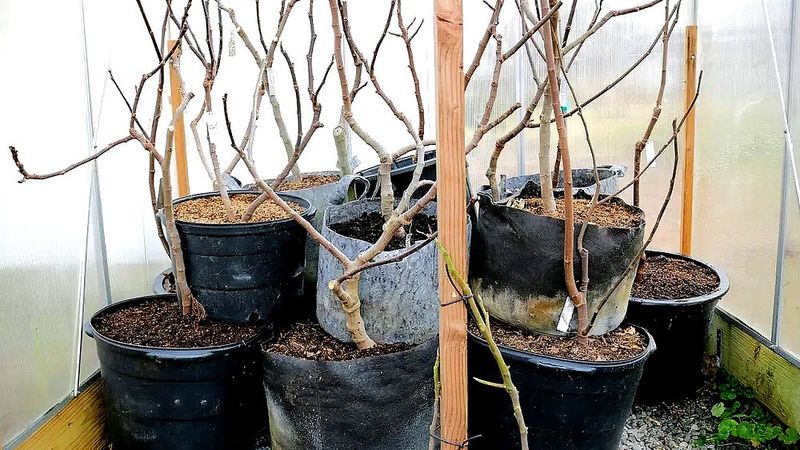
Potted figs have an easy option that in-ground trees do not: you can move them. Where outdoor cold threatens the plant or its roots, a cool, protected spot such as an unheated garage or basement is a straightforward choice.
It is not a requirement for every potted fig, especially in milder climates.
Roots in a container sit above ground, where cold reaches them from every side. That is why the pot matters as much as the branches.
Protect the pot and roots too, perhaps by setting the container on a pallet or against an inside wall and wrapping it.
Wait until the plant is dormant before you move it, as Virginia Cooperative Extension advises. Then keep it dormant.
A warm living room can wake the tree too early and trigger soft new growth that struggles without strong light.
Watering should be sparse. Guidance varies: University of Illinois Extension and Iowa State Extension describe approaches from a light drink about once a month to watering when the mix is dry a few inches down.
Pick the approach that fits your space, and check the soil with a finger rather than following a strict schedule. The goal is soil that never turns soggy or fully dust dry.
Keep insulation breathable and watch for rodents
Plastic feels like the obvious answer to wet, cold weather, but sealing it directly around a fig is a mistake. Virginia Cooperative Extension warns that plastic traps moisture and can encourage mold and fungi on the wood.
A tarp can still have a role. Used as an outer shield over insulation, it sheds rain and snow, and University of Maryland Extension describes this approach.
The key is leaving the bottom open so air can move through and dampness can escape.
Check on the setup after a long wet spell or a thaw. If the insulation feels soggy, pull back a section and let it dry before closing it up again.
There is one more tradeoff to weigh. Straw and leaves make cozy shelter for voles, which may feed on fig bark and reduce the tree’s vigor or production.
You can keep an eye out for small tunnels or gnawed spots when you check the tree. Some gardeners decide the insulation is worth that risk, while others choose lighter protection.
Either choice is reasonable if you know what to watch for.
Check for living wood before you prune
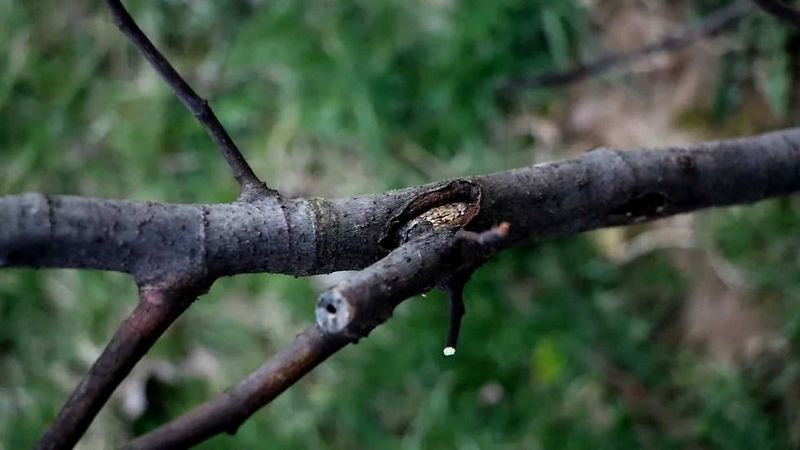
Spring is the time to look, not midwinter. Dead-looking wood in January can fool you, and damage is not reliably clear until the weather warms.
Waiting gives the tree time to show what survived.
When growth begins, check beneath the bark on several stems. University of Maryland Extension notes that green tissue means the wood is alive.
Scratch a tiny patch with a thumbnail or knife tip, and test more than one stem, since damage can be uneven.
Dead branches can be removed in early spring once you are sure which ones they are. Cut back to living wood and leave anything still green.
If the whole top is gone, look for new shoots from the base and be patient, because recovery can take a season or more.
Choose protection that suits your tree, whether it grows in the ground or in a pot, and your local winters. It lowers risk, but it does not promise living branches or a harvest.
Figs are tough plants that reward a little care and some patience.