
These 9 North Carolina Native Shrubs Keep Their Berries Into February When Your Backyard Birds Need Them Most
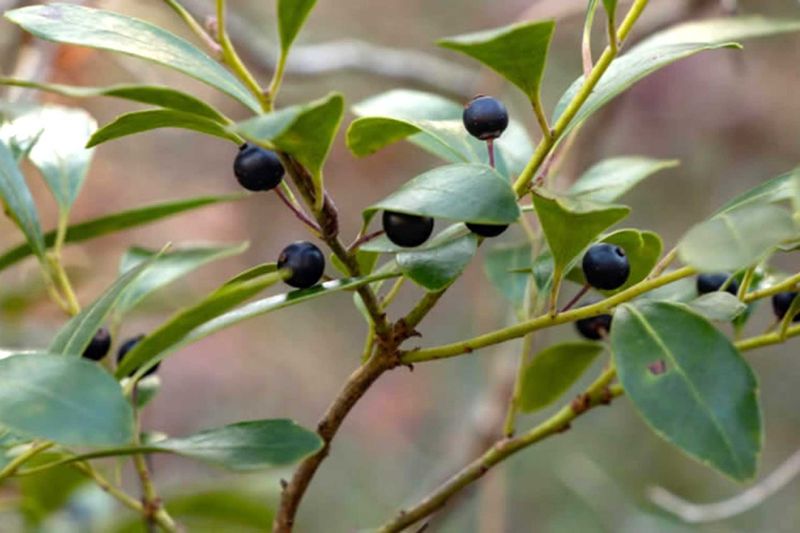
By February, most of the wild food in a North Carolina yard has been eaten, frozen, or knocked to the ground. That is exactly when bluebirds, robins, and cedar waxwings start hunting hardest for a meal.
The right native shrubs hold their fruit late into winter, almost like a pantry you stocked back in the fall. Here are nine that can turn your backyard into a late-winter lifeline while pushing out the invasives that do our birds no favors.
1. Winterberry Holly (Ilex verticillata)
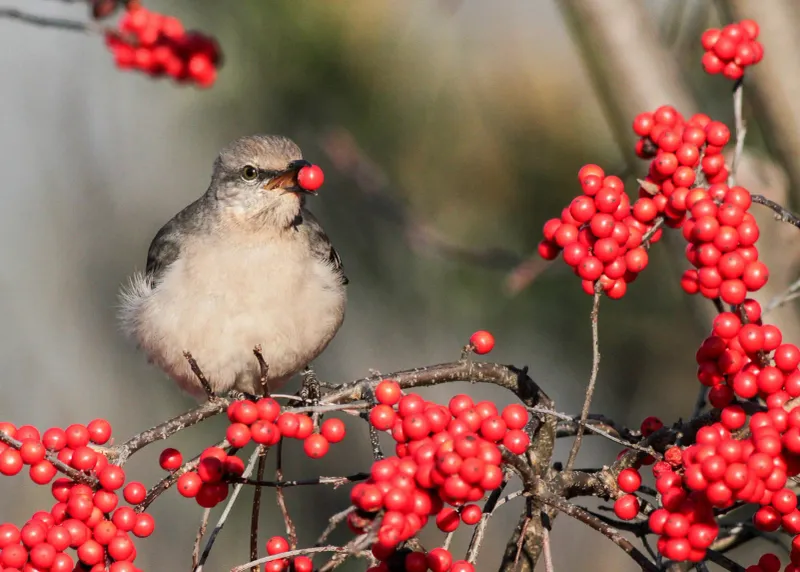
Picture a gray February morning when every branch in the yard looks bare, except one shrub glowing like it was strung with red holiday lights. That is winterberry, a deciduous holly that drops its leaves in fall so its berries can steal the show.
At least 48 bird species eat the fruit, including cedar waxwings, robins, and Eastern bluebirds.
Winterberry grows about 3 to 10 feet tall and wide, and it handles soggy soil better than most shrubs. Coastal Plain gardeners will like that it shrugs off salt spray, and it holds up fairly well to deer browsing.
A low, wet corner of the yard that drowns other plants can become its happy spot.
One catch: only female plants make berries, and they need a male plant nearby for pollination. Ask your nursery for a matching male, since one male can serve several females.
As a bonus, winterberry feeds Henry’s Elfin butterfly caterpillars in spring.
2. Possumhaw Holly (Ilex decidua)
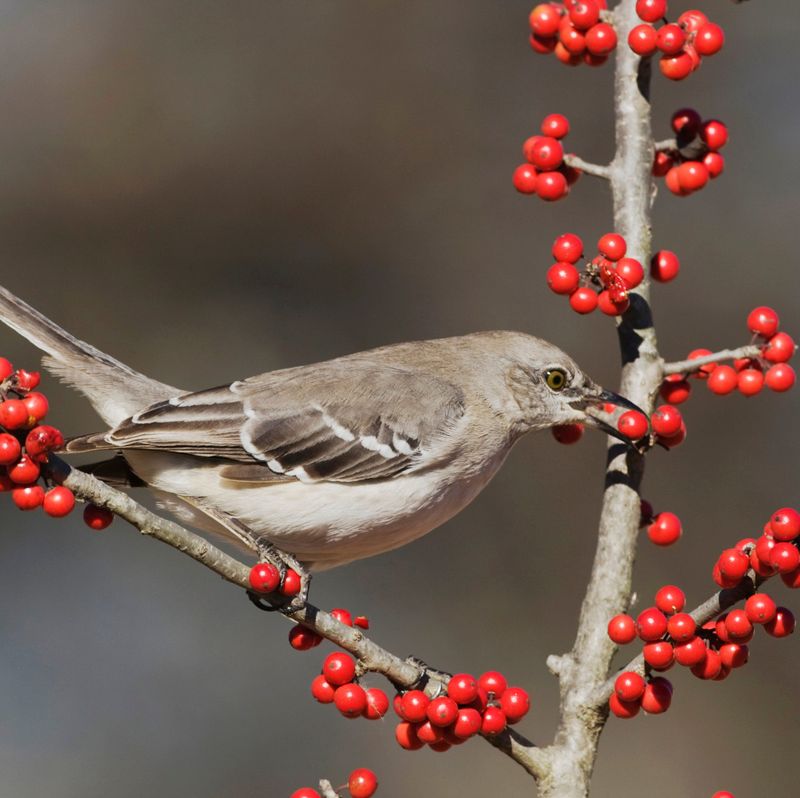
Sometimes being a little less tasty is a superpower. Birds tend to skip possumhaw berries early in the season, which means the fruit is often still hanging around in February and even March.
When everything else is gone, bluebirds, mockingbirds, and wild turkeys come back for it.
The bare branches have a silvery look that makes the red or orange-red berries pop. Possumhaw grows 7 to 15 feet tall with a rounded, spreading crown, so it works well as a loose, natural screen along a property line.
Give it full sun for the heaviest crop, though it tolerates some shade. Like its holly cousins, it needs a male plant nearby for the females to fruit.
Deer resistance is fair, and Henry’s Elfin caterpillars use it as a host plant too.
3. Yaupon Holly (Ilex vomitoria)
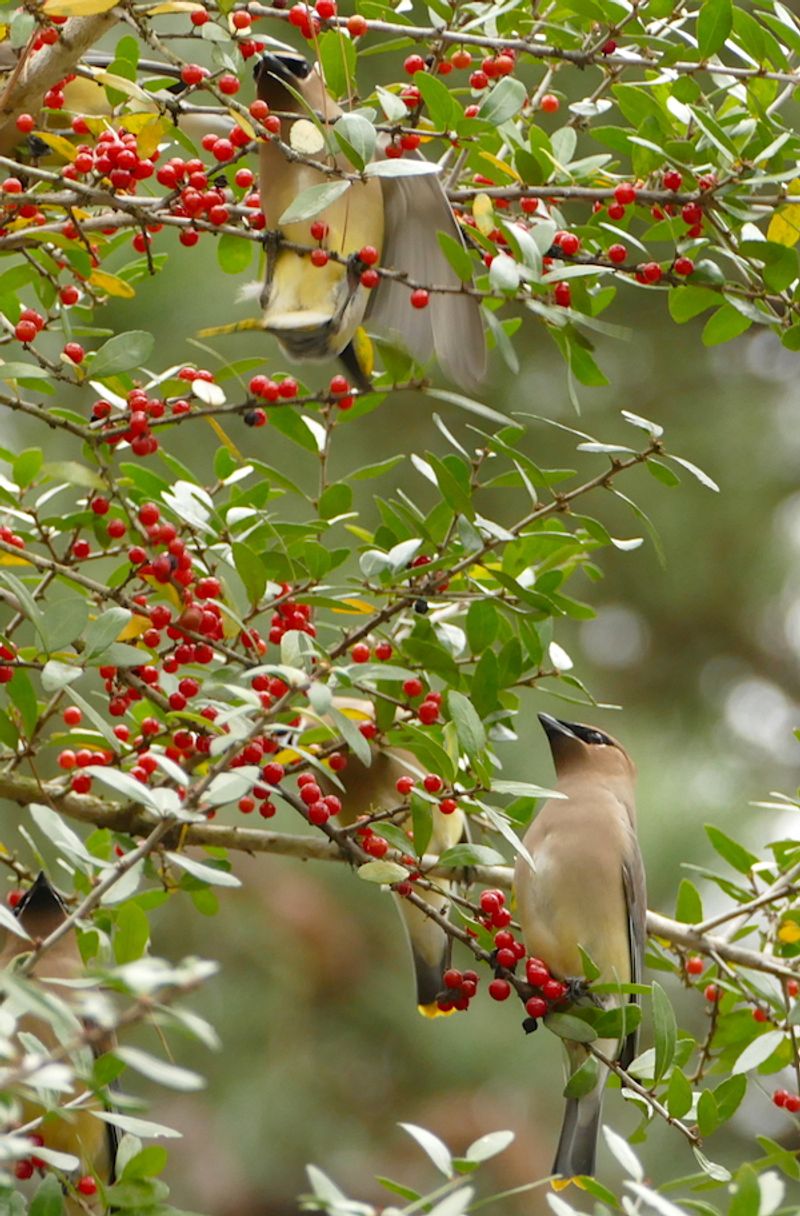
Ever watched a flock of cedar waxwings strip a shrub bare in under an hour? Yaupon is often the scene of the crime.
Female plants carry heaps of bright red berries through winter, and waxwings treat them like a buffet.
Yaupon is tough as nails. It tolerates drought, many soil types, and even occasional flooding, which makes it a smart pick from the Outer Banks to the Piedmont.
It grows fast and can reach 10 to 30 feet, though many compact forms stay much smaller.
Because the leaves stay green all year, birds also get shelter from wind and hawks. Fun fact: yaupon is the only native North American plant with caffeine in its leaves, and coastal Native peoples brewed it into tea.
Swap it in for invasive privet hedges and your birds win twice.
4. Inkberry Holly (Ilex glabra)
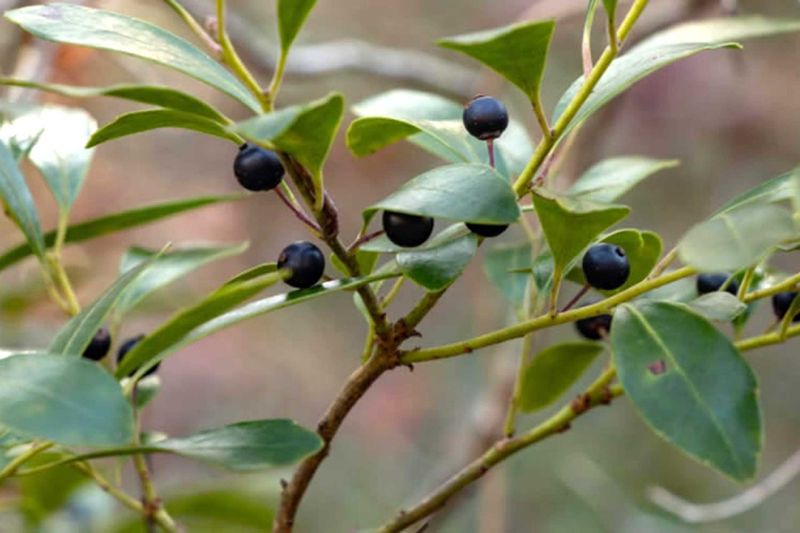
Not every winter berry has to be red. Inkberry sets dark purple-black fruit that blends into its glossy evergreen leaves, and it often stays on the shrub well into winter.
Bobwhite quail, wild turkeys, and songbirds all take advantage.
This holly grows 5 to 10 feet tall and slowly spreads by suckers. That habit makes it handy for filling gaps along a fence line where you want steady cover.
Short on space? Compact cultivars fit nicely near a patio or foundation.
Inkberry thrives in full sun to part shade and loves the wet, sandy soils so common in the Coastal Plain. In spring, native bees work its small flowers.
It also hosts Henry’s Elfin and Holly Azure butterflies, so the yard stays busy long after the berries are gone.
5. American Beautyberry (Callicarpa americana)
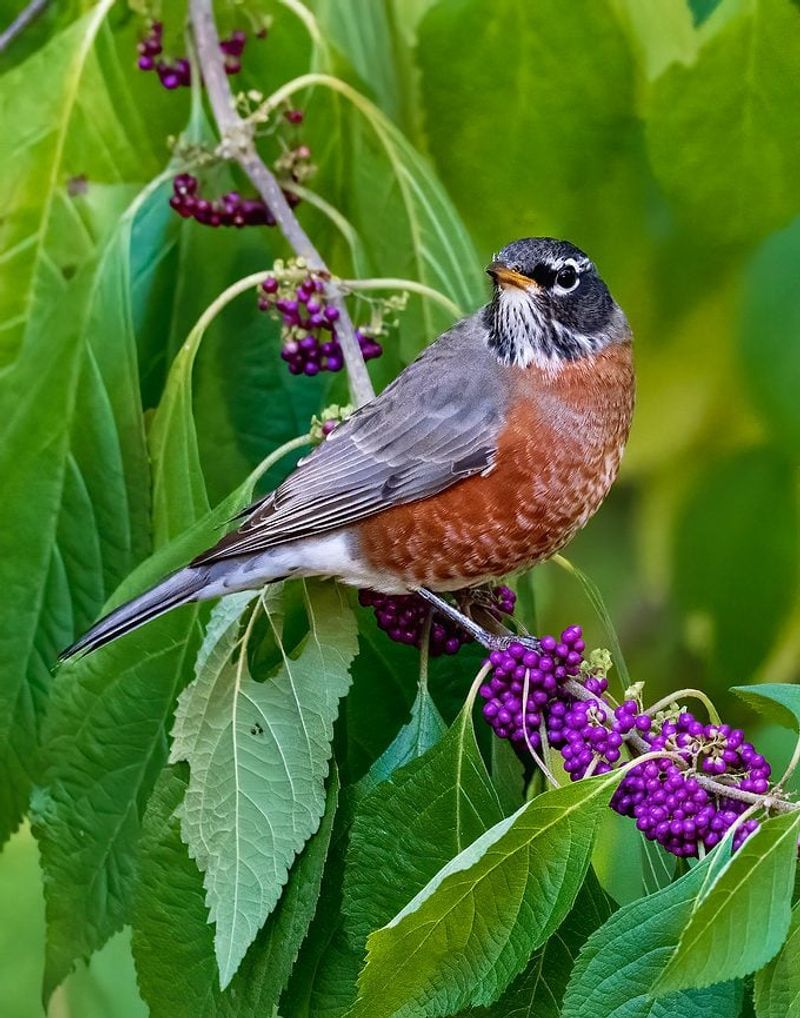
Neighbors will ask about this one. The berries come in tight clusters of such bright purple that they almost look fake, wrapped around arching stems like beads on a necklace.
The fruit ripens in early fall and often hangs on into winter, especially in milder Piedmont and Coastal Plain yards. Eastern towhees, robins, and purple finches eat it, and so do foxes, opossums, raccoons, and squirrels.
It grows happily in full sun to part shade.
Here is the steward’s angle: beautyberry is a great replacement for nandina. Nandina is invasive in North Carolina, and its berries can be toxic to cedar waxwings.
Pulling out nandina this winter and planting beautyberry in its place is one of the kindest swaps you can make for your birds.
6. Red Chokeberry (Aronia arbutifolia)
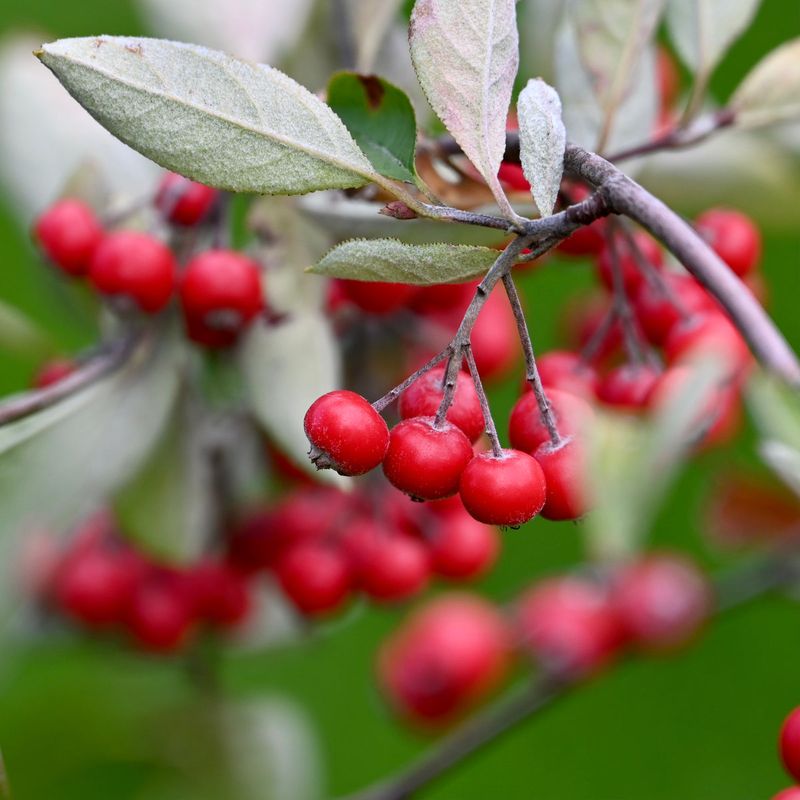
Red chokeberry plays a long game. Its berries ripen in late summer, yet they are tart enough that birds often save them for later, leaving fruit on the branches deep into winter.
Thrushes, robins, and cedar waxwings eventually clean them up.
Before winter arrives, you get a fireworks show. The leaves turn a brilliant red in fall, giving this shrub two seasons of color in one plant.
Chokeberry is easygoing about soil. It handles wet spots and drier ground alike, so it fits rain gardens and regular borders across the state.
If you have invasive burning bush in your yard, chokeberry gives you that same red fall color without the spread.
7. Fragrant Sumac (Rhus aromatica)
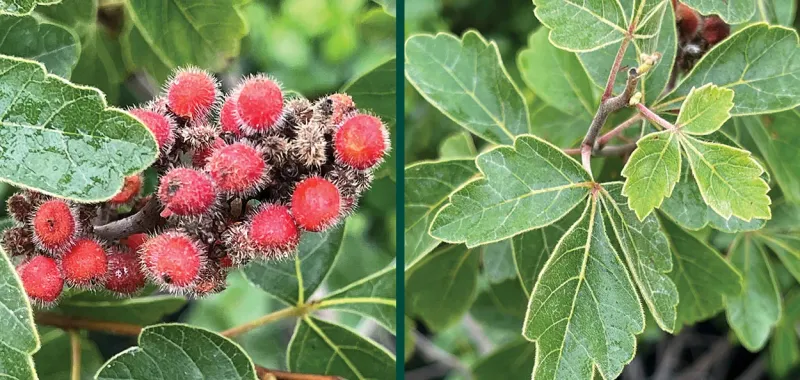
Short and wide wins the race here. Fragrant sumac usually stays 2 to 6 feet tall but spreads 6 to 10 feet, making it a natural fit for covering bare ground, filling the space under a fence, or holding soil on a slope.
Its fuzzy red berry clusters form in late summer and cling into winter. Songbirds, turkeys, chipmunks, and opossums all snack on them.
Plant it in full sun for the best growth, and expect deer to mostly leave it alone.
The real hidden value shows up in spring. Fragrant sumac hosts 54 species of moth and butterfly caterpillars, including the luna moth and red-banded hairstreak.
Those caterpillars become baby food for nesting birds, so this shrub feeds your birds in winter and their chicks a few months later.
8. American Holly (Ilex opaca)
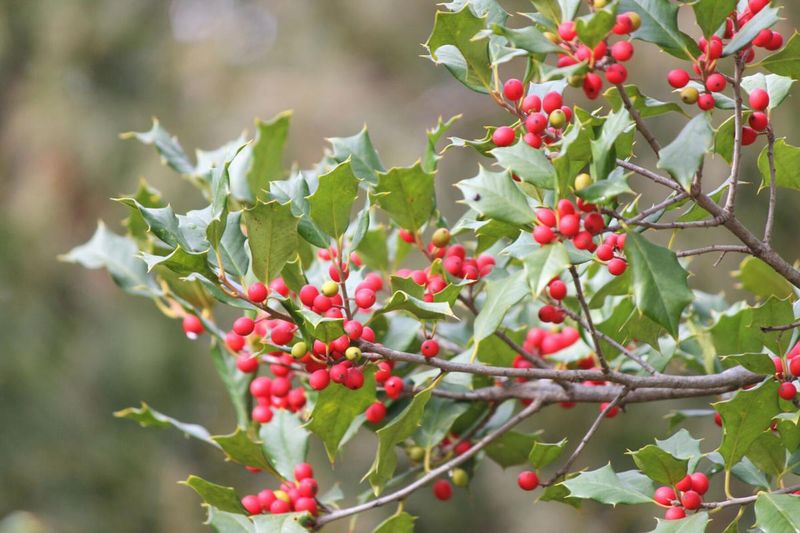
Grab a cup of coffee and watch the window. A mockingbird will often claim an American holly as its own private winter pantry, chasing off robins and bluebirds in a feisty, funny show that lasts for weeks.
No wonder it is worth defending. This classic North Carolina evergreen offers bright red berries well into the cold months, plus spiny leaves that make dense, safe cover from hawks and stray cats.
American holly grows slowly into a neat pyramid and can eventually reach 15 to 30 feet or more. Think of it as planting for the next decade, not the next season.
As with other hollies, you will need a male nearby for the females to set fruit. If English holly is popping up in your woods, pull it and give our native the spot.
9. Eastern Redcedar (Juniperus virginiana)
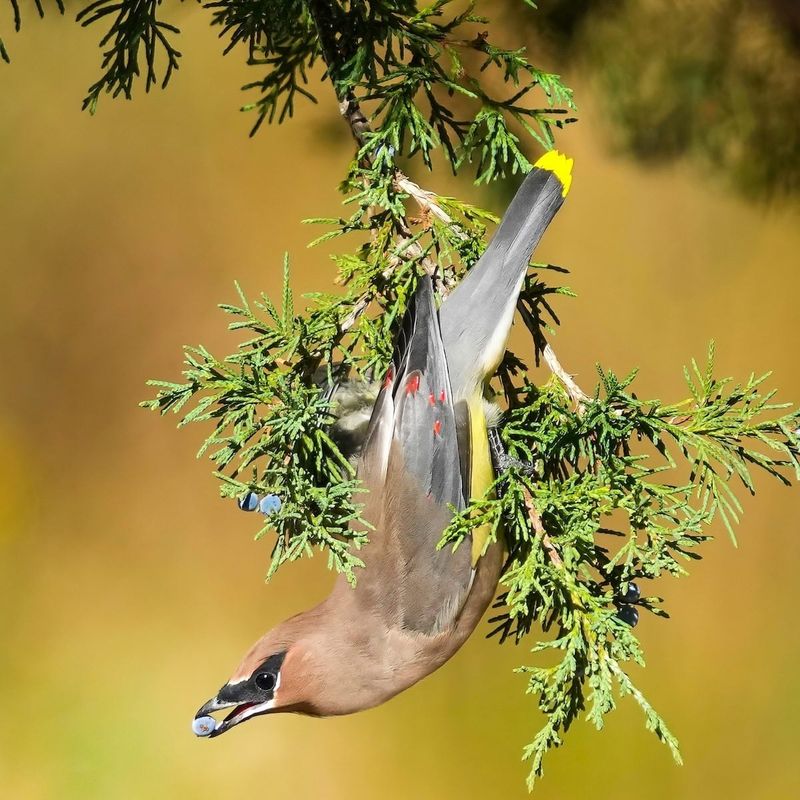
Cedar waxwings got their name from this plant, and that tells you a lot. Eastern redcedar is often called a tree, but in many yards it acts like a big, dense shrub that birds flock to all winter.
Its powdery blue berries, which are really small cones, feed waxwings, bluebirds, yellow-rumped warblers, and many other species when food runs thin. The thick evergreen growth also gives birds a warm, sheltered roost on icy nights.
Redcedar is a pioneer species, so it grows in poor, rocky, or disturbed soil where little else will. That makes it ideal for a tough back corner or a windbreak.
Like hollies, only female plants carry berries, so ask for a fruiting plant if you can. Plant one this year, and your February birds will have a reliable stop for decades.