
That Hydrangea Looking Tired And Droopy This Fall Isn’t Dying, It’s Just Getting Ready To Rest
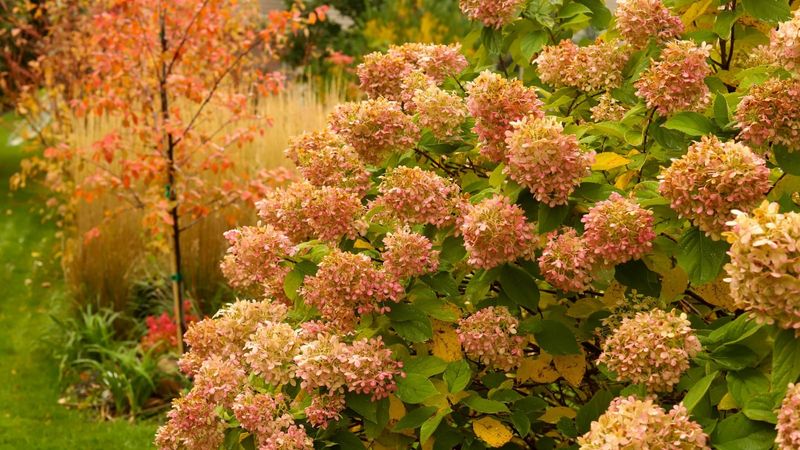
Your hydrangea is dropping leaves, the big blooms are turning papery, and a few stems look floppy. Before you panic or grab the pruners, it helps to know which changes are part of the normal fall cycle and which ones need a closer look.
A few quick checks in the yard can tell you a lot. Here is how to sort out the worry from the ordinary.
Fall color and fading flower heads can be ordinary
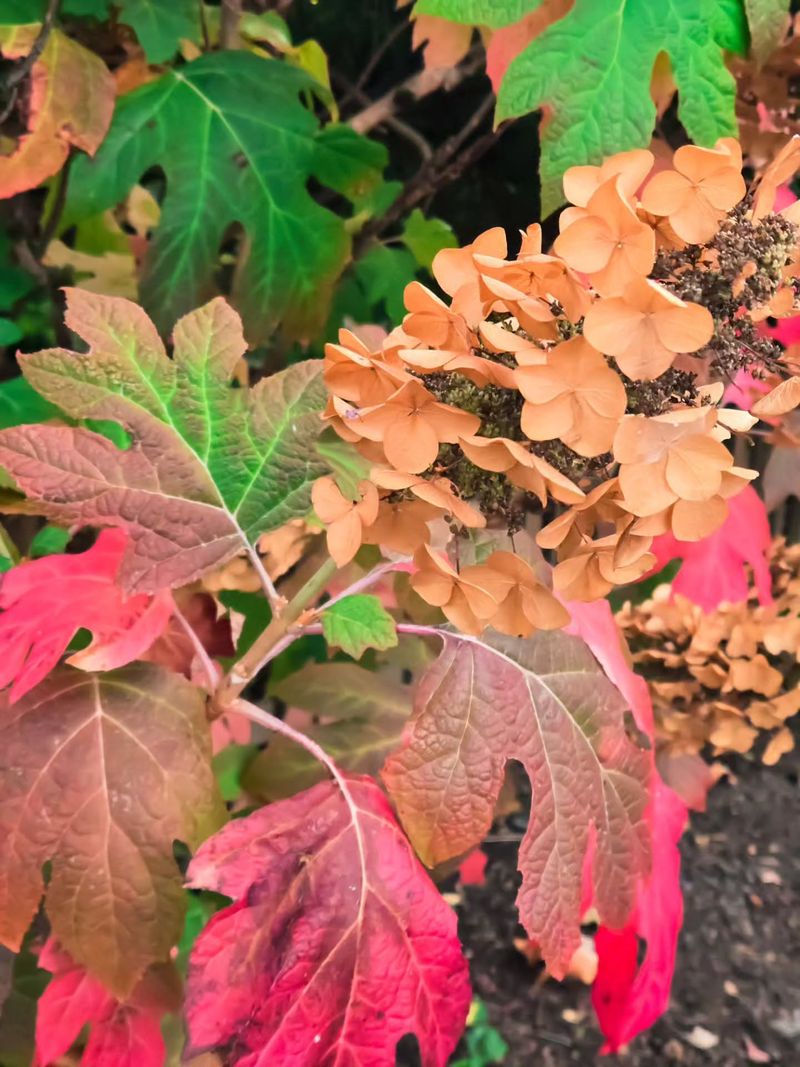
Hydrangeas are deciduous shrubs, which means they are built to lose their leaves each year. Leaves may turn yellow, bronze, or reddish before they fall, and that shift is a normal part of the seasonal cycle, as described in University of Connecticut guidance on hydrangeas.
Fall color is not the same on every plant. Oakleaf hydrangeas can develop striking red-purple foliage, while other types may turn yellow or simply fade to dull green and brown.
If your neighbor’s shrub looks different from yours, that alone is not a warning sign. Type and cultivar make a real difference.
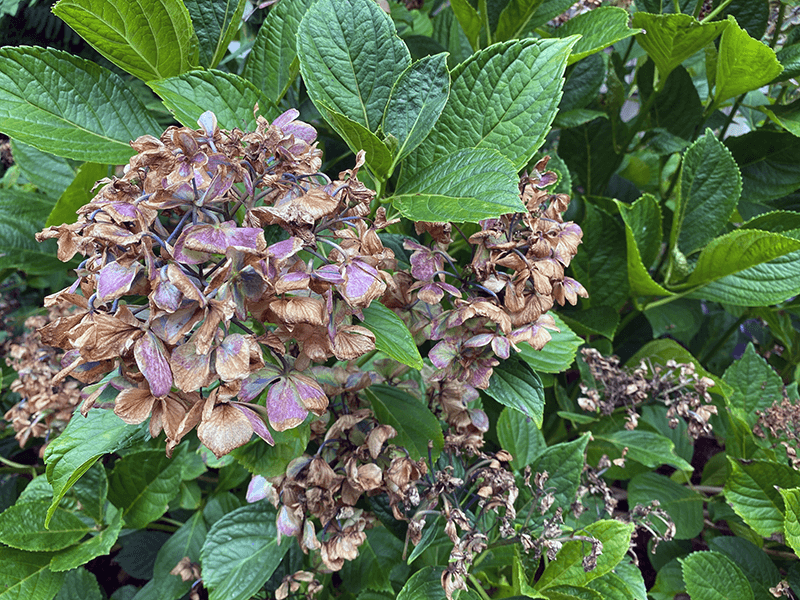
The flower heads change too. Those big pink, blue, or white blooms often age to tan, green-tinged parchment, or brown as the season winds down.
Papery, faded heads on a shrub that bloomed well this year are usually just the end of the show.
Still, appearance alone cannot tell you a plant is healthy. A shrub can have normal fall color and still be stressed at the roots, and a plant with ugly leaves can be fine.
Think of seasonal color change and leaf drop as one piece of the picture. The next sections cover the other pieces: how the stems look, how the soil feels, and what type of hydrangea you actually have.
Persistent wilt deserves a closer look
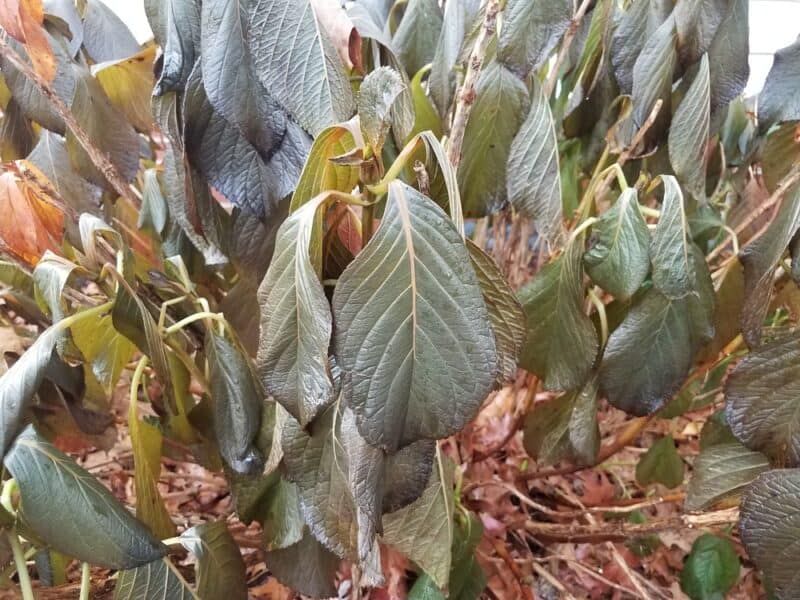
Seasonal leaf drop happens gradually, across the whole plant, and usually matches the weather turning cooler. Shoots that stay limp day after day, or that wilt suddenly while the rest of the shrub looks fine, are a different story.
That pattern is worth a closer look.
Wilting has more than one cause. University of Maryland Extension notes that hydrangeas can wilt from dry conditions, and too much water or poor drainage can also contribute to decline.
Root problems can look similar from above.
Root rot is one to keep in mind. University of Connecticut explains that it may first show up as wilting on one or more shoots, that watering may not bring affected leaves back, and that poorly drained soil can favor it.
Browning needs the same careful thinking. An Ask Extension diagnosis points out that water stress, excess sun, and disease can all cause it, so symptoms and site conditions both matter.
Ask a few questions. Is the whole shrub affected or only some shoots?
Has it been dry or soggy? Does the spot get hot afternoon sun or hold puddles?
Those clues will guide you better than one droopy stem, and they keep you from assuming that more water is the fix.
Check the soil before you reach for the hose
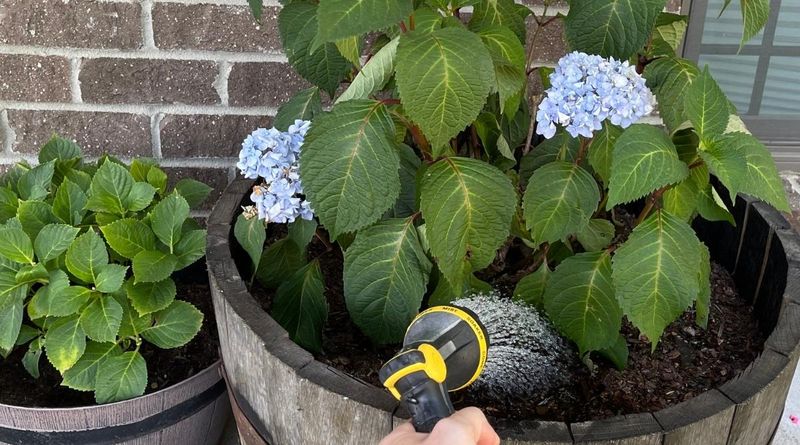
Put a finger or a trowel into the soil near the root zone, a few inches down and out toward the edge of the branches. If it feels dry, water slowly at the base.
If it feels damp or soggy, put the hose away and look at drainage instead.
That simple test matters because wilting can come from too little water or too much. University of Maryland Extension advises watering the root zone when soil is dry while avoiding waterlogged conditions.
Fall is not automatically the time to stop. Plants can still need water during long dry spells, and recently planted shrubs are the most likely to need help.
Guidance on fall and winter watering from Colorado State University supports watering as needed until the ground freezes.
You will not find one amount or schedule here, and that is on purpose. Climate, soil type, rainfall, sun exposure, and whether your hydrangea grows in the ground or a container all change what it needs.
A pot dries out far faster than a bed.
The University of Wisconsin horticulture program also stresses that drought stress and watering decisions depend on the plant and its setting. Let the soil, not the droop, tell you when to water.
Identify the hydrangea before pruning or deadheading
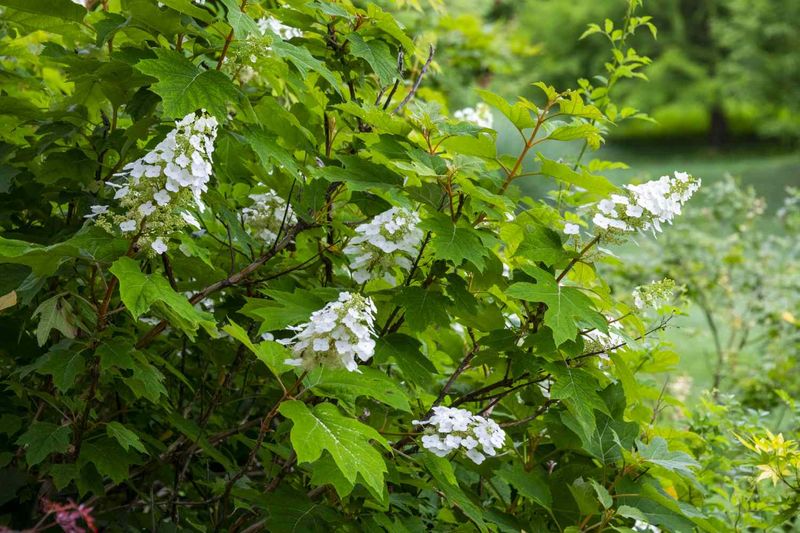
A big fall haircut can quietly cost you next summer’s flowers. According to University of Maryland Extension, bigleaf, oakleaf, and mountain hydrangeas commonly set flower buds on old wood, while panicle and smooth types bloom on new wood.
Cutting old wood can remove buds that are already formed.
So the first job is to figure out what you have. Check the plant tag, your planting records, or the leaf and flower shape.
If you cannot tell, hold off on major cuts until you can. Timing depends on type, and no single fall rule fits every shrub.
Deadheading is a separate and much smaller task. You can snip off just the spent flower at the tip of the branch after blooming, but it is optional and not needed for plant health.
Many gardeners leave the dried heads for their look in the fall garden.
Leaving stems and flower heads in place does not guarantee blooms next year, though. Winter or frost injury can still damage buds, even on branches you never touched.
If a branch is clearly dead or broken, you can deal with that. Otherwise, a light touch in fall and a clear plant ID will serve you better than any rush to tidy up.
Use mulch and winter care that fit your garden
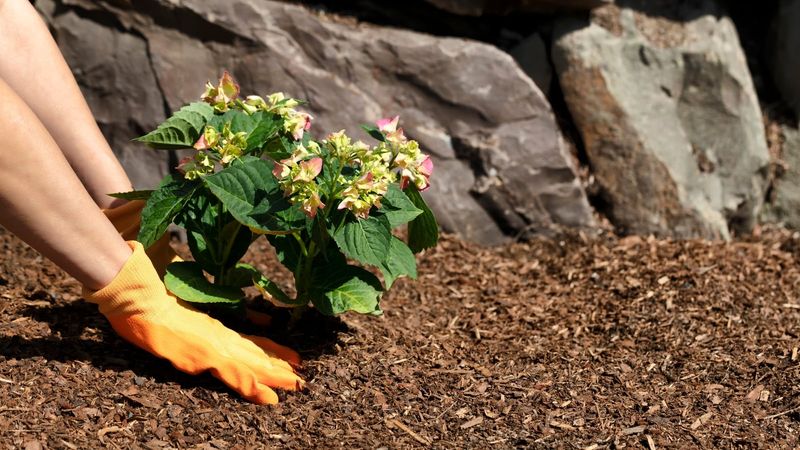
Mulch is a handy helper, though not an emergency fix. Colorado State University Extension explains that it can conserve soil moisture and moderate soil temperatures, but too much can restrict water and air reaching the roots.
You will often see 3 to 4 inches mentioned as a general depth for many mulches. Treat that as broad advice, not a rule for every yard.
Heavy clay, sandy soil, and wet climates may call for a lighter hand. Pull mulch back so it does not pile against the woody base of the plant.
Winter care is even more local. The University of Connecticut hydrangea guide notes that hardiness varies among types, so a method that suits one hydrangea in one climate may be unnecessary or wrong for another.
Moisture still counts after the leaves drop. The fall and winter watering guidance from the same university is a reminder to check soil during dry stretches until the ground freezes.
Ask your local extension office what is typical for your area and your hydrangea type. A little local knowledge beats any one-size winter wrap.
Make a simple fall check
Walk out to your hydrangea with four questions. Are the leaf changes and fading blooms the kind deciduous shrubs often show in fall?
Are any shoots staying limp, which calls for a closer look? Is the soil actually dry, per Maryland Extension?
Do you know your type before any major pruning?
A tired-looking shrub in fall is often just closing out its year.