
Can North Carolina HOA Homeowners Plant a Native Meadow? Check Your Covenants First
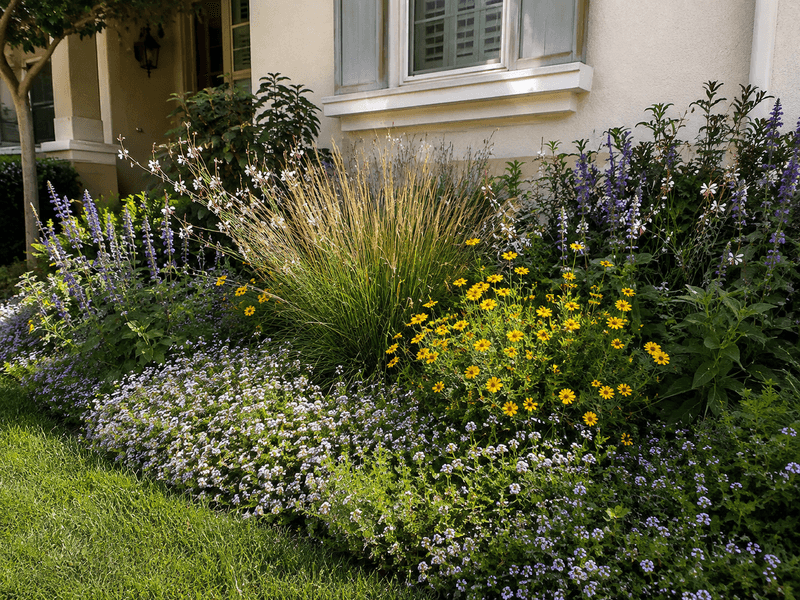
Swapping a patch of turf for flowers that feed bees, butterflies, and goldfinches sounds like a simple yard project. In a North Carolina HOA, it can turn into a letter about a violation if the paperwork is skipped.
The answer to whether you can do it depends on your community’s own rules, not on a single statewide promise. Here is how to find out where you stand before you pull up a single blade of grass.
North Carolina law does not create a blanket meadow exemption
Plenty of people believe North Carolina homeowners have a legal right to swap turf for a native meadow no matter what the HOA says. The sources reviewed for this article do not back that up.
Chapter 47F, the Planned Community Act, gives covered associations powers to adopt rules and enforce their governing documents, and it contains no general exemption for native meadows.
That does not mean an HOA can always say no, either. Whether a planting is allowed depends heavily on the community’s recorded declaration, its rules, any landscape-approval requirements, and the facts of the situation.
Neither the homeowner nor the association can count on winning by default.
Age matters, but not as much as people assume. The Act generally applies to communities created on or after January 1, 1999.
Some of its provisions, including rulemaking powers and fine procedures, also reach older communities, subject to statutory exceptions and to what the articles or declaration say.
So a neighborhood built in 1995 is not automatically outside the law, and a newer one is not automatically governed by every section. The practical takeaway is simple.
Start with your own community’s documents and treat the statute as the backdrop, not as a permission slip.
The recorded documents show what your HOA can require

Before you rent a sod cutter, get the paperwork. The NC Department of Justice advises homeowners to obtain and read the covenants and bylaws so they understand the association’s powers and their own responsibilities.
Your deed records and closing documents are a good place to start, and the HOA or its manager can supply current copies.
Read with a highlighter and hunt for specific language. Some declarations require turf or sod on front lawns, while others are silent.
Look for how the documents define landscaping, what they say about maintenance, and whether they set appearance standards such as tidy, neat, or well kept.
Next, find the architectural review provisions. Many communities require approval for changes to landscaping, even when the plants themselves are never mentioned.
Note who reviews requests, what a request must include, and how long the committee has to answer.
Also check the rules and guidelines adopted after the original declaration. The association’s rulemaking powers under Chapter 47F may apply to your community, and a newer rule may speak directly to plantings.
What the documents actually say frames the question, not a general assumption about native plants.
Landscaping disputes turn on the covenant’s specific language
Two North Carolina appellate cases show why wording matters. In Harrison v.
Lands End of Emerald Isle, the Court of Appeals found appearance language like clean and sightly unenforceable in the circumstances before it. The opinion is unpublished and non-controlling, and it turned on its own facts.
That makes Harrison a weak foundation for a meadow plan. It is not a general ruling that vague landscaping covenants are invalid, and it does not promise a homeowner will prevail.
Now consider the other side. RiverPointe Homeowners Association v.
Mallory involved explicit upkeep terms, a grass-height limit, and a requirement to get approval before removing landscaping. The court upheld the association’s enforcement powers on that declaration and those facts.
Neither case involved a native meadow, and neither decides whether every HOA may restrict every native planting. What they show together is that a specific height limit or approval clause may be enforceable, while loose appearance language may be tested differently.
Read your own covenant for that kind of detail before deciding how much risk you are taking.
HB 1212 has not established a current pollinator-garden right
Headlines about garden protections can make a proposal sound like settled law. HB 1212, introduced in the 2025-2026 session, would have protected edible or pollinator gardens from certain HOA limits.
According to its official bill history, the last action listed is referral to House Rules on May 5, 2026. That is not enactment.
Until a bill passes and becomes law, its wording does not change what your HOA can require. You can read the introduced text to see what lawmakers were considering, but treat it only as a proposal.
Also be careful with the phrase pollinator garden. Even if similar language became law someday, nobody should assume it would cover every meadow design, such as a large front-yard planting that replaces all turf.
Definitions, size limits, and conditions would matter.
The bill’s status can change, so check the General Assembly’s page before you rely on it in any conversation with your board.
Get a written decision before you remove the lawn
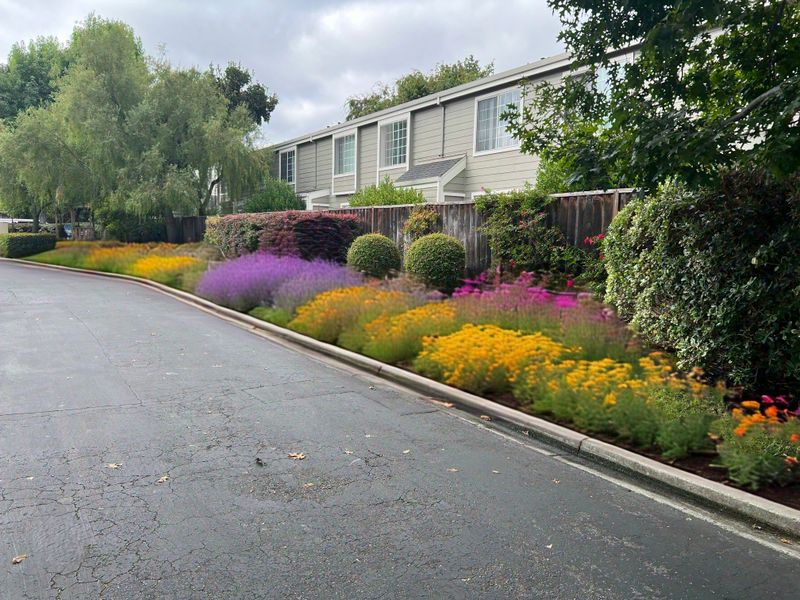
Once you know what the documents say, turn that knowledge into a proposal. A written plan gives the review committee something concrete to evaluate, and NC DOJ guidance points homeowners toward understanding their association’s rules and procedures.
If approval may be required, get the decision in writing before any turf comes out.
Include a simple sketch showing the boundaries of the planting area and how it sits next to the street, sidewalk, and neighbors. List the species or seed mix you plan to use, and describe how the edges will be kept neat.
Add your care plan. Explain how you will control weeds during the first seasons, how often you will mow or cut back, and how you will keep the planting from spreading onto neighboring lots.
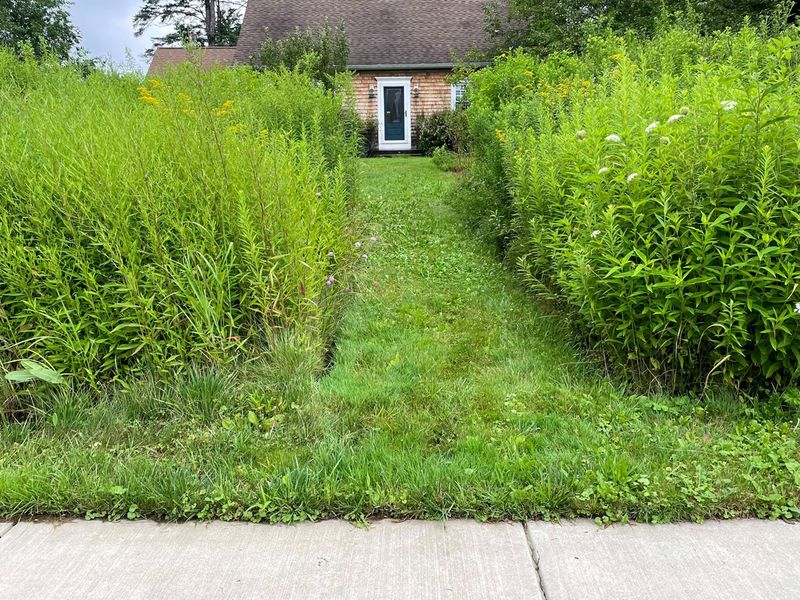
A defined, mowed border is a common way to show that a planting is intentional.
Submit the request the way the documents require, and keep copies of everything, including emails and the association’s reply. A written answer can clarify what is needed before work begins.
It does not guarantee approval, and a denial may lead you to adjust the design or ask what changes would make it acceptable.
A fine may come with a hearing and appeal process

Suppose a violation notice arrives anyway. When the statutory fine procedure applies, G.S. 47F-3-107.1 provides notice and an opportunity to be heard, with an appeal route from an adjudicatory panel.
That gives owners a chance to respond before a fine is imposed.
Whether it applies to you depends on your community. Some provisions of Chapter 47F reach older communities, but subject to exceptions and to the articles or declaration.
The statute also allows a declaration to provide its own specific procedure, so read that section of your documents.
If you get a notice, note the deadlines, respond in writing, and ask for the hearing if one is offered. Bring your photos, your plan, and any earlier correspondence with the association.
One caution matters most. A hearing and appeal process is a way to be heard, not permission to plant without required approval.
Going ahead without a decision when approval is required can leave you arguing the process instead of the planting, and a pre-approved plan is a much stronger position to be in.
A native meadow needs a site plan and ongoing care
Reviewers tend to say yes more readily to a landscape that looks planned. Treat a meadow as a designed garden, not a lawn you can walk away from.
NC State Extension says meadow wildflowers generally need 6 to 8 hours of sun, suitable drainage and moisture, and weed control before planting.
Walk your yard and note where the sun falls and where water collects. A soggy corner and a dry slope call for different species, so match the plants to those conditions instead of buying a generic bag.
Preparation is where many plantings succeed or fail. Extension warns that poor preparation and unsuitable seed mixes can produce a weed-dominated result.
It also cautions that an unmanaged planting can turn into weeds, vines, and volunteer trees.
Timing needs the same care. Extension recommends October and November for sowing meadow seed in North Carolina, but that is not a universal calendar.
NCDA&CS guidance for its pollinator blends gives its own timing and establishment advice, including dormant seeding and spring sowing.
So follow the directions for your chosen species or mix, and expect a slow start. The first season may look sparse and weedy, and a plan that says so honestly will be more believable to your HOA.
Keep tick precautions focused on the yard’s edges

Ticks are a real worry for NC yards, and an HOA board may raise them. A meadow is not tick-safe, and it is not proven unsafe either.
CDC guidance focuses on exposure around homes: clear tall grass and brush at lawn edges and around the house, mow frequently, and place a 3-foot wood-chip or gravel barrier between lawns and wooded areas.
Those steps fit a meadow plan well. Keep a mowed path or border between the planting and the places where people and pets spend time, and keep play areas and walkways away from the tallest growth.
Treat the wooded boundary as the spot that deserves the barrier.
Including these measures in your written proposal also answers a likely question from the review committee. It shows you have thought about upkeep and neighbors, which matters when documents like those in Chapter 47F communities give boards rulemaking and enforcement powers.
The path forward stays practical, as NC DOJ guidance suggests: read your documents, follow the approval steps, and propose a maintainable plan suited to your site.
A meadow that earns a yes is usually the one with a tidy edge and a clear plan.