
Early Signs Kudzu May Be Creeping Into Your North Carolina Yard Before It Forms a Blanket
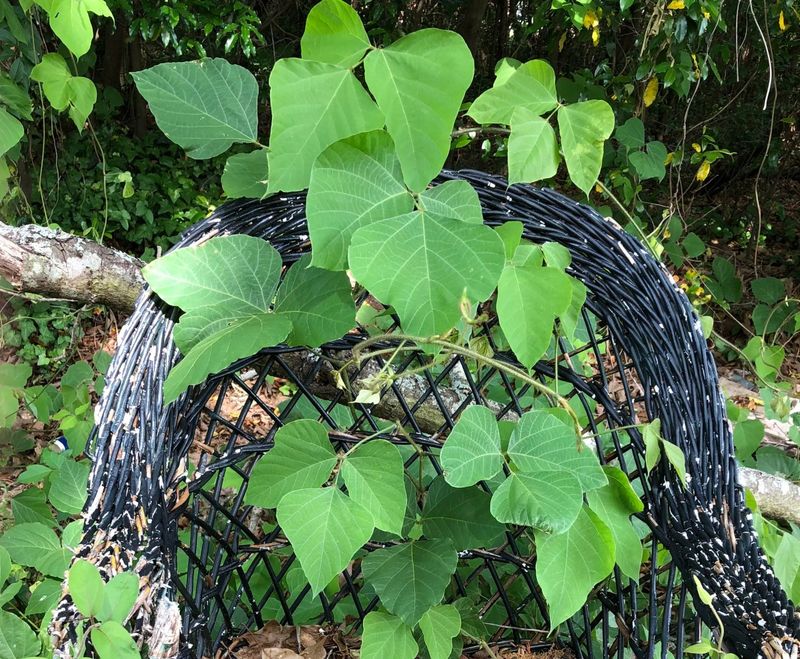
Most people picture kudzu as a thick green wall swallowing trees and sheds. Before that stage, the vine can send low runners across the ground that are easy to mistake for something harmless.
Knowing what to look for helps you check your own North Carolina yard calmly and confirm a plant before you pull, cut, or spray anything.
A runner can appear before a blanket

Kudzu has a reputation for burying hillsides, but that look comes later. Before a vine climbs over shrubs and fences, it can travel along the ground as a creeping runner.
That is the reason to look low. A runner snaking through mulch, along a fence line, or past the edge of the lawn may be easy to overlook beside other greenery, though no one can say how often homeowners actually miss early growth.
The point here is simply that a ground-level vine can be a clue worth a second look.
Kudzu is a perennial vine that grows along the ground and climbs by twining around whatever it finds. North Carolina Cooperative Extension in Madison County encourages residents to watch for it, and notes that a small patch is easier to deal with than an established one.
None of this means your yard has a hidden invasion. Most unfamiliar vines turn out to be something else.
Still, a quick walk along the edges of your property takes only a few minutes, and it lets you rule kudzu out or catch it while it is still small.
Growth speed is another reason to stay observant. The U.S.
Forest Service reports vines can grow as much as a foot in a day under favorable, active-growth conditions. That is an upper-end figure, not a typical rate, but it shows why a checked yard beats a forgotten one.
When kudzu does take hold, the damage comes from covering other plants and blocking their light. The shrubs, perennials, and young trees you chose are what is at stake.
Check the leaves and young stems
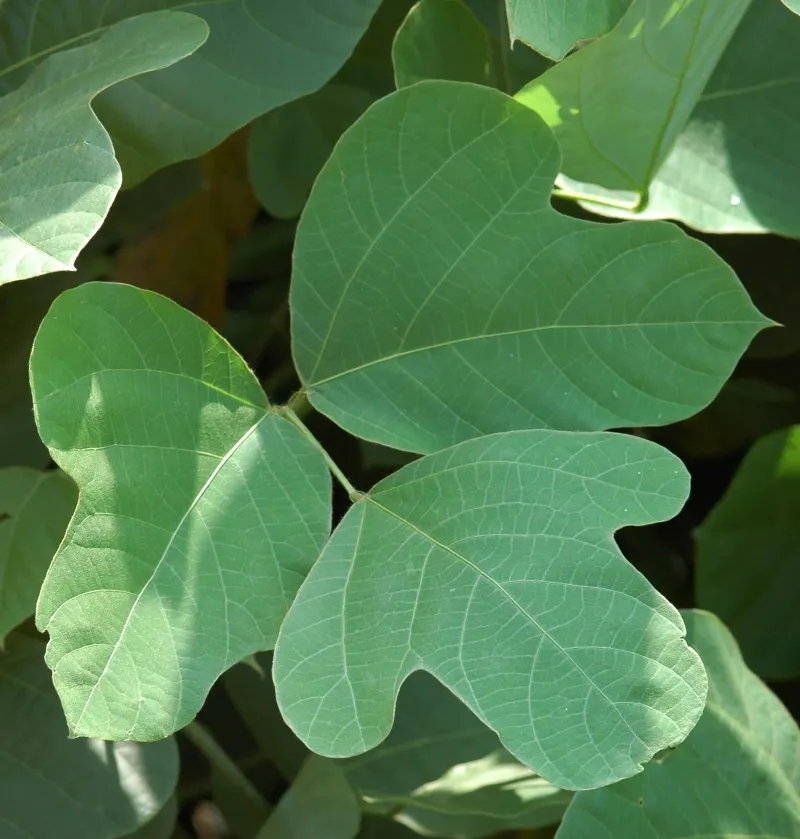
Start with the leaf layout. Kudzu leaves are arranged alternately along the stem, and each leaf is divided into three broad leaflets.
Individual leaflets can look different from one another. According to the North Carolina Extension Gardener Plant Toolbox, leaflets may be smooth along the edges or have lobes, so do not expect a perfect cookie-cutter shape.
Next, touch your attention to the stems and leaf stalks. Younger parts of the vine may be hairy, which gives them a slightly fuzzy look and feel compared with smooth stems on some lookalikes.
Hair can be subtle, so a close look in good light helps.
Now put the clues together. Alternate leaves, three broad leaflets, hairy young growth, and a vine that sprawls or twines all point in the same direction.
Any one of those features alone proves nothing, and a single leaf cannot confirm kudzu.
Habit matters too. Buncombe County Extension describes kudzu as a vine that creeps over the ground and climbs, so see how the plant behaves as well as how its leaves look.
Take a clear photo of the leaf, the stem, and the whole vine. Having several shots makes it far easier to compare notes with a local expert later.
Look for stems rooted at their nodes
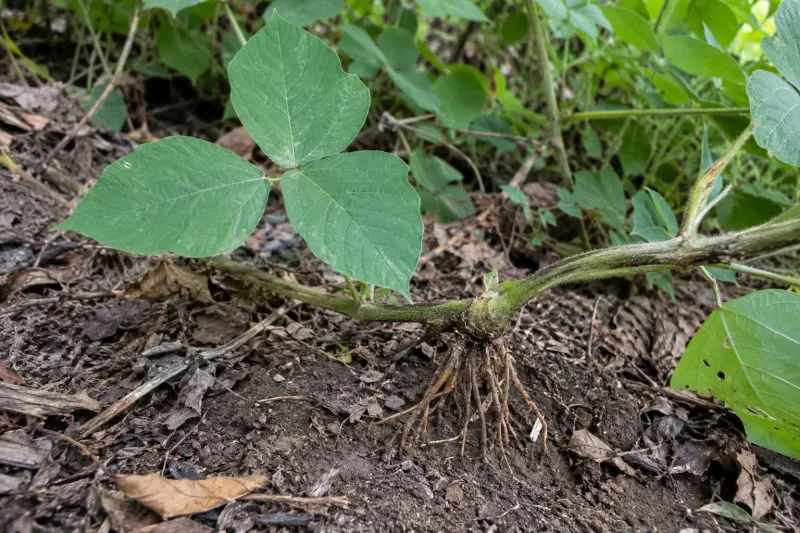
Instead of hunting only for one big central clump, follow the horizontal stems. Kudzu does much of its spreading sideways, and the trail can lead you somewhere unexpected.
Nodes are the joints along a stem where leaves attach. When a stem lies on the soil, the U.S.
Forest Service explains that kudzu can root at those nodes and form new root crowns.
A long stem alone is not much of a warning. Plenty of vines stretch across a yard without causing trouble.
The more actionable clue is a stem that has anchored itself, with roots or a new crown where it meets the ground.
To check, gently lift a section of a suspicious runner, wearing gloves if you are not yet sure of the plant. See whether the stem resists, and whether roots or a small swelling hold it to the soil.
Moving along the stem in both directions shows how far the vine has gone.
Each rooted node can become its own anchor point. That is why a patch can be larger underground than the visible leaves suggest, and why tracing runners is better than judging by the clump you can see.
Note the spots you find with a flag or a photo so you can return to them later.
Inspect likely spots without relying on a calendar
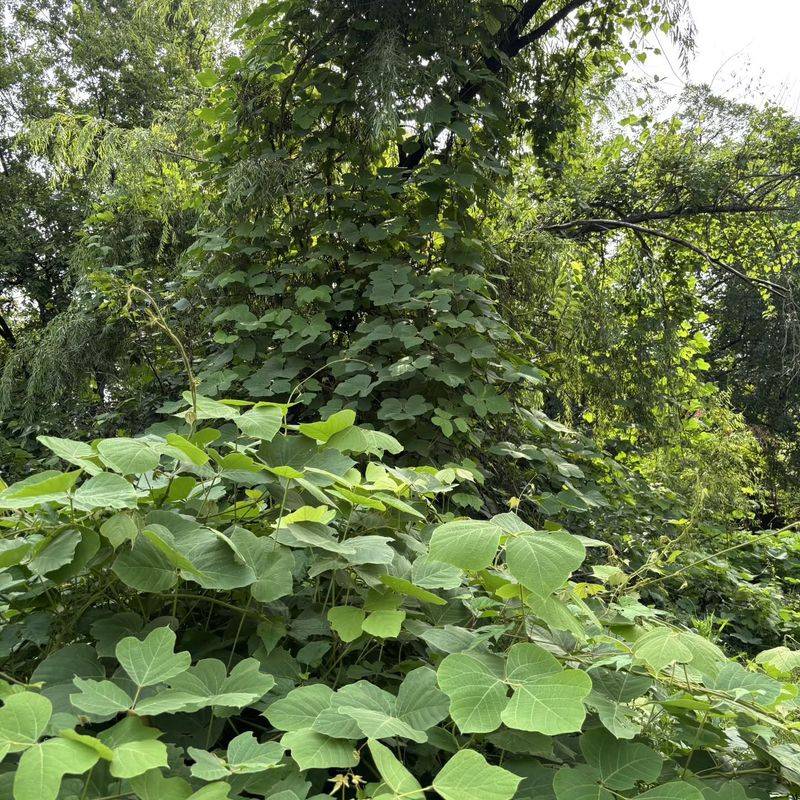
Put the clues to work on a real walkthrough. Low-growing vines along sunny, disturbed edges deserve extra attention, such as fence lines, the border where lawn meets woods, bare ground after digging, and the margins of driveways.
That does not mean kudzu grows only in those places. It simply gives you a sensible starting route, and you can widen the search to beds, shrubs, and tree bases as you go.
Timing varies across the state, so skip the single date on the calendar. The Forest Service review reports leaf emergence in late spring and flowering from late July through September, depending on location.
A Blue Ridge yard and a Coastal Plain yard will not wake up on the same schedule.
Elevation matters too. Buncombe County Extension advises considering growth and control timing locally, so watch your own plants rather than a statewide rule.
Do not wait for flowers either. Flowering comes late in the season, and prostrate runners may never flower, so waiting could mean missing the stage when a patch is easiest to handle.
Walk the same route every few weeks through the growing season and note what changes. Madison County Extension stresses catching new growth early, and repeat visits make it simple to spot a vine that was not there before.
Treat three leaflets as a clue, not a verdict
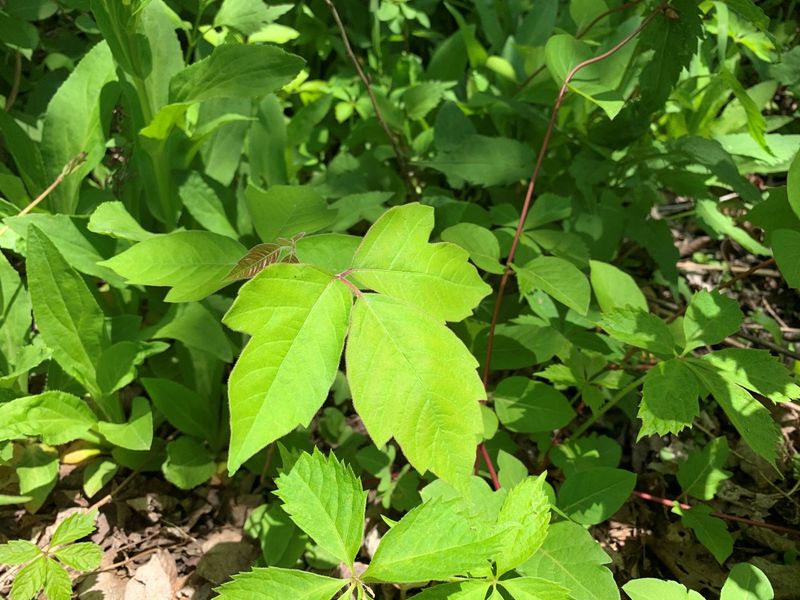
Plenty of plants wear three leaflets. Poison ivy, various native vines, and legumes such as hog peanut can all be mistaken for kudzu, and a wrong guess can cost you a rash or a harmless native.
The Indiana Department of Natural Resources lists poison ivy and hog peanut among the lookalikes. Leaf shape also varies from plant to plant, so counting leaflets cannot settle the question.
Hog peanut is a good example for a backyard steward. It is a native twining legume, and pulling it by mistake removes a plant that belongs in North Carolina.
Leaf details help sort things out. Compare size, edges, hairiness, and the way the vine grows.
The NC Extension Plant Toolbox has descriptions and photos you can hold up against what you found.
If you remain unsure, send clear photos to your county Cooperative Extension office. Include one of the whole vine, one of a leaf, and one of the stem.
Until you have an answer, leave the plant alone. Do not handle it bare-handed, and do not spray an unidentified vine, since herbicide can injure plants you want and poison ivy is a real risk.
Choose a response for a confirmed small patch

Once an expert confirms kudzu and the patch is genuinely small and new, you have a few options. NC Cooperative Extension describes hand-pulling, mowing, or grazing as possible controls through the growing season.
When pulling, work to remove the rooted portions as thoroughly as practical. Follow each runner back to its nodes and crowns, and bag the material rather than leaving cut vines on the soil where they might root.
Cutting leaves alone is not the same as dealing with roots. The Forest Service explains that established roots store reserves and can resprout, so trimming the top may only slow a patch down.
No single method promises eradication. Plan to return and repeat, and treat any success as something to confirm over time.
If you are considering herbicide, start with your county Cooperative Extension office and the label of the specific product. Buncombe County Extension notes the product must be labeled for the site, and that you should follow label directions and avoid drift.
Suitability and timing depend on the product and your site, so there is no universal rule. Take extra care near water and around desirable plants, since a misplaced spray can hurt the shrubs and perennials you are trying to protect.
Recheck the treated area
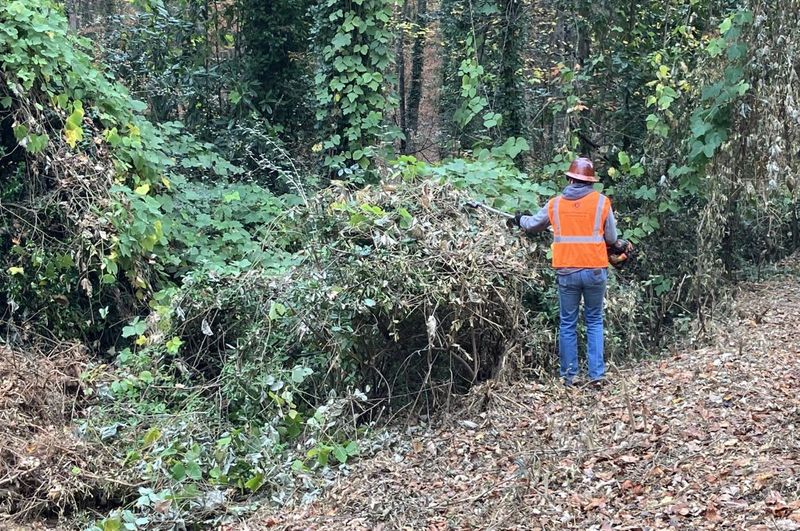
The routine is simple: scan for ground-level runners, follow them to rooted nodes, get uncertain plants confirmed, and revisit any patch you treated. Kudzu can resprout from root reserves, so the Forest Service says follow-up monitoring and repeat treatments may be needed for years.
Most vines you find will not be kudzu, and that is fine. A calm look every few weeks is enough.
A patch that stays bare is a quiet win, and a few seconds of checking keeps it that way.