
These North Carolina Maple Groves Put On The Most Colorful Fall Show Worth Driving To This Weekend
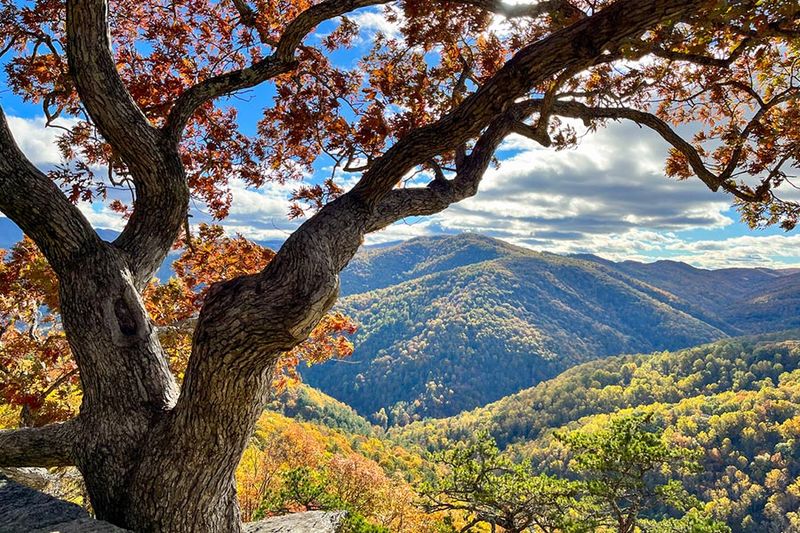
Every fall, North Carolina’s maples flip from plain green to fiery red, orange, and gold in just a few short weeks. Because our state climbs from coastal flatlands to mile-high peaks, the color show rolls downhill from late September into early November.
That means you have more chances than most states to catch maples at their very best. Here are ten spots worth the drive, plus a few ideas for bringing that same native color home to your own yard.
1. Linn Cove Viaduct and Grandfather Mountain
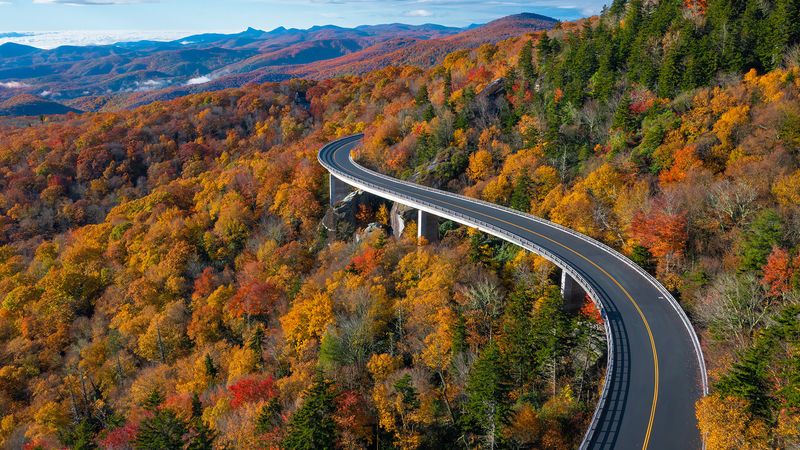
Picture a ribbon of road floating along a mountainside, with crimson maples tumbling below it. That is the Linn Cove Viaduct, and it ranks among the best fall drives in all of eastern North America.
The viaduct wraps around Grandfather Mountain near Blowing Rock and Boone. Engineers built it in pieces from the top down so they would not scar the fragile slope, which is why the forest around it still looks so wild.
Plan for mid-October, when red maples blaze against dark spruce and yellow birch. Pull into the overlooks on either end for photos, since stopping on the viaduct itself is not allowed.
2. Graveyard Fields
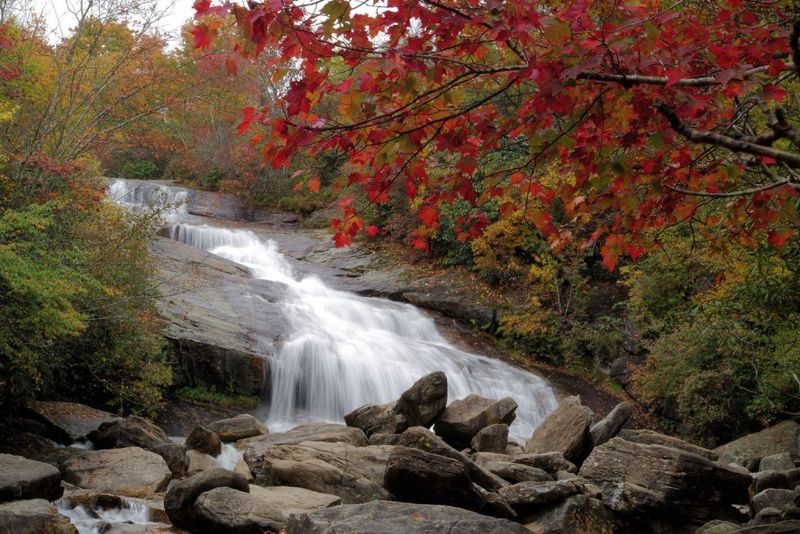
Early birds win at Graveyard Fields. This high valley off the Blue Ridge Parkway often peaks in the very first week of October, well before most of the state even blushes.
The name sounds spooky, but it comes from old stumps that once looked like tombstones after a huge windstorm and fires. Today the open basin fills with red maples, blueberry bushes, and sumac that turn the whole bowl scarlet.
An easy loop trail leads to waterfalls, so pack sturdy shoes. Parking fills fast on weekends, so arrive before 9 a.m. if you can.
3. Craggy Gardens
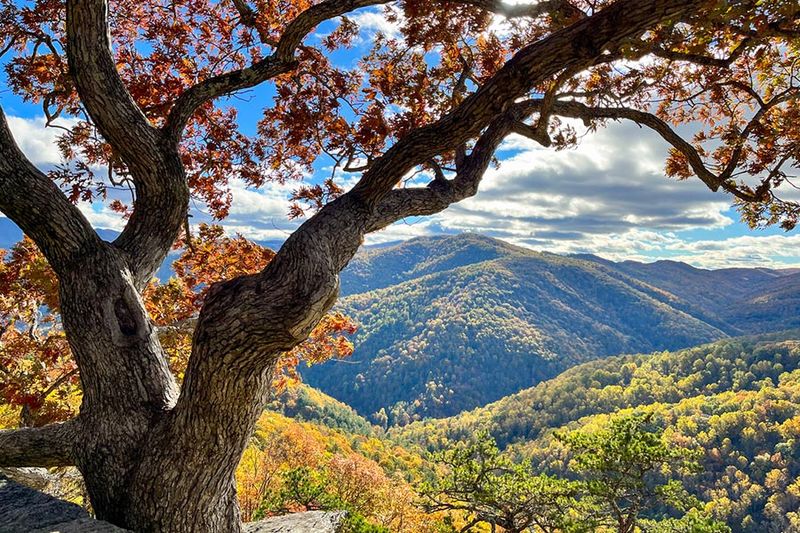
Want to spin in a slow circle and see color in every direction? Craggy Pinnacle, a short climb from the Craggy Gardens visitor center, gives you a full 360-degree view.
Up top, gnarled rhododendron and stunted trees frame the scene. Below, the slopes drop into coves stuffed with maples, oaks, and hickories that glow in layers.
The hike is under a mile each way, which makes it friendly for kids and grandparents. Bring a jacket, because the wind at these heights can feel like winter even when Asheville is mild.
4. Mount Mitchell State Park
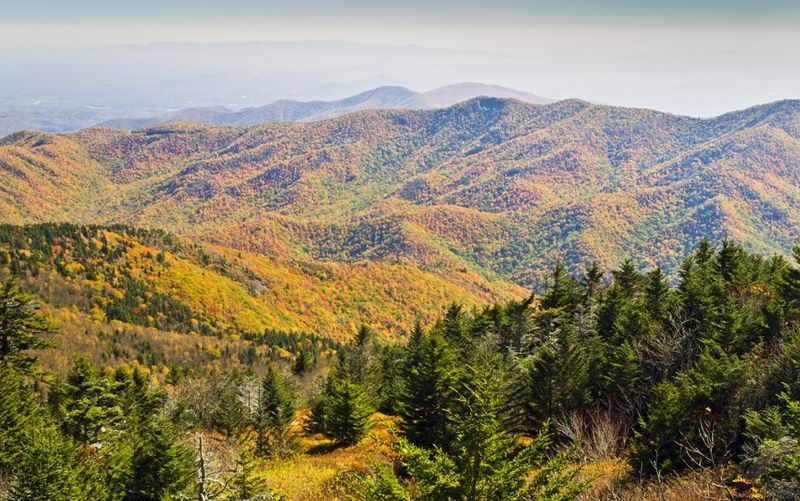
Standing at 6,684 feet, Mount Mitchell is the tallest peak east of the Mississippi River. Fun fact: it was once the center of a fierce debate between two professors over who measured it first.
Up at the summit, Fraser fir dominates, so do not expect maples right at the top. The magic is looking down, where early October paints the lower slopes in orange and red.
Because color starts so high, this park is a great first stop of the season. Check the weather before you go, since fog can swallow the view in minutes.
5. Linville Gorge and Linville Falls
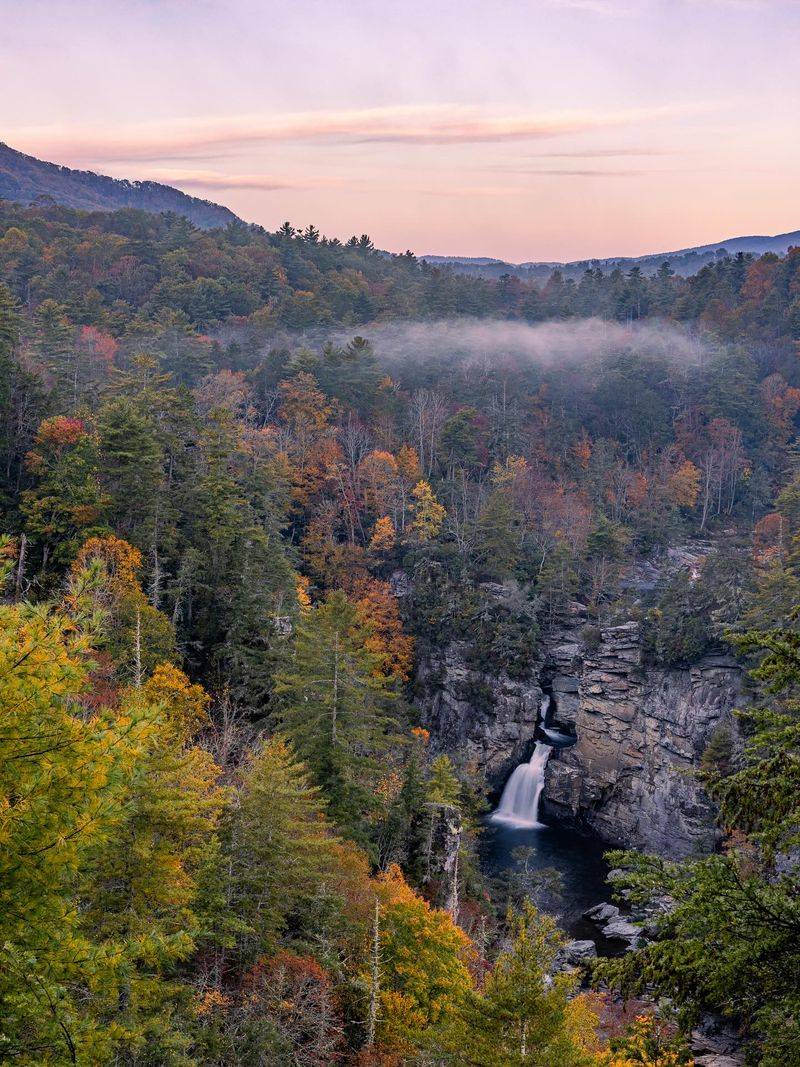
Some places whisper. Linville Gorge roars, thanks to a waterfall crashing into one of the deepest canyons in the East.
Short trails from the Blue Ridge Parkway lead to overlooks above Linville Falls. In mid-October, red maples and tulip poplars line the cliffs like a frame around a painting.
Stay behind the railings, since the rocks are slick and the drop is serious. The Erwins View trail gives the most famous look straight down the gorge.
6. Forest Heritage Scenic Byway
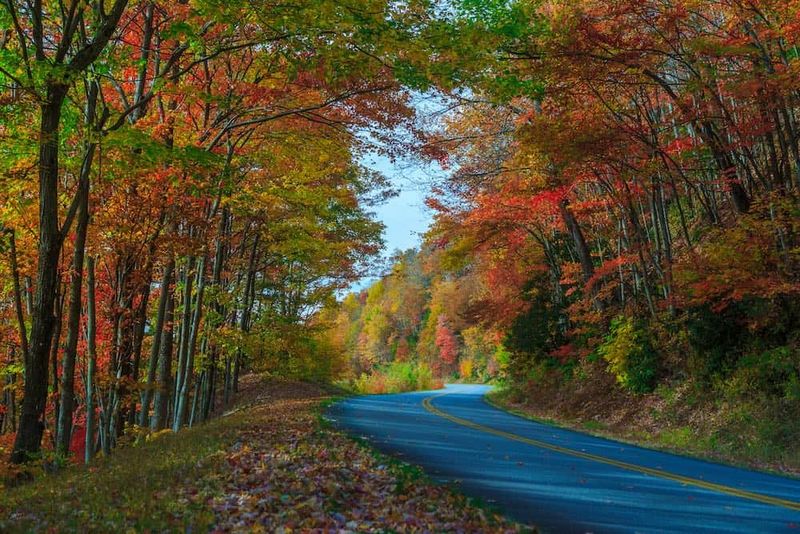
Locals call US-276 between Brevard and Waynesville a tunnel of gold and orange in mid-October, and they are not exaggerating. The road threads through Pisgah National Forest, where maples arch right over the pavement.
What sets this drive apart is the water. Looking Glass Falls sits just steps from the road, and Sliding Rock is close by too.
Roll the windows down and drive slow. Every bend seems to reveal another splash of color or a creek glittering with fallen leaves.
7. Great Smoky Mountains National Park
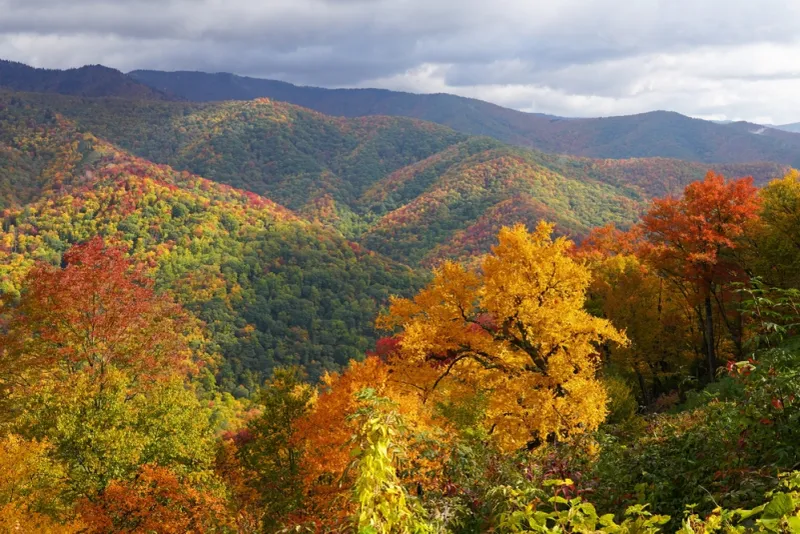
Missed peak somewhere else? The Smokies give you a second, third, and fourth chance.
Because elevations here range so widely, color can last from mid-September into mid-November. High ridges near Clingmans Dome turn first, while valleys around Cataloochee and Oconaluftee hold on until late.
Sugar maples shine in the coves, showing that classic mix of orange, yellow, and deep red. Cataloochee is also a fine place to spot elk, so keep your distance and let wild animals be.
Drive Newfound Gap Road on a weekday if you can. Weekend traffic in October can creep along for miles.
8. Chimney Rock State Park
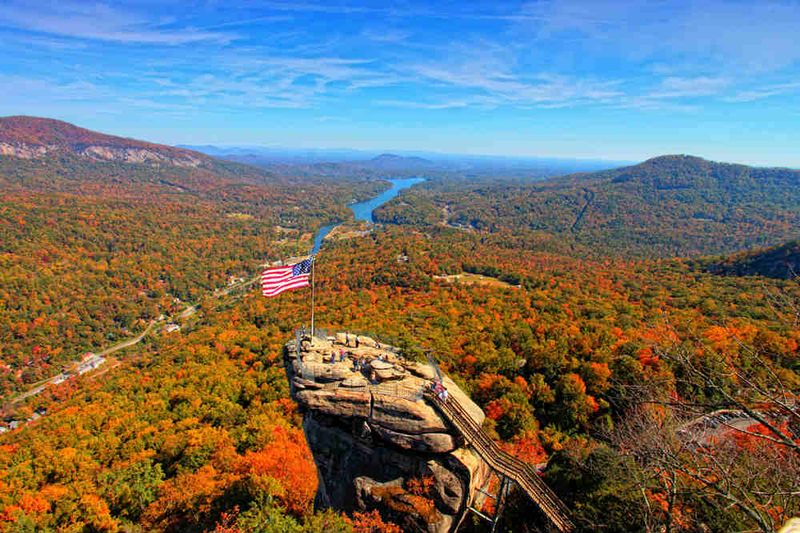
From a granite tower 2,280 feet up, you can see up to 75 miles on a clear fall day. Chimney Rock gives you that view with a lot less hiking than you might guess.
Lower elevation here means color arrives later, usually late October. That makes it a smart pick if mountain peaks have already gone brown.
Below the rock, Lake Lure reflects the hillsides like a mirror. Grab lunch in town afterward and make a full day of it.
9. Max Patch
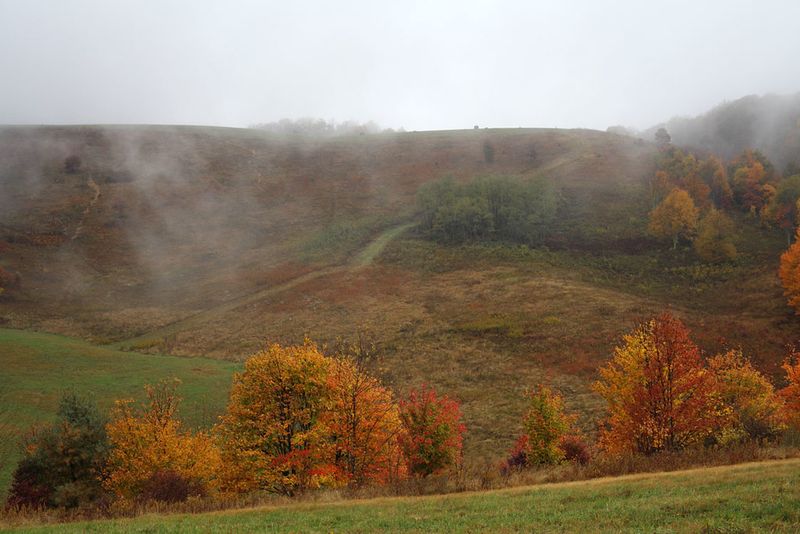
Max Patch feels like the top of the world with its sweeping grassy bald. Roughly 350 acres of open meadow sit along the Appalachian Trail, with nothing blocking your view.
From the summit, maple-covered ridges ripple out in every direction. Sunset turns the reds even deeper.
Please be a good guest here. Overuse has damaged the bald, so camping and fires are now banned on top, and staying on the trail protects the plants that grow there.
10. Piedmont Parks and Your Own Backyard Maple
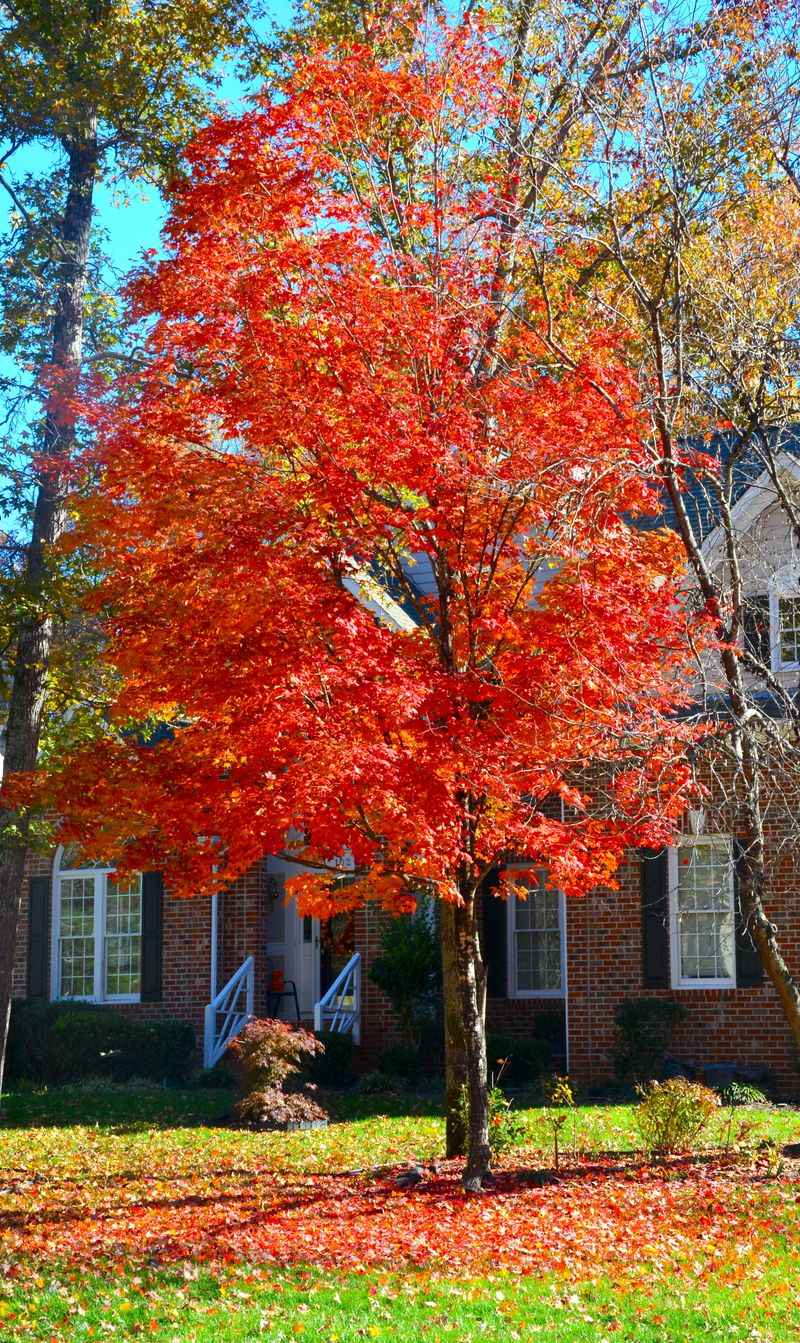
No time for a mountain trip? Piedmont color peaks in late October through early November at Eno River State Park, Umstead State Park, and Falls Lake.
Better still, you can grow the show yourself. Native red maple, Acer rubrum, turns red, orange, or butter yellow, handles many soil types, and feeds early bees in spring and squirrels and songbirds with its seeds.
Skip the Norway maple and invasive Callery pear, which crowd out natives. Fall is the best planting window in NC, and leaving some leaves under your tree may help shelter fireflies and overwintering insects.