
If Your Peace Lily Droops Every Winter, The Dry Furnace Air Is The Real Culprit, Not Thirst
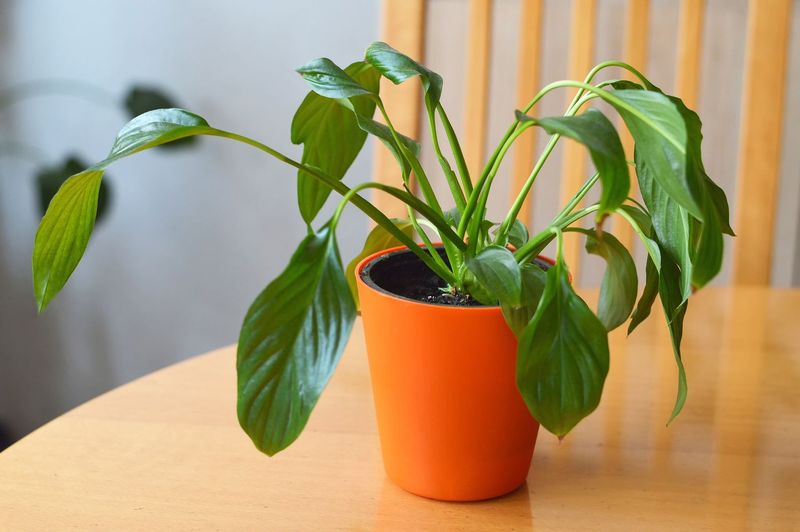
A peace lily that flops over in January can make any plant owner panic. Your first move might be to grab the watering can, or to blame the heating vents.
Both guesses could be right, or wrong. A quick check of the potting mix can point you in the better direction before you do anything else.
A drooping peace lily does not identify the cause
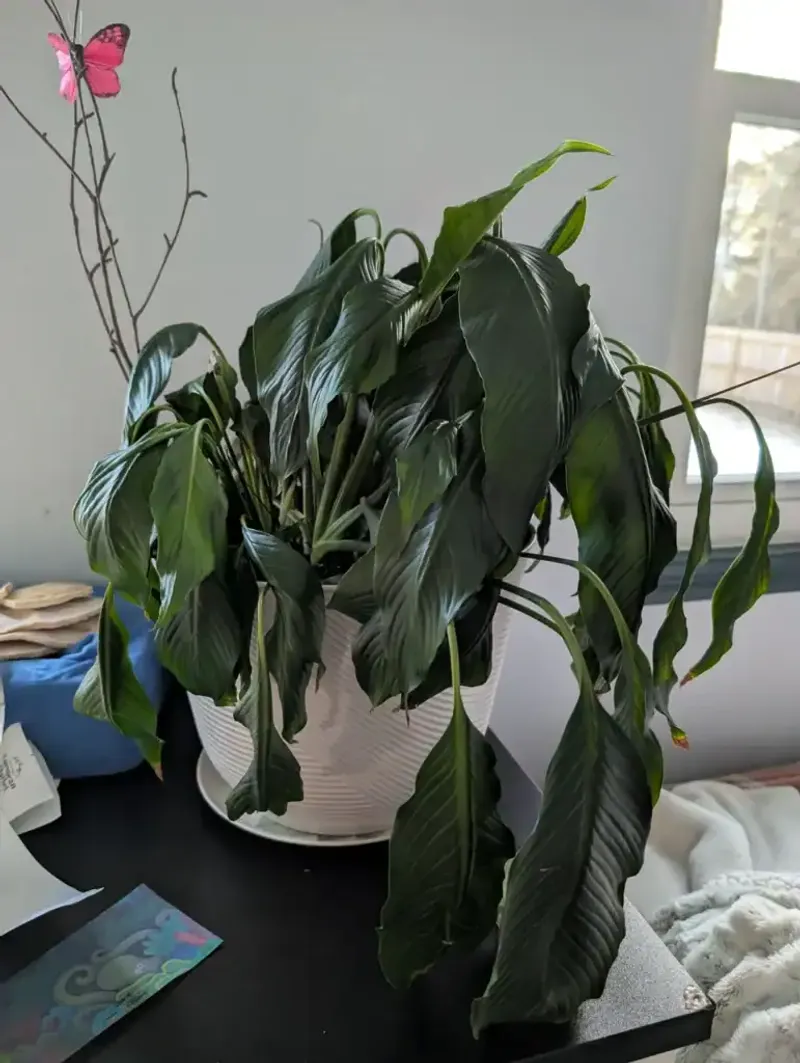
The title of this article makes a bold claim, but a drooping peace lily cannot tell you why it is drooping. Dry winter air can stress houseplants, so it deserves a look.
Still, droopy leaves alone do not prove that dry air is the cause or that thirst is off the table.
Extension guidance points in more than one direction. South Dakota State University Extension lists too little water as a reason peace lilies droop.
University of Maryland Extension notes that peace lilies can also wilt when they are overwatered. So the same limp look can come from a dry pot or a soggy one.
Low humidity shows up in a different place. North Carolina State Extension lists it as one possible cause of brown leaf tips, which is not the same symptom as drooping.
Neither clue settles the matter by itself.
That is why a soil-first approach makes sense. Before you water, and before you buy a humidifier, find out what is going on in the pot.
The answer tells you which direction to go, and it keeps you from fixing a problem your plant does not have.
What does the potting mix say?
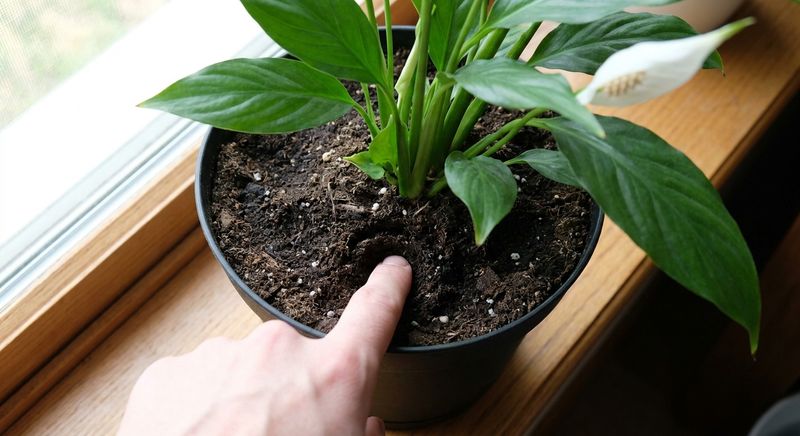
Your finger is the best tool you own for this job. Push it about 2 inches down into the potting mix, away from the stem.
University of Maryland Extension recommends testing at about that depth rather than judging by the surface or the calendar.
The top of the soil can fool you. It may look dry and crusty while the lower part stays damp, or the surface may look dark while the root zone has dried out.
Going 2 inches down gives you a truer picture of what the roots are experiencing.
Pay attention to how the pot feels, too. A pot that seems very light may be dry, while one that feels heavy and cool may still be holding plenty of water.
Look at the drainage holes and make sure they are not blocked, since water that cannot escape keeps the mix wet longer.
A fixed schedule such as every Sunday does not account for any of this. Light, temperature, and soil type all change how fast a pot dries.
Once you know whether the mix is dry or wet, the next step becomes clear, and the following two sections cover each case.
When the mix is dry, water thoroughly
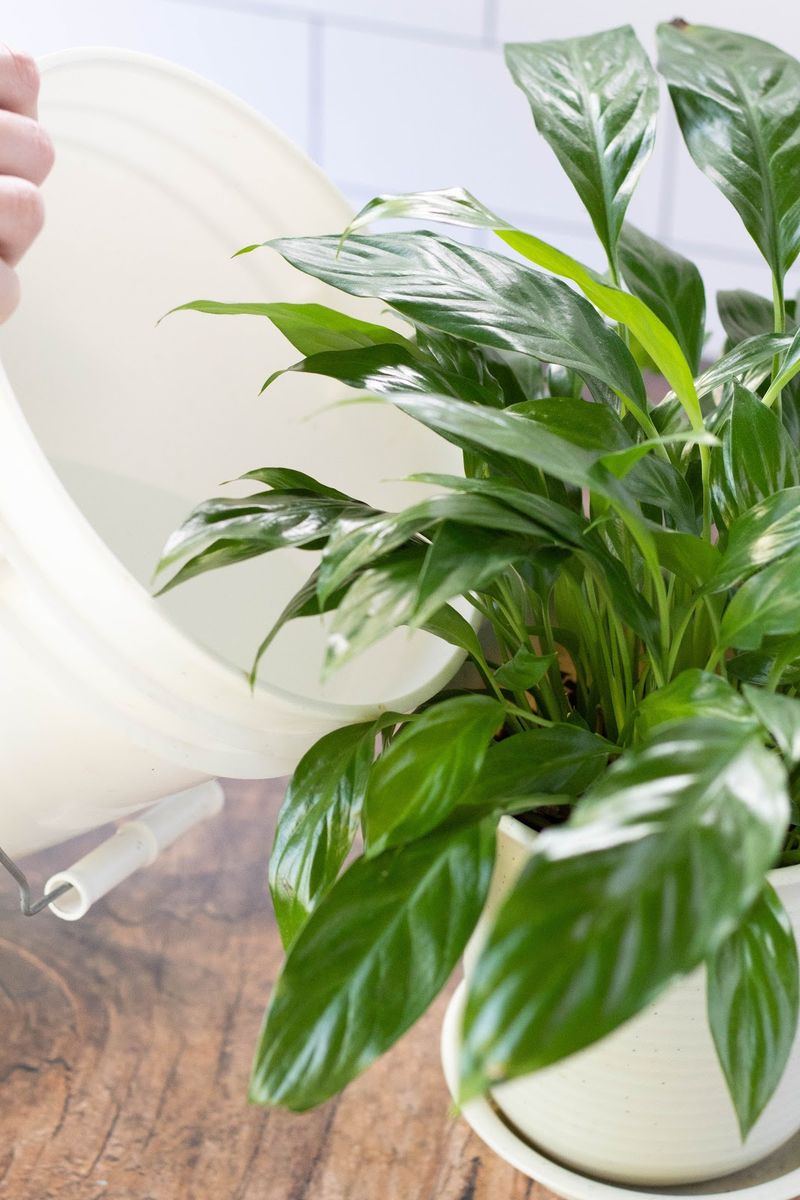
If your finger comes up dry 2 inches down, thirst is a likely suspect. Give the plant a thorough drink rather than a few sips.
Pour water slowly until it runs out of the drainage holes, which helps wet the whole root ball.
Then let the excess drain. Do not leave the pot sitting in water that has collected in a saucer or cachepot, because roots left standing in water can suffer.
Emptying the saucer after a few minutes is a simple habit that protects the plant.
The goal is soil that is moist but not soggy. South Dakota State University Extension describes keeping the mix evenly moist, and University of Maryland Extension adds that some drying between waterings is fine.
Resist the urge to turn this into a routine like watering every week. Your next watering depends on what the soil check shows.
A peace lily by a sunny window in a warm room may dry out sooner than one in a cooler corner, so let the mix guide you each time.
Wet soil calls for a pause
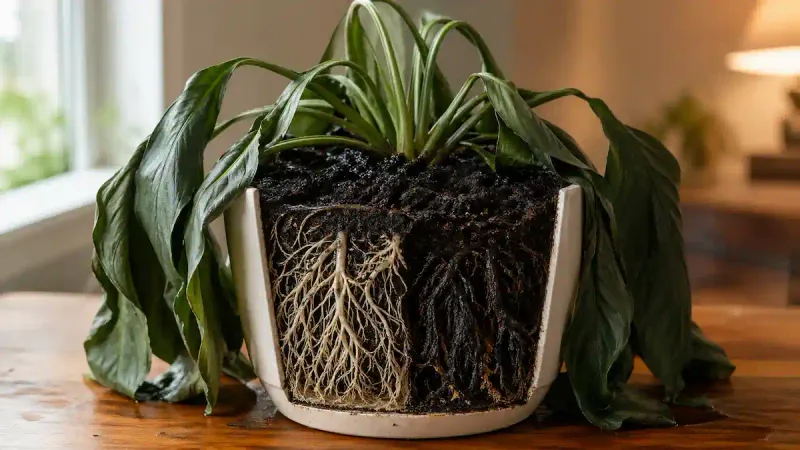
Here is where the watering instinct can backfire. If the mix is still wet and the leaves droop, adding more water is not the answer.
A plant can wilt because its roots are sitting in soil that stays soggy.
The reason is fairly simple. Persistently wet soil can damage roots, and University of Maryland Extension notes that overwatered peace lilies may wilt.
University of New Hampshire Extension also points out that damaged roots may not move water to the leaves well, so the plant looks thirsty even though the pot is wet.
So hold off and look around. Does the pot have drainage holes, and are they clear?
Is water pooling in the saucer? Is the mix very dense or staying damp for days?
Drooping alone cannot tell you the roots are harmed, so avoid jumping to that conclusion. Give the mix time to dry, fix any drainage issues, and check again.
If the soil stays wet for a long stretch or the problem keeps returning, a closer look at the roots and the pot may be worth doing.
Winter air can leave different clues
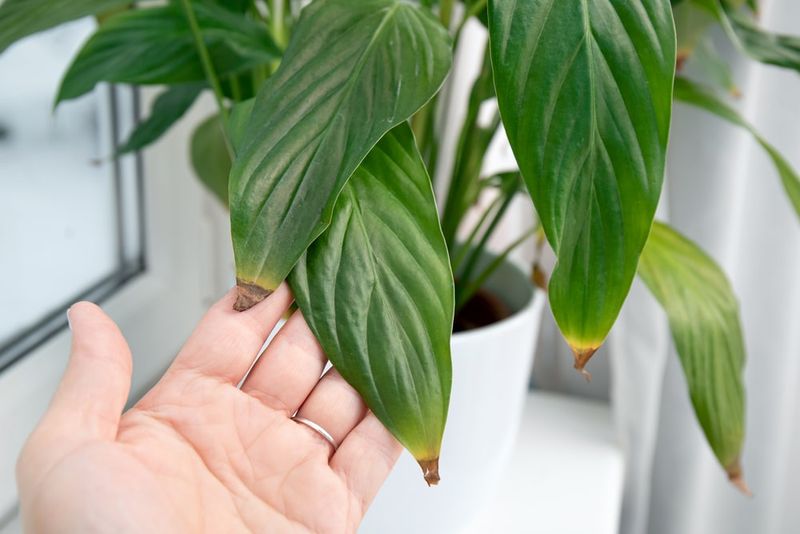
Crispy brown tips tell a different story from a droop. A drooping plant looks limp and soft, while brown tips are dry, papery edges on leaves that may otherwise stand up fine.
Keeping the two apart helps you read what your plant is saying.
Dry air is one possible reason for brown tips. North Carolina State Extension lists low humidity among the causes, but it is not the only one, so brown tips alone do not prove dry air is to blame.
Now look at where the plant lives. A spot right above a hot vent can blast the leaves with warm, dry air.
A spot near a leaky window can bring cold drafts. University of New Hampshire Extension discusses how heated indoor air can be dry for houseplants.
Winter changes more than humidity. Nebraska Extension notes that slower winter growth makes overwatering a common problem.
Lower light, cooler rooms, and drafts all shift how a peace lily uses water, so treat each clue as a piece of the puzzle rather than the whole answer.
A humidifier is more reliable than repeated misting
Start with the easiest step: move your peace lily away from direct hot-air vents and cold drafts. That costs nothing and removes two obvious stressors.
A spot with bright, indirect light and steady temperatures is a good target.
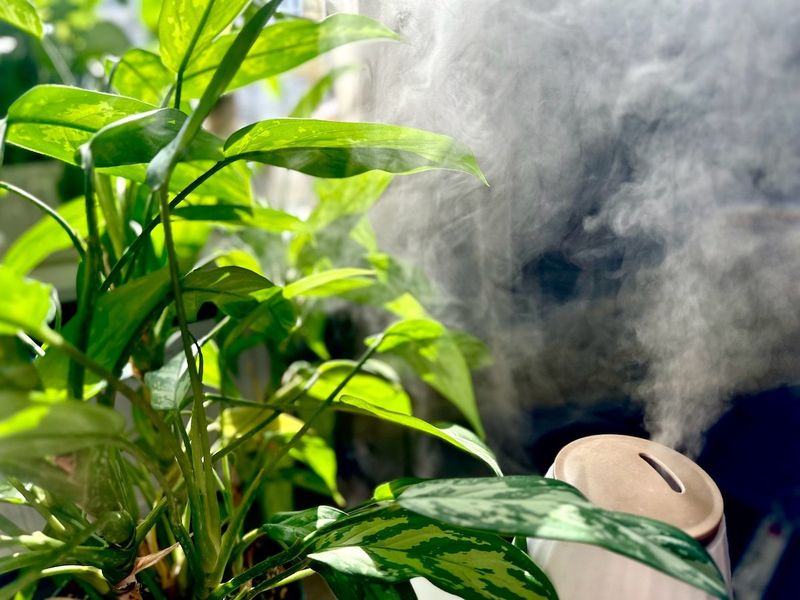
If the air still feels very dry, a portable humidifier placed near the plant is a practical option. Pair it with a small hygrometer so you can see the actual humidity instead of guessing.
University of New Hampshire Extension describes humidifiers as a way to raise humidity for houseplants. It is a helpful measure, not a guaranteed cure for drooping.
Misting is much weaker. Iowa State University Extension says the leaves dry quickly, so you would need to mist several times a day to keep up.
The boost is brief.
Pebble trays may offer a small benefit at best, according to University of Illinois Extension. If you try one, keep the pot above the waterline so the roots are not sitting in water.
Think of these tools as extras that support good watering, not replacements for it.
The soil-first winter check
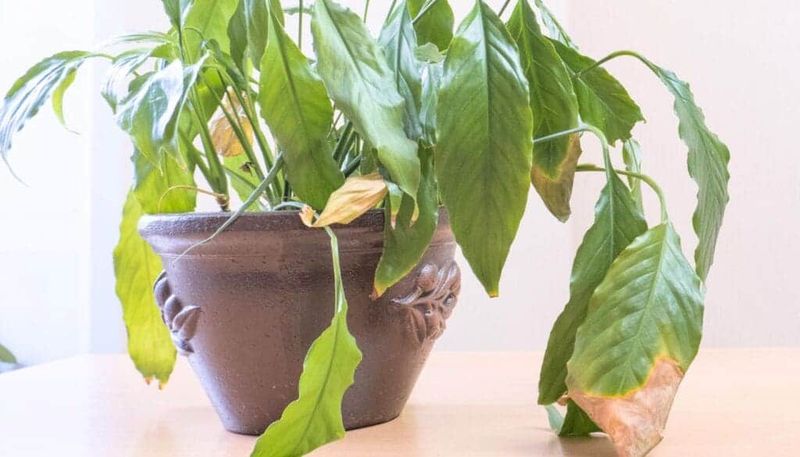
Check the mix first. If it is dry 2 inches down, water thoroughly and let it drain.
If it is wet, pause and look at drainage and roots instead of adding water. Then think about vents, drafts, and humidity as extra factors.
University of Maryland Extension and Nebraska Extension both suggest watering needs shift with conditions, so no single winter schedule fits every home. Your plant’s droop is a question, and the soil gives the first answer.