
Healthy Used Potting Mix Can Often Be Saved Over Winter: How To Store, Check, And Refresh It For Spring
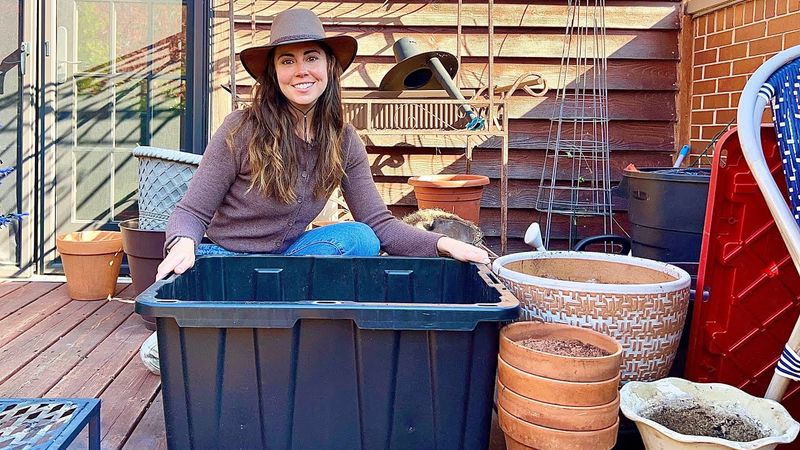
Those pots and bags of leftover potting mix sitting in the yard are not automatically a lost cause. Many gardeners worry that one cold winter turns their mix into a useless, soggy mess.
The truth is more hopeful, because mix from healthy plants can often be saved and used again. A few simple steps now can protect your tomatoes, geraniums, and petunias from trouble next spring.
One winter outdoors does not automatically ruin potting mix
The title of this article makes a bold claim, but it goes too far. Winter alone does not wreck used potting mix.
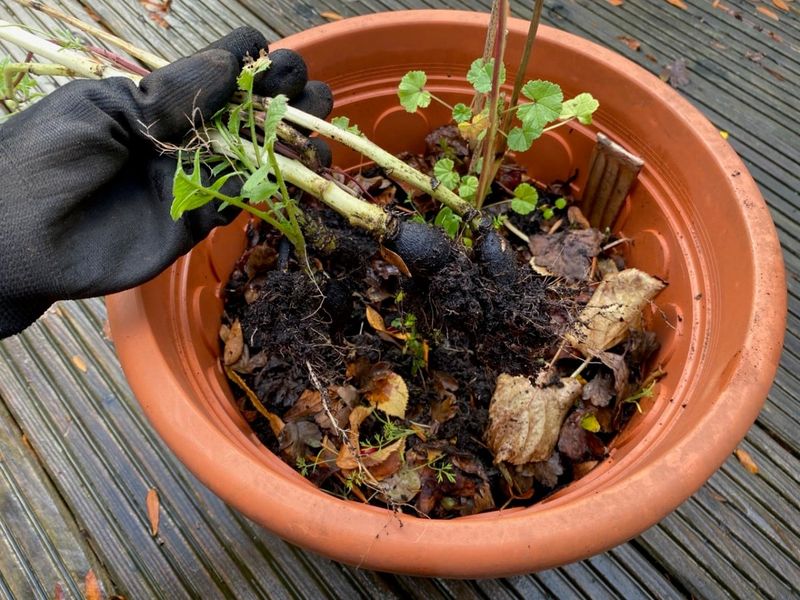
University of Maryland Extension recommends emptying containers, removing plant debris, storing the mix in a trash can or heavy-duty bags, and using it again next season if root disease was not a problem.
Oklahoma State Extension agrees that mix from healthy plants can be reused once its fertility and porosity are refreshed. So the real question is not whether the mix spent months outdoors.
The better question is what shape it is in and what grew in it.
There are some real changes to watch for. Mix that has been in use loses nutrients, and its ingredients can break down over time, which leaves less air space.
Oklahoma State notes that used mix can be more compact than fresh mix. That depends on the ingredients and how long the mix has been in service, not on a single cold season.
Freezing and thawing can also matter for some ingredients. A Maryland Extension answer says perlite can break down after many freeze-thaw cycles.
That is a reason to check your mix in spring, not proof that it is ruined.
Souring and pest problems are not guaranteed either. A mix that stays reasonably drained and came from healthy plants has a good chance of being useful again, with a little care.
Let the plant’s history guide your decision
Before you save anything, think back over the season. Did the plants in that pot grow well, or did something go wrong?
Mix from a healthy geranium or petunia is a good candidate for saving.
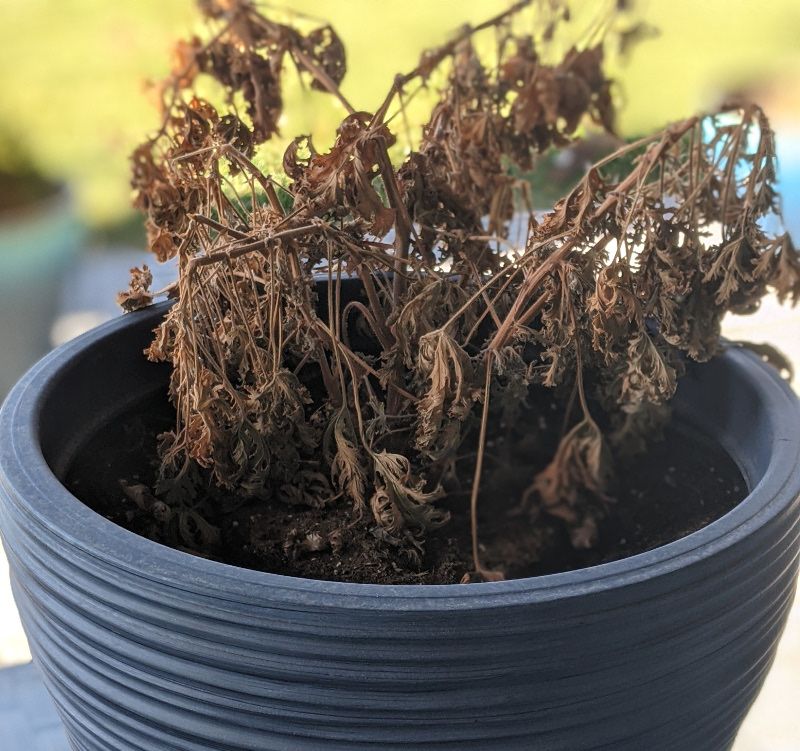
Mix from a pot where a tomato wilted from root disease is a different story. Oklahoma State Extension advises against reusing mix if disease, weeds, or insects were problems.
Disease organisms can persist in or on the mix, so saving it just carries the trouble into spring.
It is tempting to think that cold weather will clean things up. Storage preserves mix, but it does not make suspect mix safe.
Covering or sealing it limits new contamination, yet it does not remove problems that are already there, as Penn State Extension’s disease risk guidance makes clear for growing media.
Freezing is not a reliable disinfectant either. Oklahoma State’s guidance on non-chemical disease control discusses heat-based methods and warns that heating done wrong can create conditions toxic to plants.
It does not offer freezing as a dependable fix.
A simple habit helps: make a quick note on each pot before you empty it. If the plant struggled with disease, pests, or lots of weeds, let that mix go.
Empty the pot, remove debris, and protect used mix
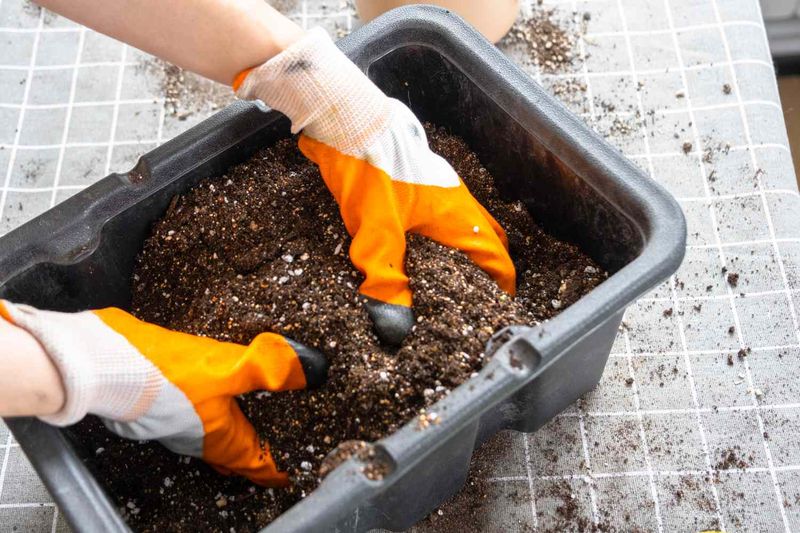
Once you have decided a pot’s mix is worth keeping, get it out of the container. Tip it onto a tarp or into a wheelbarrow and pull out old roots, stems, and leaves.
Breaking up clumps as you go makes the mix easier to assess later.
University of Maryland Extension suggests storing the cleaned mix in a trash can or heavy-duty bags for use next season. The goal is to keep out rain, pests, and stray contamination such as weed seeds or debris from the yard.
A lidded can with the lid fastened works well. Thick contractor-style bags tied shut are another option.
Keep them in a spot such as a shed corner, garage, or against a wall where they are out of the weather.
You do not need to bake the mix dry. Covering protects the mix, but it does not kill pests or pathogens, so this step only applies to mix you already judged to be healthy.
Emptying pots also helps the containers themselves. Nevada Extension describes emptying pots and storing the mix in a trash can, and other extension sources warn that repeated freezing and thawing can crack earthenware, ceramic, and terracotta.
A cracked pot is a container problem. It does not mean the mix inside is ruined.
Store unused bagged mix differently
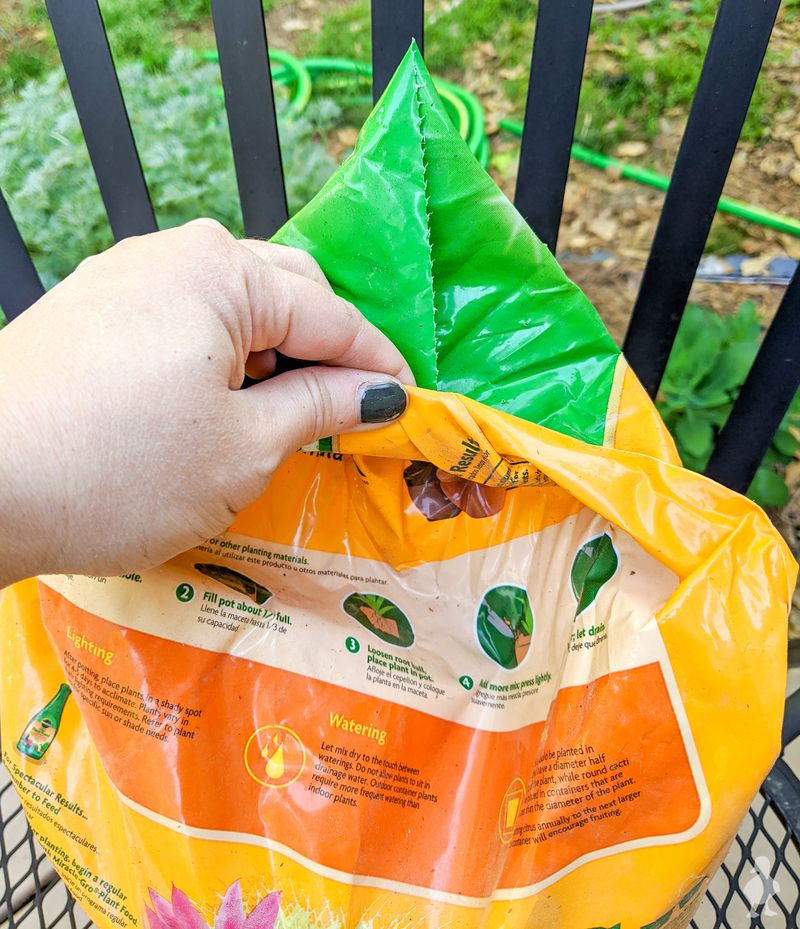
A bag you opened but never finished is not the same as mix pulled from a used pot. Fresh mix often contains slow-release fertilizer, and moisture changes how that behaves.
Used mix has already been through a season of growing, so the two need separate handling.
According to UMass Extension, if a bag gets wet, fertilizer can release inside it and become concentrated. Roots planted into that mix later may be injured.
A bag left open to rain or snow is the classic way this happens.
The fix is simple. Keep leftover bags out of the weather and seal them tightly, or move the mix into an airtight container.
UF/IFAS Gardening Solutions gives similar advice about tightly sealing leftover potting-soil bags or keeping them in airtight containers so they stay dry.
Label the bag so you know it is unused. Keeping those bags apart from your cans of recovered mix avoids confusion in spring.
This dry-storage rule is for unopened or leftover fresh mix, not a rule that all used mix must be dried out completely.
Check and refresh saved mix before planting
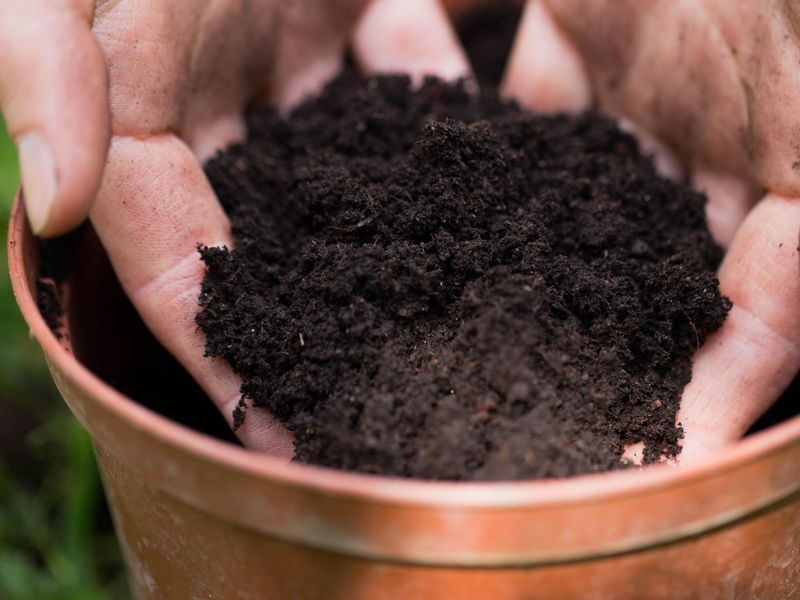
When spring arrives, treat saved mix as a starting point, not a finished product. Open the container and look at it.
Is it loose and crumbly, or packed into hard clumps that hold water?
Squeeze a handful. Mix that stays in a dense, soggy ball may have lost drainage and air space.
A Maryland Extension response notes that old mix can drain poorly and that salts from fertilizer or irrigation water can build up. Adding fresh material may improve drainage and dilute those salts.
Oklahoma State says reused mix may need better porosity and fertility. Its guidance points out that the starter fertilizer in new mix generally lasts about three to six months, so saved mix often needs feeding.
Actual needs depend on the mix and the plant.
One refresh option comes from University of Maryland Extension: blend last year’s medium 50:50 with fresh growing medium and/or compost. That is one recommended approach, not a fixed rule for every mix or plant.
Even a good blend will not turn old mix into brand-new mix. Think of it as a practical upgrade.
Hungry plants like tomatoes may need more feeding than a pot of geraniums, so watch how the plants respond.
Use a simple spring decision rule
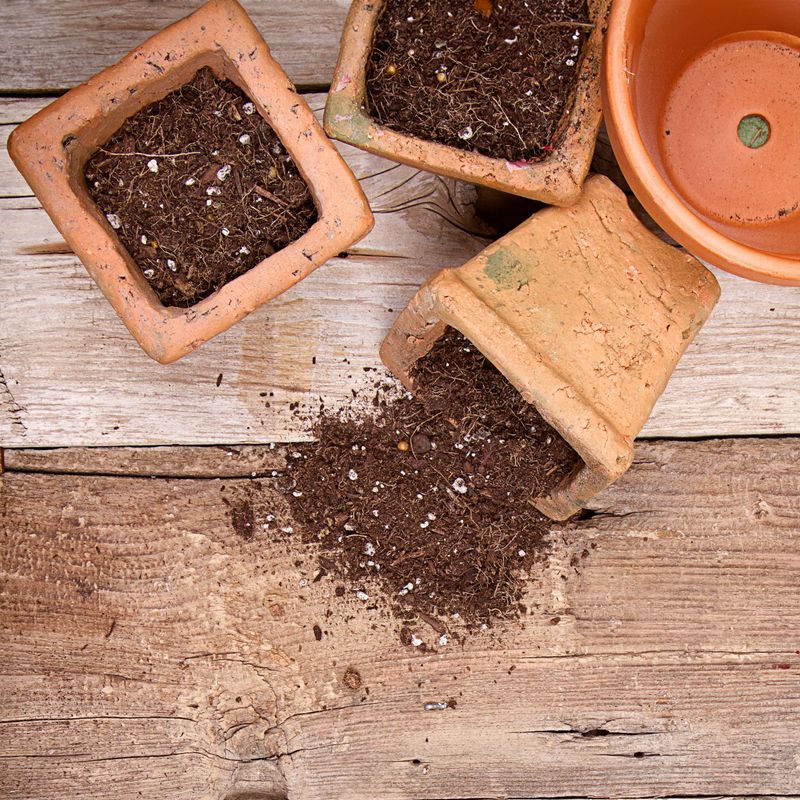
Here is the rule to carry into spring: keep mix from healthy plants, check it, and refresh it as needed. Let go of anything linked to disease, weeds, or insects.
Oklahoma State Extension and University of Maryland Extension both support that approach.
Winter is not the deciding factor, and storage is not a cleaning treatment. Good mix is the product of a healthy past and a little spring care, and that is what your next round of plants will thank you for.