
Helping Your Potted Meyer Lemon Adjust To A North Carolina Winter Indoors
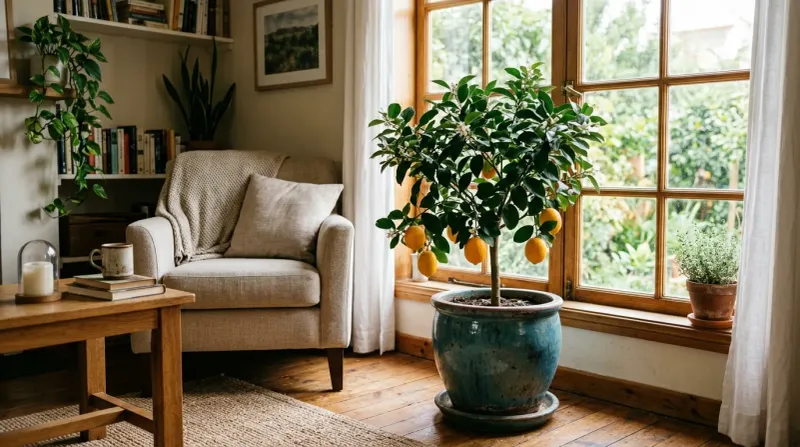
A Meyer lemon that spent the summer on your patio has to learn a whole new way of living once it moves into your house. Light gets dimmer, the air gets drier, and the soil stays wet longer.
Some trees grumble about it by dropping a few leaves or small fruit. With smart timing and a few simple habits, you can cut down on avoidable stress and give your tree a steadier winter.
Move the tree before frost, using your local forecast
Meyer lemons do not tolerate frost, and that is the main reason North Carolina gardeners grow them in containers. N.C.
Extension’s plant guide notes that the tree cannot survive frosts and suggests container growing so it can come inside where winters are colder than zones 8b or 9a. A pot gives you a big advantage, because you control when the tree comes in.
There is no single move-in date that works across the state. The Piedmont, the Coastal Plain, and the mountains all warm up and cool down on different schedules, and even two neighborhoods in the same town can differ.
A mountain gardener may need to haul the pot in weeks before someone near the coast does.
Your best tool is the local forecast. Check it often in October and November, and plan to move the tree before the first frost warning, not after.
If a cold snap is predicted for the weekend, treat that as your deadline.
Colder states give some helpful guidance. Wisconsin Extension advises bringing citrus indoors before nighttime temperatures drop into the 40s degrees Fahrenheit.
Think of that as a regional rule of thumb, not an exact point where every tree gets damaged.
A practical plan is to watch for nights trending toward the 40s, then pick a dry day to make the move. Clear a spot ahead of time so the tree is not parked in a hallway while you decide where it goes.
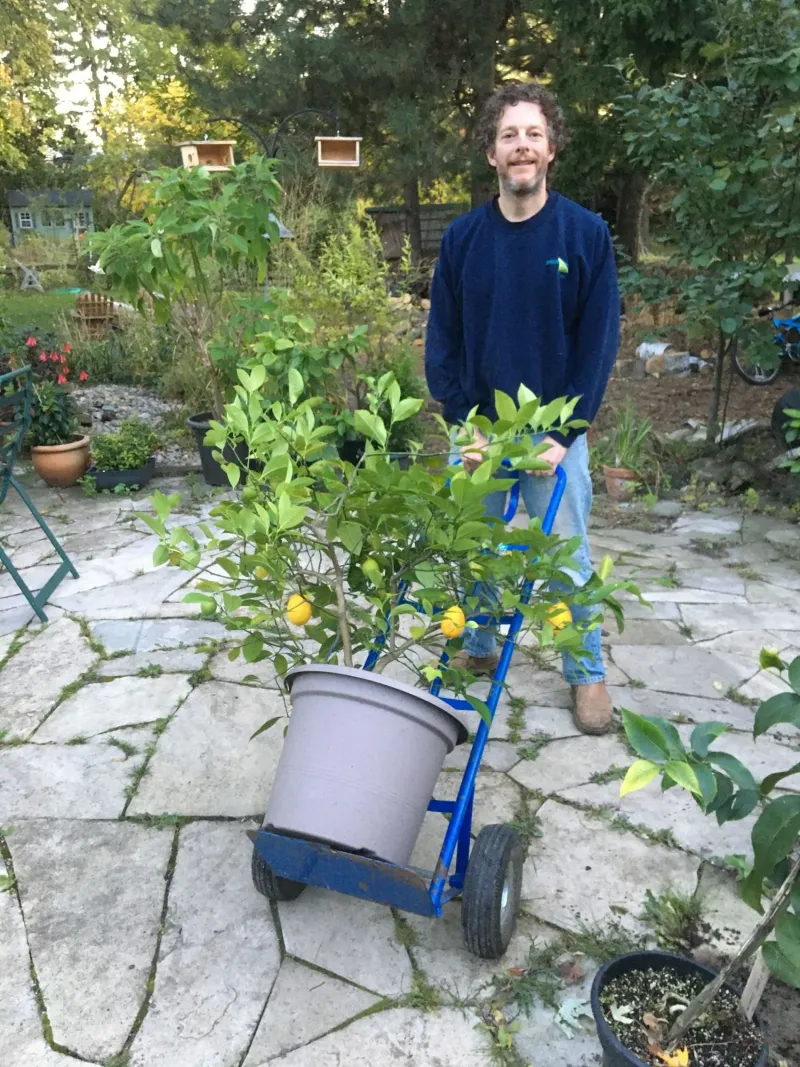
Having a hand truck or a plant caddy ready also saves your back with a heavy container.
Ease the light change and choose a bright indoor spot
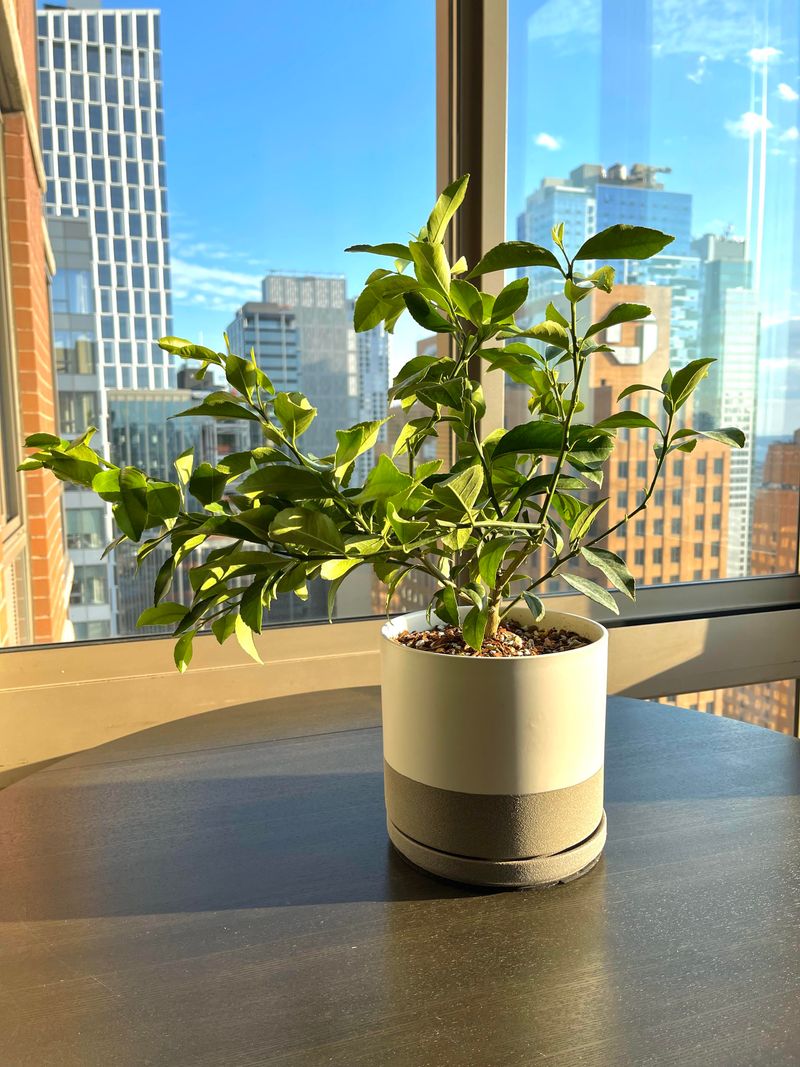
Even a sunny window is dimmer than an open patio, and that drop in light is one of the biggest shifts your tree faces. Leaves that grew in full sun have to adapt to weaker light, and some may yellow or fall as the tree adjusts.
Minnesota Extension suggests reducing outdoor light gradually for about a week before bringing citrus inside. You can do this by moving the pot into a shadier part of the yard, like under a porch roof or a tree.
This may help the tree adjust, but it will not stop every leaf from dropping.
Once the tree is inside, give it the brightest spot you have. A south- or southwest-facing window is usually best, since it catches the most winter sun.
Keep the pot close to the glass, but watch for cold air leaking around old window frames at night.
If your windows are shaded or face north, consider a grow light. Wisconsin Extension says supplemental light is needed for fruit production when a tree gets less than six hours of direct light daily.
A simple way to check is to note when sun actually hits the pot over a typical day.
Rotating the pot a quarter turn every week or so helps the whole canopy get light. Wipe dusty leaves with a damp cloth too, since a clean leaf collects light better.
If the tree seems to lean toward the window, that is a hint it wants more light.
Water by the soil, not by the calendar
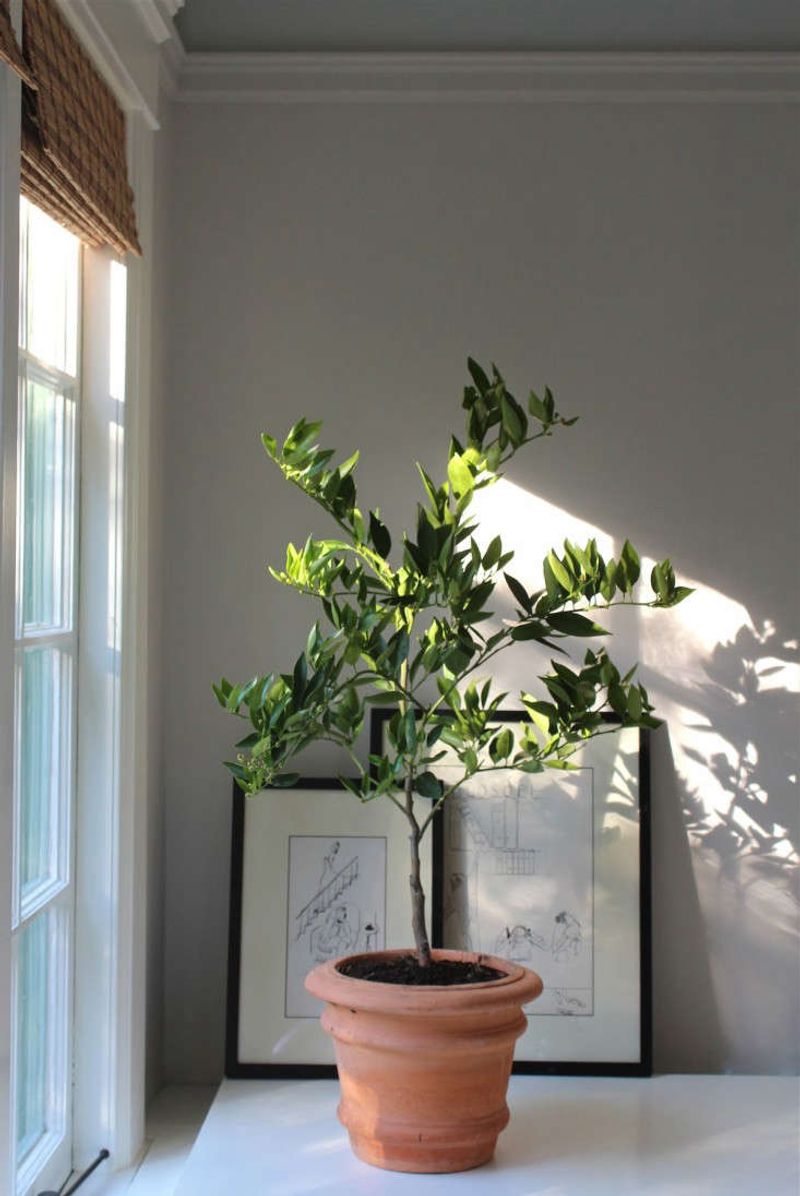
Forget the idea of watering every Saturday. Indoors in winter, growth slows and the soil often stays damp longer than it did on the patio, so a calendar can lead you to overwater.
Your finger is a better guide than your phone.
Push a finger about an inch or two into the soil. Wisconsin Extension recommends keeping citrus soil moist but not soggy and letting it dry slightly between waterings.
If the soil feels damp, wait a day or two and check again.
When it is time to water, do it thoroughly until water runs out of the drainage holes. Then let the pot drain and empty the saucer, because roots sitting in standing water can suffer.
A pot that feels very light when you lift it is another clue that it has dried out.
N.C. Extension likewise advises cutting back on watering in winter.
That does not mean letting the tree go bone dry. It means watering less often as the tree uses less water, while still checking the soil.
Make sure the pot has drainage holes and uses a well-draining potting mix. Watch the tree itself too.
Wilting with dry soil points to thirst, while yellowing leaves with constantly wet soil can point to too much water.
Keep indoor conditions steady; treat humidity as secondary
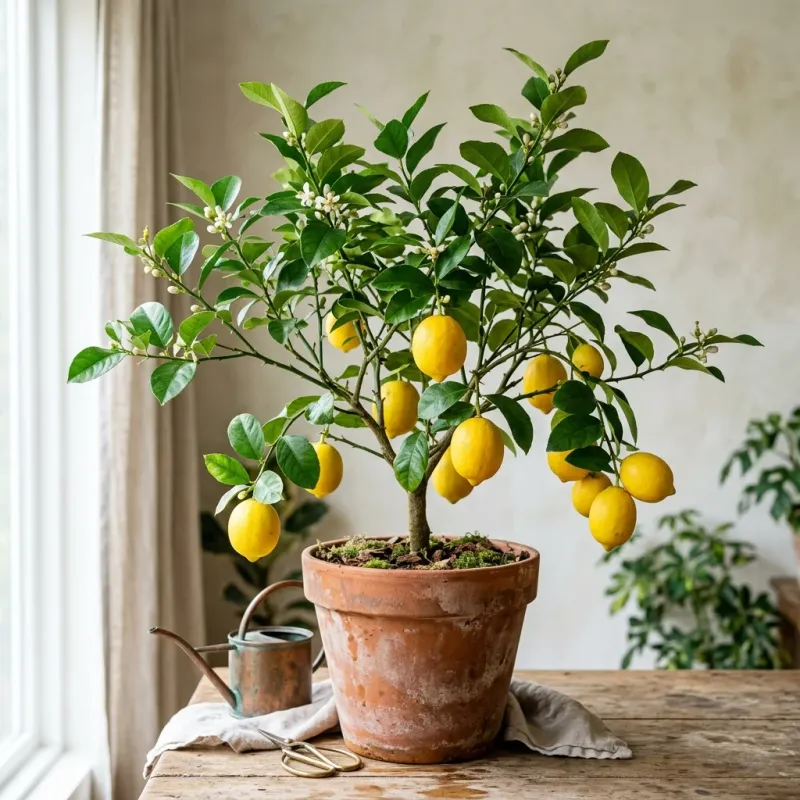
Few things annoy a citrus tree like sudden changes. A spot next to a heating vent blasts it with warm, dry air, while a drafty door can chill it in an instant.
Ask Extension points to abrupt environmental changes and warm, dry air as possible stressors for a Meyer lemon moved indoors.
Walk around your house and feel for moving air. Avoid the spots by vents, fireplaces, space heaters, and exterior doors.
A steady, bright corner away from those trouble zones is often a better home than the very warmest room.
Dry air can add to the stress, especially once the furnace is running. Still, light, stable conditions, and sensible watering matter more, so fix those first.
Humidity is a helper, not the star.
Many people reach for a spray bottle, but the relief is short. Iowa State Extension says misting does not raise humidity effectively for more than a short time.
If your air is very dry, a room humidifier is a more practical choice.
A cheap humidity meter can tell you whether you actually have a problem. If the number looks reasonable, skip the extra gear and focus on the basics.
Expect some shedding, but do not assume every loss is harmless
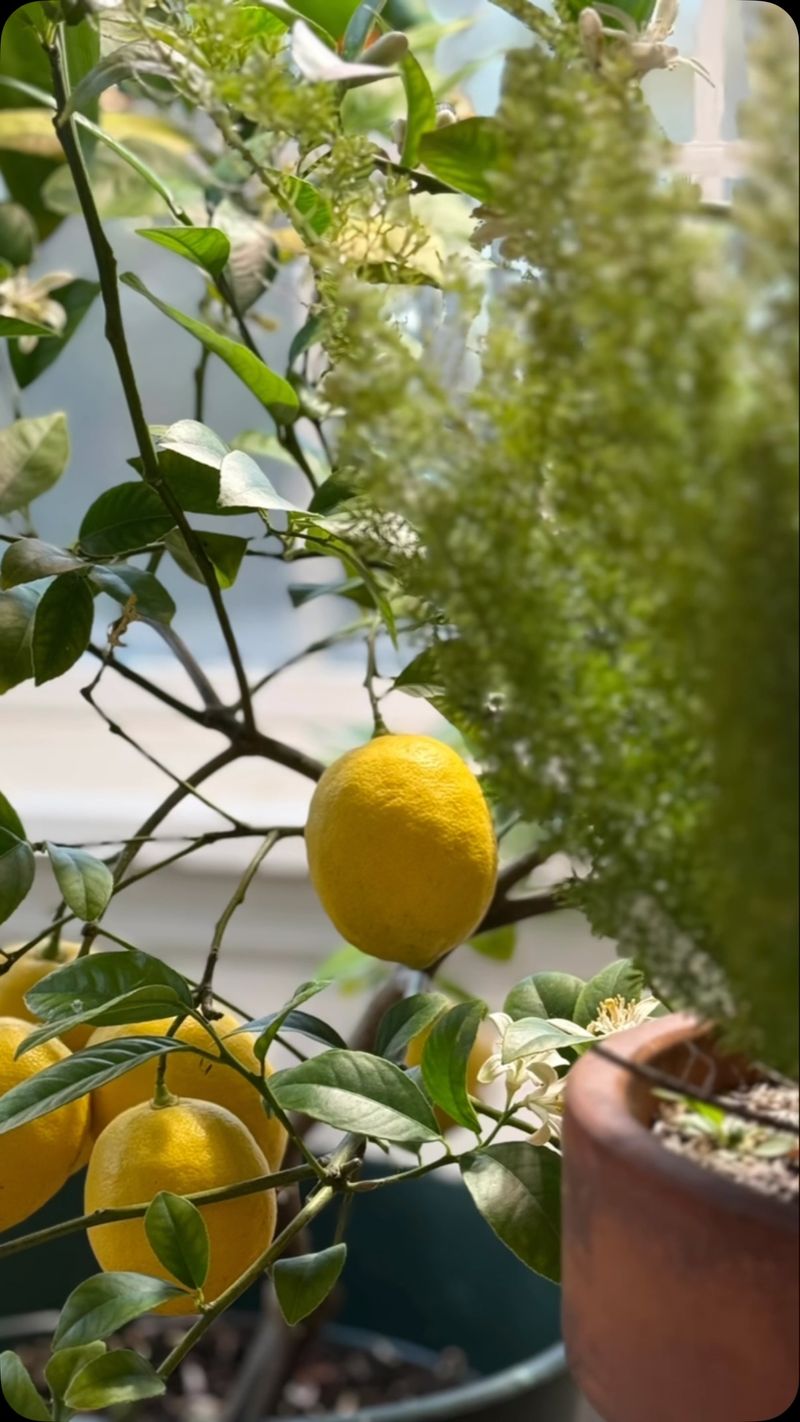
Finding a few leaves on the floor in the first weeks indoors can feel alarming. Some leaf loss may be the tree adjusting to new light, temperature, and humidity.
A light sprinkle of leaves is different from a tree that keeps dropping them by the handful.
Fruit works a little differently. Citrus naturally sheds some of its small, immature fruit, as UC Statewide IPM explains, so not every fallen fruitlet signals trouble.
Larger fruit dropping is more likely to point to stress, such as sudden temperature swings or problems with light or water.
University of Maryland Extension also links environmental changes to leaf and fruit drop in dwarf citrus. That is why steady care helps, though it cannot prevent every loss.
If you want fruit from an indoor tree, remember the bees are not around. N.C.
Extension notes that indoor Meyer lemon flowers need hand-pollination to produce fruit. A small soft brush works well for moving pollen between blooms.
Be honest with yourself about the outcome. Some lemons may stay and ripen, and some may not.
Neither result means you failed.
Investigate persistent loss and inspect for pests
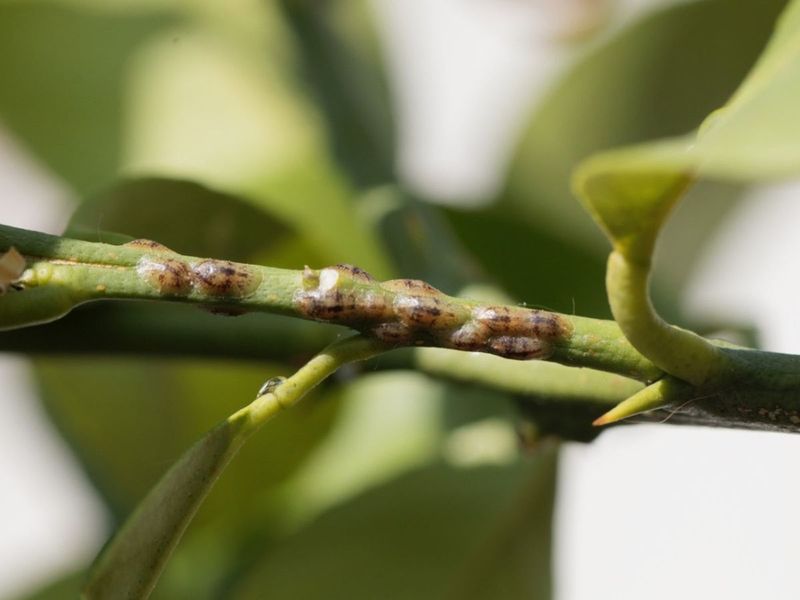
When leaves keep falling week after week, stop blaming the move and start looking for causes. Insufficient light, too much or too little water, temperature stress, and pests can all play a part, as University of Maryland Extension and Ask Extension both suggest.
Dry air may add to it, but it is rarely the only answer.
Work through a checklist. Is the tree getting the brightest light you can offer?
Does the soil feel soggy or bone dry? Is it near a vent or a cold draft?
Then look closely at the foliage. Check the undersides of leaves and the stems for scale, mites, whiteflies, and aphids.
Sticky residue, tiny webbing, small bumps on stems, or clouds of tiny flying insects are all clues.
Prevention starts before the move. Iowa State Extension recommends inspecting plants and rinsing the foliage before they come inside.
Keep checking every week or two through winter.
If you decide to treat a pest, use only a product labeled for citrus and for that specific pest, and follow the label directions closely. This matters even more when the fruit may be eaten.
Fertilizer advice varies. N.C.
Extension advises feeding every three months for indoor fruit production, while Minnesota Extension says to fertilize only while the tree is actively growing. Tie feeding to growth and the product label, and skip heavy winter feeding.
A tree that is dropping leaves is not a hopeless one. Sort out the cause, fix one thing at a time, and give it a few weeks to answer.